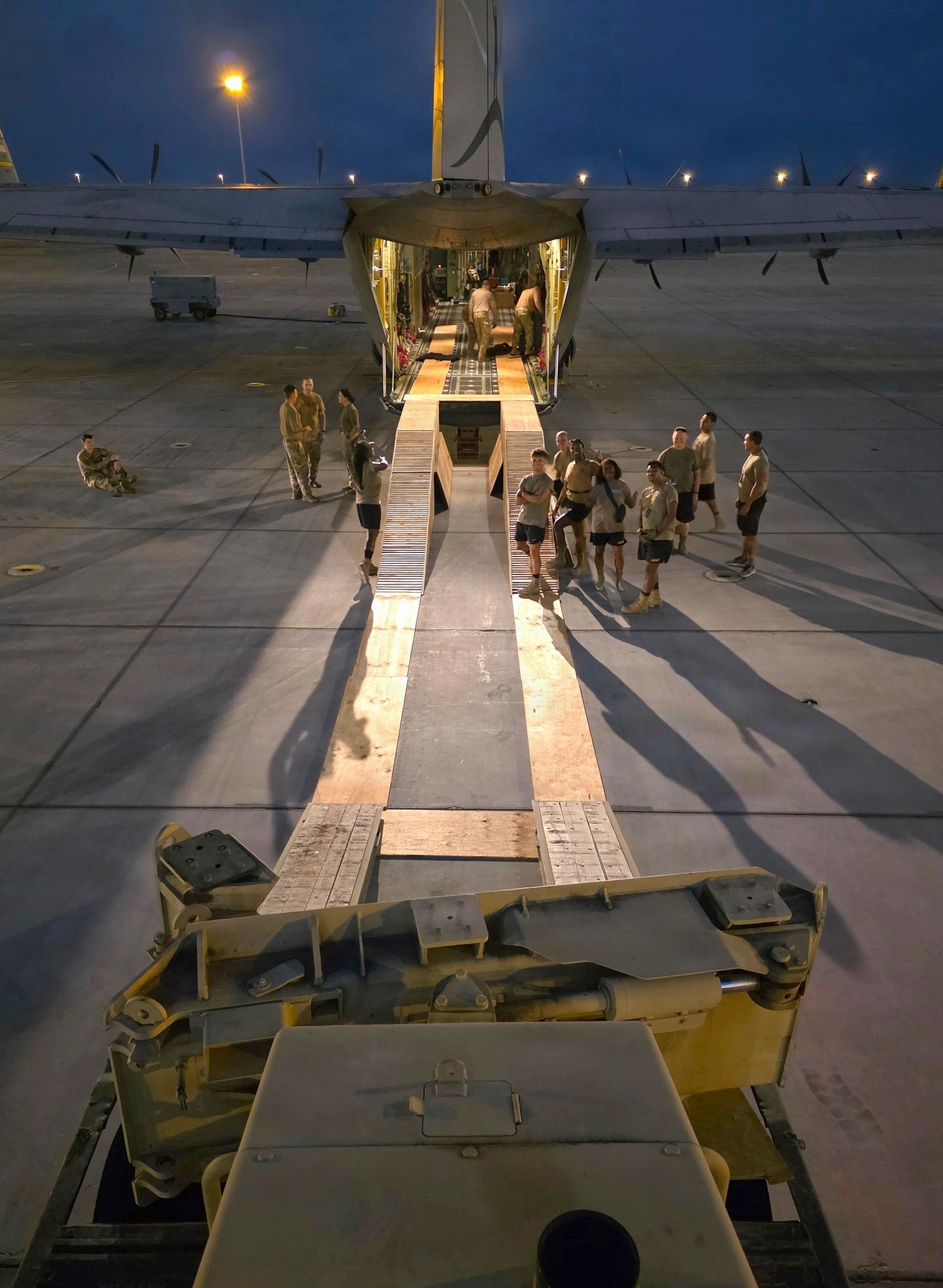
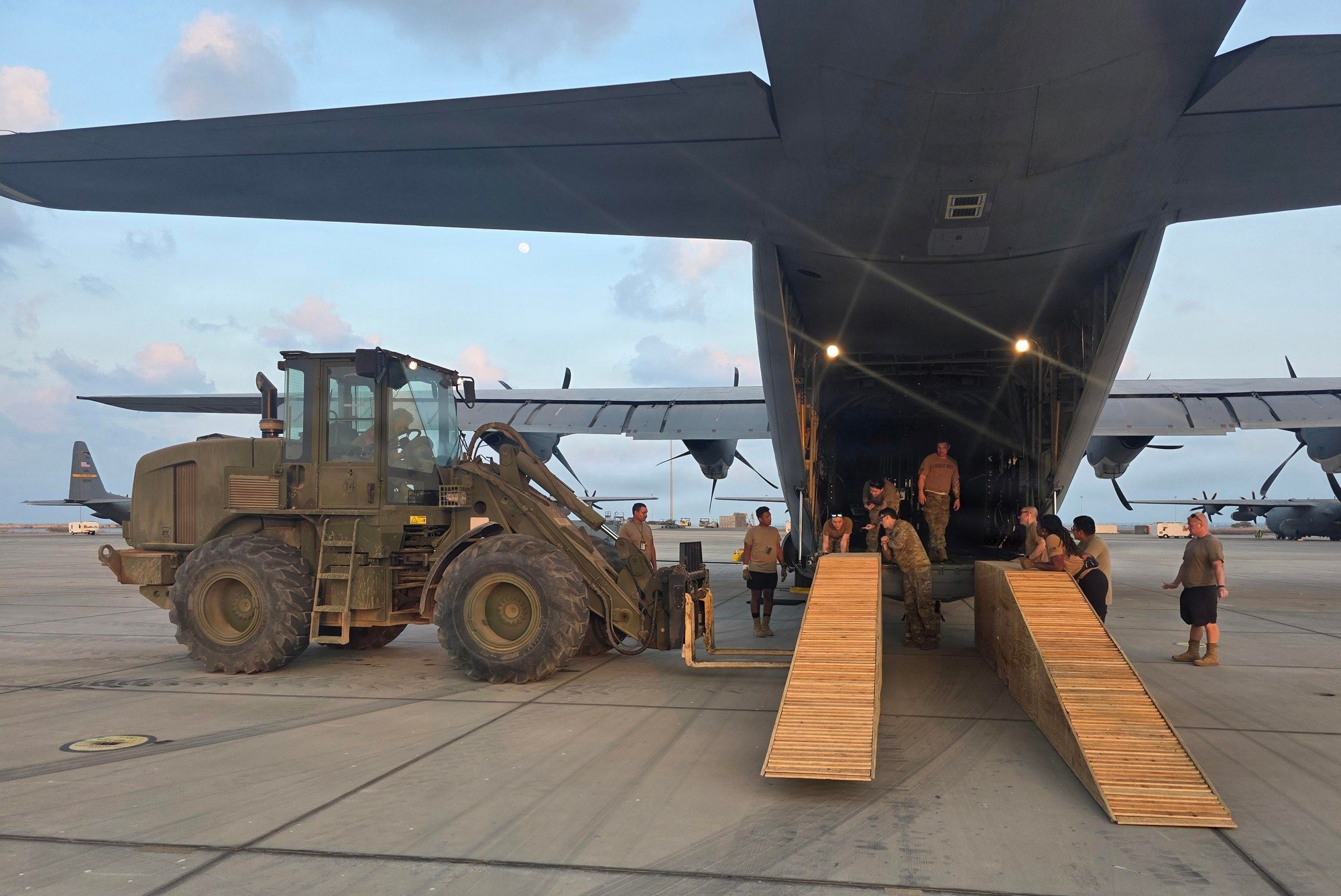
CAMP LEMONNIER, Djibouti – Virginia National Guard Soldiers assigned to the Powhatan-based 180th Engineer Support Company, 276th Engineer Battalion, 329th Regional Support Group, completed a historic equipment movement while on federal active duty supporting Combined Joint Task Force - Horn of Africa Dec. 3, 2025.
The engineers conducted an air movement of a Caterpillar D6K Dozer from their main camp to an outstation in the region using a C-130J Super Hercules aircraft, with support from the West Virginia Air National Guard. This was the first time a dozer had been moved by air to an outstation during the CJTF-HOA mission.
“This mission was significant because it was the first time a dozer had been deployed from the main camp to an outstation, marking a major milestone in the operational capability and growth of the base,” said Capt. Catherine Bean, commander of the 180th. “What makes it truly stand out is how it highlights the joint nature of modern engineer operations, as its success depended on the seamless cooperation between the Army, the Air Force, and defense civilians.”
Bean said the dozer is used for essential earth-moving tasks, including airfield maintenance, site preparation and force protection enhancements. For this mission, the 180th had to coordinate a complex, multi-tiered operation, including air movement and the use of specialized military vehicles to load the dozer onto the aircraft.
“The biggest hurdle was that ground transportation of the dozer was not feasible due to the distance, terrain, and other operational constraints of reaching the outstation,” Bean said. “This challenge was overcome through a complex, joint logistical effort where the 180th ESC worked in concert with the 130th Air Lift Squadron, West Virginia Air National Guard, to airlift the dozer, ensuring it arrived safely and kept the overall project on its timeline.”
Moving the dozer by air required more than simply loading the large equipment into the aircraft.
“There were two key factors to getting the bulldozer broken down correctly: safety and good communication,” said Sgt. 1st Class Patrick Powers. The Soldiers took the time to consider all safety aspects and discussed their plan of action before any disassembly. The leaders communicated effectively and made sure even down to the lowest rank knew what needed to happen and ensured all Soldiers had a good understanding of what this task meant to the overall mission.”
Focusing on safety, the team leveraged its extensive logistics experience to load the dozer onto the aircraft, a process that required careful calculations and skill. The unit’s bill of materials team proved vital to the effort.
“The alignment and set distance of the truck/trailer combo, to the ramps and shoring leading to the aircraft were the most critical and difficult aspect of the load, with only a half inch of deviation between the whole setup,” said Sgt. James Robinson. “This operation was made possible due to Soldiers knowledgeable in both equipment operations and building trades. Without the years of expertise, skills and organization of the BOM leadership and the Soldiers in the BOM Team, this mission would have not been a success.”
The arrival of the dozer at the outstation was a huge boost to that station’s capabilities, according to outstation officer-in-charge 1st Lt. Nathan Cossaboon.
“The ability to receive a dozer at our outstation was paramount to enhancing force protection on base,” Cossaboon said. “It widened the scope of our capabilities, and increased the speeds at which this type of work can be completed.”
While this was the first occurrence of this mission, it proved successful and sustainable, proven when the 180th completed a second identical movement about two weeks later, this time to a different outstation.
“The success of this mission demonstrated the significant initiative, expertise, and commitment of the Soldiers in the 180th Engineer Support Company,” Bean said. “By leading this effort, they not only reinforced their role as the lead engineer unit on base but also set a new, higher standard for all future engineer elements to follow.
"I am exceptionally proud of the Soldiers of the 180th Engineer Support Company and their successes on this deployment,” she added. “This mission perfectly highlights their ability to lead complex, joint operations and deliver critical support where it is needed most. They have set a new standard for expeditionary engineering, and their initiative and commitment are making a direct and positive impact on our ability to accomplish the mission."
The 180th took responsibility as the CJTF-HOA’s engineer capability from the New York National Guard’s 152nd ESC in late 2025. The 180th is supporting CJTF-HOA and U.S. Africa Command in enhancing regional stability and strengthening relationships with partner nations through construction projects coordinated across the Horn of Africa. Combined Joint Task Force - Horn of Africa comprises thousands of military personnel from every branch of the U.S. military. Based in Djibouti, CJTF-HOA conducts operations to protect U.S. and partner interests, deter terrorism, promote regional stability, and dissuade conflict.
Social Sharing