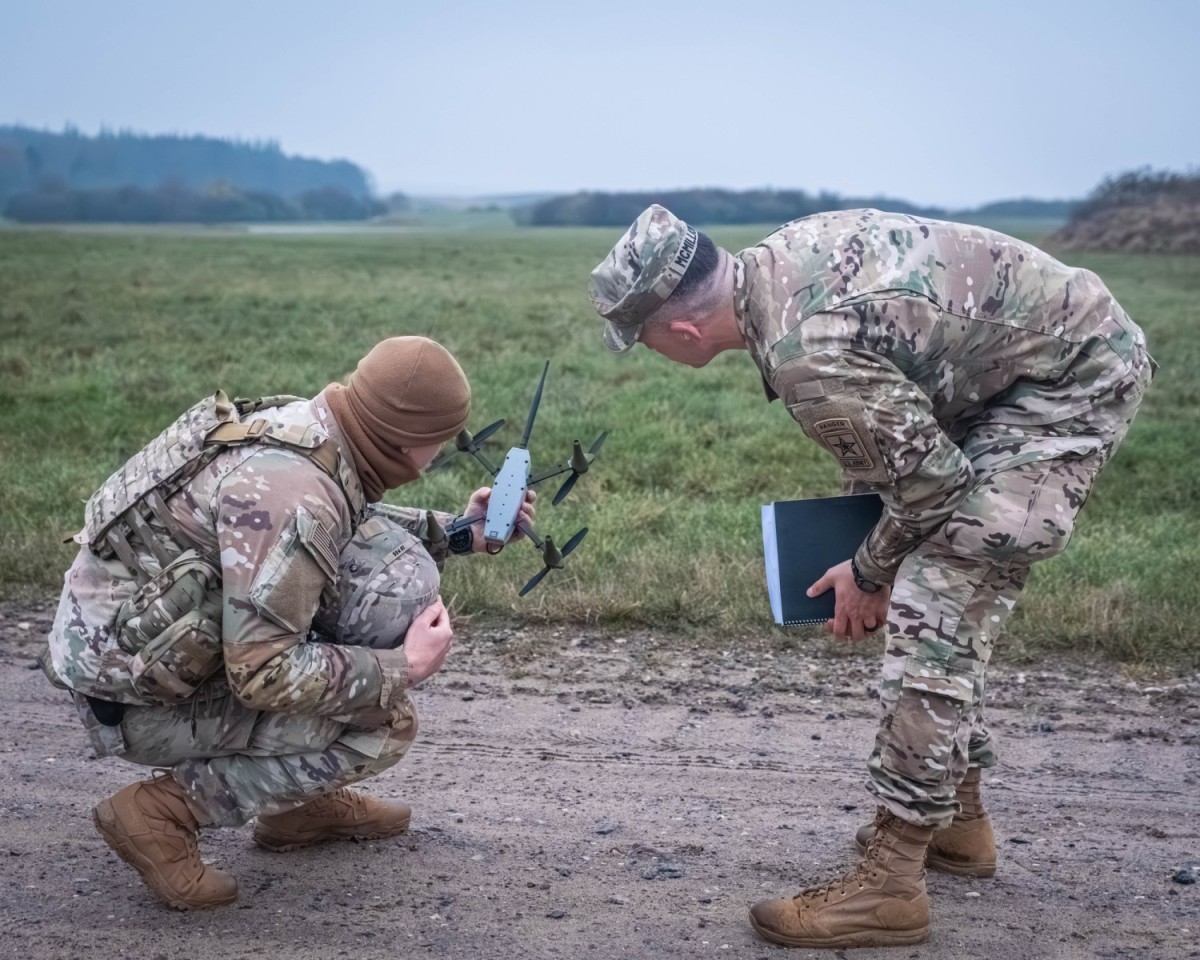
Safety is one of the U.S. Army Test and Evaluation Command (ATEC)’s most critical considerations as it helps Army senior leaders determine whether to provide a piece of equipment to Soldiers. Safety is a cornerstone of ATEC’s evaluations to reduce risk in the acquisition process and ensure Soldiers come home to their families after accomplishing their mission.
Today, in support of Army transformation, ATEC is significantly streamlining the Safety Release process, combining speed with rigor to help put crucial systems in Soldiers’ hands faster than ever before.
Foundational efforts
The U.S. Army Evaluation Center (AEC), a subordinate organization to ATEC, leads the command safety process. It produces timely technical and operational evaluations to enable Soldier use of emerging technologies for Army leaders to make future force decisions. AEC accomplishes its safety evaluations by identifying hazards, verifying hazard mitigations through tests or analysis and determining the residual risk. AEC publishes the safety evaluation in the form of a Safety Release. The Safety Release is provided to units when Soldiers use non-type-classified systems in tests and experiments.
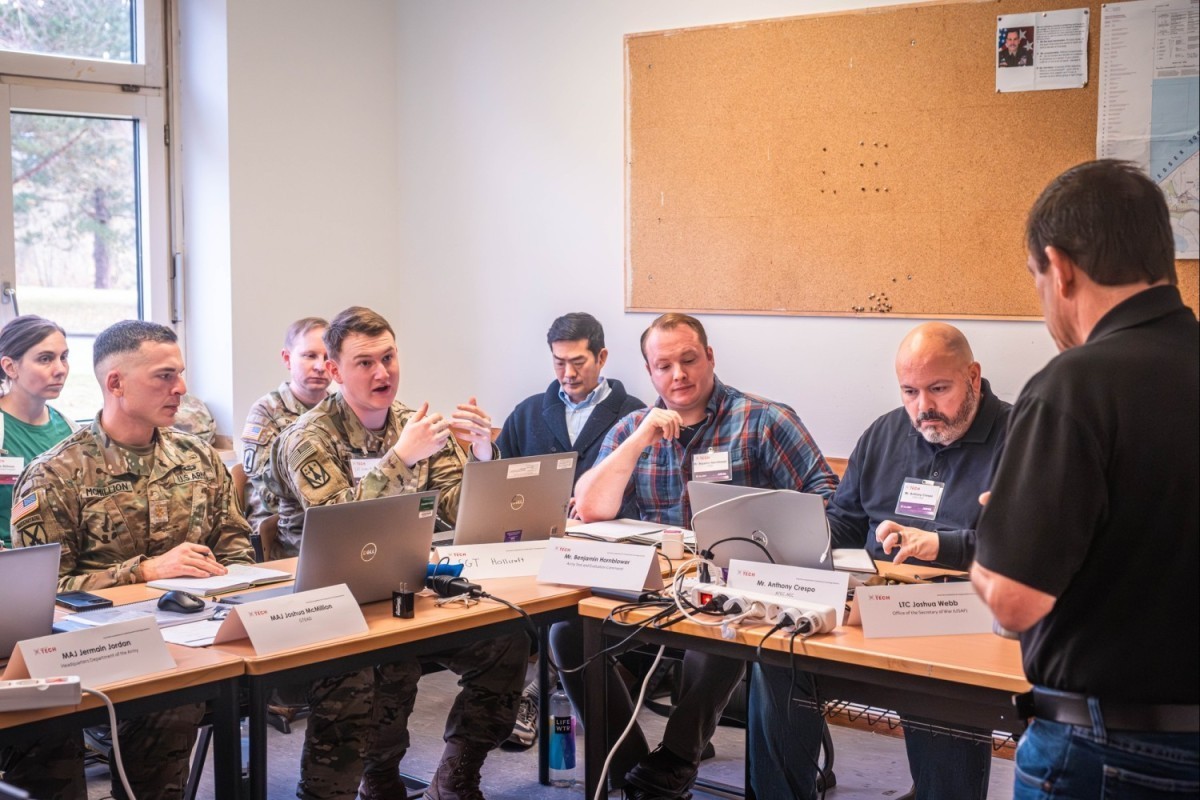
These Safety Releases are especially critical to support major Army Transformation in Contact experimentation events, during which units try out different vendor prototype equipment under real-world conditions. For example, AEC personnel recently provided support to three large Army experimentation events: Operation Flytrap 4.5 Counter-Unmanned Aerial Systems (C-UAS) exercises in Germany; a 25th Infantry Division rotation to the Joint Pacific Multinational Readiness Center in Hawaii; and the xTech Overwatch small business autonomous system competition in Austin, Texas.
During this period, the team authored over 34 Safety Releases alone for small UAS, UAS payloads and passive/active C-UAS technologies and 19 others supporting C5ISR, Manuever Ground and Soldier systems. The team also traveled to provide on-site evaluation support to the xTech program office and 25th Infantry Division. These Safety Releases are foundational to the Army’s ability to rapidly and safely evaluate emerging technologies to support its transformation initiative.
Responding to the need
ATEC historically wrote Safety Releases to expire at a specific date, for a specified unit and at a defined location as directed by Army regulation. In addition, hazard assessments were generally risk averse to reduce risk to the lowest level possible for peacetime learning.
ATEC has evolved in response to the Army’s shift toward rapid innovation and experimentation and a desire to actively manage risk to maximize learning. ATEC, through AEC, has improved its safety products by removing restrictive language and including mitigated and unmitigated risk assessments for each identified hazard. This offers the unit commander options in managing risk balanced with learning objectives.
ATEC has also accelerated its Safety Release process through administrative enhancements to include delegating the Safety Release signature authority to the lowest level, addressing Safety Releases to a higher echelon of command and waiving the requirement for some Safety Releases. In addition, ATEC has accelerated the Safety Release process by implementing the following four initiatives:
1. Access to ATEC Safety Release repository
This repository is open to all Army users with a Common Access Card (CAC). Users can search for published Safety Releases by system or experiment. Since system changes may occur during development, unit safety managers should contact ATEC to ensure they have the latest Safety Release that is directly applicable to the intended use of the system. If changes impacting safety have occurred or the Safety Release has expired, ATEC will issue an amended Safety Release to support upcoming events.
Click here to access the ATEC Safety Release repository (CAC required).
2. Extended or no expiration date
ATEC can provide Safety Releases that have extended or no expiration date, provided there are no system configuration (hardware or software) upgrades or changes. If further experimentation with the same system is known or forecasted, unit safety managers should communicate with their ATEC POCs, so the final product meets the need. ATEC can also amend previous Safety Releases rapidly for administrative changes.
3. Group Safety Releases
ATEC has published Safety Releases with common risks and mitigations for non-weaponized Commercial-Off-the-Shelf (COTS) Group 1 and Group 2 small UAS (sUAS) that are on the Defense Contract Management Agency’s cleared UAS Blue List. These Group Safety Releases provide risk assessment information for Soldier use of non-weaponized COTS sUAS that are on the UAS Blue List without the need for a new Safety Release.
4. Training aids
ATEC is leaning forward and working through the process for developing safety graphical training aids with the UAS community to enhance the learning and retention of the hazards and recommended mitigations to minimize the risk for Soldier use. Through the development process, ATEC has received positive internal and external stakeholder feedback and is working through the comments. Once development is final, these training aids will be published, made available on the ATEC Safety Release repository and submitted for Army-wide publication.
Commitment to safety, with speed
ATEC continues to be agile in supporting the Army’s need to go fast while providing decision makers with the information needed to minimize risk to Soldier safety. The figure below compares the legacy Safety Release process to the accelerated process. The Safety Release is a critical input to the unit commander’s risk assessment. ATEC remains committed to helping unit commanders make informed risk decisions while driving Army transformation with speed and rigor.

For inquiries, contact ATECSafetyReleaseSupport@army.mil.
Social Sharing