1 / 3Show Caption +Hide Caption –
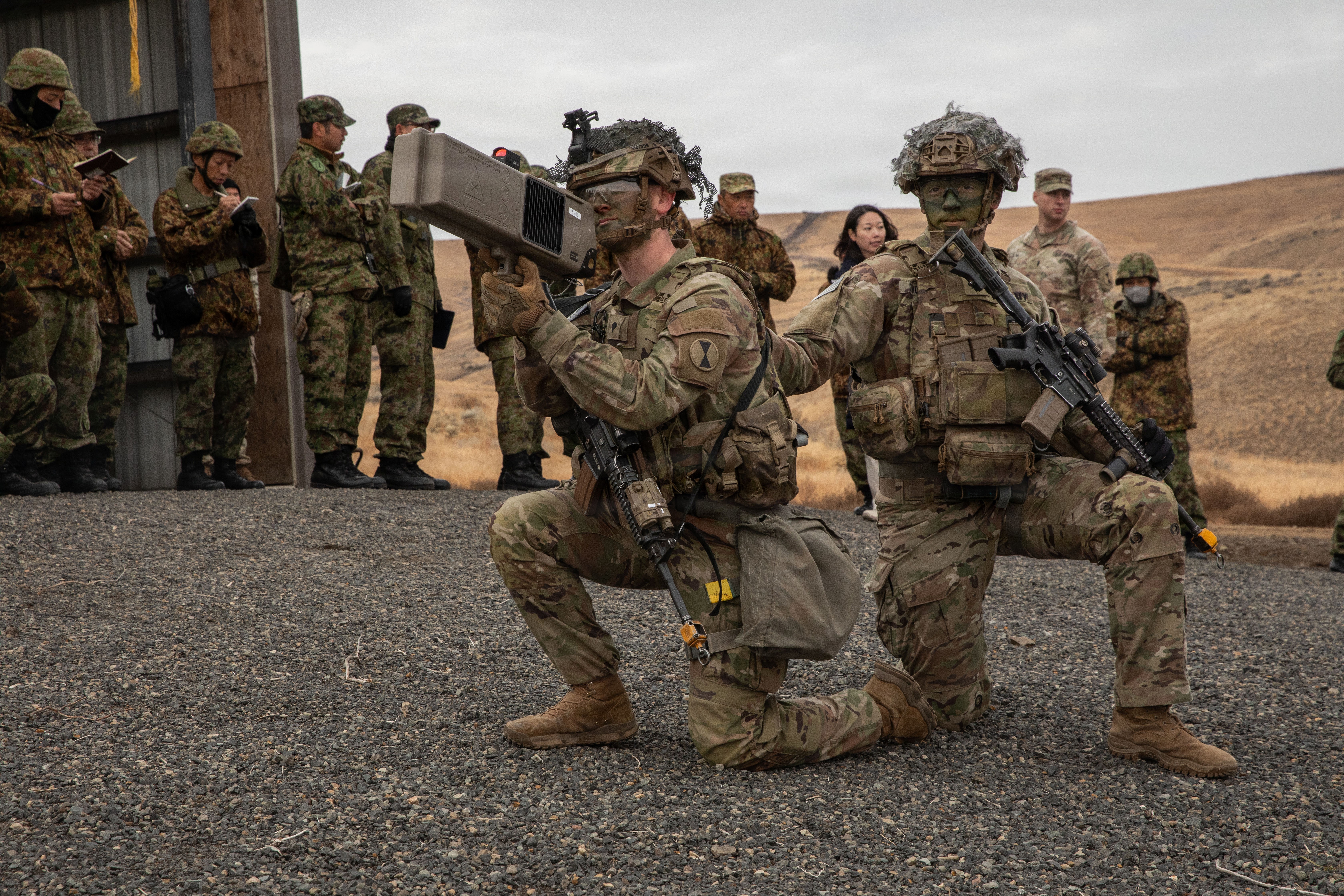
U.S. Soldiers, assigned to 7th Infantry Division, demonstrate Counter Unmanned Aerial Systems capabilities to the Japanese Self Defense Force Members during Rising Thunder 25, Yakima Training Center, Wash., on Oct. 28, 2025. Rising Thunder is a U.S. Army-hosted exercise designed to build interoperability between I Corps, the 7th Infantry Division and the Japan Ground Self-Defense Force.
(Photo Credit: U.S. Army photo by Pfc. Jolene Cintron)VIEW ORIGINAL2 / 3Show Caption +Hide Caption –
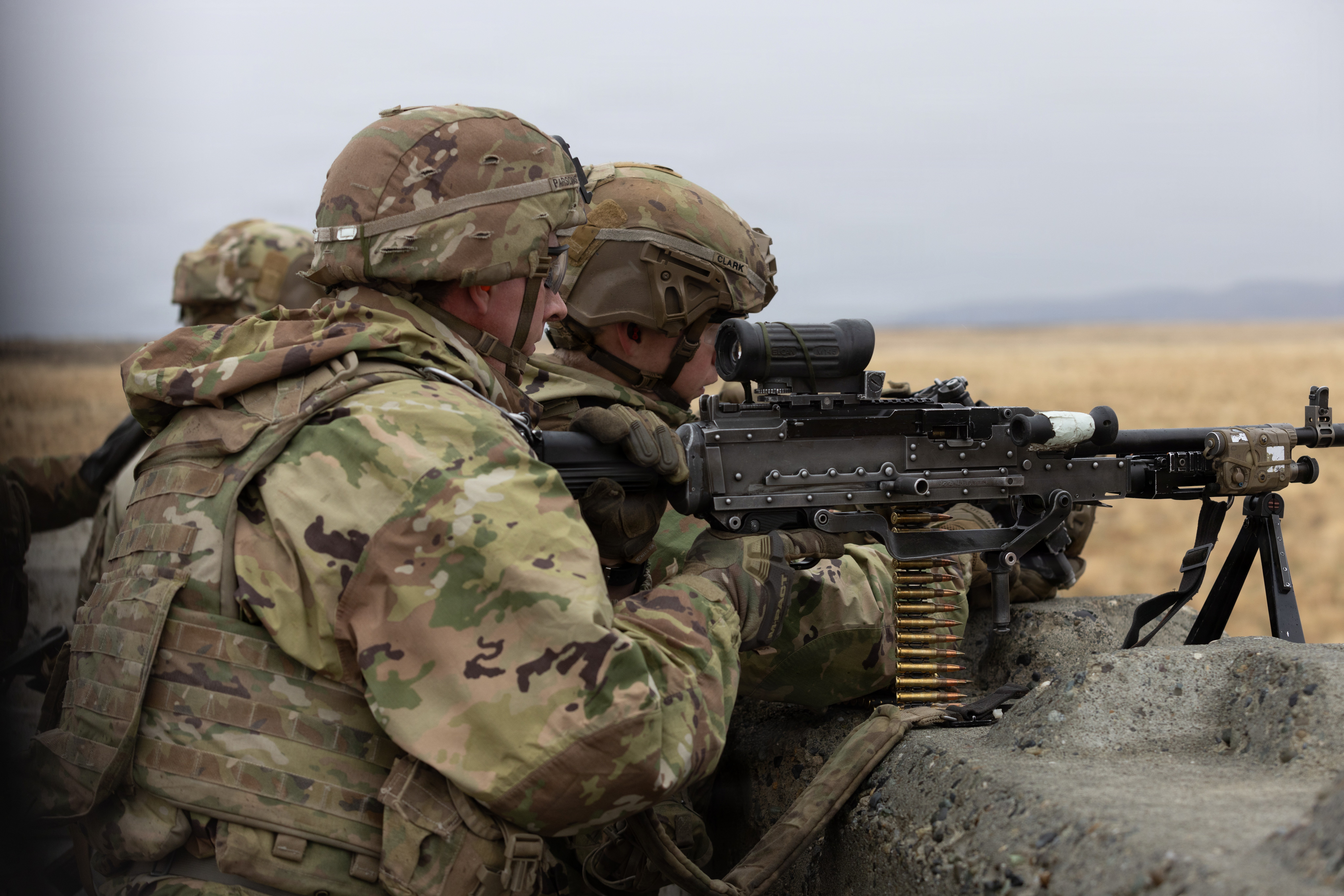
A Japanese Ground Self-Defense Force member, assigned to the 22nd Rapid Deployment Regiment, conducts a sniper live fire exercise during Rising Thunder 25 at Yakima Training Center, Wash., Oct. 30, 2025. Rising Thunder is designed to enhance interoperability and combat readiness between the U.S. and Japan and has been a regular occurrence between the two allies since 1994.
(Photo Credit: U.S. Army Photo by Pfc. Jolene Cintron)VIEW ORIGINAL3 / 3Show Caption +Hide Caption –
Japanese Self Defense Force members, assigned to 22nd Rapid Deployment Regiment, zero their rifles before a shoot house with U.S. Soldiers during Rising Thunder 25, Yakima Training Center, Wash., on Oct. 29, 2025. Rising Thunder is a U.S. Army-hosted exercise designed to build interoperability between I Corps, the 7th Infantry Division and the Japan Ground Self-Defense Force.
(Photo Credit: U.S. Army photo by Spc. Kyle Kimble)VIEW ORIGINAL
YAKIMA TRAINING CENTER, Wash. — Since 1994, the U.S. Army and the Japanese Ground Self-Defense Force have annually conducted Rising Thunder, an exercise that strengthens the interoperability and readiness amongst both allied nations.
U.S. Navy Adm. Samuel Paparo, assigned as U.S. INDOPACOM commander, says, “It’s a time for our partnerships and alliances to be stronger than they ever have been, and we are in fact seeing unprecedented bilateral relationships, examples are the Republic of Korea, Japan, and the United States.”
Units participating in this year's iteration included the 7th Infantry Division and 16th Combat Aviation Brigade, both stationed at Joint Base Lewis-McChord, Washington. Alongside them were the 22nd Rapid Deployment Regiment from the JGSDF.
Rising Thunder consisted of trainings covering artillery strikes, battle rhythms, M24 Squad Automatic Weapon and .50 caliber rifle weapons training, a combined arms live fire exercise and various conditioning.
1 / 3Show Caption +Hide Caption –
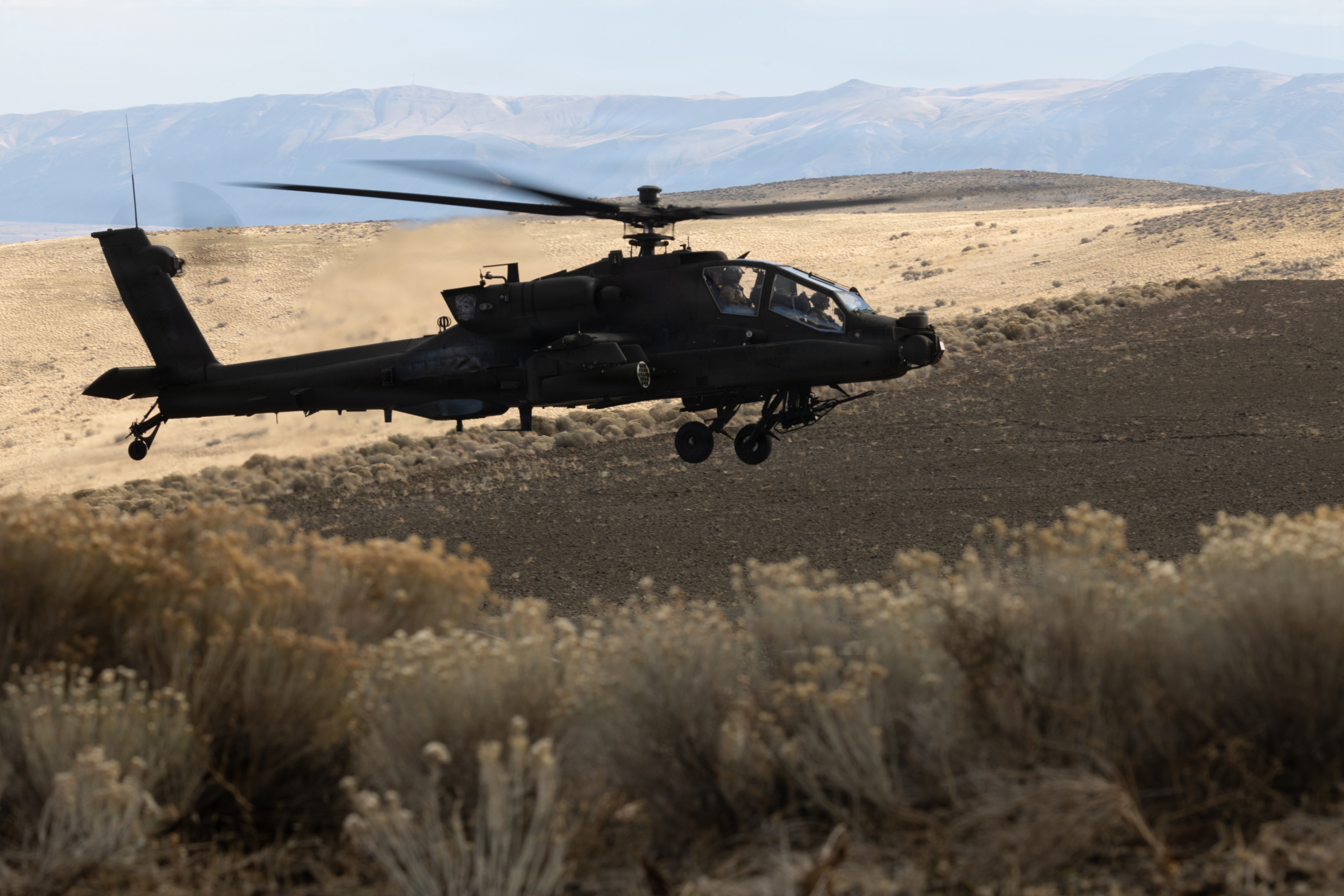
An AH-64 Apache assigned 16th Combat Aviation Brigade, conducts refueling operations during Rising Thunder 25 at Yakima Training Center, Wash., Nov. 1, 2025. Rising Thunder is designed to enhance interoperability and combat readiness between the U.S. and Japan and has been a regular occurrence between the two allies since 1994.
(Photo Credit: U.S. Army Photo by Spc. Kyle Kimble)VIEW ORIGINAL2 / 3Show Caption +Hide Caption –
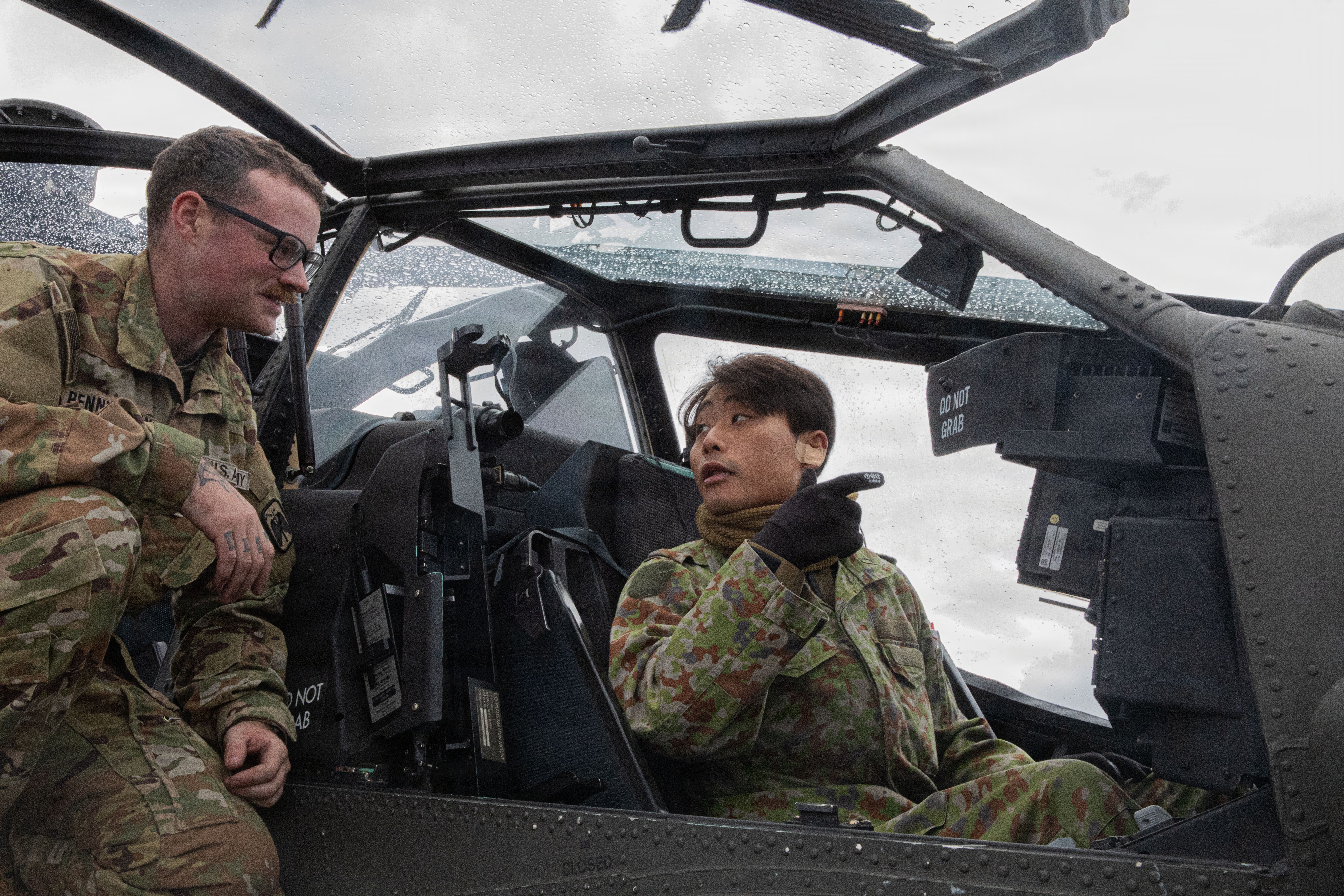
U.S. Soldier, assigned to 16th Combat Aviation Brigade, explains the different technology in the AH-64 Apache to Japanese Ground Self-Defense Force Member, assigned to 22nd Rapid Deployment Regiment, during Rising Thunder 25, Yakima Training Center, Wash., Nov. 5, 2025. Rising Thunder is designed to enhance interoperability and combat readiness between the U.S. and Japan and has been a regular occurrence between the two allies since 1994.
(Photo Credit: U.S. Army photo by Pfc. Jolene Cintron)VIEW ORIGINAL3 / 3Show Caption +Hide Caption –
U.S. Soldier, assigned to 7th Infantry Division, pulls security amidst a CALFEX, during Rising Thunder 25, Yakima Training Center, Wash., Nov. 3, 2025. Rising Thunder is designed to enhance interoperability and combat readiness between the U.S. and Japan and has been a regular occurrence between the two allies since 1994.
(Photo Credit: U.S. Army photo by Spc. Kyle Kimble)VIEW ORIGINAL
“[The allies of] the United States, and our already inherent interoperability, are making us stronger, and they’re leading to more and more effective interoperable exercises across wider geographies,” said Paparo.
For 31 years, Rising Thunder's mission has been to enhance the relationship between U.S. and Japanese forces. Every rank has the opportunity to work together and see each of their capabilities.
Training with the JGSDF holds up our promise not just to Japan but to all of our allies to have their back, no matter how close the enemy is to them, said Sgt. Dallen Tyler, assigned to A Company, 1-2 Stryker Brigade, 7th Infantry Division.
Joint Base Lewis-McChord's main priority is the Indo-Pacific, and it's committed to enhancing stability by promoting security cooperation, encouraging peaceful development, responding to contingencies, and deterring aggression. This is based on partnership, presence, and military readiness, such as Rising Thunder.
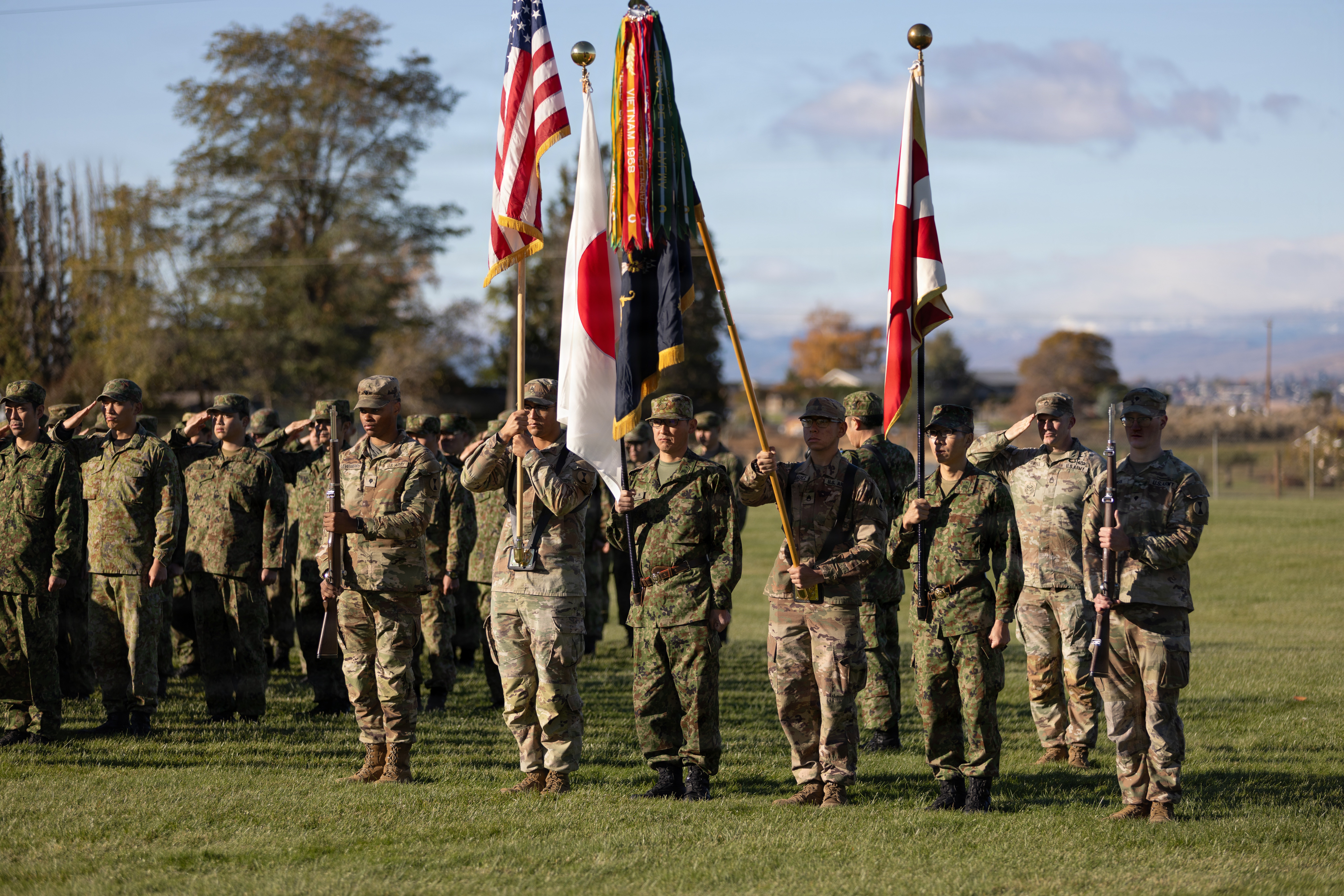
1 / 2Show Caption +Hide Caption –
U.S. Soldiers assigned to 2-3 Infantry Battalion, guard the colors alongside Japanese Self Defense Force Members assigned to 22nd Rapid Deployment Regiment, Japan Ground Self-Defense Force, during the opening ceremony of Rising Thunder 2025 at Yakima Training Center, Wash. on Oct. 27, 2025. Rising Thunder is designed to enhance interoperability and combat readiness between the U.S. and Japan and has been a regular occurrence between the two allies since 1994.
(Photo Credit: U.S. Army Photo by Spc. Kyle Kimble)VIEW ORIGINAL2 / 2Show Caption +Hide Caption –
U.S. Soldiers of the 2-3 Infantry Battalion, guard the colors during the opening ceremony of Rising Thunder 2025 at Yakima Training Center, Wash. on Oct. 27, 2025. Rising Thunder is designed to enhance interoperability and combat readiness between the U.S. and Japan and has been a regular occurrence between the two allies since 1994.
(Photo Credit: U.S. Army Photo by Spc. Kyle Kimble)VIEW ORIGINAL
U.S. Maj. Timothy “Shane” McKiddy, 16th Combat Aviation Brigade's 1-2 Attack Battalion executive officer, says, “Japan is one of our five treaty allied partners in the Pacific, and in the INDOPACOM theater of operations, which is the most important theater in today's world, and it's important that we place emphasis on that theater.”
Rising Thunder 25 highlighted JBLM’s critical role in ensuring warfighting readiness and how resilient ICorps’ land power is combat-credible across the Indo-Pacific.
“It’s important that the JGSDF understand our capabilities that we can bring to bear against our adversaries and the theater that we share, so that we can better support them and their Ground Force Commander and their scheme of maneuver as they fit into the combined and joint fight,” McKiddy explains.
Social Sharing