FORT CARSON, Colo. — The 4th Infantry Division executed the first live fire training missions using Next Generation Command and Control, NGC2, technology, marking a key step in scaling the prototype for the broader Army.
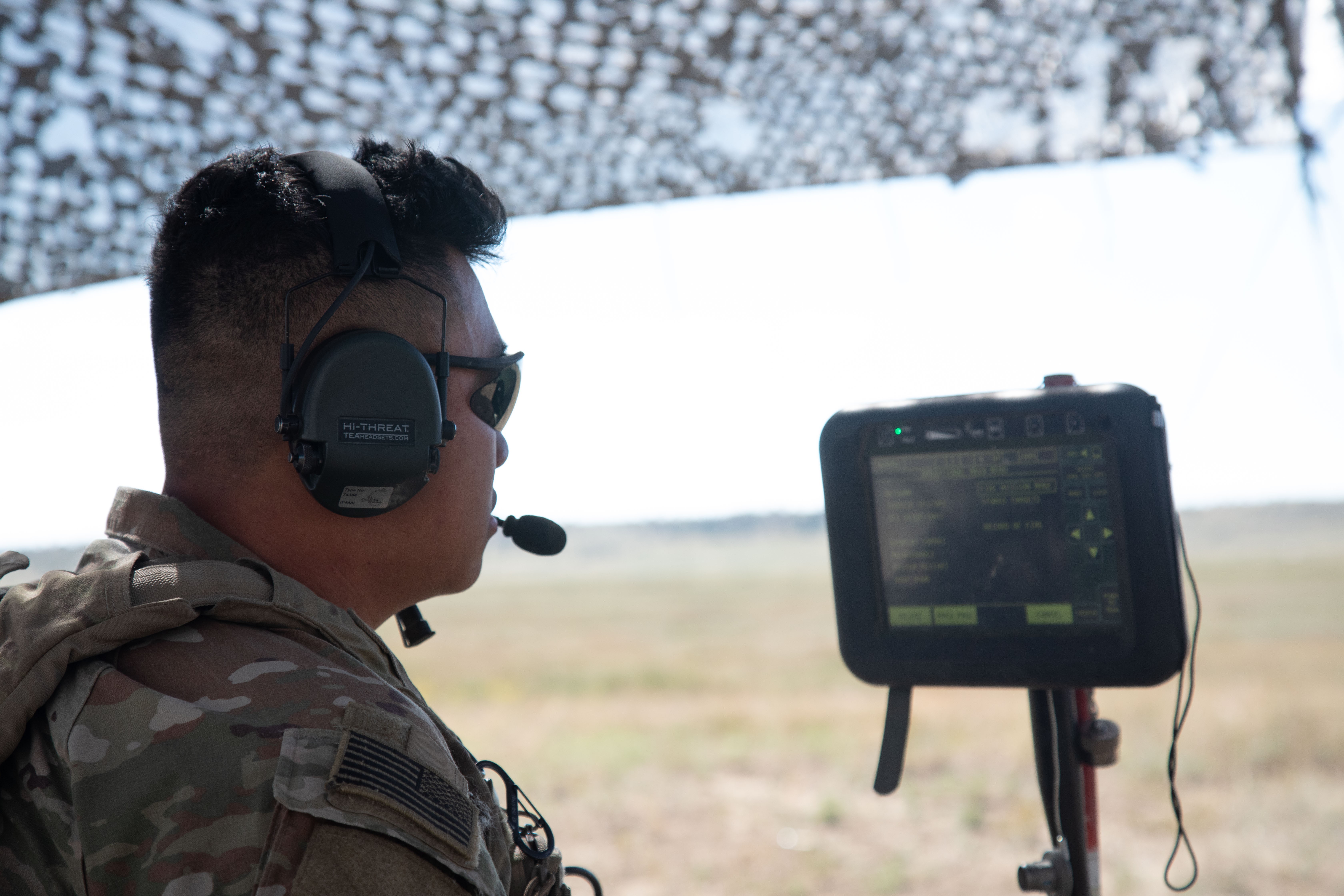
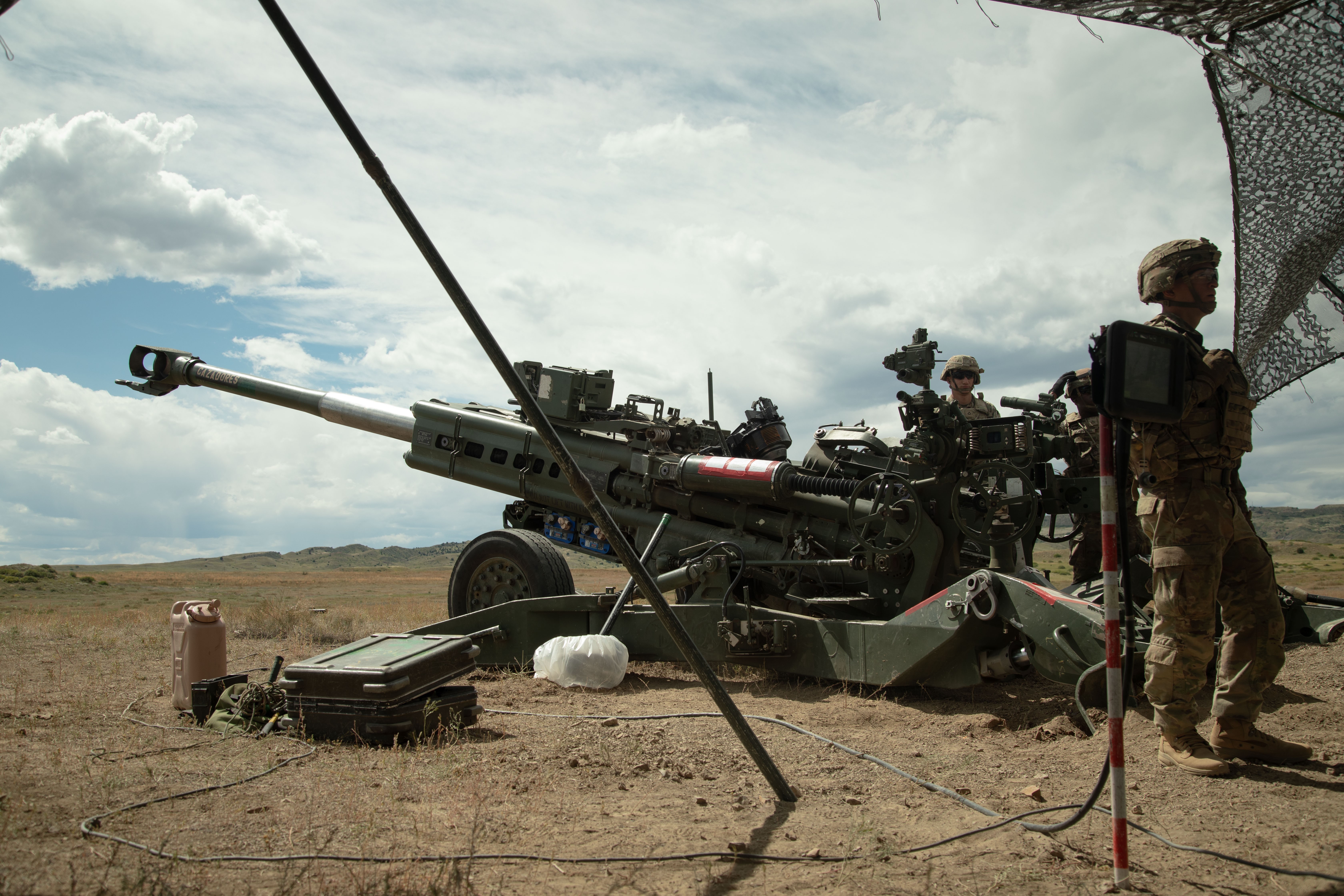
With howitzer blasts powered by new digital fire control software and modern communications equipment, the division’s artillery brigade, DIVARTY, demonstrated how NGC2 enables faster, more synchronized and more effective operations.
“Every second that we can shave off the kill chain reduces risk for a formation. At the same time, it puts pressure against the enemy,” said Col. Charles Brown, 4th ID DIVARTY commander, adding that the common data infrastructure and user-friendly interface provided by NGC2 enabled his Soldiers to more rapidly identify, process and hit their targets.
“It's about lethal formations,” Brown said. “Fundamentally, what’s driving the technology is a highly qualified, skilled Soldier. We’re actually giving them tools that are intuitive, easy to use and they see the benefit right away.”
NGC2 is the Army’s new, fundamentally different approach to reduce stove piped warfighting systems and provide commanders with the integrated data they need to make more, better and faster decisions than the enemy. Aligned with Army transformation efforts, NGC2 leverages rapid progress in commercial technology — from software applications to communications devices — to make tactical formations faster, lighter, more lethal, and more survivable.
The 4th Infantry Division is charged with pioneering an operational NGC2 prototype ecosystem through a series of events known as Ivy Stings and Ivy Mass. Ivy Stings and Ivy Mass are division training exercises that will incrementally add elements of NGC2 software and hardware into different echelons and mission sets, ahead of a culminating event at the Project Convergence Capstone 6 experiment next summer where 4ID will fight with NGC2 instead of legacy command and control systems.
VIEW ORIGINAL
Feedback from 4ID — along with the 25th Infantry Division and the III Corps headquarters, which will also receive elements of NGC2 prototype equipment — will inform Army procurement decisions to scale NGC2 and deliver technology across the force.
“It’s not perfect, but the Soldiers are just rolling up their sleeves and solving problems, and that makes me excited,” said Maj. Gen. Patrick Ellis, commanding general, 4ID. “The Soldiers are seeing the potential, and their feedback as part of the prototyping effort is helping to shape what will go to the rest of the Army. We all here feel it very acutely, the pressure to make sure that we get this right, because we know that our brothers and sisters are going to have to use whatever it is that we help build out here.”
Ivy Sting 1, executed at Fort Carson, from Sept. 14-18, focused on fires missions because fires is the “backbone” that incorporates several other warfighting functions that utilize the NGC2 data layer, including intelligence, airspace management, logistics and movement and maneuver, Ellis said.
The new fire control software for Ivy Sting 1, known as the Artillery Execution Suite, was delivered in the NGC2 ecosystem on a Sunday night, artillery Soldiers trained on it the next day, and they used it live on the training range that same Monday afternoon, officials said.
A side-by-side firing later in the week with the Army’s legacy fires system — the Advanced Field Artillery Tactical Data System, which began fielding in 1995 — and legacy communications equipment showed the potential for NGC2 to streamline operations.
“You don't need a Ph.D. in 1990s computer science to understand this [new] system,” said 1st Lt. Aidan O’Dowd, part of the artillery brigade, noting that although the unit is still early in experimentation, NGC2 “already has a number of noticeable, real and tangible improvements” over legacy systems, from easier troubleshooting to clearer graphics and maps for real-time situational awareness and battlefield coordination.
“It’s going to speed us up, and it’s going to allow us to be safer,” he said.
As NGC2 progresses through prototyping, the Army and the Division will continue to add operational complexity to the scenarios for Ivy Sting and Ivy Mass, including contested electromagnetic spectrum, network jamming, and degraded communications environments, to ensure commanders have options to move data around the battlespace.
While building this communications resiliency, NGC2 will also incorporate new functional software applications developed by the Army, industry, and even Soldiers — such as an app to support air assault landings that was designed by a captain who recently served at the Army Software Factory. The prototype will also increase the use of artificial intelligence and machine learning tools to help organize and process the vast amount of data available on the battlefield to facilitate more informed decisions.
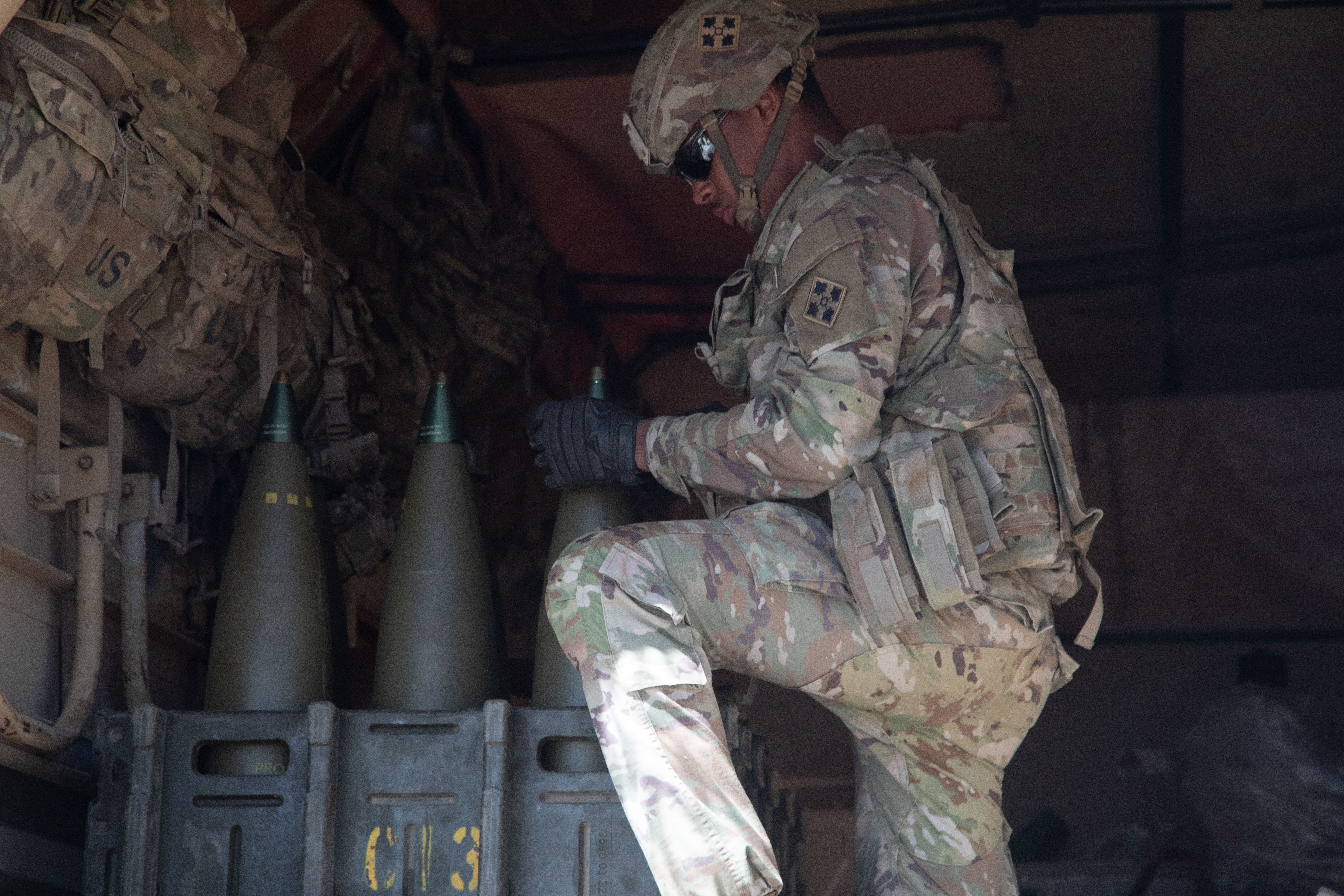
“All these tools are fantastic, but they do not replace the Soldier. What it does do is enable the Soldier to reduce their cognitive load, and increase their tactical ability, so commanders can make rapid decisions,” said Lt. Col. Dana Lafarier, commander of the 2nd Battalion, 77th Field Artillery Regiment, Division Artillery Brigade. “We are here to optimize systems, accelerate the kill chain, and deliver steel on target against the enemy.”
Social Sharing