
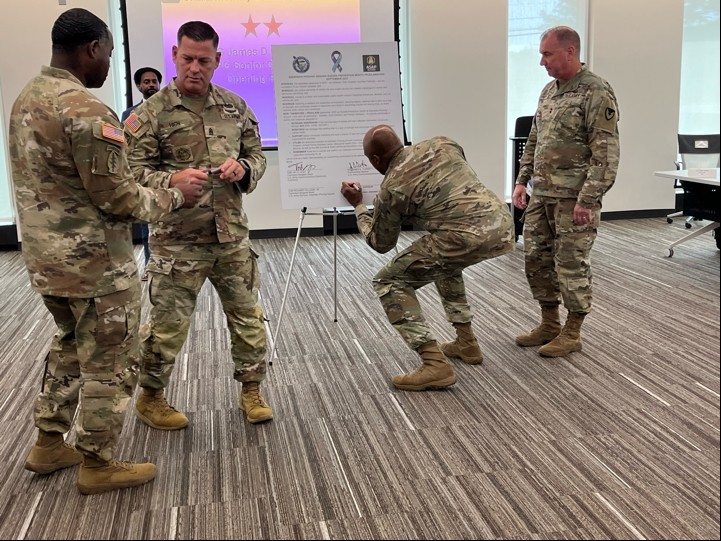
ABERDEEN PROVING GROUND, MD - Every September, the Army joins the nation in observing Suicide Prevention and Awareness Month, reaffirming our commitment to protect our Soldiers, civilians, veterans, and families from the devastating impact of suicide. At APG prevention is not just a campaign — it’s a culture of readiness, resilience, and care.
Sean Green, APG’s Community Ready and Resilient Integrator (CR2I), works closely with leaders, supervisors, and families to strengthen protective factors, reduce risks, and make sure no one faces crisis alone. “Risk factors like job uncertainty, financial challenges, anxiety, and isolation can touch Soldiers, veterans, civilians, and family members alike,” Green explained. “How we cope with adversity — and the support we have around us — makes the difference.”
Resources at Your Fingertips
If you or someone you know is in crisis, dial 988, the National Suicide & Crisis Lifeline. Locally, APG provides a network of support including:
- Kirk U.S. Army Health Clinic Behavioral Health
- APG/Organizational Chaplains
- Army Community Service (ACS): financial education, counseling, resilience skills, grief support, communication training — all free for Soldiers, retirees, civilians, and families
- Employee Assistance Program (EAP): confidential help for civilians, retirees, and families facing personal or workplace challenges
- Suicide Prevention Program (ACE model): Ask, Care, Escort training equips community members to recognize signs and guide others to help
- Armed Forces Wellness Center (AFWC): stress management and biofeedback classes to build healthy coping skills
- VA Programs: S.A.V.E. training, firearm/medication safe-storage campaigns, and veteran-specific crisis resources
- Local Community Care: Klein Family Center, Upper Chesapeake Medical Center, and other Harford County providers
Training Leaders, Empowering Peers
Green stresses that prevention is a community responsibility. APG delivers monthly and annual suicide prevention training using the Army’s Ask, Care, Escort (ACE) model. “Leaders, supervisors, and peers are often the first to notice changes,” he said. “Giving them the skills to recognize warning signs and intervene effectively is powerful.”
One success story stands out: “Years ago, I applied the ACE model with someone under tremendous stress,” Green recalled. “By listening, caring, and escorting them to Army Community Service, they received financial assistance and additional resources. That simple act of connection may have saved a life.”
Breaking Stigma, Building Trust
One of the greatest barriers to seeking care is stigma. Many fear being seen as weak, damaging their careers, or risking a security clearance. “That’s why advocacy, education, and evidence-based messaging are so critical,” Green said. Leadership testimonials, accessible services, and ongoing communication help normalize help-seeking.
Lethal means safety is another key strategy. “Properly storing firearms and medications can create time and distance in a crisis,” Green explained. APG offers classes on safe storage, substance misuse, and gambling prevention as part of holistic readiness training. “It’s about creating barriers without judgment — and providing a safe space for people to learn and prepare.”
Measuring Impact
APG evaluates prevention through surveys, self-assessments, training completions, and crisis referrals. “One death by suicide is one too many,” Green said. “We look at data not just to measure, but to adapt our programs and ensure they’re reaching the people who need them most.”
How You Can Help
Every community member — coworker, family member, or friend — has the power to protect life. Green recommends three practical steps:
- Save the 988 Lifeline number in your phone and share it with someone you care about.
- Ask directly, listen actively, and connect someone to available resources.
- Encourage protective steps like building an emergency plan, using resilience tools, and practicing safe storage.
“In the end, it’s about connection,” Green emphasized. “Checking in, showing care, and knowing where to turn can change — and even save — lives.”
One Action to Take This Month
As part of Suicide Prevention and Awareness Month, APG encourages everyone to take one clear action: learn the ACE model and commit 988 to memory. With those tools, you may be the link that protects someone in crisis.
In Crisis? Dial 988 or call 911.
Together, the APG community can embody readiness, resilience, and care — ensuring no one stands alone.
Social Sharing