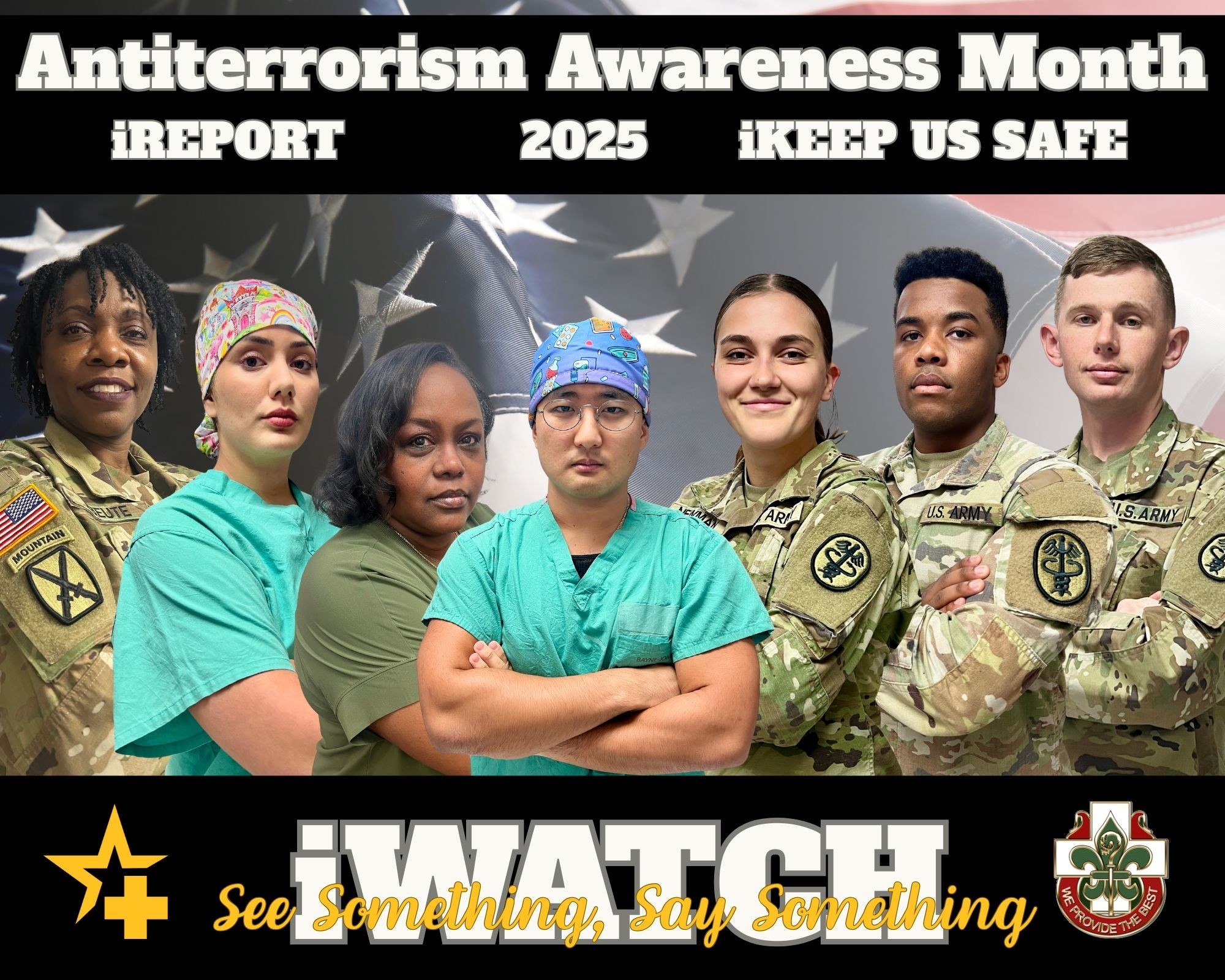
From left: Col. Ebeute, deputy commander for nursing; Pfc. Karen Farias, Operating Room Specialist (MOS 68D); Melynda M. Hill, Security Officer; Pfc. Sean Kim, Operating Room Specialist (MOS 68D); Spc. Raven Newman, Radiology Specialist (MOS 68P); Cpl. Cadeau JeanCharles, Radiology Specialist (MOS 68P); and Staff Sgt. Jack Helton, recruiter. The photo supports BJACH’s Antiterrorism Awareness Month (2025) campaign encouraging the iWATCH Army principle: “See something, say something.” VIEW ORIGINAL
Protecting People at Every Level: BJACH Strengthens Security Awareness
Hospital leaders emphasize reporting, vigilance and readiness during Anti-terrorism Awareness Month.
By Jean Graves
Bayne-Jones Army Community Hospital Public Affairs
FORT POLK, La. — At Bayne-Jones Army Community Hospital, readiness doesn’t just apply to patient care — it applies to protection. As the Army observes Anti-terrorism Awareness Month throughout August, BJACH security officials are reminding staff, Soldiers and beneficiaries that vigilance is a shared responsibility.
“Anti-terrorism awareness is essential to preserving our freedom, safeguarding lives and protecting Army resources,” said Melynda M. Hill, BJACH’s security specialist and antiterrorism officer. “Whether you’re in uniform, scrubs or civilian attire, everyone plays a role in force protection.”
BJACH Commander Col. Patrick W. Miller echoed the importance of a shared security mindset.
“Security is everyone’s responsibility — especially in a healthcare environment where protecting our patients and our people is mission-critical,” Miller said. “Anti-terrorism Awareness Month serves as a powerful reminder that when each of us stays alert, we strengthen the safety of the entire team. I encourage every member of BJACH to take an active role in prevention and to report anything that doesn’t seem right. Your vigilance is vital to our readiness.”
Hill, a Level II-certified antiterrorism and operations security professional, said the key to prevention lies in proactive observation and timely reporting.
“The iWATCH Army program empowers our team to recognize and report suspicious behavior,” she explained. “It’s not about spying on others — it’s about staying alert to what doesn’t belong and taking action to keep our workplace safe.”
The theme of this year’s campaign, “See something, say something,” is more than a slogan. In a hospital setting — where high foot traffic, civilian access and large quantities of sensitive information intersect — it becomes a daily imperative.
According to Hill, BJACH staff members should report anything that seems out of place: unattended bags, unauthorized individuals in restricted areas or unusual behavior that raises concern.
“We rely on the eyes and ears of our staff at every level,” she said. “Whether you’re a nurse, housekeeper, medic or clerk — you have the power to deter threats before they develop.”
BJACH leaders are reinforcing the importance of layered defense strategies, including security awareness training, access control measures and safeguarding protected health information.
Protecting patient privacy and supporting readiness
LaTonya Jackson, BJACH’s HIPAA compliance officer, said maintaining data security also contributes to the hospital’s broader force protection mission.
“When sensitive information falls into the wrong hands, it can pose a risk to both individuals and national security,” Jackson said. “Protecting patient data through proper access, handling, and reporting protocols is not just a regulatory requirement — it’s a readiness issue.”
Jackson emphasized that staff should remain vigilant for insider threats, understand secure workstation practices, and avoid discussing patient information in public areas. Regular training, audits and a culture of accountability help reinforce compliance and promote safety throughout the military treatment facility.
To report suspicious activity, staff and beneficiaries can contact the BJACH Security Office or the Military Police desk at (337) 531-2677. All reports can be made anonymously, and prompt reporting is encouraged.
“This is not just a law enforcement issue — it’s a whole-team effort,” Hill said. “Every person in this facility contributes to our security posture.”
As BJACH continues to support military readiness, the message this August is clear: awareness saves lives — and protecting our hospital starts with each of us.
Social Sharing