

ABERDEN PROVING GROUND, Md. –The air gets chilly, the wind picks up, and the days get shorter. The meaningful holidays of Veteran’s Day and Thanksgiving arrive, shortly to be followed by festivities all the way through the New Year. While there are multiple ways to celebrate those days, there is one activity that can transcend the ceremonies and meals. It is late fall, and the nearly universal wish of the American public is to watch some football. Today, television allows the sports-loving public to watch professional athletes from the comfort of their homes.
But the story of football 100 years ago was a little different.
The year was 1922. The location, Camp Vail, New Jersey, destined to become Fort Monmouth in just three years. But in 1922, the future of the Camp was undetermined. Much like Camp Vail, professional football was in its infancy. Local teams that had grown out of athletic clubs were organizing under the National Football League, and standards such as consistent rules and the use of paid, professional players were gaining traction. In 1922, the Canton Bulldogs were crowned champions over the other 17 professional teams.
The public’s need for football games was not met by the nascent professional football associations and the college football teams, however, and local amateur teams were still popular. In 1922, two teams – the Camp Vail All-Stars and the Long Branch Knights of Columbus met up on 26 November, ahead of the Thanksgiving Holiday, which fell on 30 November that year. The All-Stars came out ahead, 26-13, in front of the large afternoon crowd.
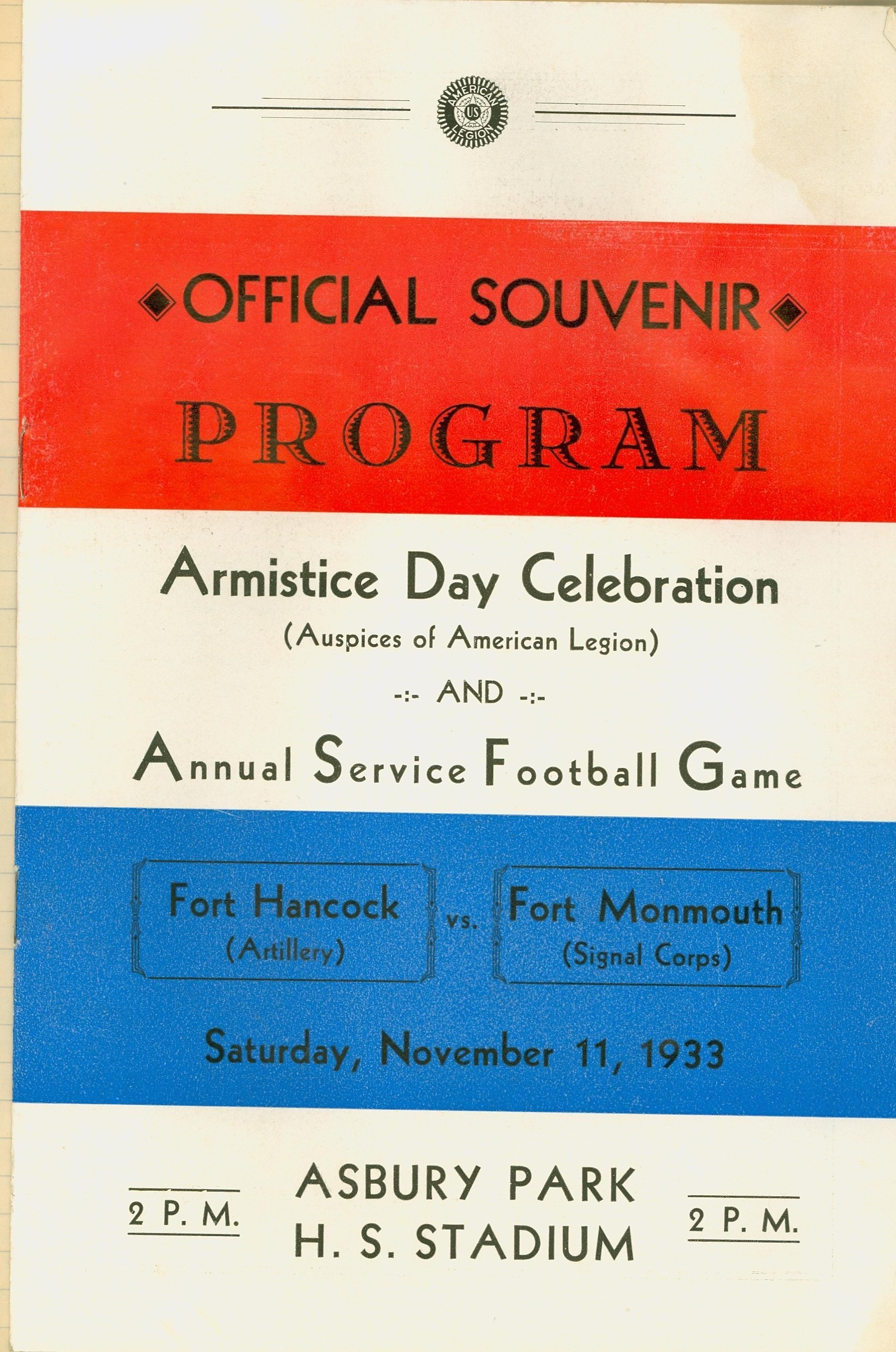
Eleven years later, the Fort Monmouth Signaleers, proudly displaying their team colors of orange and white in front of a crowd estimated to number 3,000-4,000, met the Fort Hancock team at the Asbury Park High School field. The two had been regular rivals since 1921, with Camp Vail/Fort Monmouth coming out ahead in each of the nine games played prior to the match-up. The game was part of an Armistice Day (now Veteran’s Day) program, sponsored by the Monmouth County American Legion. Other events scheduled for that day included a parade, a ceremony during half-time, and a dinner and ball later in the evening.
On that November 11, 1933, if you had paid your 40 cents for a ticket (discounted tickets were provided to officers, and enlisted men who marched in the parade were provided complimentary tickets), you would have witnessed a game that favored the heavier Fort Monmouth team from the start. In the end, the Signaleers beat the Artillerymen 27-0.
The Signaleers would end their winning season that year against Governor’s Island, during a 10 a.m. game on Thanksgiving. The results of that game were reported the New York Times. Since football was designated a “letter” sport under the Fort Monmouth Athletic Regulations, twenty-two members of the football squad were awarded white v-neck sweaters with a six-inch orange chenille letter “M” on the front, in recognition of their athletic ability, sportsmanship, and loyalty.
Fort Monmouth would continue to field a team through the late 1950s. As television and professional football increased in popularity, the public’s willingness to stand on the sidelines for local amateur teams diminished. But thanks to the efforts of early collectors of Fort Monmouth history who lovingly chronicled the teams, we can remember football the way it used to be.
Social Sharing