354th Mobile Public Affairs Detachment
Readiness has always been a focus of the Army Reserve and National Guard and was a point of emphasis for the 347th Regional Support Group (RSG) during their work in the 78th Training Division’s Combat Support Training Exercise (CSTX) at Fort McCoy in August 2021.
Soldiers with the 347th RSG of the Minnesota National Guard conducted a variety of training focused on realistic near-peer conflict and trained in simulated chemical attacks, perimeter breaches, and guard duty.
“We typically work in a management capacity. The majority of our team does not participate in perimeter security or base maintenance. We are facility managers in support of headquarters,” said Capt. Eric Jungels, public affairs officer with the 347th RSG.
Jungels said their primary responsibility is to manage support operations for other units on the ground. Soldiers experienced challenging field conditions present while at Fort McCoy. Some of the CSTX conditions included sleeping in single-person tents, bathing in mobile showers, utilizing portable sanitation units, and field feeding.
“The nature of our duties place us in a more comfortable situation than the Soldiers in the field. For example, during this CSTX, our team experiences the physical discomforts a Soldier stationed at an entry control point is subjected to,” Jungels said.
Another value Soldiers received from training at Fort McCoy was using advanced technology integrated with realistic training.
“When I joined the Army 20 years ago, advanced technology was a thought and an idea, and now we are actually using it,” Lt. Col. David Johansson, brigade training officer with the 347th RSG, said.
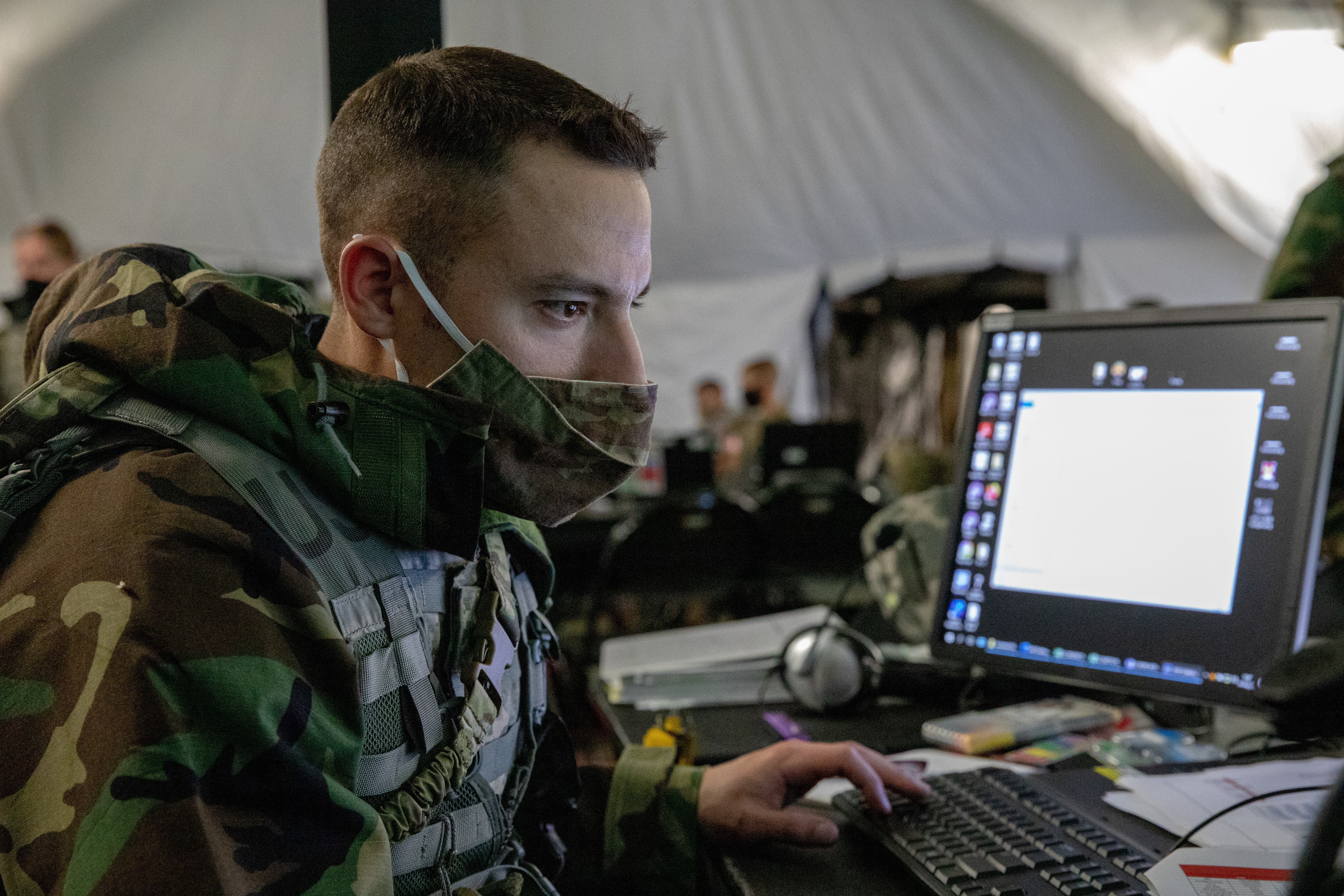
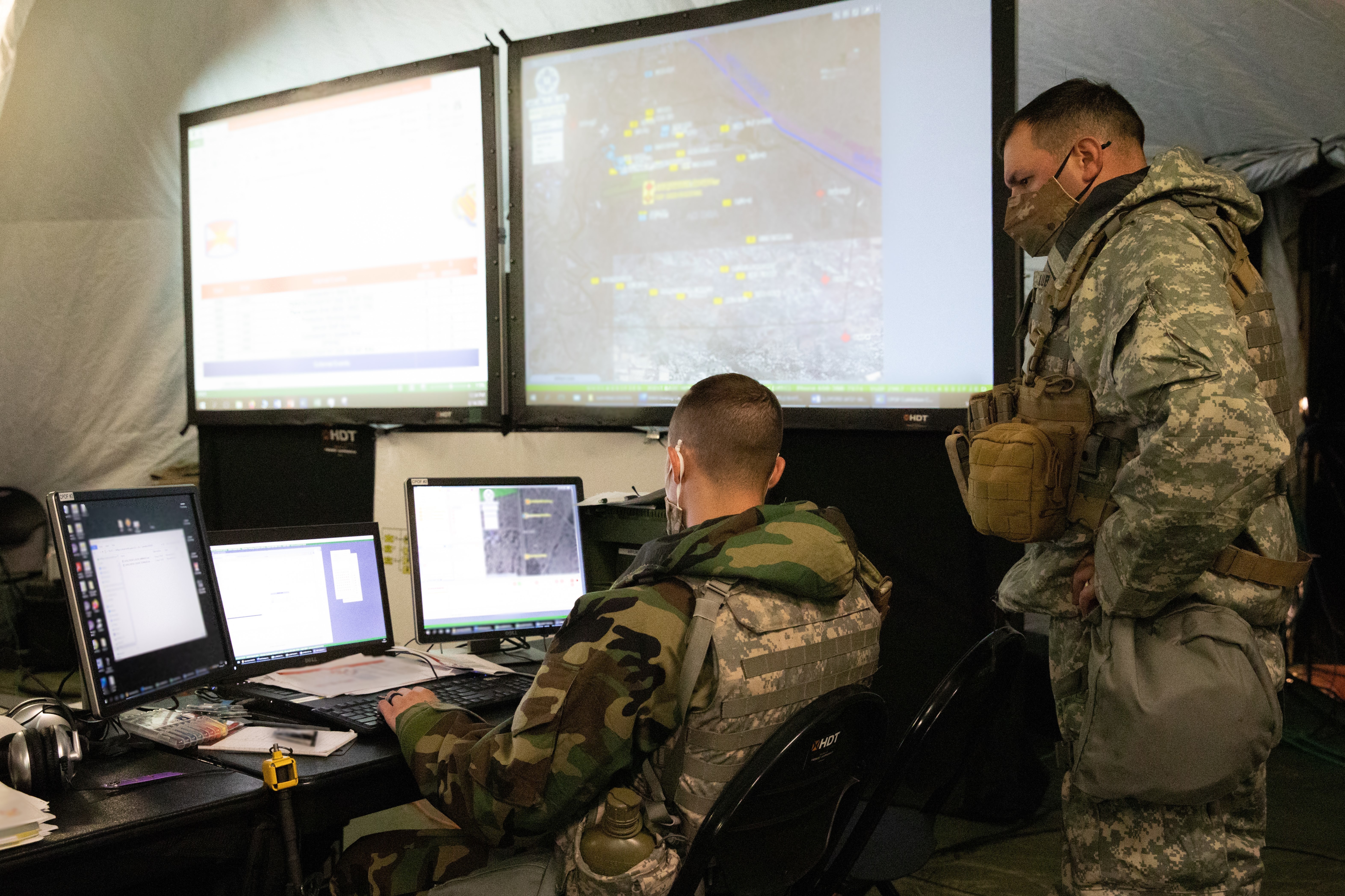
They used the Command Post of the Future (CPOF), a multiscreen computer system that enables warfighters to visualize the battlefield and plan the mission through a dynamic view of critical resources and events. This technology incorporates satellite communication, high definition monitors, encrypted radio communication and drone surveillance.
Implementing this technology provides a tactical advantage over forces who rely on antiquated technology.
With the addition of realistic near-peer training and advanced technology, the Army Reserve and National Guard are better prepared to successfully engage adversaries in austere environments, Johansson said.
“Our technical components tie together satellites and imagery and allows us to share products,” Johansson said.
“It has increased the speed of information and allowed us to execute the command’s vision at a much faster pace.”
Social Sharing