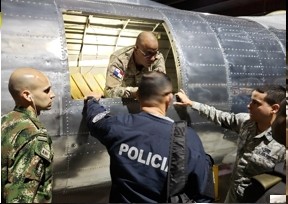
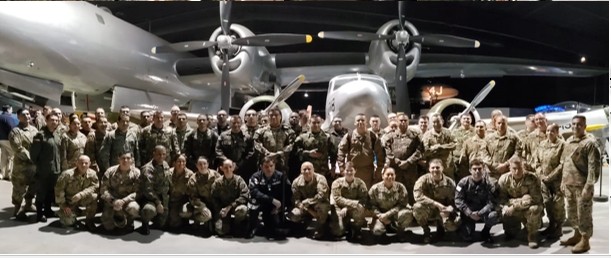
ROBINS AIR FORCE BASE, Ga. -- Sixty-seven students attending the Command and General Staff Officer Course (CGSOC) at the Western Hemisphere Institute for Security Cooperation (WHINSEC) visited the Museum of Aviation at Robins Air Force Base, located near Warner Robins, Georgia, Feb. 20.
They were studying the allied combined bombing strategy during World War II using the museum exhibits and displays as their classroom.
Mike Rowland, the museum curator, and Dr. Paul Larson, a staff historian with Air Force Reserve Command, guided students through the museum, describing many types of aircraft used during WWII and their important roles in developing airpower doctrine.
Students focused on three iconic aircraft: a B-17 Flying Fortress, a B-29 Superfortress, and a P-51 Mustang, which all played vital roles during the strategic bombing of Germany and Japan, enabling Allied success.
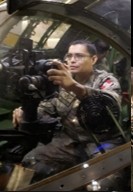
Given the opportunity to go inside the fuselage of the B-29, students sat at the bombardier's station and studied the Norden bombsight, which was a technological innovation that enabled more accurate daylight bombing.
The field grade officers discussed the challenges involved delivering airpower during combat operations. They gained a greater appreciation for aviation and the value of airpower. They considered the influence of culture, geopolitics, economics, technology and combat experiences from World War II and how it helped shape the development of airpower in close-air support.
The four teams making up the CGSOC Class gathered at the end of the visit and delivered presentations on their observations. This museum provided a fitting setting for the learning objectives of the class. It provided visual examples of how competing ideas within airpower challenged the measures used to define success during a strategic campaign such as WWII. Historic ideas are analogous and pertinent in evaluating progress in today's operational environment.
The Museum of Aviation is the second largest museum operated by the United States Air Force, and the fourth most visited museum in the Department of Defense. Four exhibit buildings contain many of the nearly 90 aircraft at the museum. They preserves the heritage and tradition in the development of airpower for the United States. The full-size bombers on display at the museum easily transported students to an era when the effects of strategic bombing were instrumental to Allied success. The styles and size of the different aircraft helped chart innovations in air power that led to the aircraft currently employed in the global operating environment.
CGSOC is the Army's mid-level leader course, taught in English at Fort Leavenworth, Kansas, and in Spanish at WHINSEC. The class began in July 2018 and will graduate this coming May. Students participating in this class are field grade officers from the active duty U.S. Army, the U.S. Army Reserve, U.S. Army National Guard, U.S. Air Force, U.S. Marine Corps and a Foreign Service Officer from the Department of State. All branches of the Military and Law Enforcement officers make up the international students from the countries of Colombia, Costa Rica, Dominican Republic, El Salvador, Guatemala, Mexico, Peru, Honduras and Panama.
Social Sharing