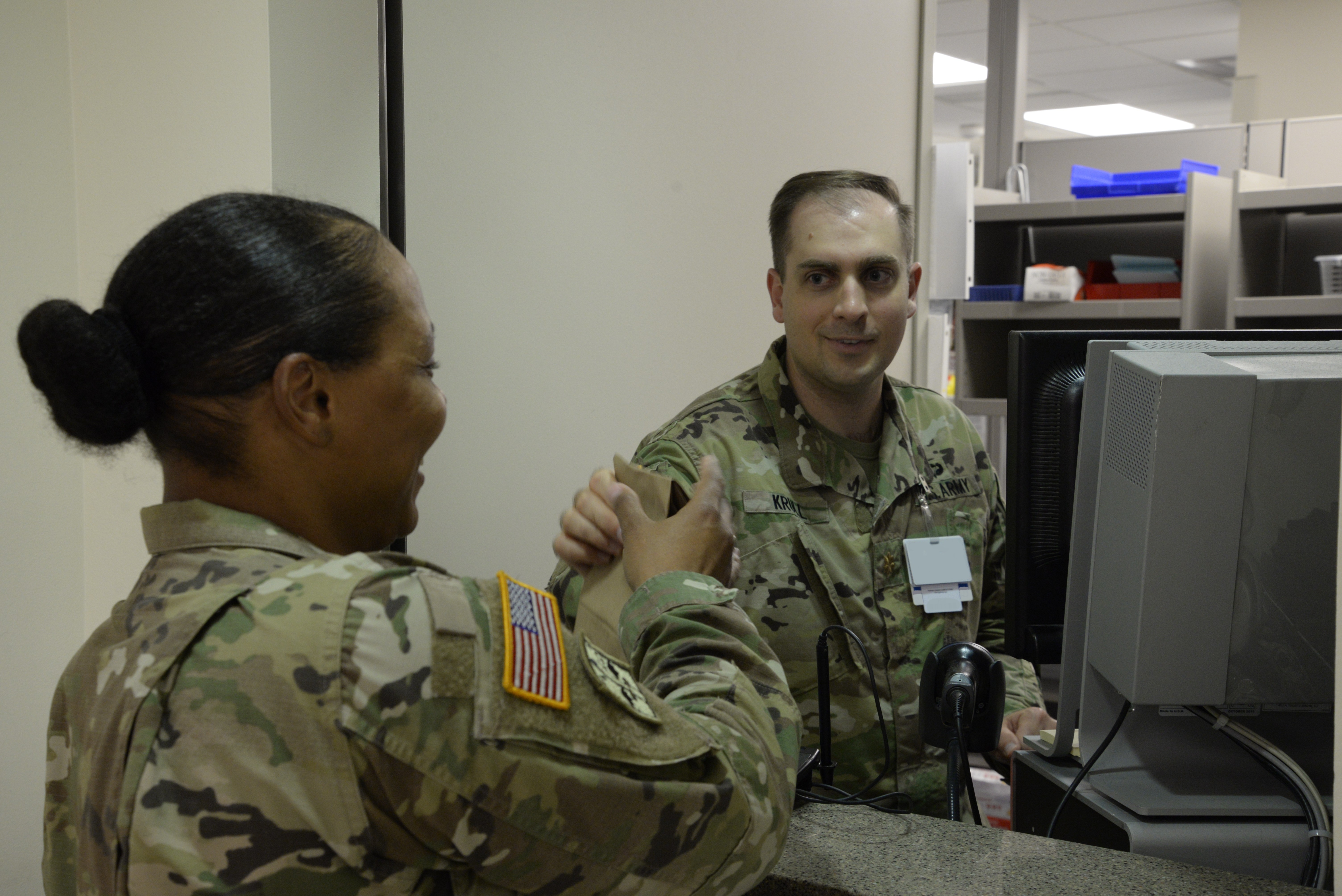
Fort Leonard Wood, Mo. -- Pharmacists have an expanded role in healthcare delivery today by providing a wide range of patient-oriented services to maximize medication effectiveness.
After six years of college devoted to learning medicine and how medicine affects the body, pharmacists truly are medication experts who practice clinical services with emphasis on diabetes, hypertension, cholesterol, anticoagulation, pain management, and asthma.
Pharmacists practice patient therapy through the use of pharmaceutical drugs, as distinguished from therapy using surgery, radiation, or other modes. This "pharmacotherapy" or "medical" therapy practiced by pharmacists consists of consultation with patients as well as patients' providers to ensure patients receive the best results from their medications.
As a key health care professional in a patients' care team, the pharmacist also discusses possible side effects, such as what foods, drinks or activities should be avoided while on a medication, what you should do if you miss a dose, and a wide range of other helpful information.
To make the most of their medical care, people should choose their pharmacist as carefully as they choose their physician.
A patient should choose a pharmacist that they feel at ease to talk with concerning their health and medications, who takes enough time with them to explain things in a way they understand.
Pharmacists who know their patients and have a history with them will be aware of possible harmful drug interactions or allergies to certain drugs.
Medicines can do serious harm if taken inappropriately. Pharmacists know that the most expensive medication is the one that doesn't work or causes a patient harm.
Pharmacists also practice in a wide range of settings -- community pharmacies, hospitals, long-term care facilities, the pharmaceutical industry, mail service, managed care, academia, and government (Department of Defense, Department of Veterans Affairs, Indian Health Service, and Public Health Service).
What used to be a profession focused solely on preparing and dispensing medications to patients has evolved to provide patients with extensive training that makes the pharmacist the most knowledgeable health care professional when it comes to medicine and their use.
The General Leonard Wood Army Community Hospital (GLWACH) Pharmacy Team is comprised of over 50 civilian and military pharmacists and technicians. Last year, GLWACH Pharmacies provided clinical pharmacy services to over 6,700 patients, and filled over 600,000 outpatient prescriptions, and over 500,000 inpatient medication orders.
Our goal is to help our patients achieve high quality of life while providing the best pharmacy service possible. We look forward to continuing our partnership with you, for your good health.
In today's world, medicines have provided patients with expanding opportunities for treating disease and improving quality of life for millions of Americans.
(Editor's note: Stephanie Gilbert is the assistant chief of Pharmacy at General Leonard Wood Army Community Hospital)
Social Sharing