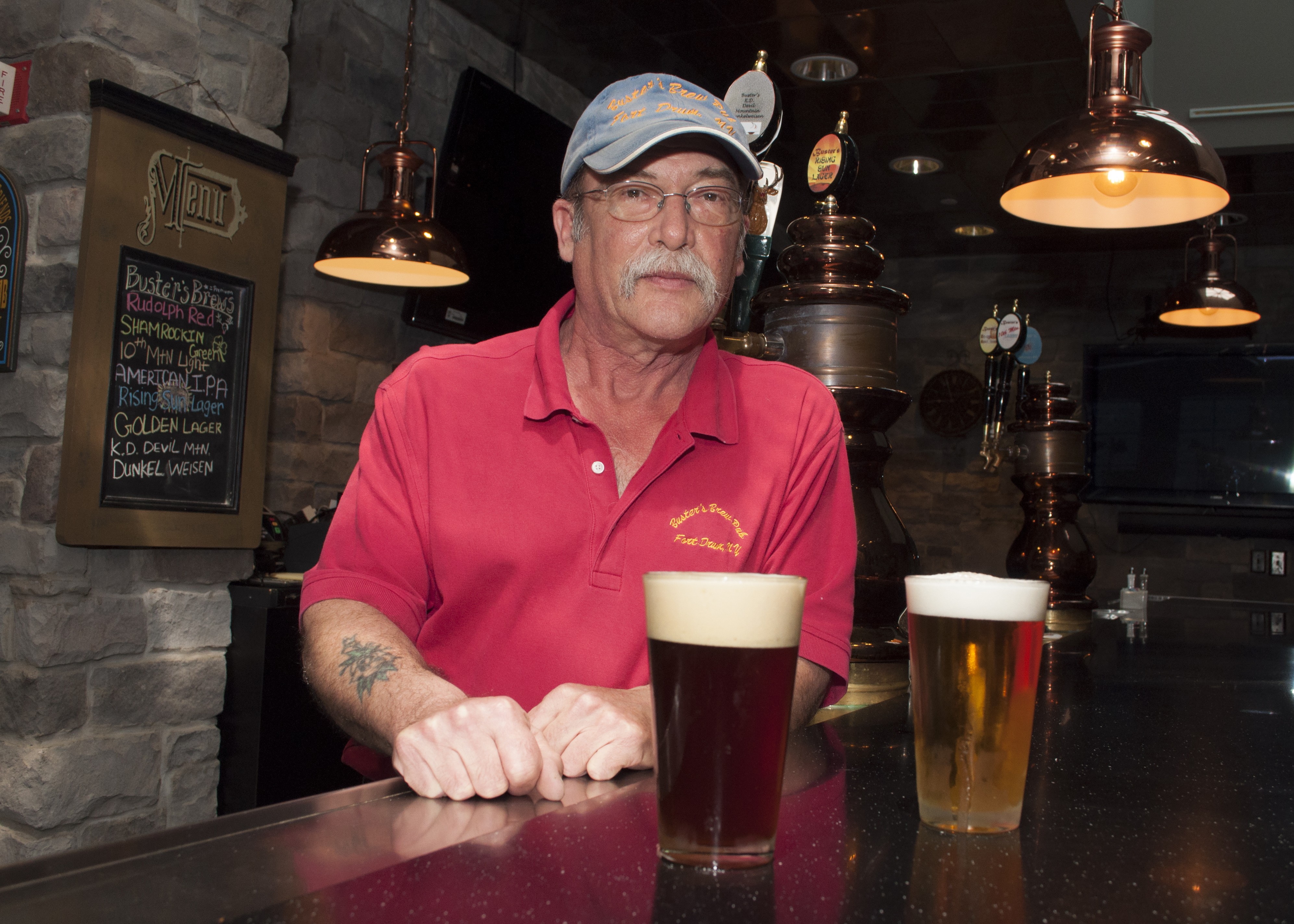
FORT DRUM, N.Y. -- When Jim Arquiett first began brewing batches of his own beer in five-gallon buckets in the late 1970s, he had no idea that this hobby would one day become his livelihood at Fort Drum. All he knew was that he enjoyed experimenting with different methods of brewing.
A native of Felts Mills, Arquiett enlisted in the Navy in June 1975 -- just after graduating high school and two days after his 18th birthday. The economy was poor in the local area at that time, and he felt that military service would benefit him in finding work when he returned home.
"Joining the military was a good way to make a living while gaining a little education and some work experience," he said. "I was a hall technician, so I learned a lot about plumbing, welding and carpentry work."
It was during his time in California that Arquiett first tried his hand at beer-making.
"I was in the Navy for four years on the USS Mount Hood, stationed out of Concord, Calif.," he said. "A friend of mine wanted to get into home brewing. We got a bucket and some extract and went for it."
At the time, home brewing was not common, and Arquiett and his friends gathered what little information they could and began experimenting with methods to make different types of beer. He chuckled as he recalled some of their earliest attempts.
"We brewed quite a few batches," he said. "Some were pretty good and some were just awful."
Arquiett returned to the North Country in 1979 after completing his four-year tour of duty. After working a variety of utilities jobs, he was hired on Fort Drum in 1994.
"I started working in the services division for (the Directorate of) Family and Morale, Welfare and Recreation," he said. "At first it was seasonal work, and then later I got a permanent position."
Working in building maintenance, Arquiett was friendly with the Commons staff and often spoke of his hobby of making beer.
"In conversation, I had mentioned that I did my own home brewing and would like to come over (to the Commons) and work," he said.
When the brewmaster position became vacant in 2004, Cindy Romig, director of FMWR's Community Operations Division, remembered Arquiett's interest and asked if he would take the position.
"Of course I said yes," he said. "For me, it was perfect. I could do something that I loved and earn a living doing it."
The brewing process consists of several steps that must be carefully timed and executed with precision and skill that Arquiett said he has learned over the years.
"There are a lot of steps in the process, so having brewed beer before makes it much easier," he said.
While there are many types of beers, the process involves the use of three main ingredients -- malt, hops and yeast. The variation in flavor and beer category is due to differences in the amount and types of malt, hops and yeast used.
Beer can also be made in different manners -- all-grain brewing, which requires more time, space and equipment -- or extract brewing. Due to the efficiency and the reduced length of time necessary to brew using an extract, this is the method that Arquiett uses.
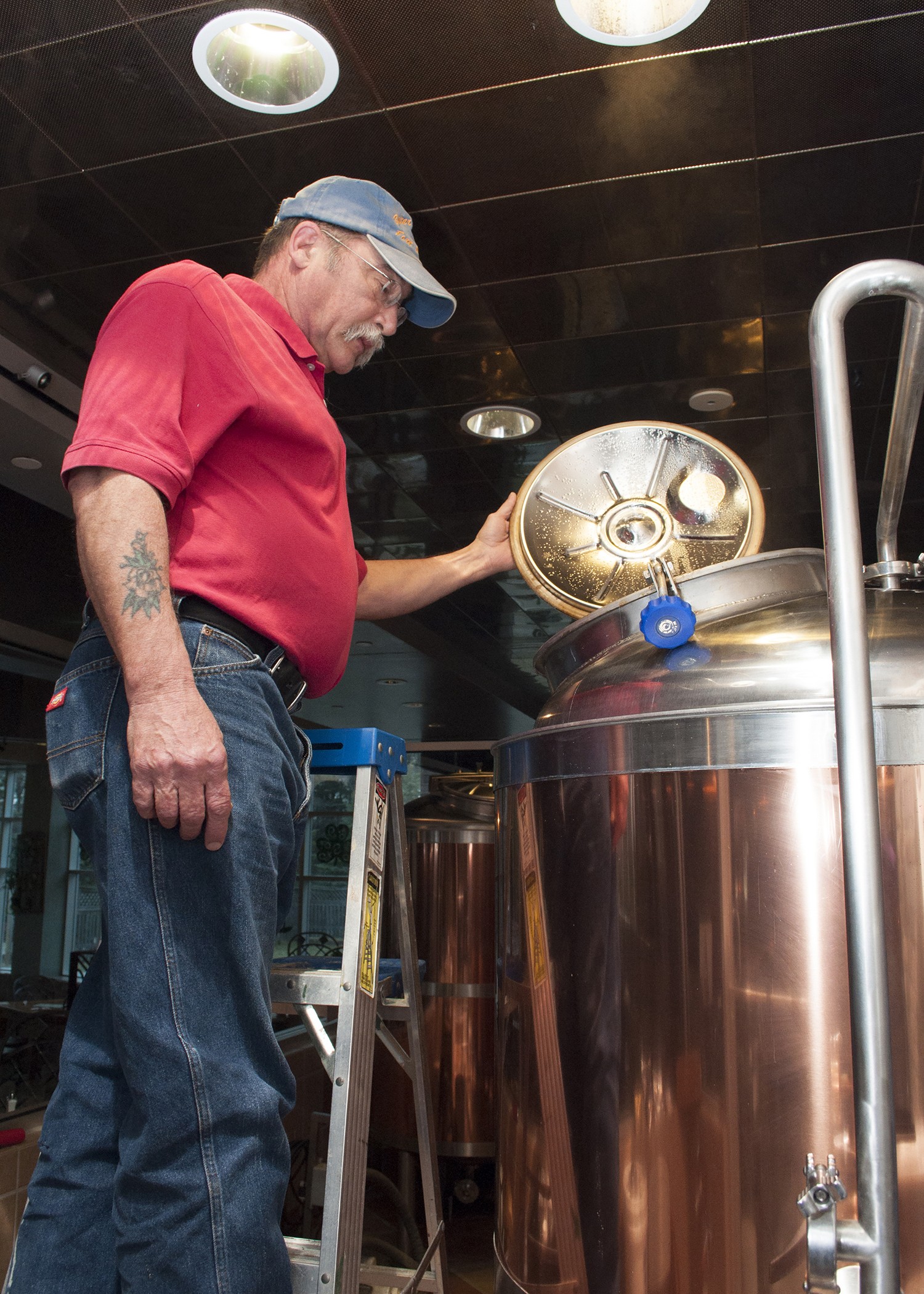
"I add the premade mix and water to our brew kettle," he said. "I wait for the mixture to come to a boil and then it is ready for the first addition of hops."
Hops are responsible for determining the bitterness, flavor and aroma of a beer. Different types of beers -- from ales to stouts to lagers to pilsners -- get their distinct taste profile from the types and amounts of hops used in the brewing process. Arquiett uses hop pellets, which dissolve easily, making the process more efficient.
"Today I'm making a golden lager," Arquiett said. "It's not too 'hoppy' and has a little bit of a fruity flavor to it. It's a good beer for drinkers who don't want a really light beer, but don't want something too dark or strong."
Although the Commons is known for its two flagship beers -- the 10th Mountain Division Light and the golden lager -- Arquiett brews several varieties of beers. He said he especially enjoys making seasonal brews for consumption at the Commons and at special installation events.
"For Oktoberfest, I like to make some kind of German beer," he said. "I like to keep it authentic."
After the hops have been added to the brew kettle -- which holds approximately 160 gallons -- the mixture is brewed for about an hour to allow the ingredients to circulate and mix together. During this time, residue settles to a cone-shaped collector at the bottom of the tank and the liquid -- known as wort -- is sent through a plate chiller that cools the mixture to approximately 60 degrees.
This process is essential, Arquiett said, because if the temperature is too cool or too warm, the yeast will not be properly activated.
As the beer passes through the plate chiller, it is pumped into a second tank -- the fermenter. There the yeast eats the sugars and causes fermentation. For the golden lager, this process takes approximately four weeks.
"After it's done fermenting, I start bringing it down to 32 degrees and I let it settle," Arquiett said.
Once again, this allows residue to settle into the bottom of the tank, where it remains when the beer is pumped into storage tanks in the back of the kitchen.
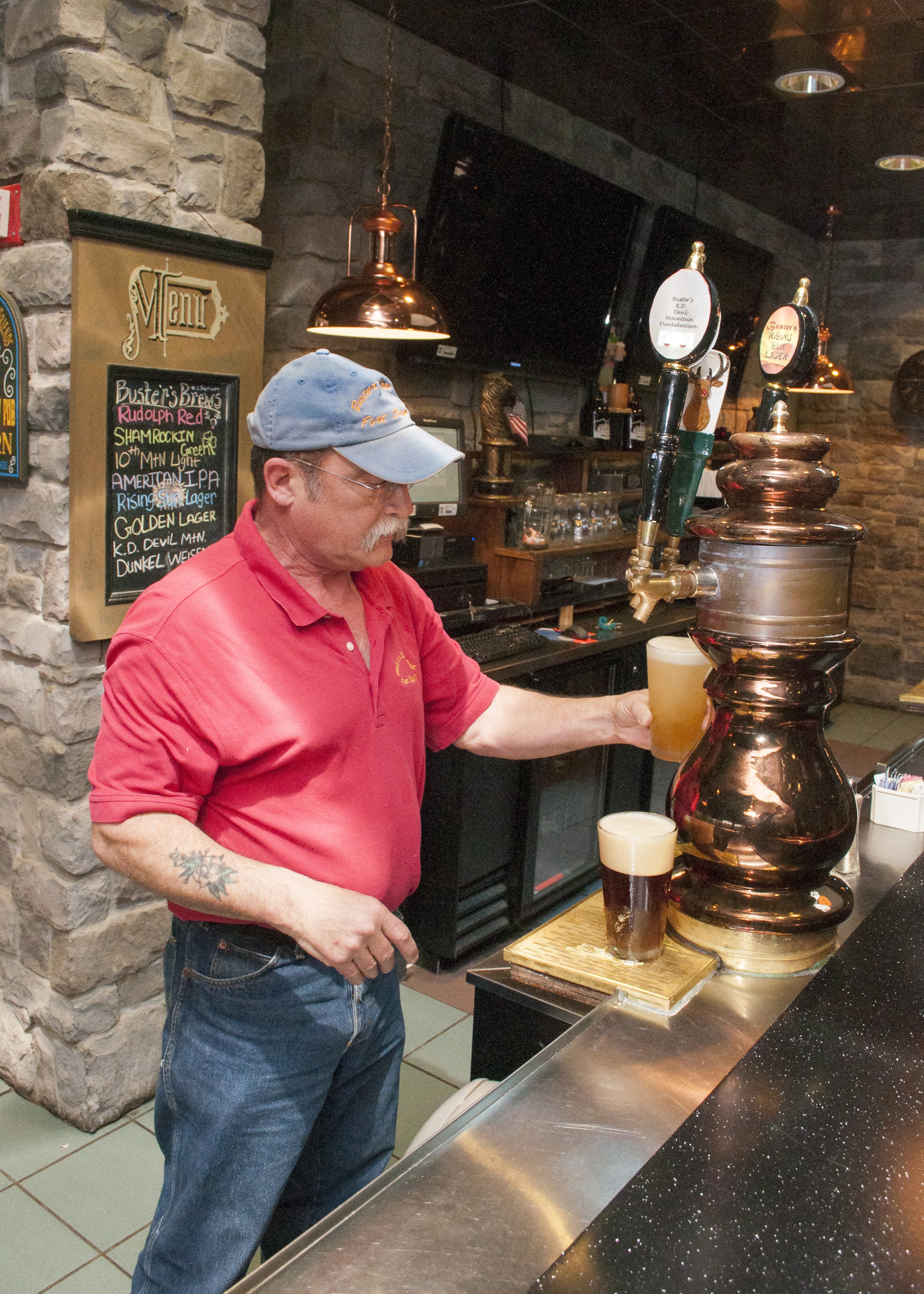
Inside these storage tanks -- which hold approximately 120 gallons -- the beer is filtered and then forced-carbonated, a process that forces nitrogen and carbon dioxide gases into the beer, which readily absorbs the millions of tiny bubbles. It is now ready to enjoy, and the beer moves through tubing connected directly to the taps at the front of the bar.
In addition to brewing beer for consumption at the Commons, Arquiett brews and kegs beer for Fort Drum celebrations including Mountainfest and Riverfest.
"Mountainfest is the biggest event we brew for," he said. "I'll be starting to brew for Mountainfest by the end of the month."
Arquiett said that, whether at a large event or inside the Commons, he enjoys watching patrons sample his beers. He likes to know that he is providing an enjoyable way for Soldiers to relax and unwind after a long day of training.
"If I'm in here and see a bunch of guys come in and have a few beers, it just feels good," he said. "I like knowing that I'm making something that they enjoy."
Social Sharing