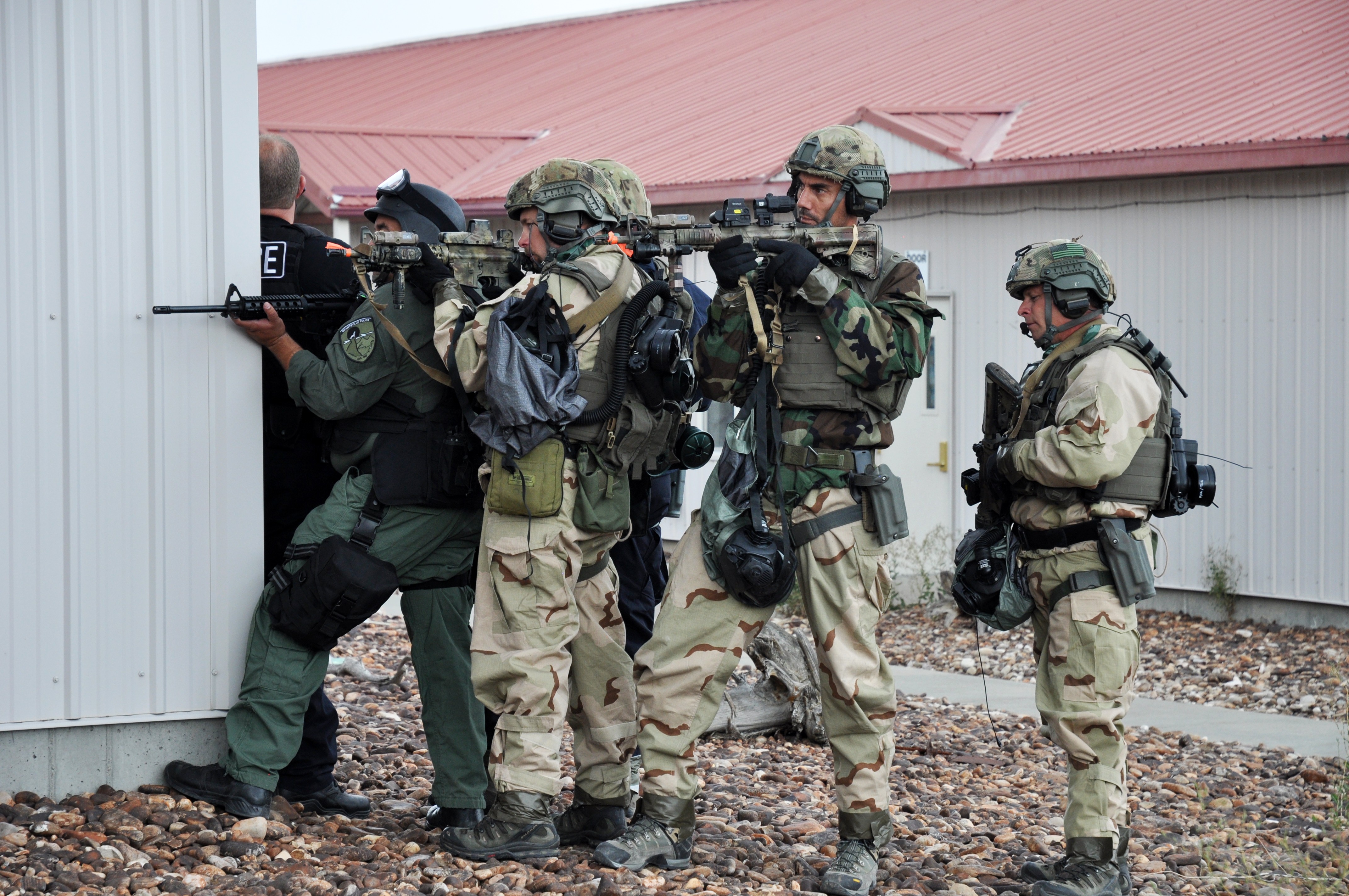
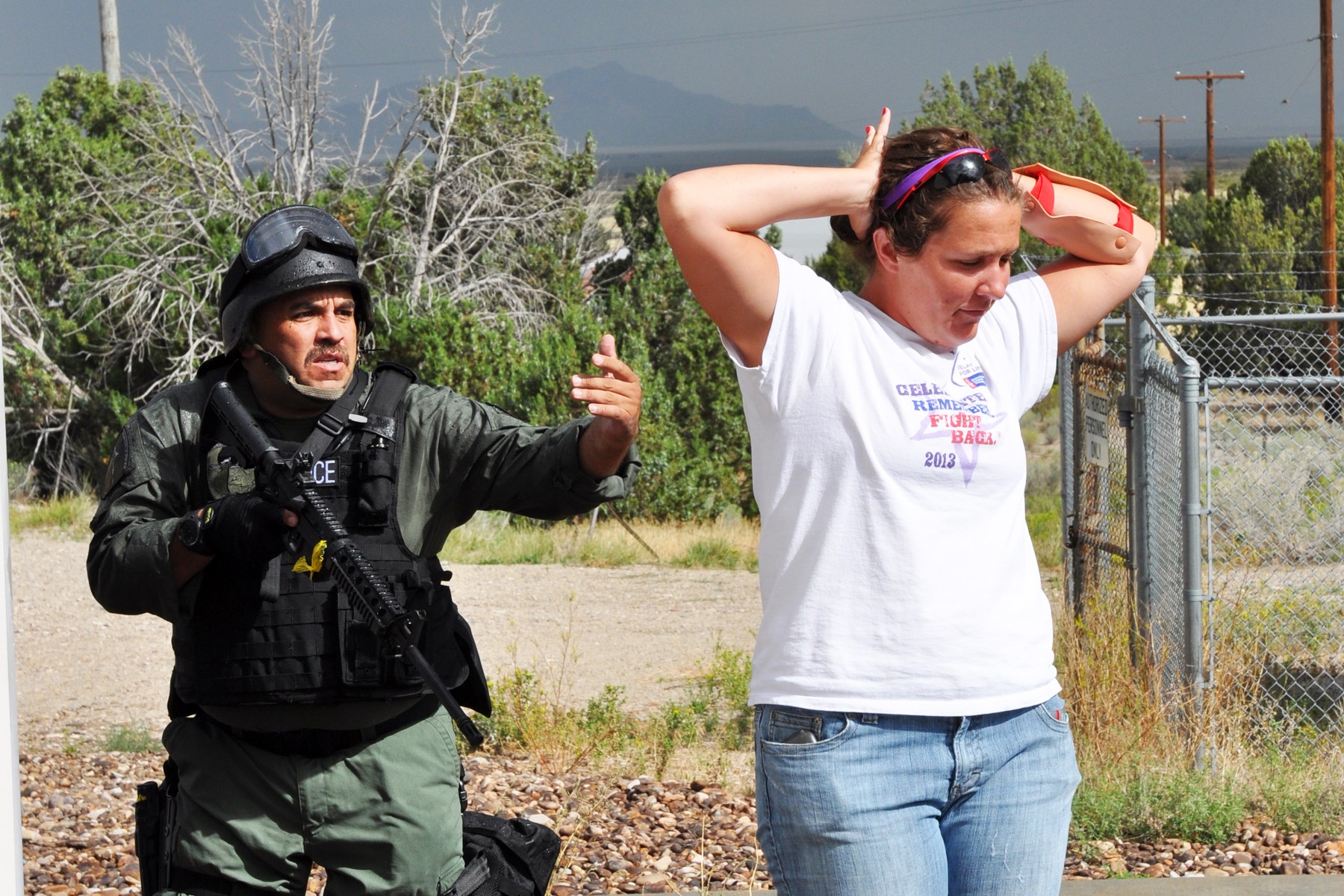
TOOELE ARMY DEPOT, Utah --The Tooele Army Depot participated in a joint antiterrorism training exercise with Tooele and Grantsville city police departments, Salt Lake City Unified FBI squad, and Mountain West Medical, here, August 12.
The annual training exercise is required for all U.S. Army installations to provide realistic hands-on training to force protection agencies and provides awareness to installation employees for real-life terrorism situations.
The exercise allows the depot to test the local mutual aid agreements, and other relationships, with other public safety agencies in the local community that provide specialized expertise to the depot.
During the exercise, at approximately 8:30 a.m., TEAD headquarters received a call from a perpetrator who had gained access onto the depot and was located in one of the depot's administrative facilities.
The perpetrator made his demands to the depot's Deputy to the Commander, Gary Carney. TEAD security forces and fire and medical services activated their protocols. The recommendation was then made to activate the depot's alternate Emergency Operations Center.
The EOC notified the local Tooele and Grantsville cities police departments, and Salt Lake City Unified FBI squad. All special reaction teams quickly responded to the site at the depot with their hostage negotiators, qualified personnel, robots, and fully equipped command post vehicles.
The exercise scenario took place at the depot's ammunition operations area, taking control of one of the administrative facilities which houses numerous employees. The entire area was quickly secured and the scene cleared of all bystanders.
In the scenario, the negotiators from the FBI talked the head perpetrator into releasing one of the wounded hostages. As the event progressed, three ammunition employees were killed, and seven hostages were taken and locked down into one room.
The perpetrator's demands were to "impress upon you and the world that we will no longer tolerate your imperialistic, greedy, oppressive business of occupying, colonizing and plundering the wealth of the world, and supporting a racist and brutal occupation in many countries."
The depot's command office was told that an employee would be killed, one every hour, until demands were met. In addition, the perpetrator threatened to release sarin gas, strapped as an agent bomb, to one of the hostages.
The simulated sarin gas bomb, strapped to an ammunition supervisor, became the focal point with emergency response teams. Sarin is a man-made toxin, used in terrorist attacks in Japan in 1994 and 1995.
Following release of sarin into the air, people can be exposed through skin or eye contact. They also can be exposed by breathing air that contains sarin. The symptoms of sarin poisoning appear within a few minutes after exposure to the liquid form.
All nerve agents such as sarin, which is the most volatile, causes toxic effects to exposed people which no longer allows them to breathe.
At this point of the scenario, there was extreme panic and people ran from the building through any door they could find.
Demands became more stringent, time frames of demand, became shorter, tempers were raging, and now the perpetrator made requests in Spanish. Negotiators from the Salt Lake City, Unified FBI, quickly responded with a Spanish-speaking hostage negotiator. Upon entry of the surrounded Army building, two more wounded hostages were negotiated for release.
Above all, an exercise of this magnitude is a necessary step in testing and refining the communication and other skills needed to respond to an emergency. It also enables the public safety agencies in the community to work together and build relationships that will allow them to respond to any future emergencies.
"This exercise proved that TEAD has the ability to respond to, and succeed in, overcoming a terrorism situation with the support of local community and external federal agencies," stated Col. Roger McCreery, depot commander.
While most employees at the depot will never have to do more than listen to a police officer or security guard directing them to safety during such a circumstance, the TEAD Emergency Operations Center personnel have a much more intense role, McCreery said.
Whether during a training exercise or an actual event, all organizations of the depot will be affected, whether it is the engineers, contracting, public affairs and other disciplines of the facilities team.
The Tooele Army Depot was established in 1942 as the Tooele Ordnance Depot, and for 72 years it has committed itself to readiness and rapid munitions response for America's allies and warfighters. TEAD provides storage, maintenance and logistics capability under the Army's Joint Munitions Command. The depot specializes in providing services in ammunition equipment prototype design, development, manufacturing and fielding. The depot also develops innovative Ammunition Peculiar Equipment used for demilitarization, as well as completing renovation, modification, modernization and maintenance of conventional-type munitions.
Social Sharing