FORT GORDON, Ga. (June 20, 2014) - It's common knowledge that Army veterinary services involve animals. A lesser known undertaking is its role in the food industry.
Taking care of animals is only half of Fort Gordon Veterinary Services' main responsibilities. The other is taking care of people -- by way of food safety.
Capt. Katharina Horton, officer in charge of veterinary services, is part of a team that inspects food on and off the installation to ensure safe food consumption. They are behind the reason Fort Gordon rarely hears about local product recalls or foodborne illness outbreaks.
"When it comes to food, we have a fairly safe food supply in this country, but outbreaks happen all the time," Horton said. "One of the reasons you don't hear about them in the military communities is because we have a secondary safety net."
Horton has five highly trained Soldiers who conduct most of the inspections on post. From vendors to restaurants to the commissary, every facility that serves, sells or processes food is inspected and must come from an approved source. They follow the Food and Drug Administration Food Code, an extensive document that provides a "scientifically sound technical and legal basis for regulating the retail and food service segment of the industry."
While Horton credits local health departments with doing quality work, she said they don't have the luxury of time or resources that her team has when inspecting, which can significantly impact a food inspection. For example, if a health inspector enters a restaurant at a time when food is not being handled, the restaurant could receive a passing inspection; whereas if they go during food production, the results could differ drastically. Unlike local health departments, Fort Gordon takes it a step further using a food defense piece.
"We have that secondary safety net on top of the primary safety net that already exists in this country," Horton said.
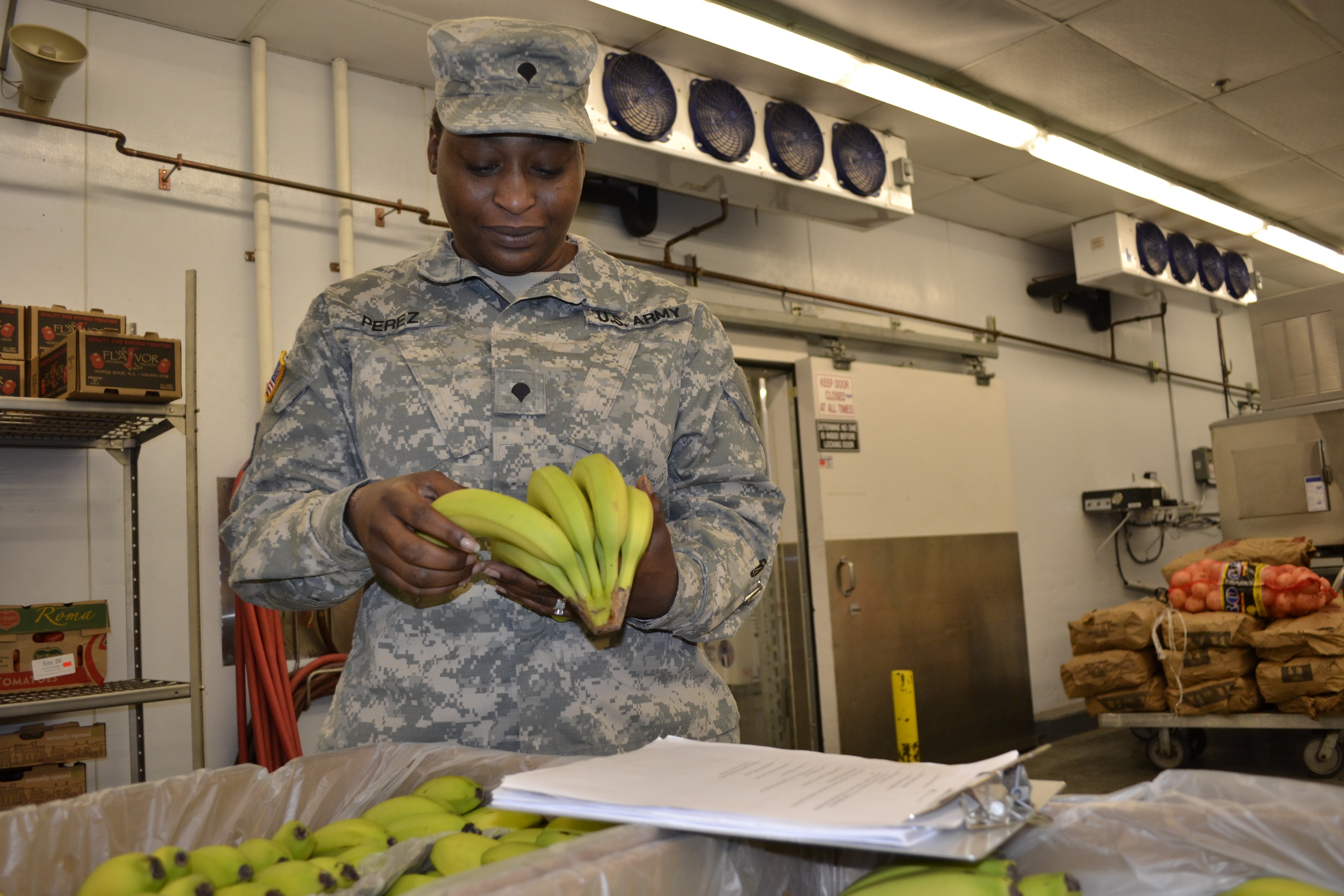
It's a process Spc. Danielle Perez implements daily. Perez, a veterinary food inspector with Fort Gordon Veterinary Services, routinely inspects shipments arriving at the commissary. When shipments arrive, Perez verifies its temperature to ensure the seal was not compromised and inspects products as they're unloaded. She also inspects the truck for cleanliness, cracks and holes.
" We're looking for anything that indicates the temperature's not where it should be and anything that could compromise food safety," Perez said.
Perez checks the internal temperature of products including meat, eggs and milk to further ensure safety. Foods deemed potentially hazardous are returned to the company or placed in the commissary's salvage area then later tossed.
"Anything out of date, not good or potentially hazardous will not hit the sales floor," Perez said.
And that's just the beginning.
Other daily tasks include conducting a thorough walk-through prior to delivery to make sure coolers are at the proper temperatures, meat and produce are of highest quality, and expired products get pulled. Perez stays up to date on product recalls and follows up on customers' complaints -- all for the sake of safety.
On the other side of the gates, Horton invests most of her time and expertise in production facilities, factories and caterers tied to Fort Gordon. Critical findings -- or imminent health hazards -- could deem the site "unacceptable," in which case Horton would issue a corrective action request. A site with three imminent health hazards is automatically given an "unacceptable" rating. Examples of critical findings include storing food outside a safe temperature zone, handling raw chicken over cooked foods and failing to use a metal detector on foods that require one.
Horton has taken her findings and established a list of approved vendors and caterers for the community. She strongly advises leaders to use food establishments from that list when planning for unitwide events, noting that it does not apply to military members paying for themselves at a restaurant.
"This is for events where units are utilizing unit funds to pay, and you're announcing this as a unit event," Horton said.
Command program events, team building events and catered hails/farewells should have their food come from an approved source. Commanders may request support for a risk assessment on a particular venue if it is not on the approved list. Should a facility not meet required standards, Horton can give guidance to help it establish itself as a recommended site.
"At the end of the day, we can make the food supply as safe as possible for our Soldiers," Horton said.
A list of approved caterers is pending and will be announced when finalized. For questions or concerns, contact Horton at: (706) 787-3315.
Social Sharing