MRC, East
U.S. Army Medical Readiness Command, East
Commander's Welcome
Welcome to Army Medical Readiness Command, East!
We are committed to advancing Army Medicine’s core imperatives: delivering a Medically Ready Force and building a Ready Medical Force. Through synchronized, high-reliability health services, we ensure our Warfighters are medically fit to deploy, fight, and win, while simultaneously training and sustaining an agile, highly capable medical team ready to support operations.
Across our footprint – including our Military Treatment Facilities, Soldier Recovery Units, and Public Health and Veterinary Commands – our dedicated team of Soldiers, Civilians, and Contractors take immense pride in delivering safe, high-quality care to all our Warfighters, families, beneficiaries, and military working dogs.
Combat Ready Care… This We’ll Defend!
Brig. Gen. Jamie Burk,
Commander


Mission
The Medical Readiness Command, East provides regionally ready, globally responsive medical forces, health service support, and force health protection to conserve the fighting strength, enable the readiness and health of the Army and designated activities, and integrate and liaise at echelon for the provision of health service support and force health protection to the Total Army. It will also provide command and control to medical department activities, medical centers, Dental Health Command, Public Health Commands, and Soldier Recovery Units.
Medical Readiness Command, East Links
- Womack Army Medical Center, Fort Bragg, N.C.
- Ireland Army Community Hospital, Fort Knox, Ky.
- Keller Army Community Hospital, West Point, N.Y.
- McDonald Army Health Center, Joint Base Langley-Eustis, Va.
- Guthrie Ambulatory Health Care Clinic, Fort Drum, N.Y.
- Kenner Army Health Clinic, Fort Gregg-Adams, Va.
- Kimbrough Ambulatory Care Center, Fort Meade, Md.
- Blanchfield Army Community Hospital, Fort Campbell, Ky.
- Dwight David Eisenhower Army Medical Center, Fort Gordon, Ga.
- Winn Army Community Hospital, Fort Stewart, Ga.
- Martin Army Community Hospital, Fort Moore, Ga.
- Moncrief Army Community Hospital, Fort Jackson, S.C.
- Lyster Army Health Clinic, Fort Rucker, Ala.
- Fox Army Health Center, Redstone Arsenal, Ala.
- Public Health Command, East, Fort Meade, Md.
Army Medical News
-
 BAMC celebrates the life of infants lost during Remembrance Ceremony
October 24, 2026
BAMC celebrates the life of infants lost during Remembrance Ceremony
October 24, 2026
-
 DARPA autonomous vehicles deliver command-controlled robotic lethality at Fort Knox event
October 22, 2026
DARPA autonomous vehicles deliver command-controlled robotic lethality at Fort Knox event
October 22, 2026
-
 Army Medicine Celebrates Army Animal Care Specialists
October 19, 2026
Army Medicine Celebrates Army Animal Care Specialists
October 19, 2026
-
 Due for cervical cancer screening? BJACH helps patients take the next step
October 14, 2026
Due for cervical cancer screening? BJACH helps patients take the next step
October 14, 2026
-
 'That's when training kicks in': How Soldiers saved lives after car crash
October 10, 2026
'That's when training kicks in': How Soldiers saved lives after car crash
October 10, 2026
-
 Two generations of Army dietitians celebrate selection for Army Baylor program
October 3, 2026
Two generations of Army dietitians celebrate selection for Army Baylor program
October 3, 2026
MRC, East News
-
 Fort Knox Medical Company gets new commander
October 21, 2026
Fort Knox Medical Company gets new commander
October 21, 2026
-
 ATAMMC Quality Management Efforts Strengthen Safety, Trust and Patient Care
October 21, 2026
ATAMMC Quality Management Efforts Strengthen Safety, Trust and Patient Care
October 21, 2026
-
 KACH collaboration garners FDA approval of TBI diagnosis device; device recognized by TIME
October 21, 2026
KACH collaboration garners FDA approval of TBI diagnosis device; device recognized by TIME
October 21, 2026
-
 KACH recognition of West Point ATs highlights vital partnership
October 15, 2026
KACH recognition of West Point ATs highlights vital partnership
October 15, 2026
-
 MRC-East squad wins 2026 Army Medicine Best Squad Competition
July 24, 2026
MRC-East squad wins 2026 Army Medicine Best Squad Competition
July 24, 2026
-
 SECARMY recognizes Winn Army Community Hospital team for lifesaving response
August 8, 2025
SECARMY recognizes Winn Army Community Hospital team for lifesaving response
August 8, 2025
Team East in the News
16 Oct 2026 Team East in the News Final.pdf [PDF - 386.2 KB]
Medical Readiness Command, East INSPECTOR GENERAL
Before you take an issue to your Inspector General:
- Clearly identify the problem or concern.
- Consider using your chain of command when appropriate.
- If possible, contact your local Inspector General first.
- Be honest and provide complete, accurate information.
- Bring relevant documents, dates and names.
- Understand that IG's assess, assist, inspect, investigate, and advise; they do not command or direct resolution.
- Understand that IG actions are based on facts and applicable standards.
- Allow time for a resolution.
- Be prepared to consider a reasonable response, even if it is not the outcome you requested.
YOUR RIGHTS
Every Soldier, Civilian and Family Member has the right to contact an Inspector General without fear of reprisal.
The Inspector General system provides assistance, conducts inspections and investigations, identifies systemic issues, and advises commanders on matters affecting good order, discipline, morale, readiness and organizational effectiveness.
CONTACT
Phone: 571-515-8196
IG Email Dropbox: usarmy.belvoir.medcom-mrc-e.mbx.ig-office@health.mil
Mail:
Medical Readiness Command, East Office of the Inspector General
Bldg 1221, Suite 1600
9275 Doerr Road,
Fort Belvoir, VA 22060
MRC, East Inspector General Office Leadership
-
 Command Inspector GeneralLt. Col. Steven E. McDaniel
 -
 Inspector General NCOICMaster Sgt. Anthony R. Gomez
MRC, East IG Tri-Fold
Informational Tri-Fold that can be printed on 8x10 paper or downloaded for use in understanding what the Inspector General can and cannot do along with specific instructions to submit a concern or problem. MRC-East-IG-Trifold-1 NOV 26.pdf [PDF - 257.4 KB]
IG files
-
FY22 MRC, East IG Inspection Report.pdf [PDF - 2.6 MB]
FY22 IG Inspection Report Pertaining to Staffing Levels at SRUs.pdf [PDF - 2.2 MB]
FY21 RHC-A IG Inspection Report (Signed).pdf [PDF - 1.2 MB]
FY21 SRU Inspection Report.pdf [PDF - 1.7 MB]
FY 19 WTB Inspection Report.pdf [PDF - 1.6 MB]
FY18 WTB Inspection Report.pdf [PDF - 1.7 MB]
FY17 WTB Inspection Report.pdf [PDF - 1.7 MB]
FY16 Inspection Report [PDF - 520.1 KB]
Inspector General News
-
 USASAC Deputy IG brings civilian industry standards to Army oversight
September 16, 2026
USASAC Deputy IG brings civilian industry standards to Army oversight
September 16, 2026
-
 SETAF-AF NCOs discuss ABCP
August 11, 2026
SETAF-AF NCOs discuss ABCP
August 11, 2026
-
 Trio crowned Inspectors General of the Year
August 28, 2025
Trio crowned Inspectors General of the Year
August 28, 2025
-
 ASC IG delivers impartial support to CG, workforce
July 31, 2025
ASC IG delivers impartial support to CG, workforce
July 31, 2025
-
 Andersen sworn in as new USASAC inspector general
July 30, 2025
Andersen sworn in as new USASAC inspector general
July 30, 2025
-
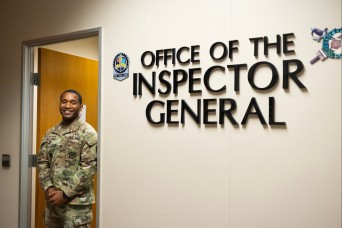 Soldiers, Civilians & command: One IG bridges the gaps
July 24, 2025
Soldiers, Civilians & command: One IG bridges the gaps
July 24, 2025
MEDCOM Family Programs
Soldier Resources
History of the United States Army Medical Readiness Command, East
The U.S. Army Health Services Command was reorganized into regions, known as Health Service Support Areas, in 1992. The support area covering the northeastern United States was the North Atlantic Health Service Support Area, headquartered at Walter Reed Army Medical Center.
In October of 1993, the U.S. Army Medical Command (Provisional) was established. The new command, combining Army Dental and Veterinary Commands with general medical commands, was permanently authorized in 1994. The North Atlantic Health Service Support Area became the North Atlantic Regional Medical Command. At the time, NARMC was one of the Army's six regional medical commands and was responsible for about 25 percent of MEDCOM's patient load in the United States.
Base Realignment and Closure in 2005 prompted a reorganization of the Army Medical Command. Walter Reed Army Medical Center was closed and integrated with the National Naval Medical Center at Bethesda to create Walter Reed National Military Medical Center. In addition, the Joint Task Force Capitol-Medical was established. The reorganization afforded the new Northern Regional Medical Command the opportunity to evaluate its health care delivery processes. Northern Regional Medical Comma ndsought to improve access to care for all beneficiaries.
On July 8, 2015, with approval from the Secretary of the Army, followed by operational order from U.S. Army Medical Command, NRMC became Regional Health Command - Atlantic, the largest health command in Army Medicine. The region included all Army medical centers, hospitals, and clinics east of the Mississippi River. In addition, RHC-A was responsible for the Atlantic region's dental and public health commands.
RHC-A was officially redesignated as the U.S. Army Medical Readiness Command, East on Sept. 8, 2022, as part of the Army's modernization efforts to build the Soldier of 2030.