U.S. ARMY & PRIVATE INDUSTRY: A PARTNERSHIP FOR MODERNIZATION
The U.S. Army has launched the Strategic Capital Initiatives (SCI), a landmark effort to partner with the private sector to accelerate a historic, enterprise-wide modernization. This initiative marks a fundamental shift away from traditional government contracting and toward a more agile, collaborative model. We are inviting industry leaders, investors, and innovators to co-invest with us, harnessing the speed and ingenuity of the commercial market to build the resilient Army required to secure our nation's future.
The Strategic Imperative: A New Model for a New Era
To meet the challenges of the 21st century, the Army must move at the speed of innovation. The Strategic Capital Initiative operationalizes the National Defense Strategy by creating a new framework for public-private partnership. Our goal is to supplement traditional funding with strategic capital, creating commercially viable and self-sustaining ventures that strengthen our industrial base, enhance our readiness, and provide a significant return on investment for our partners and the American taxpayer.
The Opportunity: A Value-for-Value Partnership
This is a two-way street. The Army brings unique assets to the table that are difficult for the private sector to acquire, including thousands of acres of secure, underutilized land, a stable and predictable demand signal for critical capabilities, and a mission of national importance. In return, we are seeking your boldest ideas and the capital to turn them into reality. We are open to a wide range of structures—from long-term leases to joint ventures—and are committed to creating partnerships where your success is aligned with our mission.
Our Areas of Focus
We are seeking innovative solutions across the full spectrum of Army operations. Our initiative is focused on six strategic pillars that represent concrete opportunities for investment and growth:
- Energy Resilience and Dominance: Develop independent power grids and energy storage solutions on Army installations.
- Modernizing the Organic Industrial Base: Co-invest in upgrading the Army’s 23 depots, arsenals, and ammunition plants.
- Strengthening Logistics and Supply Chains: Harness automation and technology to create a more resilient supply chain.
- Advanced Manufacturing & Technology Adoption: Integrate AI, robotics, and digital engineering into our industrial processes.
- Real Assets and Facilities Utilization: Lease non-excess Army land for dual-use projects like data centers and industrial parks.
- Critical Minerals and Resource Development: Partner to explore and process essential minerals on Army lands to secure domestic supply chains.
Who We Are Looking For
We are casting a wide net to build a new ecosystem of partners. Whether you are a venture capital firm looking to scale a new technology, an institutional investor seeking stable, long-term returns in infrastructure, an industrial leader capable of re-shoring supply chains, or an innovative small business with a transformative idea, we want to hear from you.
[RFI] View the Request for Information (RFI)
[EMAIL] Contact Our Team
Also, visit SAM.gov for announcements of RFIs, RFPs etc.
RFI | Frequently Asked Questions
Submission Guidance
-
The RFI, along with its attachments, can be found here.
-
“RFI Response: Private Capital and Market Participant Investments” is the correct way. However we will take all RFI answers.
-
We intend to follow-up on the most promising RFI responses with a targeted Commercial Solutions Opening (CSO). While we are obligated to hold a competitive bidding process, it would be based on the terms you help define. Our process is designed to turn innovative concepts into actionable acquisition strategies in the next 6-12 months.
-
Yes. David R. Fitzgerald, Deputy Undersecretary of the Army, hosts a weekly Live Open Range Q&A Session, on Thursdays from 2 to 4 p.m. EST, via Microsoft Teams. You can request the meeting invitation and login details by emailing usarmy.pentagon.mbx.strategic-capital-initiative@army.mil.
-
All proposals incorporating specific Pillars will be reviewed and considered. The proposals that integrate multiple streams that support multiple pillars in integrated way will be the most competitive.
-
A hybrid approach would likely be most effective. You should present a broader, enterprise-level solution that outlines your company's strategic vision and capabilities, while using specific, individual locations as concrete examples or case studies of how that vision could be implemented.
-
The Army is seeking tangible Industry groups that are able to self-organize and provide an array of funding and underwriting options as part of their proposal. These will be the more competitive proposals.
-
Respondents should ideally present a team of stakeholders which they would like to partner with alongside the Army. The best responses will have all of the above stakeholders identified.
-
Absolutely. A compelling response is the catalyst for action. While we must ensure competition, we do so by building a solicitation around the best idea. The author of that idea inherently holds a commanding advantage. You will have defined the terms of the debate, and your proposal will be the standard against which all others are measured.
-
We fully expect a Commercial Solutions Opening or Request for Proposal stemming from these RFI responses. Expect a quick turnaround for those proposals that are deemed sufficient within 1-2 months for a solicitation posting on sam.gov.
Partnership Models & Financial Structures
-
Based on the goals and language within the RFI, the partnership models that align best are those that emphasize flexibility, commercial viability, and the creation of dual-use assets. The Army is signaling a move away from traditional, rigid government contracts and towards more agile, commercially-driven partnerships.
-
The Strategic Capital Initiatives is leveraging pre-existing authorities granted by Title 10 USC 2667, specifically for Enhanced Use Leases and Public Private Partnerships.
-
The Army is willing to be customer, co-investor, landlord, or any combination of the above. You should think of the Army's role as that of a strategic enabler and vested partner.
-
The Army will consider a wide range of proposals of equity consideration through either profit sharing, production off take, and equity stake as proposed and agreed upon conditions during negotiations.
-
Venture funds are eligible to participate, but their proposal must describe a tangible business case for how their good or service can integrate into the requirements stated in the RFI.
-
The Army is open to the idea of a fund, but with specific stipulations: 1) The Army will not enter into exclusive contracts which might lead to vendor lock-in or limit decision space in the future 2) the Army must retain some veto authority over the investments of the fund to ensure it remains aligned with Army needs.
-
The Army is seeking innovative IP frameworks that move beyond standard DFARS structures. We recognize that for our commercial partners' proprietary IP is foundational to their enterprise value, and we are committed to negotiating agreements that protect that value. In parallel, any agreement must provide the Army with pre-defined, limited 'step-in rights' to ensure mission continuity.
-
The Army views in-kind consideration as potentially more valuable than cash rent, provided it directly supports mission readiness, modernization, and installation resilience. The fundamental preference is for value that the Army would otherwise have to procure itself.
-
As of now, there is no intent to create an Army sourcing team, but it may be within scope in follow-on iterations.
Strategies for Success
-
Company X, which is owned by Private Equity Firm Y, has a fantastic patent on a new, advanced lithium-ion battery that represents a significant leap forward in technology compared to previous versions. The U.S. Army uses lithium batteries in several of its systems – from handheld radios to drones. There is also a sizeable commercial market for lithium batteries, which are used in cell phones and other electronics. Private Equity Firm Y therefore proposes the following:
- Private Equity Firm Y will lease a 400-acre plot of land at Blue Grass Army Depot in Central Kentucky for 10-15 years, with a re-evaluation every 2-3 years.
- Private Equity Firm Y will spend $70M to develop the land at Blue Grass Army Depot into a lithium-ion manufacturing site for Company X.
- The Army will co-invest $30M in appropriated funds to develop the battery manufacturing site.
- The Army will agree to purchase 30% of the batteries produced at the site, and Company X can sell the remaining 70% into the commercial market.
- At each re-evaluation point, the Army and Private Equity Firm Y will reassess the state of the lithium-ion battery technology and the future aggregate demand for Company X’s batteries.
- If aggregate demand for batteries diminishes to the point that the business case is no longer viable, Army and Private Equity Firm Y will consider additional co-investment to retool the Blue Grass Army Depot site for another high-demand product.
- As a tenant of the BGAD, Private Equity Firm Y will pay the Central Kentucky market value for the land leased from the Army.
- In lieu of cash payments for the lease, the Private Equity Firm Y will partner with Construction Company Z to provide in-kind benefits to the Army at the assessed market rate.
- Construction Company Z will use in-kind funds to modernize railhead infrastructure at Blue Grass Army Depot, benefiting both Army freight operations and commercial shipping.
- As an added benefit, the U.S. Army has also coordinated with a Mining Company A (also owned by Private Equity Firm Y) for a similar Enterprise Use Lease agreement. The Army agrees to invest $200M in appropriated funds in exchange for a 10% equity stake in the company. The Army agrees to purchase at least 10% of the lithium offtake, thereby giving Private Equity Firm Y the confidence to deploy an additional $600M in capital to develop the site.
-
The responses will be evaluated holistically. Factors like financial model viability, speed to execution, dual-use scalability, measurable readiness outcomes, are all important. Overall, the Army seeks the best opportunities to generate benefits for the Army, while also supporting its ongoing commitment to take care of its Soldiers, prepare to fight and win the Nation’s wars, and be a part of its surrounding communities. The selection of one proposal will not automatically exclude another proposal. Additionally, the Army expects to conduct numerous rounds after the initial solicitation period. We will provide general feedback on submissions to help you rework them for future rounds.
-
There are numerous arrangement options that are potentially feasible such as service agreement, off-take commitment, pay-for-performance milestones, enterprise software subscription. Ultimately, this outreach to industry has had to strike a fine balance between seeking creative solutions and being overly prescriptive. The Army’s role as the anchor customer will largely depend on the activity that is being proposed. If it is for the manufacturing of dual-use capabilities that the Army has an organic demand for, the Army’s role will likely be an off-take partner. Proposals that can provide a clearly defined benefit that leverages the Army’s long-term stability as a partner will be weighted highly.
-
The most competitive proposals would be the ones that can create multiple streams of benefit. If Army installations were treated as an ecosystem, a proposal would tie together mutually beneficial activities and entities. For example, activities and projects that would attract additional commercial entities, academic research activities, logistics networks, and other government entities around Army installations would be highly competitive.
Investment & Risk Mitigation
-
The eligibility requirements explicitly state that a proposing entity must have majority domestic ownership and control and be organized under U.S. law. The Army will not review proposals made by foreign persons or organizations. The framework is designed to enforce this domestic ownership requirement, not to create exceptions for allied capital.
-
The Army is willing to use press releases, letters of intent, and any other non-binding measures as a means of communicating a bankable demand signal.
-
All submissions will be handled and considered as Contract Sensitive. Therefore, proprietary commercial information included as part of the submission will be protected under Exemption 4, which precludes Trade Secrets from FOIA requests.
Project and Site Specifics
-
The Army needs everything from modernized railhead facilities to barracks, to dining facilities. If companies are interested in touring a particular installation, we can help arrange the tour.
-
Any proposals that demonstrate value to the Army and the achievement of its stated objectives will be evaluated regardless of the governance structure internal to the primary industry partner, provided that the commitments are met as agreed upon.
-
The Army’s preferred mechanism involves the use of existing authorities under Title 10 USC 2667 for Enhanced Use Leases or Public-Private Partnerships.
-
The capacity is 2.8 MW.
-
Below are three examples:
- Watervliet Arsenal - WVA established a Public-Private Partnership with Electralloy where the company invested in investment into machinery at the Arsenal. WVA gained sustained industrial activity, facility upgrades, and expanded use of its rotary forge, while Electralloy benefits from access to a skilled workforce, world‑class forging capabilities, and the ability to produce ABS‑certified components for high‑value maritime applications.
- Lake City Army Ammunition Plant has created a model where national security requirements and private‑sector opportunity reinforce one another. The Army maintains ownership of the plant and sets production priorities for small‑caliber munitions, ensuring the nation retains a reliable, surge‑ready ammunition base. A defining feature of this arrangement is the operator’s ability to leverage the same production lines—when not committed to government orders—to manufacture commercial‑market ammunition.
- HDUSA (a U.S.-based company whose parent company is Hanwha) was conditionally awarded an EUL for 1,065 acres of underutilized land at Pine Bluff Arsenal, Arkansas, on 20 Jan 2026, for a manufacturing facility to produce energetics for munitions (e.g., base bleed units, nitrocellulose, modular charge systems). They are self-funding the $1.3B investment in the site and anticipate creating 200 jobs in Arkansas.
-
Appendix E to the Army base RFI on Sam.gov provides a list of all the developable land in the Army’s real estate portfolio. The Army is open to all proposals for enhanced use leases or public-private partnership opportunities for the installations listed.
-
- Campus style dining is an important part of our effort to improve Soldier quality of life across the force by bringing Army dining facilities up-to-par with industry standards.
- It's a new model where the Army provides a dining facility to a contractor who operates the site and provides food services at an agreed upon price.
- The first-round program selections are Fort Hood, Texas; Fort Carson, Colorado; Fort Bragg, North Carolina; Fort Stewart, Georgia; and Fort Drum, New York. Fort Hood is already operational, and the remaining four are expected to become operational soon.
- The Army plans to expand this program to Army dining facilities at Fort Bliss, Texas; Joint Base Lewis-McChord, Washington; Fort Irwin, California; Fort Riley, Kansas; Fort Campbell, Kentucky; and Fort Polk, Louisiana.
- The Army is conducting an initial assessment for future locations, including OCONUS locations in Alaska, Hawaii, Germany, and the Republic of Korea.
-
Currently, anticipated responses to the RFI are limited to basic components and parts of commercially available dual-use technologies such as UAS.
Critical Materials & Logistics
-
The Army’s most critical mineral needs include Antimony, Arsenic, Bismuth, Gallium, Germanium, Indium, Natural Graphite, Rare Earth Elements, Scandium, Tantalum, Tungsten, and Yttrium.
The Capability Program Executive for Ammunition and Energetics also periodically publishes a list of 30 high-priority chemical materials deemed critical to the U.S. Army. Ultimately, the Army is interested in any and all opportunities for onshore production of these materials.
-
The Capability Program Executive for Ammunition and Energetics periodically publishes a list of 30 high-priority chemical materials. The Army is interested in any and all opportunities to on-shore production of these materials.
-
The road map is built around six "Characteristics of Need": 1) Energy, Supply and Services; 2) Advanced Manufacturing and Maintenance; 3) Assured Distribution; 4) Ammunition and Energetics; 5) Predictive Sustainment; and 6) Medical. Each has specific investment opportunities, from mobile microgrids to autonomous resupply and tele-maintenance.
The following are examples of our six characteristics of need(s):
Energy, Supply, and Services: This concept focuses on reducing fuel demand by developing mobile capabilities for power production, storage, and distribution.
- Mobile Microgrids: Invest in developing mobile, scalable power grids and novel energy solutions to power the tactical edge.
- Efficient Energy Systems: Develop bi-directional energy storage and distribution systems
- Mobile Nuclear Power: A long-term opportunity in mobile micro-reactors (like Project Janus) to provide significant, reliable power for forward bases.
Advanced Manufacturing and Maintenance: This concept aims to bring critical manufacturing and repair capabilities to the point of need, increasing readiness and reducing reliance on depots.
- Expeditionary 3D Printing: Invest in rugged, mobile 3D printing systems that can create critical metal, polymer, and electronic parts on-demand in the field.
- Robotics and Tele-maintenance: Develop robotic maintenance systems and remote
- guidance tools that allow experts to assist with complex repairs from a distance.
- Digital Replication: Invest in technology to quickly scan damaged parts, create digital blueprints, and manufacture replacements at the point of need.
Assured Distribution: This concept is about fielding a resilient, multi-domain network of distribution platforms to supply dispersed forces.
- Autonomous Resupply: Invest in fleets of autonomous ground vehicles, cargo drones, and unmanned surface/underwater vessels to deliver supplies without risking personnel.
- Manned-Unmanned Teaming: Develop technology to integrate robotic trucks into manned convoys, increasing throughput with fewer soldiers.
- Unified Control Systems: Create common mission command systems that allow operators to control diverse families of air, land, and sea-based logistics robots.
Ammunition and Energetics: This concept seeks to modernize the ammunition industrial base through targeted risk assessments and private partnerships.
- Industrial Base Private Equity: Direct private investment to modernize Army Ammunition Plants and build a more resilient production network.
- Reshoring Critical Materials: Invest in the domestic production of essential energetic materials and chemical precursors for munitions to secure the supply chain.
- Advanced Munitions: Innovate "at the round" by developing smart munitions with advanced fuzing to counter emerging threats like small drones.
Predictive Sustainment Annex: This area uses data and AI to forecast logistics needs and create a "precision sustainment" model integrated with command and control.
- Predictive Analytics: Develop AI/ML applications that forecast demand, predict equipment failures, and optimize the supply chain for the Next Generation Command and Control system.
- Pervasive Sensors: Invest in low-cost, resilient sensors for vehicles and supply containers to provide real-time data on consumption, location, and readiness.
- AI-Driven Munitions Management: Use AI to drive speed and efficiency in the production and distribution of munitions, ensuring they are available when and where needed.
Medical Annex: This concept integrates advanced medical capabilities into the logistics framework to improve casualty care at the point of injury.
- Autonomous Medical Evacuation (MEDEVAC): Develop unmanned air and ground vehicles for casualty evacuation from high-risk areas.
- Telemedicine & Remote Surgery: Invest in high-bandwidth networks and robotic systems to enable remote surgical support and expert guidance.
- On-Demand Medical Supply: Use autonomous drones for the "last mile" delivery of critical medical supplies like blood and plasma to medics on the front line.
-
The Capability Program Executive for Ammunition and Energetics periodically publishes a list of 30 high-priority chemical materials identified as critical for the U.S. Army. Below is the current list. Ultimately, the Army is interested in any and all opportunities for on-shore production of these materials.
- 4-Nitroaniline
- Aminoguanidine Bicarbonate
- Antimony Sulfide
- Barium Nitrate
- Barium Peroxide
- BDNPA/F
- Black Powder
- Calcium Resinate
- Calcium Silicide
- Dinitrotoluene
- Hexamine
- HMX
- Lead Hexoate
- Lead Nitrate
- Magnesium Powder
- Magnesium Carbonate
- Nitrocellulose
- Nitroglycerin Mixed Acid
- Oxamide
- Polyisobutylene
- Potassium Nitrate
- Potassium Perchlorate
- Potassium Sulfate
- RDX
- Smoke Dye*
- Strontium Nitrate
- Strontium Oxalate
- Strontium Peroxide
- TATB
- TNT FLAKE
* Smoke Solvent, Nitroanthraquinone, Quinaldine, Sublimed Quinizarin, Tech Quinizarin, Lueco Quinizarin
-
 Army launches flagship Strategic Capital Initiative with FedEx Dataworks to modernize logistics infrastructure
August 21, 2026
Army launches flagship Strategic Capital Initiative with FedEx Dataworks to modernize logistics infrastructure
August 21, 2026
-
 Army announces conditional lease awards for domestic critical mineral processing facilities to secure defense supply chains
June 25, 2026
Army announces conditional lease awards for domestic critical mineral processing facilities to secure defense supply chains
June 25, 2026
-
 Army launches tranche II of Strategic Capital Initiatives focused on energy resilience
June 16, 2026
Army launches tranche II of Strategic Capital Initiatives focused on energy resilience
June 16, 2026
-
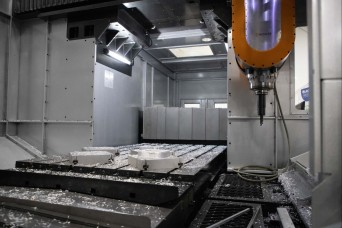 Army announces next phase of its strategic capital initiatives, targeting critical minerals and advanced manufacturing
May 18, 2026
Army announces next phase of its strategic capital initiatives, targeting critical minerals and advanced manufacturing
May 18, 2026
-
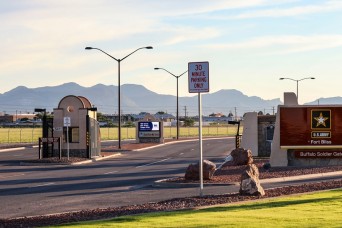 Army reaches conditional agreement with private industry for hyperscaled data centers
March 26, 2026
Army reaches conditional agreement with private industry for hyperscaled data centers
March 26, 2026
-
 Army Strategic Capital Initiatives – Seeking private sector partners to accelerate enterprise-wide modernization
March 2, 2026
Army Strategic Capital Initiatives – Seeking private sector partners to accelerate enterprise-wide modernization
March 2, 2026