Battlescape
AUDIO INTERVIEW: Listen to Sgt. Kyle White's describe the events, ambush and his actions buring the battle outside the village of Aranas, Nuristan Province, Afghanistan on November 8, 2007. Excerpts of the audio are highlighted in the chapters below.
1. THE MISSION
[On] the trail that it takes to go from Bella to Aranas, the unit before us had sustained some casualties … It's pretty vulnerable to attacks, because [it has] a lot of high ground that we can't cover when we're moving.
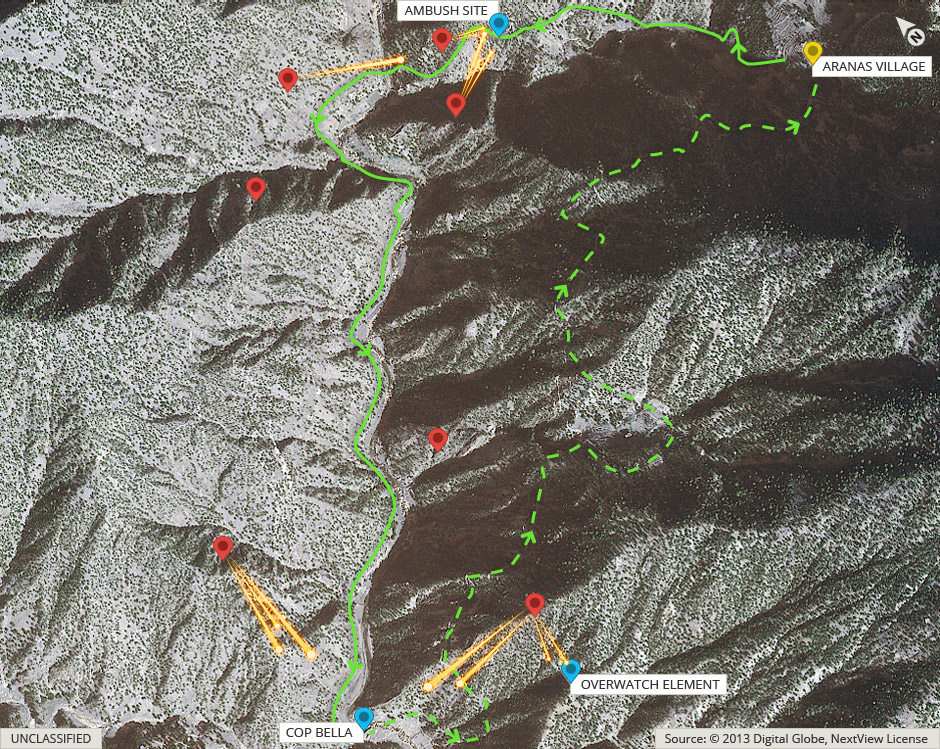
On Nov. 8, 2007, members of 1st Platoon, Chosen Company, 2nd Battalion (Airborne), 503rd Infantry Regiment, 173rd Airborne Brigade, headquartered at Combat Outpost, or COP, Bella, prepared for movement to the village of Aranas, Afghanistan, for a Shura meeting with village elders. There had been little communication with the village after their suspected collusion on a major attack months earlier on COP Ranch House — a former American post situated on the mountain overlooking the large village. The Ranch House attack resulted in eleven wounded and the closure of the outpost.
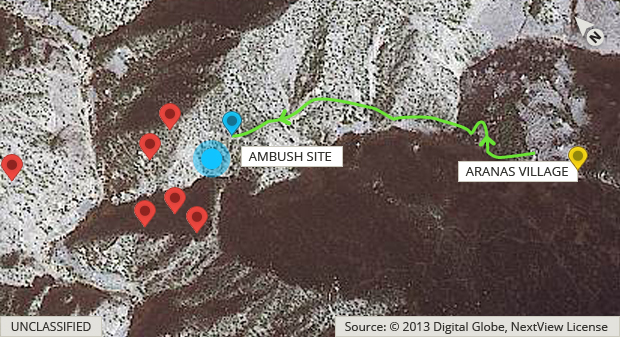
Moving under cover of darkness, the 14 Americans and approximately one squad of Afghan National Army soldiers made for the American-built schoolhouse on the southern edge of Aranas, where they would bunk for the night.
2. SIGNS OF DECEPTION
The interpreter was receiving radio traffic [in] a language he didn't know, and couldn't understand, and the Marine ETT Sgt. Bocks was kind of put on edge about that. [Bocks said,] “We need to get going. This isn't good. We need to leave.”
Upon daybreak, the Americans and their Afghan National Army counterparts prepared for the meeting at the mosque. The villagers delayed the meeting, saying the elders were praying, for several hours until finally beginning in the afternoon, at around 1-1:30 p.m.
Villager turnout for the Shura was unusually large. There were more questions and villager engagement than the Americans had experienced in the past. At first, team members were hopeful about the level of interest from the village males. Then, the Marine Embedded Training Team member, Sgt. Phillip A. Bocks, alerted leadership that his interpreter was hearing radio chatter in a language he didn't recognize. Bocks advised the platoon leader, 1st Lt. Matthew C. Ferrara, it was best to leave immediately.
3. ENEMY FORCES ATTACK
[There was] one shot, you know, down into the valley, and then it was two shots, and then it was full-automatic fire and RPGs. It was coming from multiple directions.
Several villagers followed the unit on their 10-to-20-minute trek up the mountain, to the shallow mountainside trail back to COP Bella. No sooner did the followers break off to the ridge above, did the ridgelines echo with accurate small arms fire. The enemy initiated a three-pronged attack, simultaneously hitting the patrol from Aranas, the scouts providing overwatch of the patrol from a ridge to the southeast, and the unit's home — COP Bella.
4. WHITE RETURNS FIRE, TAKES RPG BLAST
As I dropped that magazine and went to load another one, it was just lights out. ...An RPG hit right behind my head and knocked me unconscious. When I woke up, I was facedown on a rock.
Carrying a fully-automatic M4A1 rifle, Spc. Kyle White emptied his magazine in the direction of suspected and known enemy targets. After White dropped his magazine and loaded the next 30-round magazine into his weapon, an enemy rocket-propelled grenade detonated near his location, knocking him unconscious. As White awoke, an enemy round fragmented near his head sending shrapnel into his face.
VIDEO: The Perspective from COP Bella, Interview with 1st Sgt. David L. Dzwick on the details of the battle that occured, Nov. 9, 2007, from the perspective of COP Bella, Afghanistan. Dzwik, former weapons squad leader for 1st Platoon, Chosen Co., was at Bella during the Aranas ambush. BC5. TEAM CUT OFF FROM PLATOON
The shots rang out, and I never saw the rest of the element again.
After initial contact, the forward observer, Spc. Kain Schilling, White, Ferrara, Bocks and the interpreter were cut off from the rest of the patrol, whose members had been forced to slide down the cliff to the ground, 50 meters below and 150 meters to the west. White relayed a situation report to Staff Sgt. Conrad Begaye, who was part of the element that had jumped down the cliff.
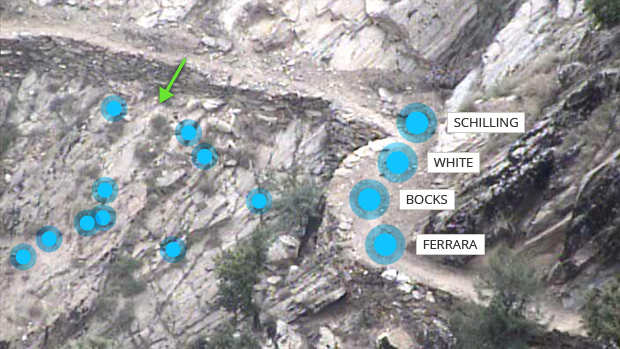
This picture shows a trail south of Combat Outpost Bella, in the Waygal Valley, in Nuristan Province, Afghanistan. This is typical of the trails in the area, and of the trail the team was on when they were ambushed. This photo illustration shows how the 14-member patrol was split up upon the initial attack, with the forward elements of the team escaping the primary kill zone by bounding down a steep incline. With the enemy on high ground all around, four of the ten who navigated the steep cliff were ultimately killed by enemy fire. (Photo courtesy of Capt. Matthew R. Myer)
6. WHITE CONDUCTS FIRST AID ON SCHILLING
[After the radio was destroyed] I noticed a weird taste in my mouth. It was [a] kind of a metallic taste, and then, I felt a burning in my chest.
White saw that Schilling had been shot in the arm. He moved to Schilling and applied a tourniquet to the arm, which stopped the bleeding. White dropped his pack and realized his radio was now hit and not operational. Schilling's and White's only concealment came from the loose canopy of a single tree jutting up from the side of the cliff below them. The tree provided just enough shade to make the two Americans difficult targets for accurate enemy fire.
White now noticed that Bocks was badly wounded — in the open — about 10 meters away from his location to the east. He yelled to Bocks to use all his strength and crawl to his position. Bocks tried, but his wounds were too severe to make any progress.
7. WHITE DRAGS BOCKS TO COVER
His wounds were pretty severe. At that time, I can't remember thinking he wasn't going to make it, but I knew I wasn't going to stop trying. No matter what the outcome, I'm going to do what I can with what I have.
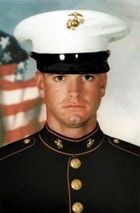
White sprinted the 10-meter expanse, with enemy rounds ricocheting around his feet and snapping past his head. White reached Bocks and yelled to the interpreter to go and treat Schilling. The interpreter's attempts to move to Schilling were met with enemy fire, so he stayed at his location.
White began to drag Bocks toward Schilling. He realized the enemy fire was now concentrated on him, which was further endangering Bocks, so he sprinted back to the relative concealment of the tree canopy momentarily to draw their fire away from Bocks. After the enemy fire dwindled, White moved back to Bocks, dragged him a little further — until the enemy fire was too concentrated — and then moved back to the relative concealment of the tree. He did the sprint and drag several times, before finally getting Bocks to a more protected location. White applied a tourniquet to the Marine's leg and treated him until Bocks eventually succumbed to his wounds.
8. SCHILLING HIT, WHITE CONDUCTS FIRST AID AGAIN
I told him, “Hey man, this is going to hurt.” He's like, “Just do it.” I put my foot on his leg and pulled the belt as hard as I could until the bleeding stopped.
No sooner did White realize that his Marine battle buddy was dead, did he look back to see Schilling get hit again by small arms fire, this time in the leg. White sprinted to Schilling, pulled his own belt from his pants and tied it around the leg as a tourniquet, stopping the hemorrhaging.
9. WHITE GOES TO FERRARA
Not knowing his condition, I needed to go check on him.
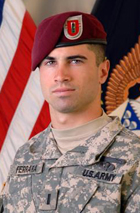
Once Schilling's bleeding was under control, White noticed his platoon leader lying still, face down on the trail. White exposed himself to fire once again, crawling to Ferrara's position. Upon discovering that his platoon leader was dead, White moved back to Schilling.
10. WHITE ESTABLISHES RADIO COMMS
A round from the enemy went right through the hand-mic and just blew it out of my hand. I remember thinking to myself, "Really? Why?"
Both Soldiers' radios had been destroyed in the gunfire. White moved back to Bocks, under enemy fire, hoping to locate a functional radio. Bocks' radio was still operational, and White established communication with friendly elements and rendered a situation report. As the only Paratrooper capable of controlling his fighting position, White provided key information that enabled his company and battalion to understand the enemy and friendly situation well enough to begin bringing mortars, artillery, air strikes and helicopter gun runs into the fight. This helped prevent the enemy from massing on the friendly positions.
VIDEO: The Perspective from COP Bella, Radio communication with Kyle White. Interview with 1st Sgt. William L. Stockard, former platoon sergeant for 1st Platoon, Chosen Co., on the details of the battle that occured, Nov. 9, 2007. Stockard was at Combat Outpost Bella during the Aranas Ambush. BC11. MORTAR FIRE CONCUSSES WHITE AGAIN
I heard a hiss come from the left side of me; [there was] just a second of a hiss, and then a big, big explosion and that one kind brought me down to my knees, beasause, [it kind of] scrambled my brains a little bit there. That's the second time [I was concussed that day], and it turns out it was one of our own 120-mm mortars that came a little short of its intended target. So, [it was] a little scary.
White then heard a hiss and felt a large explosion from the cliff below. It was a friendly 120mm mortar round. The blast caused another concussion for White. As he shook off the effects of the blast, he could hear Schilling yell for him to answer the radio.
12. WHITE DIRECTS SECURITY AT NIGHTFALL
It was a pretty intense situation; I wasn't a fan of it.
After nightfall, White began giving the interpreter commands to relay to the Afghan National Army and established them into a security perimeter. The enemy was still conducting a recon by fire — shooting blindly into the darkness in hopes of having Americans return fire and reveal their location.
13. MEDEVAC RECOVERS CASUALTIES, WHITE DEPARTS BATTLEFIELD
You're so focused on what you're doing, you don't think about what you're doing. You just do it.
As the hours ticked by, White made regular contact with the tactical operations center to track the status of the MedEvac rescue. White reassured Schilling, though he knew extraction was still a few hours away. White also consolidated the sensitive items - radios and weapons - in a central location, ensuring that no equipment was lost to the enemy.
The effects of multiple concussions were weighing on White. As he felt his physical condition deteriorating, he decided to request immediate MedEvac of Schilling. He knew if he passed out, the helicopters wouldn't be able to find them, and Schilling and the injured Afghan National Army soldiers could die.
White marked the landing zone and assisted the flight medic in hoisting the wounded Soldiers into the helicopter. Only after all wounded were off the trail did White allow himself to be evacuated.
VIDEO: The Perspective from COP Bella, Radio communication with Kyle White. Interview with 1st Sgt. David L. Dzwick, former weapons squad leader for 1st Platoon, Chosen Co., on the details of the ambush that occured, Nov. 9, 2007, in Aranas, Afghanistan. BC14. AFTERMATH
I got informed that my best friend, Sean Langevin, he didn't make it. That was really hard to hear.
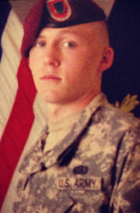
After more than four hours, the three-pronged attack on Chosen Company ended with the loss of six American lives and many wounded. Spc. Kyle White exhibited extraordinary personal bravery distinguishing himself above his comrades. He took charge of his element, arranged security and provided critical aid to wounded Soldiers in terrain with little cover or concealment. White exhibited extraordinary disregard for his own safety by exposing himself numerous times to effective and accurate fire, providing aid to two coalition soldiers despite being wounded himself — thus saving the life of one Soldier. His ability to take command and control of the situation and render critical situation reports to his higher command also enabled Close Air Support and Close Combat Air to disrupt the enemy attack, allowing for the successful evacuation of all wounded and fallen personnel from his location.
VIDEO: Interview with 1st Sgt. David L. Dzwick and Staff Sgt. Jason A. Baldwin thoughts and feelings on Kyle White receiving the Medal of Honor. BC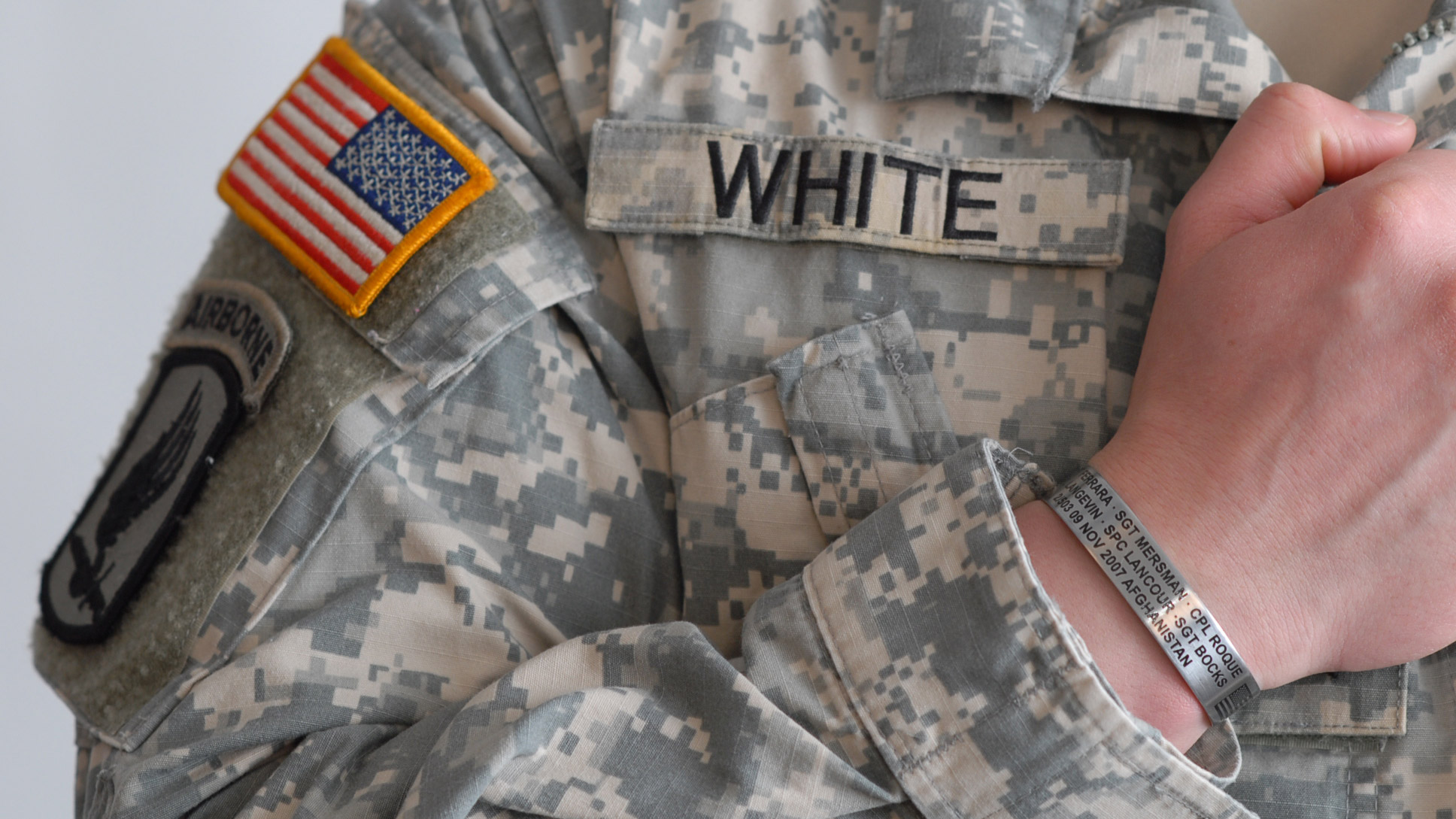
FALLEN HEROES
Anti-Afghanistan forces ambushed two squads and a headquarters element from 1st Platoon, 2nd Battalion (Airborne), 503rd Infantry Regiment, 173rd Airborne Brigade Combat Team, as well as an Embedded Training Team Marine, with accurate rifle, machine gun and rocket-propelled grenade fire from multiple fortified attack positions from high ground. The initial attack and subsequent four-hour battle took the lives of five Soldiers, a Marine, and multiple Afghan National Army soldiers. This site is dedicated to the memory of those who paid the ultimate sacrifice — Marine Corps Sgt. Phillip A. Bocks, Capt. Matthew C. Ferrara, Spc. Joseph M. Lancour, Cpl. Sean Kanae-Aldrique Langevin, Sgt. Jeffery S. Mersman, and Cpl. Lester G. Roque.
-
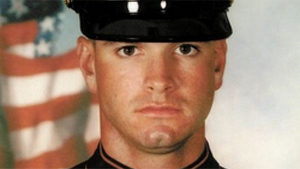
Marine Corps Sgt. Phillip A. Bocks
HOMETOWN: Troy, Mich.
MILITARY OCCUPATION: Rifleman (0311)
-
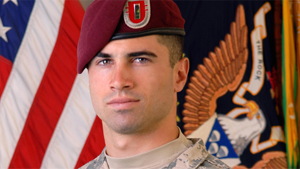
Capt. Matthew Charles Ferrara
Posthumously promoted from first lieutenant
HOMETOWN: Torrance, Calif.
MILITARY OCCUPATION: Infantry
-
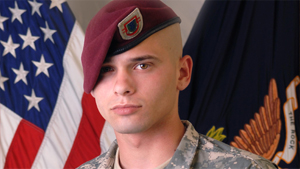
Spc. Joseph Michael Lancour
Posthumously promoted from private first class
HOMETOWN: Swartz Creek, Mich.
MILITARY OCCUPATION: Infantryman (11B)
-
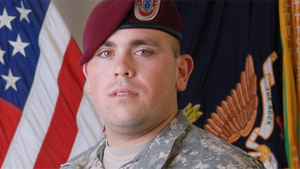
Cpl. Sean Kanae-Aldrique Langevin
Posthumously promoted from private first class
HOMETOWN: Walnut Creek, Calif.
MILITARY OCCUPATION: Infantryman (11B)
-
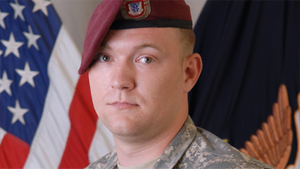
Sgt. Jeffery Scott Mersman
HOMETOWN: Parker, Kan.
MILITARY OCCUPATION: Infantryman (11B)
-
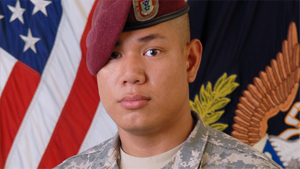
Cpl. Lester G. Roque
Posthumously promoted from private first class
HOMETOWN: Torrance, Calif.
MILITARY OCCUPATION: Health Care Specialist (68W)