551st Inf. Regt. (TNG)
551st Infantry Regiment (Training)
Command Team
-
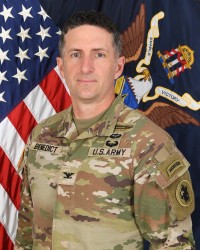 CommanderColonel Keith W. Benedict
 -
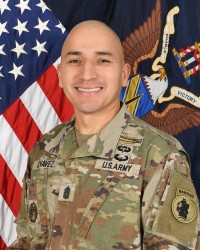 Command Sergeant MajorCommand Sergeant Major Pedro G. Chavez
Biographies
-
Colonel (COL) Keith Benedict graduated and eared a commission in the Infantry from the United States Military Academy in May of 2003. He is a graduate of the Infantry Officer Basic Course, the Maneuver Captains Career Course, the Command and General Staff School, the Joint Advanced Warfighting School, and the United Kingdom’s Higher Command and Staff Course.
In 2005, COL Benedict earned a Master of Philosophy in International Development from Oxford University as a Rhodes Scholar. He then was assigned to 2nd Battalion, 325th Airborne Infantry Regiment at Fort Bragg, North Carolina, where he served as a Rifle Platoon Leader, Company Executive Officer, Battalion Assistant Operations Officer and Logistics Officer, and Heavy Weapons Company Commander, including one deployment to Iraq during the “Surge” and one to Haiti following the 2010 earthquake. In 2010, he served as a Strategic Advisor and Strategic Analyst at the International Security Assistance Force Headquarters and U.S. Central Command, respectively, before then teaching International Relations and Comparative Politics in the Department of Social Sciences at the United States Military Academy for three semesters. Upon completion of the Command and General Staff College, he then served as a Battalion Executive Officer and Brigade Operations Officer in Stryker formations at Joint Base Lewis McChord, Washington, then served as a Professor of Military Science for one year at Temple University in Philadelphia, Pennsylvania.
In 2018, COL Benedict assumed command of 2nd Battalion, 14th Infantry Regiment at Fort Drum, New York, and later assumed responsibility for commanding a Combined Task Force in Kandahar, Afghanistan, that also included a Romanian Infantry Battalion and a Bulgarian Infantry Company. Following command and attendance at the Joint Advanced Warfighting School in Norfolk, Virginia, COL Benedict served as a Joint Operational Planner and Joint All-Domain Command and Control Officer at U.S. Central Command. He then commanded 2nd Stryker Brigade Combat Team, 4th Infantry Division, at Fort Carson, Colorado and for a rotation to the Republic of Korea. Most recently, he attended the United Kingdom’s Higher Command and Staff College in Shrivenham, England.
COL Benedict holds a bachelor’s degree in economics from the United States Military Academy and has three master’s degrees from Oxford University, the Command and General Staff College, and the Joint Advanced Warfighting School. His awards and decorations include the Legion of Merit, the Bronze Star Medal (1 Oak Leaf Clusters), the Defense Meritorious Service Medal (1 Oak Leaf Cluster), the Meritorious Service Medal (5 Oak Leaf Clusters), the Army Commendation Medal, the Joint Service Achievement Medal (2 Oak Leaf Clusters), the Army Achievement Medal(1 Oak Leaf Cluster), the Humanitarian Service Medal (2 Oak Leaf Clusters), the NATO Medal, the Valorous Unit Award, the Parachutist, Air Assault, Combat and Expert Infantryman Badges, and the Ranger Tab.
-
CSM Pedro G. Chavez was born in Taft, Texas and entered the Army in November 2000 as a mechanized Infantryman. He attended Basic training and Advanced Individual Training at Fort Benning Georgia. CSM Chavez has served in every leadership position from Team Leader to Command Sergeant Major.
CSM Chavez’s assignments include; 1st Battalion of the 9th Infantry Regiment, Camp Hovey, South Korea where he served as a mechanized infantry dismounted and a Bradley infantry fighting vehicle driver, 2nd Squadron of the 11th Armored Cavalry Regiment Fort Irwin, California where he served as a FVI Gunner and a Team Leader, 2nd Battalion of the 1st Infantry Regiment, Fort Wainwright, Alaska where he served as a Squad Leader and completed a 16 month deployment to Iraq, 1st Infantry training Battalion 50th Infantry Regiment where he served as a Drill Sergeant and Senior Drill Sergeant, 1st Battalion of the 5th Infantry Regiment Fort Wainwright, Alaska where he served as a Platoon Sergeant and completed a 12 month deployment to Afghanistan, the Northern Warfare Training Center Fort Wainwright, Alaska where he served as the Training Branch NCOIC, the 3rd Battalion of the 21st Infantry Regiment where he served as the Bravo Company 1SG, the HHC 1SG, at the University of Alaska Fairbanks, Alaska as the Senior Military Instructor, at the 1st Battalion of the 9th Cavalry Regiment Fort Hood, Texas where he served as the Operation Sergeant Major, and at the 1st Squadron 3d Cavalry Regiment Fort Hood, Texas where he served as the Command Sergeant Major, and previously he served at Fort Benning, Georgia as the Airborne and Ranger Training Brigade (ARTB) Command Sergeant Major. CSM Chavez is currently serving as the Army Security Cooperation Group - South (ASCG-S) Command Sergeant Major.
CSM Chavez’s military education includes; all levels of Non-Commissioned Officer Education System, Airborne School, Air Assault School, Drill Sergeant School, Ranger School, Combative levels 1, 2 and 3, Cold Weather Leaders Course and SHARP Course and has a Bachelor’s degree in Business Administration.
CSM Chavez’s awards and decorations include; 1 Bronze Star Medal, 1 Purple Heart Medal, 3 Meritorious Service Medal, 1 Army Commendation Medal with V device, Army Commendation Medal with 8 oak leaf cluster, Army Achievement Medal with 8 oak leaf cluster, 1 valorous unit award, Army Good Conduct Medal 7th award, 1 National Defense Service Medal, Afghanistan Campaign Medal with 2 service stars, Iraq Campaign Medal with 2 service stars, 1 Global War on Terrorism Service Medal, 1 Korea Defense Service Medal, Non-Commissioned Officer Professional Development Ribbon 5th award, 1 Army Service Ribbon, 6 Overseas Ribbon, 1 NATO Medal, Drill Sergeant Badge, Ranger Tab, Master Combat Badge, Combat Infantryman's Badge, Expert Infantryman's Badge, Parachutist Badge, Air Assault Badge.
Mission

- Runs Joint Security Cooperation Group - Panama (JSCG-P), oversees all U.S. military staging, reception, and security cooperation efforts within Panama
- In charge of the Jungle Operations Training Course - Panama (JOTC-P)
- Conducts Security Cooperation efforts throughout Central and South America
Joint Security Cooperation Group - Panama (JSCG-P)
Mission
- The JSCG-P supports and enables Security Cooperation Opportunities, Activities and Investments (OAI) by, with and through SENAFRONT, Aeronaval, and PNP security forces in Panama to enable a combined defense of the Panama Canal; on order, provides initial mission command and RSOI of joint forces in support of a combined defense of the canal.

Security Cooperation Opportunities, Activities, and Investments
-Civil Affairs: Building relationships with local leaders and people across Panama to find opportunities for collaboration. This engagement helps the command better understand the local environment by providing key information.
-Engineers: Managing construction projects in Panama. These projects balance two priorities, 1. Humanitarian aid projects, coordinated with the U.S. Embassy. 2. Infrastructure projects for Panama's security forces. This allows Department of War engineers to gain real-world experience and improve their skills while also helping to build and improve infrastructure in Panama.
-Medical: Providing medical aid to the people of Panama by working with the Panamanian Ministry of Health. Department of War medical professionals will work in Panamanian hospitals to treat patients.
Combined Jungle Training Center - South (CJTC-S)
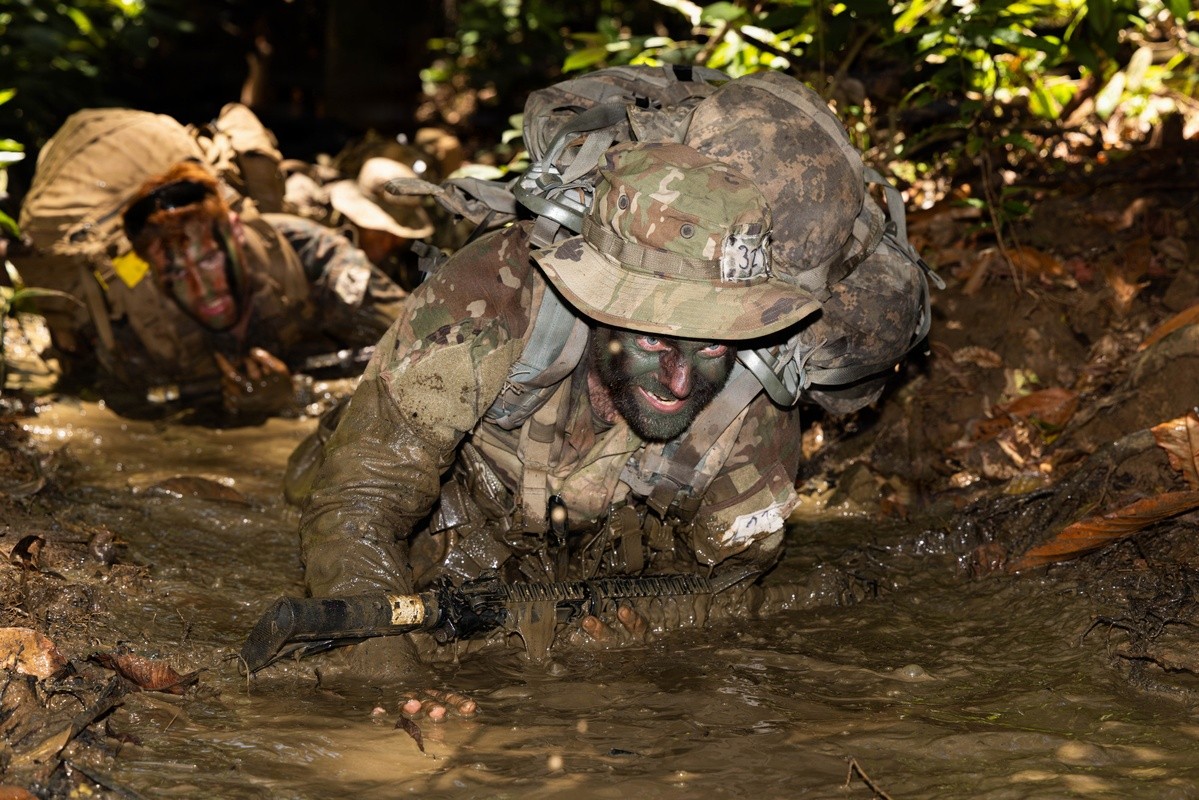

Mission.
CJTC-S is the home of CTC rotation style training within Central and South America, where partners, allies and U.S. military units can test their individual through collective training in the austere and challenging Panamanian jungle. CJTC-S is operated by both U.S. Army and Panamanian security forces.
Jungle Operations Training Course - Panama (JOTC-P)

Mission: To forge the world's most adaptive and lethal jungle warriors.
Through a combined partnership, the Jungle Operations Training Course - Panama leverages the unique and demanding jungle environment of the Isthmus to train and certify leaders and units from the United States, Panama, and other partner nations in basic jungle warfare techniques, survival skills, and interoperability, ensuring they are prepared to fight and win in any tropical environment. The school is dedicated to fostering a multinational center of excellence that promotes shared tactics, mutual understanding, and enduring security cooperation throughout the Western Hemisphere.
Jungle Operations Training Course (JOTC-P). (Current as of Jul. 23, 2026)
-
Phase I: Foundational Jungle Skills
Phase I builds the essential baseline required to function effectively under the canopy. Students are assessed individually on critical technical skills, including:
Jungle Mobility: Mastering five critical and two non-critical knots.
Water Survival: Completion of the Combat Water Survival Assessment (CWSA).
Physical Standards: Completion of the Jungle 5K run within 40 minutes and passing the Land Navigation Assessment under strict time constraints.
Phase II: Tactical Application
Building on the foundations of Phase I, Students refine their ability to operate as a cohesive element. Instruction focuses on:
Waterborne Operations: Conducting river crossings and utilizing rope systems in tactical environments.
Combat Tracking: Developing the "hunter" mindset through sign-cutting and tactical tracking techniques.
Jungle Tactics: Adapting standard infantry tactics to the limited visibility and restrictive terrain of the jungle.
Rope Systems: Proficient operation of the One Rope Bridge and the 3:1 Line Haul System.
Survival: Mastering the art of sustaining life and combat power in high-humidity, dense-growth environments.
Phase III: The CULEX (Culmination Exercise)
The course culminates in a three-day field training.
-
For Prospective Students
For Prospective Students
Q: I’m not stationed in Panama; can I still attend as a walk-on?
- A: No. Walk-on status is strictly reserved for personnel currently stationed in Panama. All other students must secure a slot via ATRRS and submit their packet NLT 45 days prior to the course start date. Change this to NLT 35 days as well
Q: What happens if I fail the Jungle 5K or the CWSA on Day 1?
- A: These are mandatory critical skill assessments to be awarded the J2 ASI. Failure to meet the 40-minute standard for the 5K or successfully complete the Combat Water Survival Assessment will result in the student being allowed to continue the course, HOWEVER the student will receive only a certificate of training and NOT a graduation Diploma or the J2 ASI.
Q: Do I need to bring my own rope for the knot testing?
- A: No, training materials are provided. However, you must arrive already proficient in the five critical and two non-critical knots. We recommend practicing with standard 7/16-inch or 11mm static line prior to arrival.
Q: Is there a specific "packing list" for the jungle?
- A: Yes. The packing list is provided in your Welcome Letter. Note that the jungle environment is extremely hardware-intensive; failing to have a "critical" item (like specific footwear or moisture-wicking gear) will result in a drop from the course.
For Unit Leaders (CDR/1SG)
Q: Why does my Soldier need to report three days early?
- A: The three-day window is critical for weather acclimatization and RSOI (Reception, Staging, Onward Movement, and Integration). The humidity and heat index in Panama require a physiological adjustment period to prevent heat casualties during high-intensity training.
Q: Does my unit need to submit an APACS request for the Soldier?
- A: No. The CJOTC Training and Standards Cell (TSC) handles all APACS submissions. Your responsibility is ensuring the Soldier’s packet is 100% complete and submitted NLT 45 days out.
Q: What is the "Panama 100" and why do I have to sign it?
- A: The Panama 100 is your certification as a commander that the Soldier is technically and physically prepared. By signing, you verify they have passed the CWSA, the Jungle 5K, and knot-tying proficiency at home station.
For Schools & Training Managers
Q: How do I handle a medical waiver for a Soldier with a "2" in their PULHES?
- A: Medical waivers must be submitted to the U.S. Army Infantry School (USAIS) NLT 75 days prior to the class start date. Email requests to: usarmy.benning.mcoe.mbx.usais-training-waivers@army.mil.
Q: A Soldier’s STP shows they are 40 years old; what extra documentation is needed?
- A: They must provide a copy of a complete Cardiovascular Screening Program (CVSP) and EKG conducted within 90 days of the course start date. This is a hard requirement IAW AR 40-501.
Q: What is the naming convention for digital packet submissions?
- A: Packets must be scanned as a single PDF and named: CL#_LAST_FIRST_JOTC-P_PACKET. For example: CL 26-02_RAMBO_JOHN_JOTC-P_PACKET.
General Travel & Logistics
Q: Can I rent a car at PTY airport?
- A: No. Students are not authorized rental cars. Military transportation is provided from PTY Terminal 1 (Hertz Center) to the training site.
Q: Is Yellow Fever the only mandatory shot?
- A: No. You must also have a current Rabies series (2x + booster), Typhoid (within 2 years), and Meningococcal (within 5 years). All must be documented on your DD 2766C or CDC 731
Miscellaneous
Q: How do I get a course slot?
- A: Going through your Division Schools NCO
Q: How long is the course?
- A: Total training time is 18 days, but you are asked to arrive a couple days prior to acclimate to Panama.
Q: Can I attend with a profile?
- A: Profiles will be reviewed on a case by case basis
-
The majority of course seats for the Jungle Operations Training Course are reserved through ATRRS via the CJTC-S Training and Standards Cell (TSC). For personnel already stationed in Panama, "Walk-On" opportunities may be available on a space-available basis.
Eligibility Requirements
To be considered for a walk-on slot, students must meet the following criteria:
Duty Location: Walk-on status is authorized only for personnel currently stationed (Permanent or Rotational) in Panama.
Travel Clearance: Since walk-on students are already in-country, APACS approval is not required.
Full Compliance: Walk-on candidates must meet 100% of the medical, physical, and technical prerequisites required of ATRRS-reserved students.
The Submission Process
Reporting on Day 0 without prior CJTC-S TSC coordination is not authorized. All walk-on students must submit a completed packet NLT 21 days prior to the report date for vetting and approval.
Packet Submission: Prospective walk-ons must submit a complete application packet through the CJTC-S TSC no later than 21 days prior to the report date.
Wait-Status: Once ATRRS slots are filled, the TSC will accept and process packets for "Wait-Status."
Packet Requirements Checklist
Ensure your packet is complete before submission to the TSC. Missing document(s) will result in the packet being rejected.
Panama 100 Form: Must be signed by the Commanding Officer verifying Land Nav and Knot proficiency.
Medical Records: Proof of MEDPROS "Green" status and all jungle-specific immunizations (Yellow Fever, Rabies, Typhoid, etc.).
Physical Standards: Verification of a passing AFT and compliance with AR 600-9 (Height/Weight) or service equivalent.
Unit Equipment Inspection: Signed verification that a 100% layout was completed.
Note to Units: Walk-on slots are never guaranteed. Units should always prioritize securing primary slots through ATRRS to ensure their Soldiers are slotted for training.
-
All travel requirements are governed by the Aircraft and Personnel Automated Clearance System (APACS) and the DoD Foreign Clearance Guide (FCG). To ensure successful entry into Panama and enrollment in CJTC-S, follow the steps below. APACS is handled internally by the CJTC-S TSC upon receipt of a completed course packet. Individual units do not need to submit travel clearances. See the JOTC-P Training Request Workflow tab to begin the process.
Administrative Documentation
Panama-100 Form (Signed by CO)
Signed ISAP (Individual Student Assessment Plan)
Soldier Talent Profile (STP) (or Service Equivalent)
ISOPREP (Must be completed/verified by your Division G2)
CDC 731 (Yellow Card): Proof of Yellow Fever (within 10 years).
Electronic Immunization Record (DD 2766C): Must show Rabies series, Typhoid (within 2 years), and Meningococcal (within 5 years).
CVSP/EKG: Required for students 40 and older. Results must be within 90 days of the course start date.
Medical Waiver: (If applicable).
Mandatory Training (JKO) and Briefings
JS-US007: Level I Antiterrorism Awareness Training (2 hrs)
J3T A-US1329: SERE 100.2 Level A (4 hrs)
J3S N-US649: SOUTHCOM Human Rights Awareness (1 hr)
JCSUAS A-US1401: Basic sUAS Awareness (1 hr)
Mandatory Briefing: Panama Threat Brief (must be completed within 60 days of Course Start date)
ISOPREP (Must be completed by service members DIV G2 within 180 days of Course Start date)
Point of Contact:
For questions regarding travel clearance, documentation, or the APACS process, contact the TSC at email: usarmy.list.jungle-operations-training-center-panama@army.mil
-
To attend the Jungle Operations Training Course-Panama, applicants must meet the following mandatory requirements prior to the class start date. Failure to meet these standards will result in a return to unit (RTU).
Personnel & Rank Requirements
JOTC-P is open to the following ranks and classifications:
Enlisted: E-1 through E-9
Warrant Officers: W-1 through W-4
Officers: O-1 through O-6
Cadets: ROTC: MS-3 and MS-4 Cadets.
USMA: Must have completed Cadet Basic Training.
Service Obligation: Applicants must have a minimum of one year of service remaining on active duty upon course completion.
Physical & Medical Standards
Students must arrive in peak physical condition, ready to operate in a high-humidity environment.
Medical Readiness: Must be MEDPROS "Green" PHYSCAT “A” or Service equivalent. (or service equivalent).
PHA: Periodic Health Assessment must be current within 12 months of expected course completion date (IAW AR 40-501 or service equivalent).
Students may not be on a temporary profile or a permanent profile that would limit ability to complete all course requirements. Prior hot weather injuries require a medical waiver submitted to ASCG-S BDE Surgeon and approved by course convening authority.
Body Composition: Must meet their service's height and weight standards (IAW AR 600-9 or service equivalent).
Fitness Assessment: Must have a passing AFT score (IAW FM 7-22 or service equivalent) on record.
Pre-Arrival Training & Documentation
The following technical skills and administrative items must be verified by the student's home unit:
Command Verification: Proficiency in Land Navigation and the ability to tie the five critical and two non-critical knots must be verified via the Commanding Officer’s signature on the Panama 100 Form.
Equipment Inspection: A 100% layout and inspection of all required gear must be completed by the student's unit prior to arrival.
-
If a student does not meet the standard non-medical prerequisites, a waiver must be submitted through the CJTC-S Training and Standards Cell (TSC) for approval at usarmy.list.jungle-operations-training-center-panama@army.mil
If a student does not meet medical prerequisites, a waiver must be submitted through the CJTC-S Med Cell for approval at: USARMYFtBenning1SFABDEMEDClinic@army.mil
All waivers must be submitted NLT 75 days prior to the class start date.
Note: See the Medical Information tab for in-depth medical requirements and specific screen
-
The jungle environment presents unique health risks. All students must arrive with a complete and up-to-date medical record. Failure to provide physical proof of the following immunizations and screenings will result in an immediate Return to Unit (RTU). Students may not be on a temporary profile or a permanent profile that would limit ability to complete all course requirements.
- Prior hot weather injuries require a medical waiver submitted to ASCG-S BDE Surgeon and approved by course convening authority.
Waiver requests submitted through the CJTC-S Med Cell for approval at USARMYFtBenning1SFABDEMEDClinic@army.mil
Mandatory Immunizations
All immunizations must be valid through the course graduation date. Ensure your DD 2766C (Vaccine Administration Record) or CDC 731 (International Certificate of Vaccination) is updated and in your possession.
Immunization Requirement / Validity Required Documentation
Yellow Fever Received within the last 10 years CDC 731 (Yellow Card)
Rabies Full Series (2x doses + Booster) DD 2766C
Typhoid Received within the last 2 years DD 2766C
Meningococcal Received within the last 5 years DD 2766C
Cardiovascular Screening Program (CVSP)
In accordance with AR 40-501, specific heart health screenings are required for experienced Soldiers to ensure safety during high-intensity jungle operations.
Applicability: All students aged 40 and older.
Requirement: One copy of a complete CVSP and EKG results.
Timing: This screening should be completed as close to your 40th birthday as possible as part of your Periodic Health Assessment (PHA).
Action: You must present physical proof of this screening upon arrival at CJTC-S.
Medical Records Checklist
Before departing your home station, ensure your medical packet contains the following:
MEDPROS "Green" Printout (or Service Equivalent IMR).
Periodic Health Assessment (PHA) (Completed within 12 months).
Yellow Card (CDC 731) for Yellow Fever.
DD2766C for Rabies, Typhoid, and Meningococcal
CVSP/EKG Results (for 40 or older)
All student should review HeatAcclimatizationGuide.pdf prior to arrival in Panama.
-
JUNGLE SCHOOL WELCOME MEMO 26-06 (SCO).pdf
DTS Instructions - Jungle Operations Training Course (FINAL).pdf
All students must coordinate travel through the Defense Travel System (DTS) upon receipt of a valid ATRRS reservation. Compliance with the Standard Routing Doctrine (Simple Rule) for CONUS and OCONUS travel is mandatory. Students will receive a ATRRS reservation and welcome letter and must submit this information as part of their PART 1. Go to Packet and Training workflow for instructions.
Flight Planning & Routing
To ensure timely arrival and mission success, students must follow these flight parameters:
Routing: Travel from a Regional Hub to a Major Hub, then direct to Panama City (PTY).
Major Hubs (Direct to PTY): ATL, MIA, AUS, DFW, SFO, JFK, EWR, or FRA.
Arrival Deadline: No Later Than (NLT) 2100 EST on the report date.
Report Date: Generally three (3) days prior to the course start date. This window is mandatory for weather acclimatization and RSOI activities.Arrival in Panama (PTY)
Upon arrival at Tocumen International Airport (PTY), follow these instructions for military transportation to JCSG-P:
Terminal 1: The CJTC-S LNO is located outside Terminal 1, directly in front of the Hertz Rental Car Center.
Terminal 2: Students arriving at Terminal 2 must retrieve all luggage and utilize the airport shuttle to transit to Terminal 1 for pick-up.
Deviations: Any mission-essential deviations from this travel plan must be approved in advance by the CJTC-TSC.Per Diem & Return Flights
Per Diem: Rates fluctuate throughout the course based on the phase of training. Refer to the DTS Instruction PDF for specific daily rates to ensure your authorization is funded correctly.
Departure: All students will depart Panama the day following graduation.
Drop-off: Transportation from JCSG-P will arrive at PTY at approximately 1100 EST on the day of departure. Ensure return flights are booked accordingly. -
Course Enrollment Form: 1. P-100 Jul 26.pdf
JOTC_STUDENT_ISAP_ACKNOWLEDGEMENT_Revised 4 Mar 26.pdf
All U.S. Service Members must complete and submit their application packet no later than 45 days prior to the course start date. The Training and Standards Cell (TSC) is your primary point of contact for processing and approval.
Step 1: Administrative Documents
Gather the following digital documents. Ensure all forms are the most current versions.
Panama-100 Form: (With Commander signatures)
ISAP(Individual Student Assessment Plan): With Student Digital Signature
Soldier Talent Profile (STP): Or service equivalent ***See Note Below***
ISOPREP: Verified by your Division G2.
Medical Records: ***See Note Below***
CDC 731 (Yellow Card): Yellow Fever must be within 10 years and valid through the course end date.
DD 2766C: Documenting Rabies (2x + Booster), Typhoid (within 2 years), and Meningococcal (within 5 years).
CVSP/EKG: (Aged 40+) Must be completed within 90 days of the course start date.
Medical Waiver: If required, request via: usarmy.list.jungle-operations-training-center-panama@army.milStep 2: Required Online Training (JKO)
Certificates must not expire until at least 30 days after your return to home station. Complete these on JKO:
Antiterrorism Awareness (JS-US007)
SERE 100.2 Level A (J3T A-US1329)
SOUTHCOM Human Rights (J3S N-US649)
Basic sUAS Awareness (JCSUAS A-US1401)Step 3: Submit Your Packet
Suspense: NLT 35 Days prior to Day 1.
Format: Scan the entire packet as one (1) PDF document in the order of Steps 1 and 2.
Naming Convention: CL#_LAST_FIRST_JOTC-P_PACKET (e.g., CL 26-02_RAMBO_JOHN_JOTC-P_PACKET).
Submission: Submit via the official portal:USAWHC Combined Jungle Operations Training Center TSC | Part 1
*** Note*** Student packet must verify:
PHA: Current within 12 months.
Students may not be on a temporary profile or a permanent profile that would limit ability to complete all course requirements. Prior hot weather injuries require a medical waiver submitted to ASCG-S BDE Surgeon and approved by course convening authority.
Fitness: Passing AFT and meeting AR 600-9 Height/Weight standards (or service equivalent).
Service Obligation: Minimum 1 year remaining on active duty post-course.
Admin Readiness: Current DD93 and SGLV.Step 4: APACS & Clearance
Once your packet is submitted:
The TSC submits APACS on your behalf. (Your unit does not submit APACS).
You may provide the APACS number to your BDE Security Manager once issued.Step 5: ATRRS Reservation & Welcome Letter
The TSC will approve or decline packets within 72 business hours. If declined, you have 72 business hours to correct the issue. If approved, you will receive:
An ATRRS Reservation.
Official Welcome Letter: Sent to your .mil email and Command team containing DTS instructions, reporting location, in-processing, billeting, and weather acclimatization info. -
CJTC-S: usarmy.list.jungle-operations-training-center-panama@army.mil
JSCG-P Staff Duty phone number for travel concerns or issues is +507-310-5500.
Jungle School Prep
A six week training program to prep stamina and endurance in the jungle environment.
Knot tutorial (ENGLISH): https://www.youtube.com/watch?v=akySSJxLiMM
Knot Tutorial (SPANISH): https://www.youtube.com/watch?v=6CWiHDSgR3k
During JOTC-P students must complete 7 different types of knots and two rope systems. This video is to help Jungle candidates prior to attending the course.
---------------------------------------------------------
Durante el JOTC-P, los estudiantes deben realizar siete nudos diferentes y dos sistemas de cuerdas. Este video tiene como objetivo ayudar a los alumnos de selva antes de iniciar el curso.
News
-
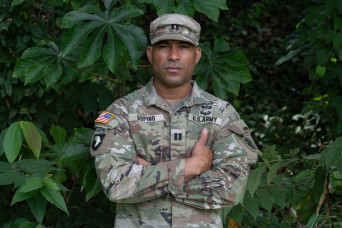 Capt. Jon Espino: Out of Panamá and Back Again
December 1, 2025
Capt. Jon Espino: Out of Panamá and Back Again
December 1, 2025
-
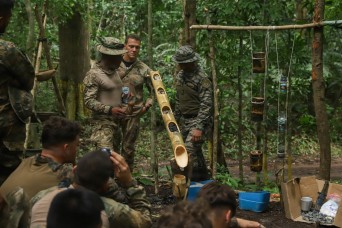 US and Panamanian forces kick off Jungle Operations Training Course
February 6, 2026
US and Panamanian forces kick off Jungle Operations Training Course
February 6, 2026
-
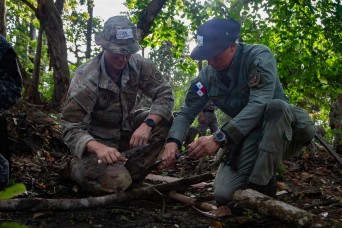 Jungle Operations Training Course - Panama: Machete techniques and water purification
February 12, 2026
Jungle Operations Training Course - Panama: Machete techniques and water purification
February 12, 2026
-
 Army Security Cooperation Group-South: First of its kind stands up in Georgia
January 27, 2026
Army Security Cooperation Group-South: First of its kind stands up in Georgia
January 27, 2026
Welcome to the ASCG-S
Welcome to the Army Security Cooperation Group - South. We are excited to have you join our team. To assist you in finding what you need as you are in-processing below are helpful links for unit point of contacts and garrison information.
Helpful Links
If you are PCS'ing to Fort Benning the below link is for how to in-process garrison.
https://home.army.mil/benning/my-fort/newcomers/reception
STAFF DUTY

ASCG-S: (762)207-0174 (Fort Benning, Ga)
JSCG-P: +507.310.5500/+507.631.1738 (Panama)
-JOTC-P students call with travel concerns or issues
CJTC-S: usarmy.list.jungle-operations-training-center-panama@army.mil
Want to Join Our Team?
If you are interested in joining the Army Security Cooperation Group - South please send the following information to ASCG-S_BDES1 <ascg-s_bdes1@army.mil>
-Full Name
-MOS
-Rank
-Current Unit
-PCS Timeline
-STP
Follow us on Social Media
ASCG-S:
Facebook. www.facebook.com/ASCGS/
Instagram. @ascg_south
YouTube. www.youtube.com/@ASCGS
JSCG-P:
Instagram. @jscg_panama
Flickr. https://www.flickr.com/photos/203303066@N08/albums/