Editor's note: This is the second part in a two-part series on the new housing guide issued in November from the Housing Office. Last week's article focused on what the housing guide was meant to do, whom it was meant to serve and how it should best be read. This week's article focuses on leadership support and rewarding those who do the right thing.
ANSBACH, Germany -- Without the support of leaders of U.S. Army Garrison Ansbach, the 12th Combat Aviation Brigade and other Ansbach-area units, the USAG Ansbach Family Housing Handbook and Resident's Guide would still be informative but ineffective as a means of enforcing standards for residents in Army housing.
Sgt. Maj. Paul G. Hutchings, who serves as the USAG Ansbach Directorate of Public Works sergeant major, said leaders have given "awesome support." Although Hutchings has drawn some of what is in the USAG Ansbach housing guide from nearby garrisons, the support of the final product from Col. Kelly Lawler, USAG Ansbach commander, is such that Lawler has sent the 60-plus-page document to other military communities as an example of what is working.
Hutchings said it's possible other military communities will come back with positive or negative feedback about the USAG Ansbach housing guide, but any feedback is good for improving it.
"We have a very close-knit relationship with the garrison command," said Master Sgt. Arthur Schreiner, the housing noncommissioned officer-in-charge, who added that he regularly communicates with the 12th CAB chain of command.
Schreiner said USAG Ansbach manages housing areas, but nearly all of the Soldiers are assigned to units other than garrison. This is why it's important for the Housing Office to have a close relationship to the units to correct problems as they arise in the housing areas. Building coordinators -- those residents charged with ensuring residents are being good members of their housing communities -- cannot correct every problem.
"It's very, very critical that leadership is involved in this," said Schreiner.
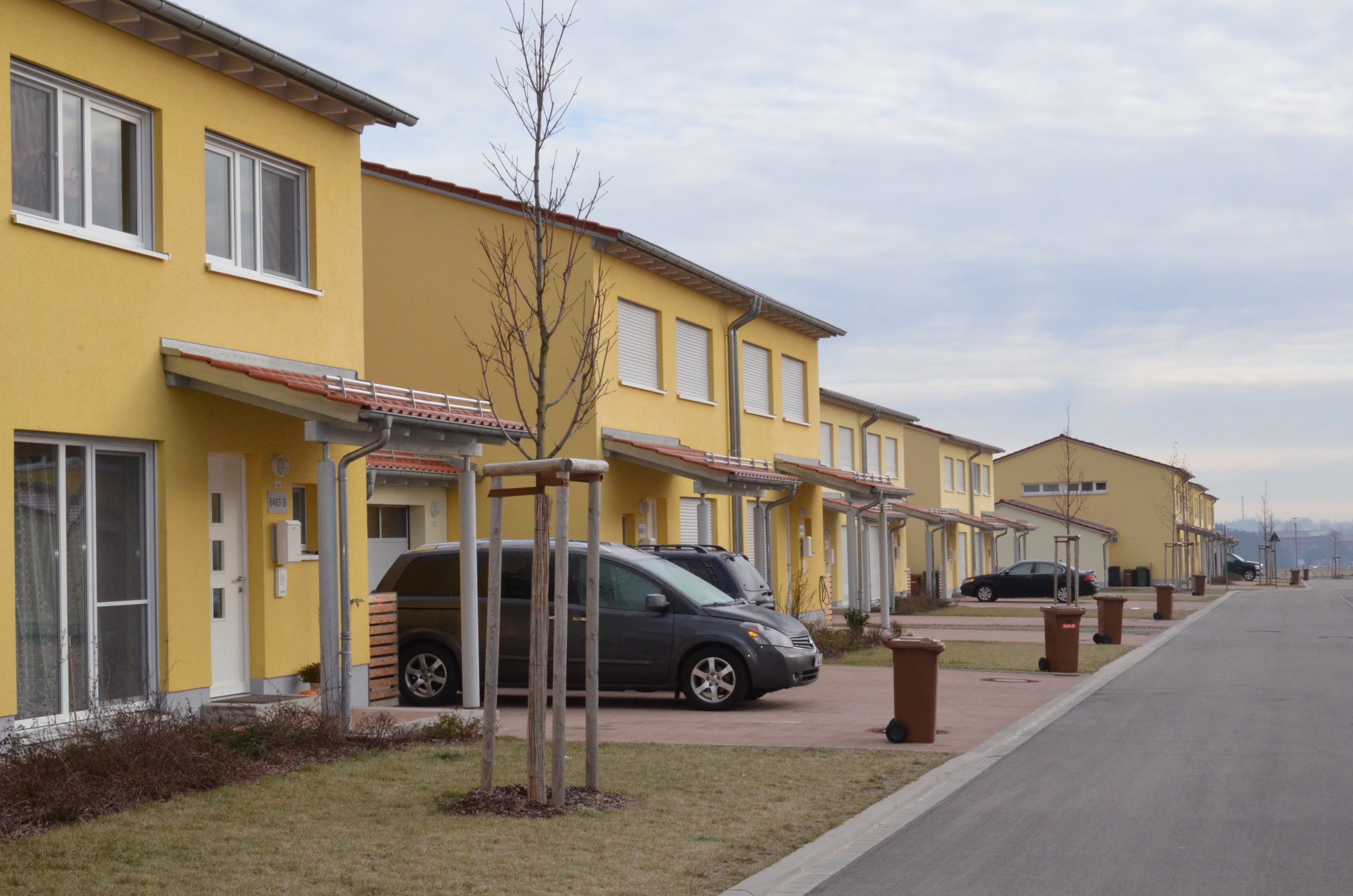
Schreiner used the example of Bleidorn Housing, which houses junior-enlisted Soldiers and their families. He said he's observed that, generally throughout the Army, leaders have not engaged their Soldiers and families at home as much as they used to. Schreiner said this has taken its toll noticeably on Bleidorn; however, he said this is changing as he continues communicating with company-level leaders about deficiencies.
"Without leadership involvement, I am ineffective," Schreiner said. "I can blow my whistle all day long, but if a first sergeant pulls you into the office because you can't clean up after yourself or you're doing the wrong things, you're probably going to get the message clearly. It's not from me. I have tools, but it's the first sergeant who's going to put the screws to you."
Schreiner said the biggest issues in the housing areas are motorcycle storage and parking, and storage of grills. The housing guide has given building coordinators ammunition with the ticketing process, he said, and now he is slowly starting to see the positive effects.
Through this process, Schreiner worked with Command Sgt. Maj. Leeford C. Cain, USAG Ansbach command sergeant major, to resolve a problem with an occupant's barking dogs.
"Over and over again, the Soldier received a warning letter; he received ticketing," Schreiner said. "I compiled all of that, sent it up to Sergeant Major Cain, and the occupant had to get rid of the dogs. So, cause and effect. As a [former] building coordinator, I endured the wonderful 'pleasure' of no ticketing. There was no policy to support me as a building coordinator. The ticketing process is the ultimate ammunition, with the warning letters, and then the forward effect from that.
"This," Schreiner said, tapping on the housing guide, "this was the basis of it. Now, we're building a program that is ultimately going to probably be the model housing program. That's what we're aiming for, for everyone to look at USAG Ansbach and say, 'Wow. They really got it. They get it.'"
Since Soldiers and family members come from different walks of life, for this program to work Schreiner said "there has to be a common meeting point. We have to all compromise at some point, but the bottom line is if we make those compromises, it's going to be great."
Schreiner and Hutchings are careful to point out there are also plenty of positive tools they have in the toolbox.
Hutchings said they are considering setting up a "Building of the Quarter" competition and rewarding winners with things like free movies and free games of bowling through the Directorate of Family and Morale, Welfare and Recreation -- in addition to a sign in front of the winner's quarters.
Hutchings and Schreiner also want to create incentives for building coordinators.
"No matter how you put it, being a building coordinator is an additional duty," Hutchings said. "He's not going to get promoted no matter how well he performs in his building coordinator duties. He's going to get promoted by how well he fixes helicopters, by how well he gets supplies and that sort of thing."
Hutchings said, however, that Lawler has proposed -- if the circumstances are right -- awarding a building coordinator with an Army Achievement Medal or even an Army Commendation Medal. Whether it's the carrot or the stick, Hutchings said ultimately he wants "people doing the right thing simply because they want to do the right thing. It benefits them."
To learn more about the guide, call 467-2943 or become a fan of "Ansbach Housing" on Facebook. The guide is available online at www.ansbach.army.mil/FlipBook/HousingGuideAnsbach/HousingGuideAnsbach.html.
Social Sharing