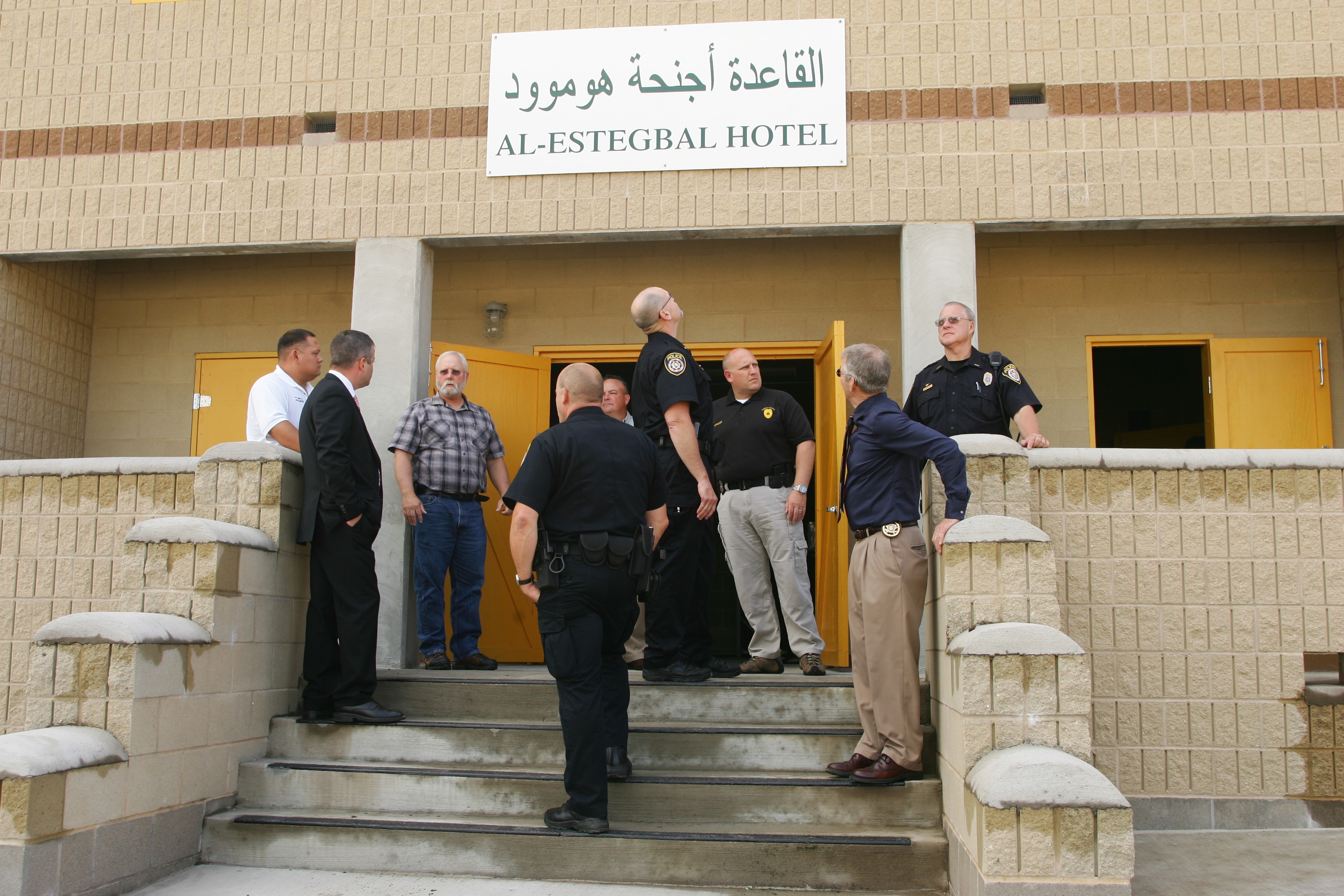
FORT MCCOY, Wis. -- Senior police leadership personnel from Fort McCoy met with agency counterparts from the surrounding communities at the installation Aug. 13 to further develop collaborative efforts to support each other's missions and training needs. Each of the participating departments takes a turn hosting the quarterly meeting.
Fort McCoy Directorate of Emergency Services Director Mark Fritsche, Chief of Police Rob Stapel and Training Officer Sgt. Alex Rivera-Torres hosted the McCoy event. Garrison Commander Col. Steven W. Nott and Garrison Command Sergeant Major Command Sgt. Maj. William T. Bissonette Jr., also attended the event to show command support and answer installation-level questions.
The meeting agenda addressed mutual training interests, training facilities available at Fort McCoy, and how Fort McCoy could support area law-enforcement training requests.
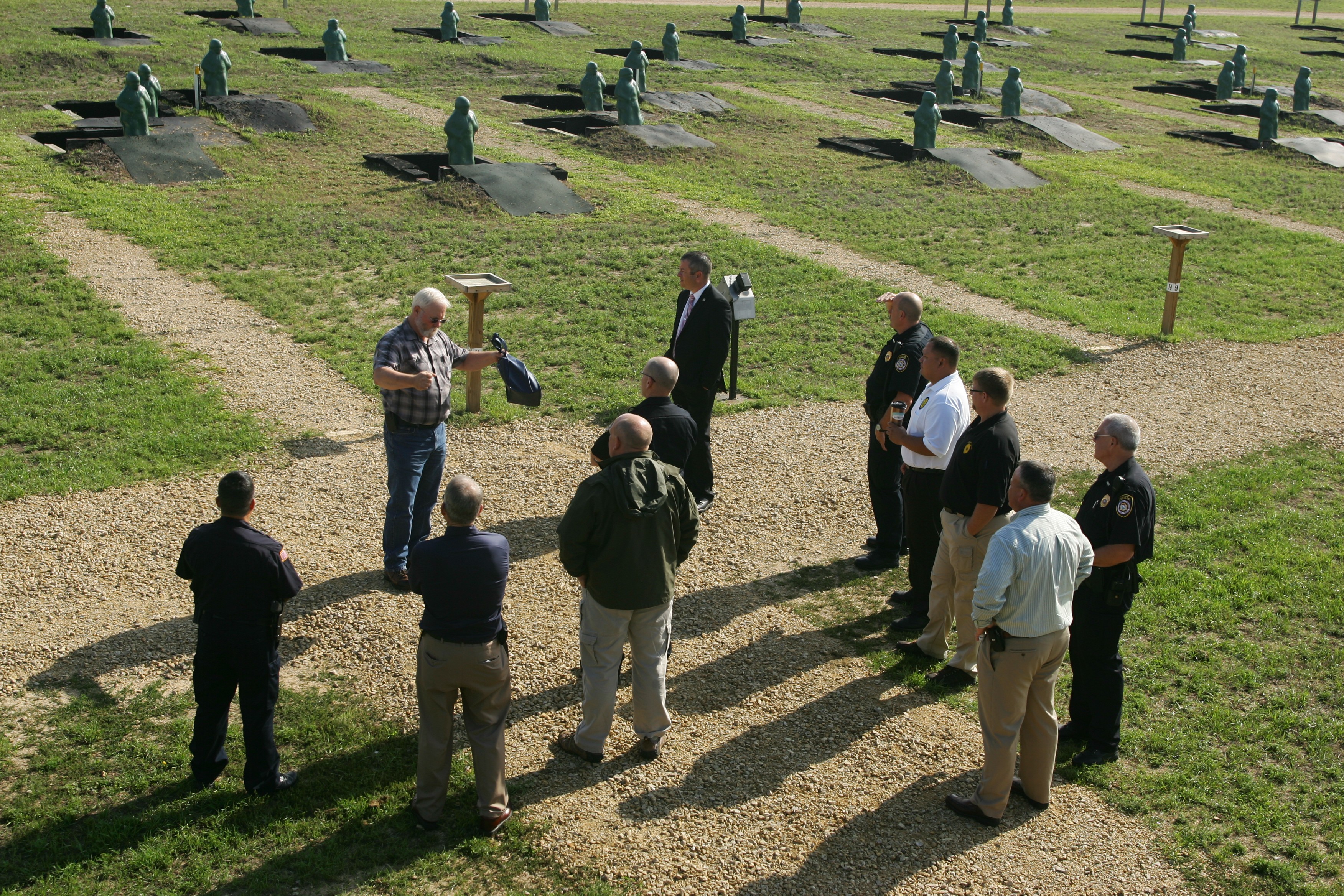
A tour and site visit to several training areas/facilities was presented by Terry Hoff, installation Range officer.
Fritsche said the installation Police Department also holds regular training, so if agencies only need to train a small number of personnel they can schedule the training along with the Fort McCoy Police Department. This allows the department to provide full capacity for ranges during the training.
"We can offer many training opportunities here," Rivera-Torres said. "We have been holding training at convenient times for our three shifts so we can accommodate training at convenient times for your personnel, as well."
Stapel said he appreciated the number of agencies in attendance. The Wisconsin State Patrol, the Tomah and Sparta Police Departments, the Monroe County Sherriff's Office and the Tomah Veterans Affairs (VA) Medical Center Police Department, among others, were represented.
Monroe County, Sparta, Tomah and Fort McCoy law-enforcement agencies will be planning scenario-based training events to address active-shooter responses, a current hot-button issue, he said.
"There's a lot we can learn from your agencies about how you approach situations," Stapel said. "Hopefully, there's a lot you can learn from us as well."
Bissonette said the meeting was an effort to help bring the relationship between Fort McCoy and the surrounding communities from one of community relationships to community interaction. To help forward that objective, Bissonette and Nott previously met with the different law-enforcement organizations in their cities.
"This is the first collective event of this type we've had as a community and I expect it won't be the last one," he said.
Fort McCoy offers excellent training opportunities, such as the use of the Live Fire Shoot House, the Mobile Urban Training Sites and special reaction threat forces training, among others.
Bissonette noted that although the ranges and training facilities are busy during peak training months, which includes the exercise season, the availability of training areas is more open outside of those time frames.
"You can use the ranges for nonstandard uses, as well, and do whatever you want to do with imagination and safety as your only limits," Nott said. "Remember what you see today is an infinitesimal piece of what you can do here."
Hoff explained the use of the installation's state-of-the-art ranges during a range tour.
The installation provides maintenance people when the ranges are in use to help address any mechanical problems if they occur with the targetry or to help determine other training avenues to accomplish the mission.
"Each range has standard facilities, such as classrooms, latrines, towers, ammunition buildings, etc., to support training needs," Hoff said.
Lt. Paul D. Matl of the Wisconsin State Patrol District Office in Tomah said he was familiar with the installation facilities and training capabilities as he served with the Wisconsin State Patrol Academy at Fort McCoy and has shared his knowledge with fellow troopers at Tomah.
Pete Quirin, the Monroe County sheriff, said the opportunities to target training to the various shifts would work well for his department because it is hard to get everyone together at the same time.
Police Chief Roberto V. Obong of the Tomah VA Medical Center said it's a good opportunity for the various departments to benefit from exchanging information and experiences from the schools and other training that officers with each department have attended.
"We need more hands-on training together so we're all on the same page," he said. "If I'm sure of the support I have and don't have to look in back of me, I can focus my efforts on what's in front of me."
Social Sharing