Fort Bliss, Texas -- It happens within a few hours. A hurricane striking the Gulf of Mexico wreaks havoc on the coast. Thousands of people are left homeless and in need of medical attention.
This single incident can overwhelm the capacity of any one entity. The cries for help and assistance puts a strain on local health and emergency services which in turn requires help from state and federal emergency services.
"It is critical to have an emergency plan in place and also a medical facility for patients to be evacuated to during a natural disaster," said Lt. Col. Villalobos, William Beaumont Army Medical Center and coordinator of the U.S. Army Federal Coordinating Center.
Villalobos's words came during a June 7 full-scale exercise testing of the National Disaster Medical System Mission which is to assist the United States and local authorities to cope effectively with medical consequences resulting from major national disasters -- natural or manmade.
This exercise provided training for personnel from William Beaumont Army Medical Center, El Paso National Disaster Medical System, the El Paso Fire Department, Border Regional Advisory Council on Trauma and Emergency Health Care, Team Bliss and staff from participating local NDMS health care facilities. The mock patient evacuation exercise was aimed at enhancing the overall training and readiness of all the supporting elements.
The June 7 exercise entailed a mock category 5 hurricane and patient evacuation response held at the Biggs Army Airfield Departure and Arrival Airfield Coordinating Group facility.
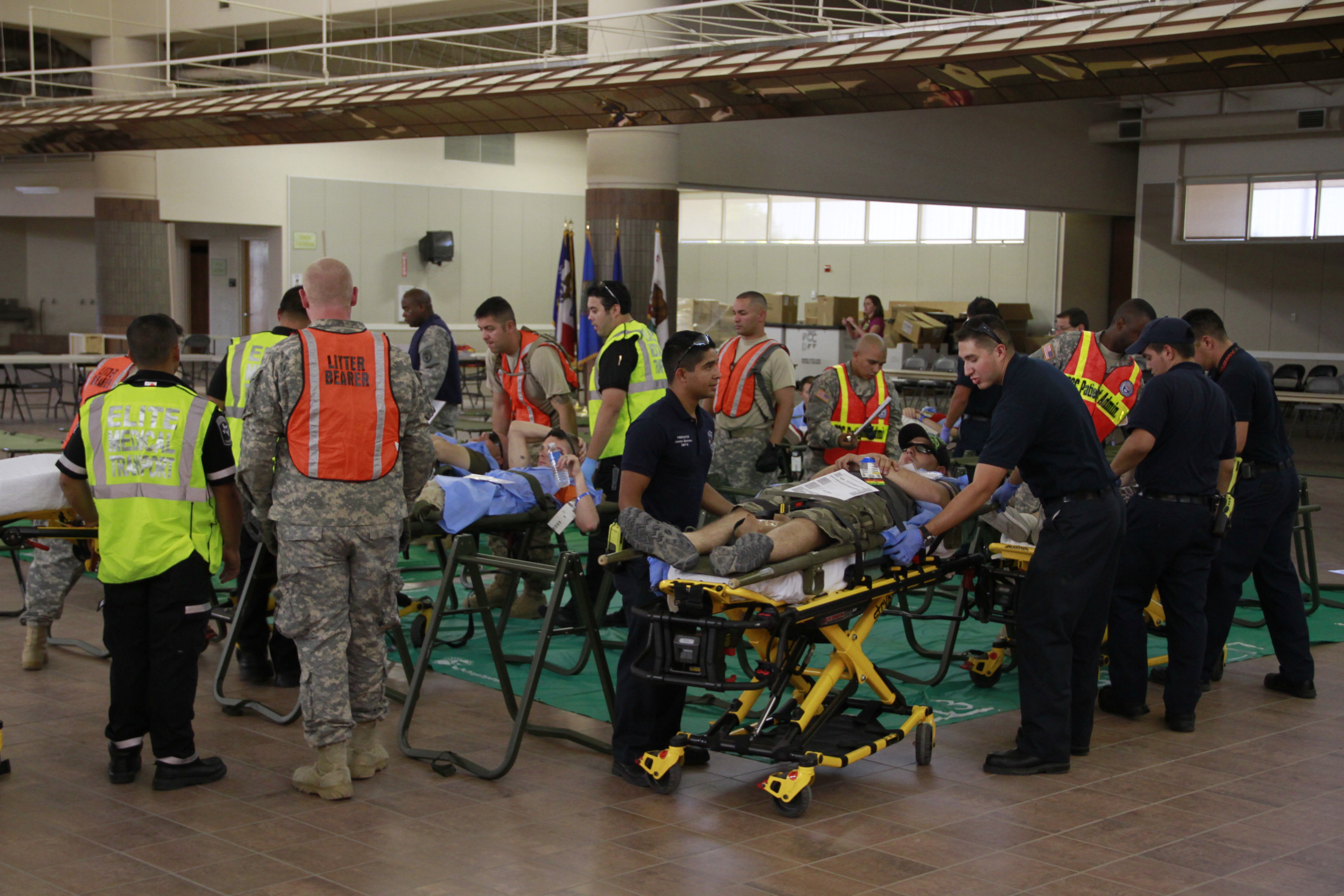
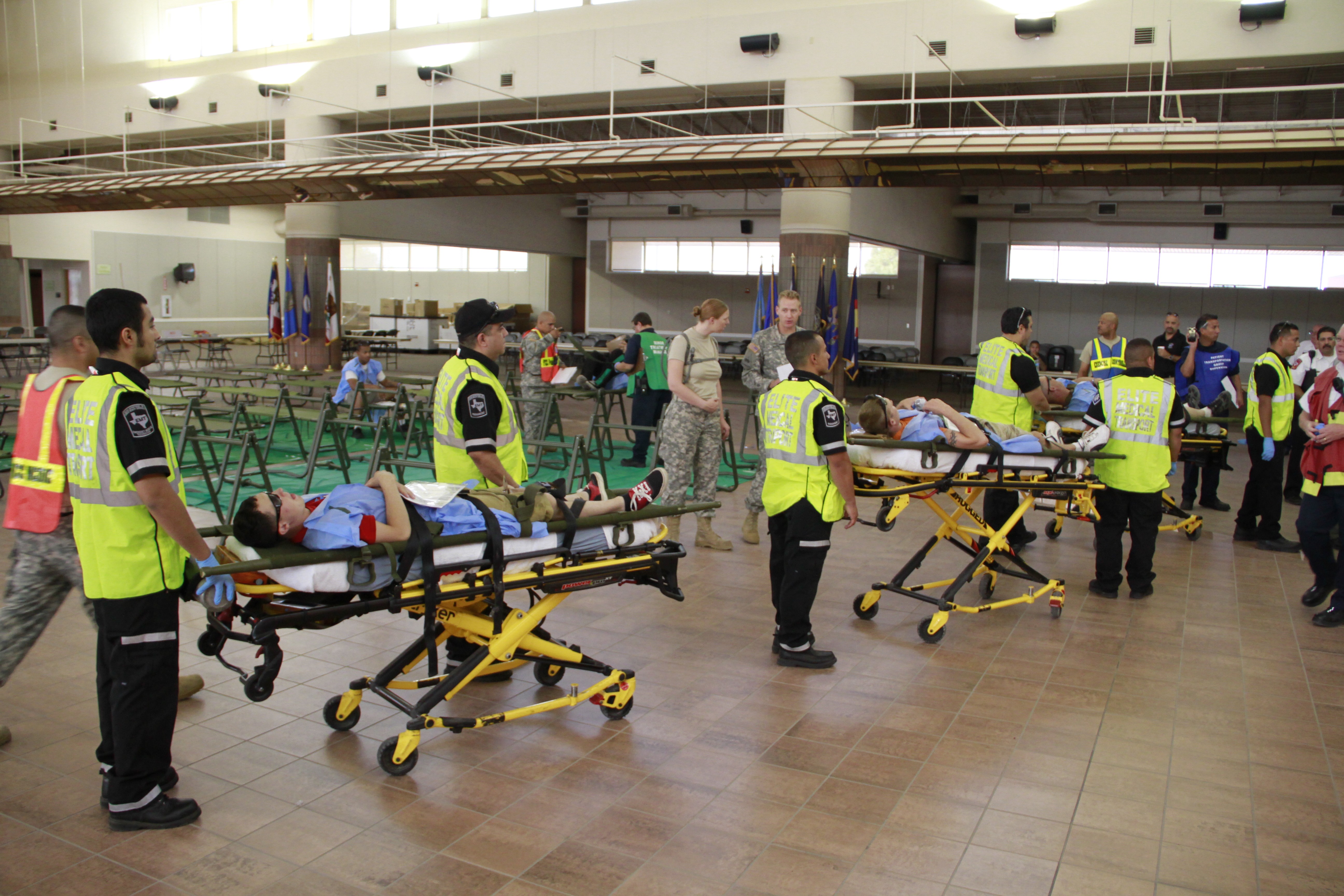
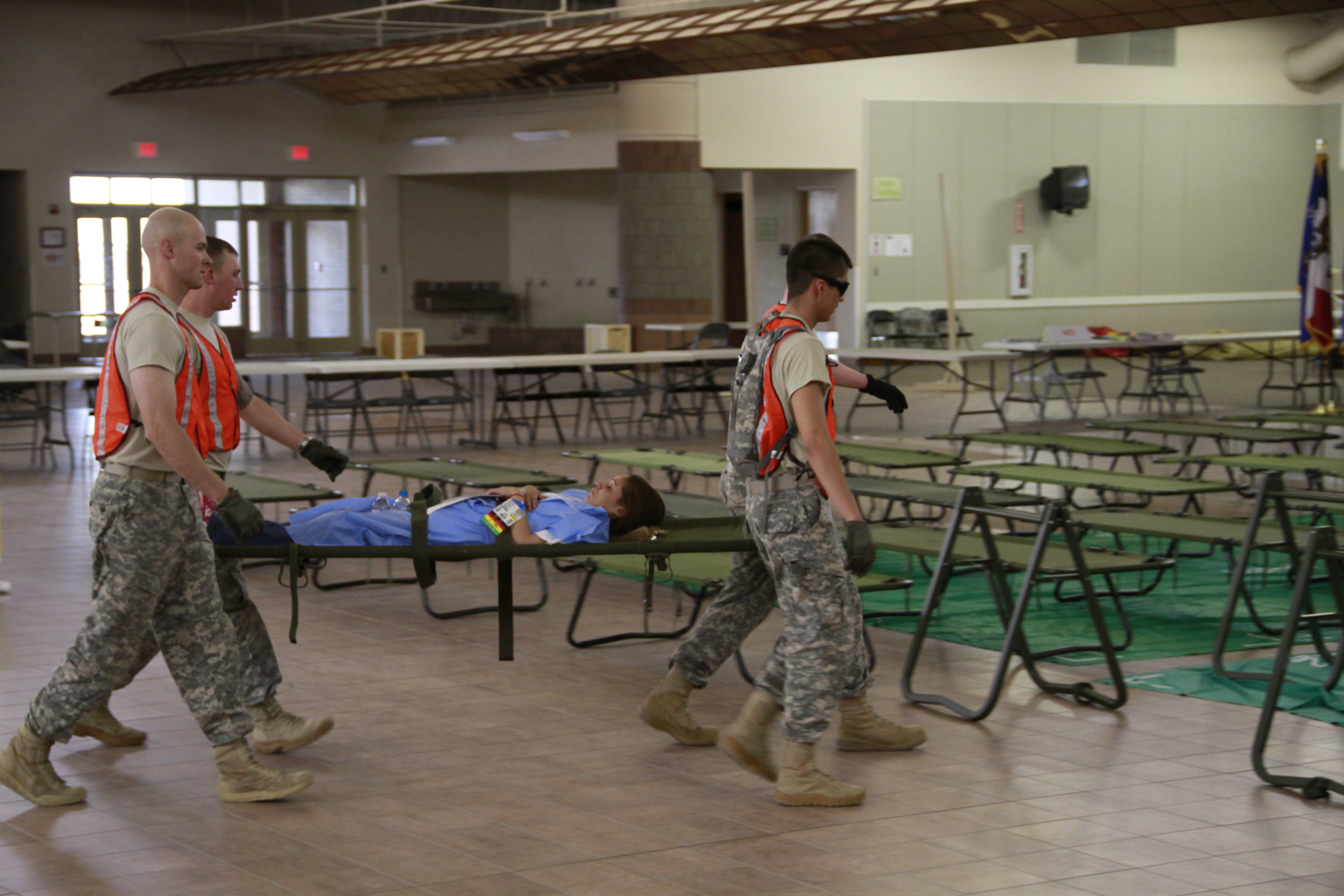
Emergency medical technicians lined up with their gurneys as personnel began transporting mock hurricane victims off of buses.
"Teamwork is critical in an exercise of this magnitude and it is important that we are well trained in the areas of our expertise'" said Michael Wells, an El Paso-area EMT, as he helped to move mock patients.
William Beaumont Army Medical Center is the host military medical facility for the National Disaster Medical System Federal Coordinating Center.
Brig. Gen. Dennis Doyle, commanding general for WBAMC, is in charge if the FCC is activated and would coordinate with regional medical facilities in El Paso and New Mexico. The goal is to provide emergency health care to disaster patients and also participate in the disaster readiness exercise.
The exercise was significant because it reassured community members that police, health care providers and emergency medical services are proficient in life-saving techniques and are able to support the workload of a disaster.
The life of an individual may depend on the skills of emergency personnel.
"Building confidence in the local community is what we as health care professionals must strive to achieve," said Shane Watters, an El Paso-area EMT.
Social Sharing