
COMBAT OUTPOST GIRO, Afghanistan (May 23, 2012) -- They still burn human waste out here, pull their own security and make contact with the enemy almost everyday.
For the paratroopers of "Charlie Troop" deployed to this remote quarter of Afghanistan's Ghazni Province, however, morale remains high, due in part to the strong bonds they've forged with their Afghan brothers-in-arms.
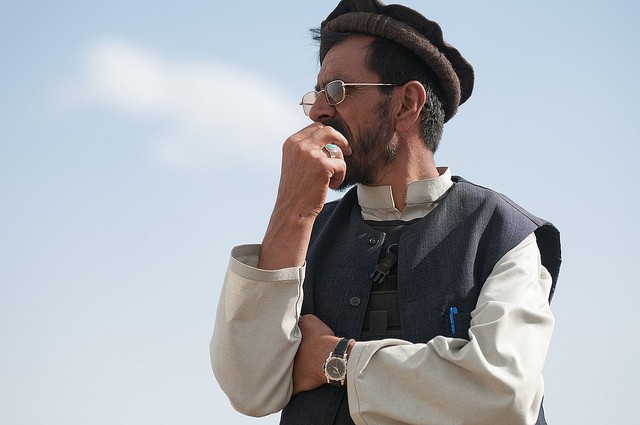
According to Capt. Michael Williams, commander of Troop C, 3rd Squadron, 73rd Cavalry Regiment of the 82nd Airborne Division's 1st Brigade Combat Team, the keystone of that partnership is Fazel Rahman, the 45-year-old sub-governor of Giro District.
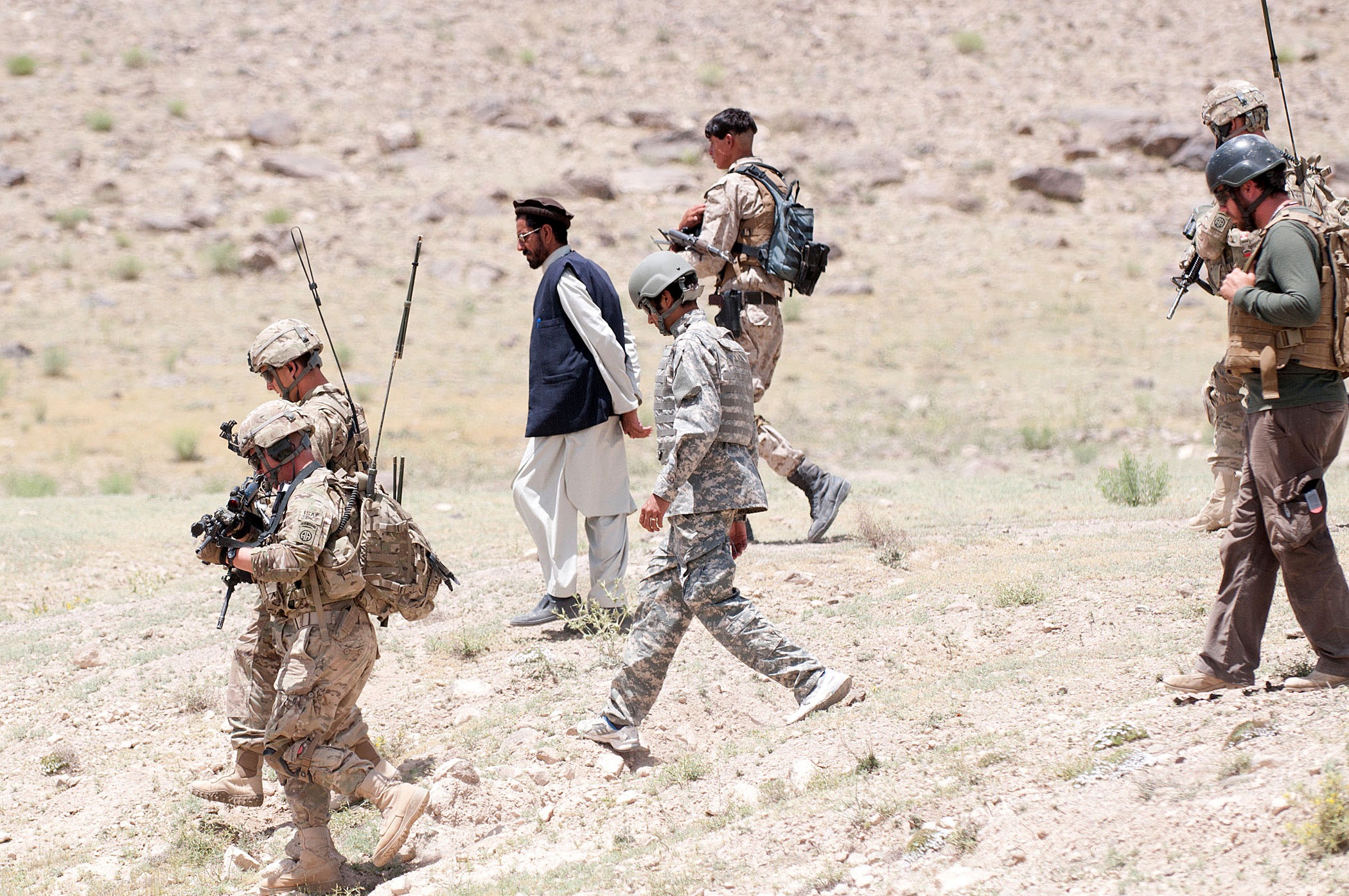
"I'm very fortunate to have a governor who is able, willing and motivated to get out and talk to people," said Williams of the sub-governor's habit of accompanying patrols that Charlie Troop sends into nearby villages.
"He motivates his security forces, he motivates the people that come see him, and he's optimistic," said Williams. "The fact that he came here [to the district center] when we got here and he hasn't left since is a testament to that. He hasn't even gone on leave or back to see his family."
On May 7, an American military vehicle was attacked with an improvised explosive device, killing Sgt. Jacob Schwallie, Spc. Chase Marta and Pfc. Dustin Gross. When the sub-governor learned of the attack and ensuing battle, he rounded up as many Afghan soldiers and policemen as he could and marched with them six kilometers into the firefight.
"The Afghan National Army soldiers here are great," said Sgt. Brandon Mendes, a communications specialist who recounted that day. "They rushed out there with heavy equipment and got into the fight. The sub-governor even shot through two clips with his 9mm [pistol] against the AK-47 and [rocket-propelled grenade] fire."
Soldier life on COP Giro is rustic. With several hundred U.S. and Afghan forces based here and a well that produces only a few thousand gallons of water per day, the COP denizens -- Afghans and Americans alike -- are allocated one shower and one load of laundry per week.
They do have a well-equipped outdoor gym, phone and computer center, chow hall with two "hots" a day, and a rifle range that gets plenty of use. With plenty of chores and few bodies, everyone seems to have more than one job.
Pfc. Olivia Guzman, who accompanies patrols to engage female Afghan villagers, also serves meals in the chow hall. Mendes helps keep communications working on the COP and on patrols, runs the helicopter landing zone, and daily engages the local Afghan security forces and sub-governor's staff. He has also been in plenty of firefights standing alongside the sub-governor.
"Just a few days ago, in the middle of a firefight, the governor ran over to a bunch of civilians who were calling for help," said Mendes. "This country would be a different place if we had more men like him."
Originally from Andar District just north of Giro, Fazel Rahman was a shopkeeper during the Taliban's rule. Suspected of colluding with the mujahedeen of Haqqani Network and Hekmatyar's Hezb-e Islami, he was beaten three times by Taliban fighters and threatened with his life, forcing him to relocate to Pakistan.
During the early Karzai years, Rahman returned to his country, where he helped manage construction for UNICEF. He was appointed Giro District sub-governor three years ago.
Alongside Rahman on many patrols is National Directorate of Security officer, Abdul Wahab, who leads a force of well-trained, disciplined and educated NDS soldiers.
"The ANA here are great, but the NDS soldiers are a cut above," said Mendes, "and when villagers see Abdul approaching, they stop in their tracks. They're great to have with us out there."
Capt. Williams said that, while some families might worry about the welfare of their soldiers working so closely with Afghans in light of recent "blue on green" fratricides and that it's always a legitimate concern, those types of incidents are typically sparked by immaturity and lack of cultural respect.
"Here we have a very disciplined force, and guys that understand and appreciate the culture. You go and fight alongside another man, whether Afghan or U.S., and you develop a bond."
"I tell my men, if you're in a firefight and you're both firing at the same enemy, you're probably on the same side. It's one of the positive things that comes from contact with the enemy. Contact unites men."
Williams, who is on his sixth deployment since 9/11 and second to Afghanistan, reserved his highest praise for the men under his command.
"They're heroes," he said. "Everyday they get up, these guys are walking out in the morning to almost a guaranteed fight. They're walking 10 kilometers a day in full kit at 6,500 to 7,200 feet, and they're getting after it, and they're not complaining. Everyday, bringing it to the enemy. I am very impressed with these guys out here."
The troop commander often reminds his paratroopers not to let their thinking get bogged down in the local fight. The big picture is to not let a group like Al Qaeda come back to Afghanistan and plot against the United States, he tells them.
"The way you do that is a strong governor with a legitimate form of governance, with a security force that's able to prevent it," he said.
"Here, we've got a start."
Social Sharing