
Homeland attacks, multiple nations' aggressive actions towards others and the possibility for full-blown global conflict were all on the table for the 368-students in the Army War College Class of 2012 during the Strategic Decision Making Exercise, Feb. 29-March 7 at the Center for Strategic Leadership.
Considered the student's capstone exercise, SDME is a six-day, interactive, strategic-level, political-military exercise based in the year 2025, which gives students the opportunity to integrate and apply the knowledge they've acquired during the academic year to a "real-life" situation.
"SDME provides the opportunity for the students to see how all of the processes and systems the students discuss in the core curriculum fit together into the US national security process," said Prof. Doug Campbell, CSL director. "It exposes them to the pressures and the kinds of events that senior national security leaders with on a regular basis."
"Learning by doing is the most effective way to learn, and the exercise allows students to apply the principles they learned in the midst of a fast-paced, complex exercise that allows them to see how frictions affect the processes," said Dr. Bill Johnsen, Dean of Academics. "The SDME exposes students to new issues and areas that they will become involved in for the remainder of their careers."
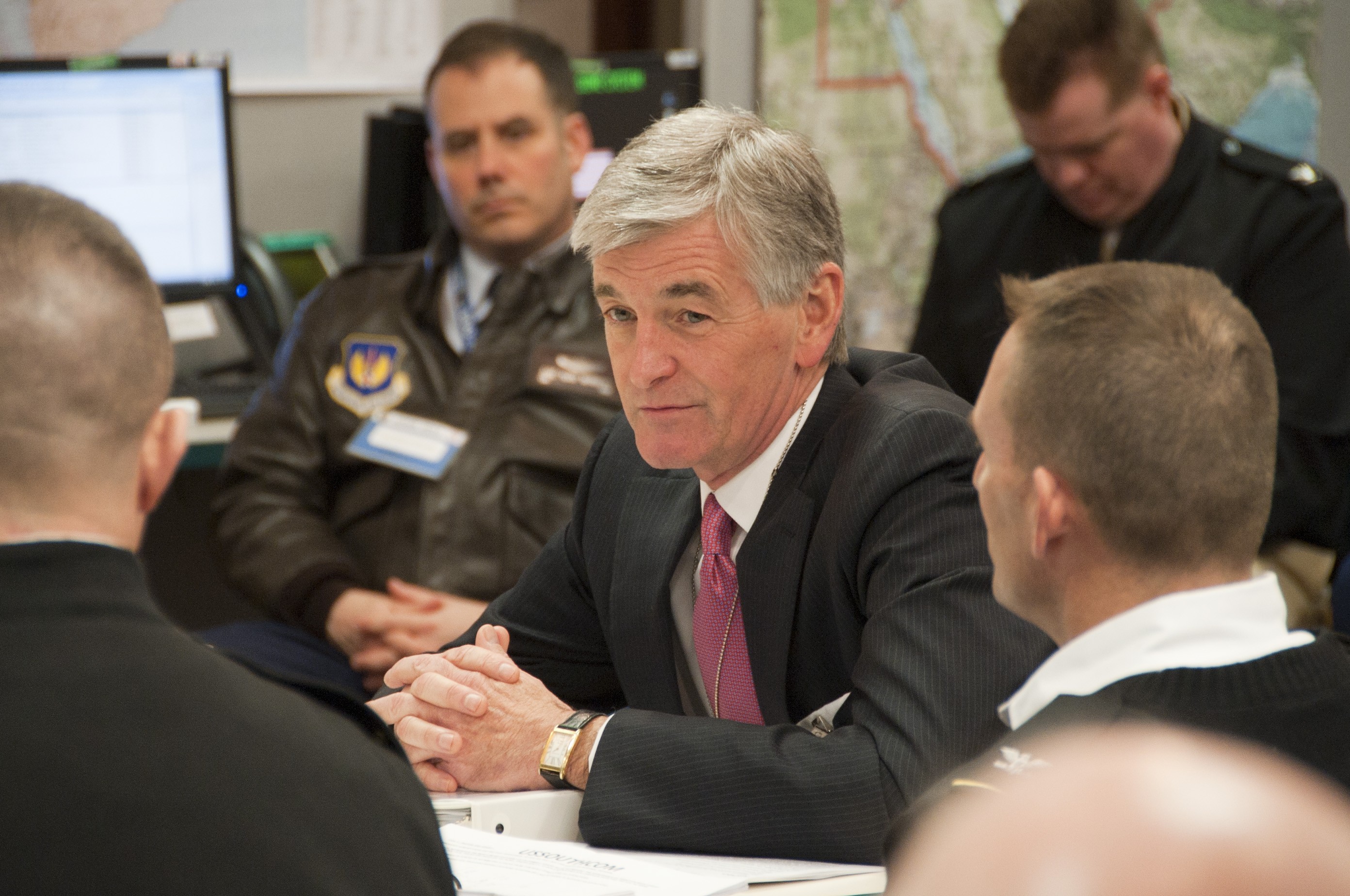
During the exercise students role-play many of the duties and tasks that they will face once they graduate, including conducting video teleconferences with Combatant Command Staffs, testifying before Congress, and performing bilateral negotiations with foreign government officials.
"This is the most incredibly complex exercise that I have ever been a part of," said student Col. Ronald Williams. "This is a great opportunity for us to apply what we have learned."
"I'm amazed at the depth of SDME," said student Lt. Col. Eric Flowers. "This has helped us see how the lessons we have learned in the classroom apply to the real world and open our eyes to the strategic level."
"This exercise has been great because it has given me an opportunity to experience and see how the DoD works in areas that I haven't been previously exposed to," said Marine Corps Lt. Col. Desmond Reid. "It has really opened my eyes to some of the challenges that face our senior leaders."
"This has been a truly great experience," said student Col. Al Abramson. "You couldn't learn like this anywhere else."
"SDME has made almost every exercise I've taken part in pale in comparison," said Air Force Lt. Col. Ralph Waite.
"This exercise demonstrates how important the interagency and international partners are to help tackle the complex world problems," saidCol. Michael Davey. "We are reminded on a constant basis that we are no longer at the tactical level and how different the world is at the strategic level."
The exercise takes only six days to complete, but takes a small army of people to plan and execute.
"The number of people involved in SDME changes over time, starting with a small core that plans the basic structure for the next exercise eventually expanding to the entire faculty of the USAWC," said Campbell.
The exercise brings together more than 600 personnel from the War College and subject matter experts from outside the school to serve as controllers, observer controllers, or exercise facilitators. People participating in the exercise come from numerous government organizations, including the Department of State, Joint Staff, FEMA, CENTCOM, FBI, and the CIA. Each year more than 50 distinguished visitors participate as role-players in the exercise; most as leaders from the military, diplomatic, interagency, business, and education communities.
This team makes sure that the exercise is cutting-edge and provides realistic scenarios for the students to encounter.
"We look at what is happening in the world and based upon the exercises we conduct with senior Army and Joint commands, what issues are those leaders dealing with and think may be an issue in the future," said Campbell. "Based upon this information we review each scenario to ensure it is plausible, reasonable and reflects fresh issues and challenges and that it achieves the educational objectives for the exercise."
Collins Hall is a perfect place to host exercise like SDME.
"Collins Hall was designed, built and staffed by HQDA for the purpose of using information technology to support education at the strategic level," said Campbell. "The Army's senior leadership specifically wanted to see events like these as well as things like the Army's Title 10 exercise and Joint exercises that are conducted here."
The exercise tests not only the students, but the faculty, exercise participants, observers and others as well.
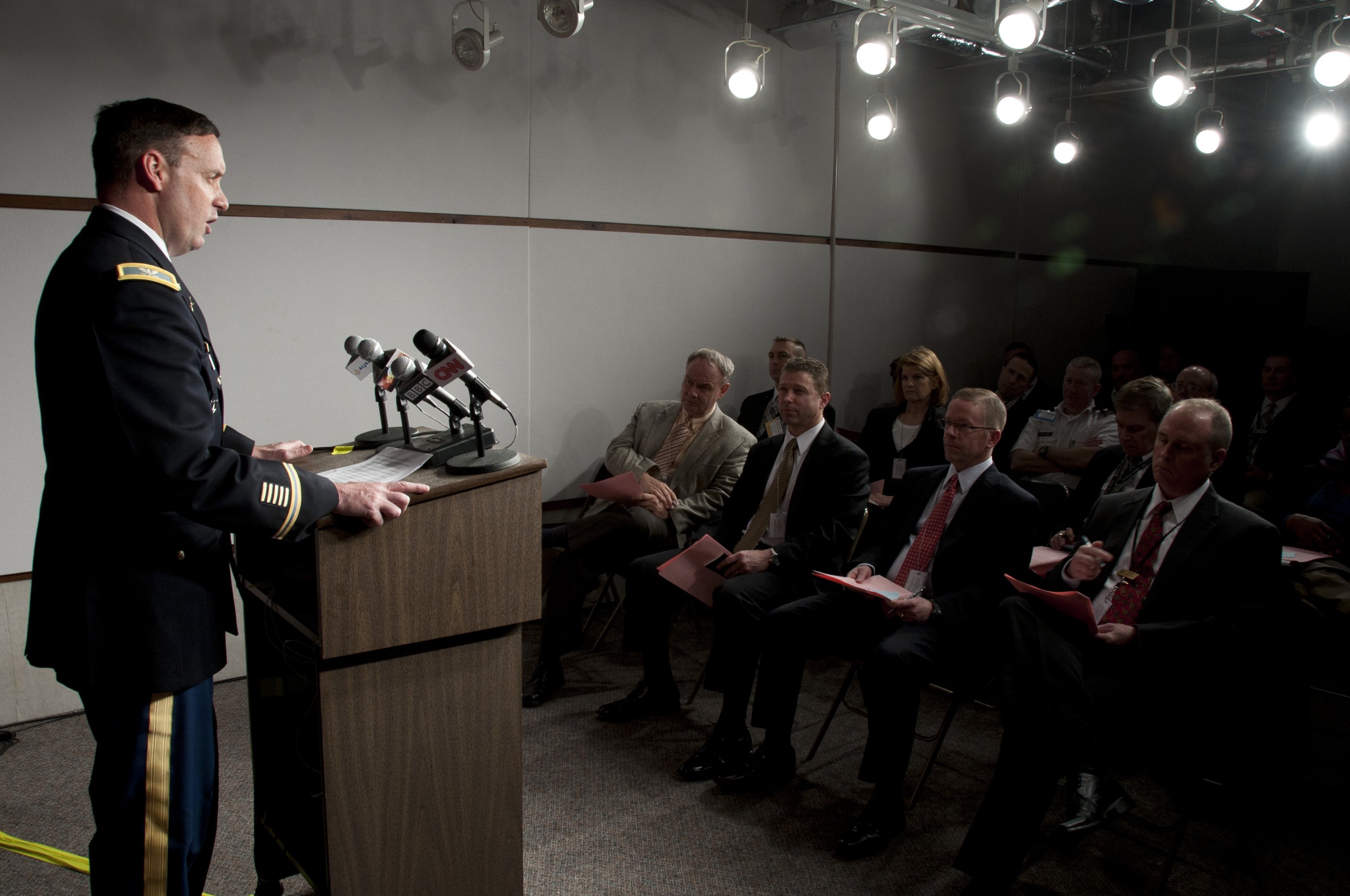
"From an exercise design perspective it is challenging to integrate all of the events are going on during the exercise and make them happen flawlessly," said Campbell. "From an exercise development perspective it is how to write scenarios which support the educational objectives we are trying to accomplish. From a faculty point of view it might be how to understand all that is going on and how it impacts the cell he or she is trying to 'observe/control.' From a student perspective it is probably testifying before Congress, or standing up in front of the 'media,' whose questions can be rather demanding."
The67 international officers in the USAWC Class of 2012 add experience and different perspectives to the U.S. students' experience. 40 of the officers took part in the "white cell" where they role-played ambassadors and senior military officials for bi-lateral negotiations.
"This is ideal because both the fellow and the U.S. students are able to learn from each other," said Col. Lou Jordan, who facilitated the white cell activities. "It's important for the U.S. students to look at issues and challenges from a non-U.S. perspective. This exercise provides them an excellent opportunity to learn about how other cultures and nations perceive an issue and how to come to a mutually beneficial solution. They need to think outside the 'U.S.' box."
Nigerian Col. Charles Ofoche agreed.
"In today's world not one country can do it all alone," he said. "To be successful we need to work together and this exercise reminds us how important these relationships are."
Another important part of the exercise involves the students interacting with various national and international news media outlets. During press conferences and interviews, controllers act as reporters from different national and international news organizations. The sound bites from these media events are then incorporated into television news broadcasts televised in Collins Hall each day.
"It was really beneficial to be able to take part in a media engagement as part of the exercise," said Marine Corps Lt. Col. Duane Opperman who took part in a short notice interview. "We don't always practice this as much as we should. I think this is an extremely valuable part of the exercise."
The filming of the interviews and the television newscasts were produced by Army Reserve Soldiers from the 209th Broadcast Operations Detachment out of Rome, Ga., and the 206th Broadcast Operations Detachment out of Grand Prairie, Texas.
"This training is a great experience for our Soldiers," said Capt. Christopher Parker, commander of the 209th. "For us, the SDME injects the concept of training-with-industry into an exercise that improves our Soldiers understanding of global events. Short of deploying, I can't imagine a better training opportunity for these broadcasters and technicians."
The exercise teaches lessons that will be valuable for years, according to Johnsen.
"The SDME requires students to continue to hone the critical thinking and creative thinking skills that they have developed during the course of this year, and upon which they will rely for the rest of their careers.
Social Sharing