

FORT DRUM, N.Y. (Oct. 21, 2026) -- Winters in the North Country can be both a snow-capped wonderland and a test of personal fortitude.
To ensure Soldiers, civilian employees, and their families are fully prepared for the elements, the Fort Drum Safety Office is hosting its annual Winter Driving and Snow Blower Operation safety courses.
The winter driving class offers guidance on vehicle preparation, hazard awareness, and the realities of driving in Upstate New York. John Rebelo, Fort Drum Safety Office acting director, said the courses began early in October to give community members ample time to get ready for the season ahead.
“The primary purpose of the course is to reduce the number of accidents on the installation due to unsafe behavior,” he said. “Some Soldiers and family members arrive here having never driven on icy or snow-covered roads before. We try to educate them on the basic skills to keep them on the road and keep them safe.”
For newcomers unfamiliar with upstate winters, the geography around Lake Ontario can present distinct challenges. Cold fronts passing over warmer lake waters can trigger intense lake-effect bands that average more than 300 inches of snow annually onto the Tug Hill Plateau between Watertown and Syracuse.
“You many find out when you walk out the door it is nice, sunny, and all good,” Rebelo said. “You drive not even half an hour down the road and then you hit that lake-effect snow. That’s why you must pay attention to local weather forecasts before leaving home.”
Rebelo said his intent is not discourage people from leaving home, but rather to give them the tools they need to avoid winter hazards so they can safely enjoy the season.
“Do me a favor; do not get cabin fever,” he said. “Don’t stay locked inside your houses all winter. There’s a lot to do in the local community. And there’s a lot you can do now to get ready for that.”
For travel planning, Rebelo suggested using the 511 NY website and downloading the app, which has real-time road conditions and access to live traffic camera feeds. Community members can also check the Fort Drum website or the My Army Post App (MAPA) for emergency alerts and information about on-post driving.
Winter mishaps often stem from chain-reaction collisions caused by excessive speed and tailgating.
“During the winter months, double or triple your following distance between vehicles, because it allows you more time to react,” Rebelo advised. “If you think the conditions are bad, you can slow down. You don’t have to drive 55 mph if you’re uncomfortable.”
Emmanuella Jeirles and her family arrived at Fort Drum in September, having previously been stationed in South Korea.
“I’m a little nervous about the snow, and I think learning a few things now and just being prepared will make a difference for me,” she said. “I really want to prepare myself because they say that this place has rapid deployments. So, if my husband’s gone, I want to make sure our family is ready.”
Jeirles said she doesn’t have much winter driving experience, and until now she hadn’t considered what emergency supplies to store in her car. Rebelo advised having a few essentials in the trunk can make the difference during inclement weather. This includes:
- Extra cold-weather clothes and blankets
- Small snow shovel
- Reflective triangles
- Bag of kitty litter or sand for tire traction
- Flashlight
- A fully-charged cell phone and charger.
Mechanical readiness is also essential, and Rebelo recommends a visit to a local auto shop or auto skills center for a battery check, coolant test, windshield wiper fluid replacement and tire inspection. He also advised having the name and phone number of a reliable towing service handy in case of emergency while on the road.
Snow Blower Safety
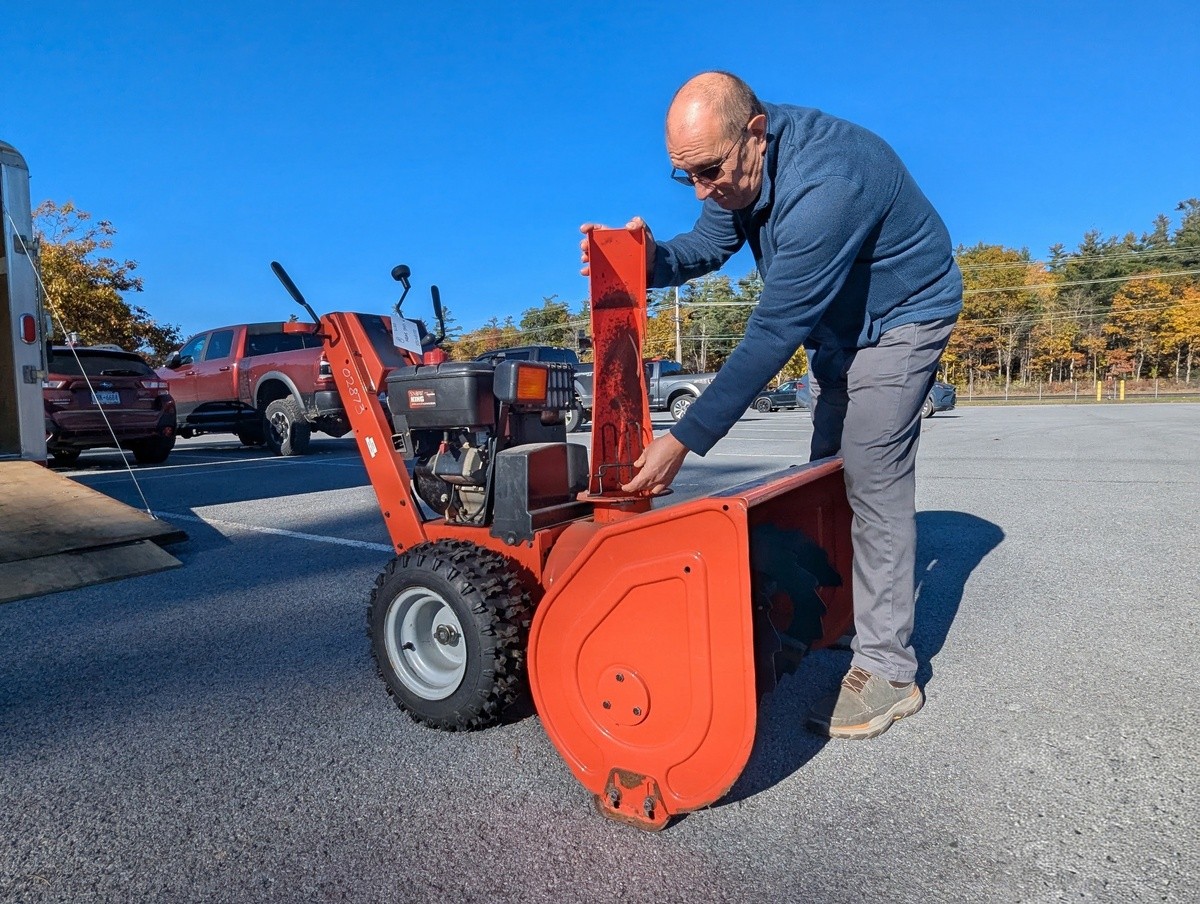
Skimming through the operator’s manual is helpful when learning how to work a snow blower, but Rebelo also offers some good advice and hands-on training during the Snow Blower Operation Course.
The course covers how to safely start and operate the snow blower, and includes debris checks, snow directions and handling wet snow or ice. Attendees also learn basic maintenance, what protective clothing to wear, and techniques to avoid accidents and equipment damage.
“We go through different hazard that you can avoid while operating a snow blower because this is basically a massive vacuum cleaner,” Rebelo said. “Whatever is on the ground, it’ll pick up and shoot it out. So, before the first snow fall, you want to prep your area. Make sure everything is clear of toys, tree branches, rocks and things that could be of risk to anyone around you.”
Rebelo said people can avoid strain or back injuries by pacing themselves and letting the machine do the work.
“If it’s powdery snow, that’s easy and you’re going to love it,” he said. “But when it’s wet and you try to eat too much, you’re going to clog up the chute quickly. You just have to go slow.”
Other tips include:
- Never use your hands to clear a clogged chute or auger. Use a wooden tool or stick.
- Wear boots with traction, or attach slip-on crampons to avoid slips on ice
- Conduct maintenance in a ventilated area to avoid breathing in fumes
- Remove any wet snow from moving parts after use that might freeze and lock up the mechanism while in storage.
To register for a class, call 315-772-0310. Classes are held in the Garrison Safety Office, Bldg. 4884 on Jones Street. The course schedule is available by searching the Events tab on the My Army Post App.
Social Sharing