
U.S. Army Pvt. 1st Class David Pomeroy, a combat engineer assigned to the Combat Engineer Company, 2nd Battalion, 503rd Infantry Regiment, 173rd Mobile Brigade Combat Team (Airborne), prepares to operate a remote-controlled small ground vehicle equipped with explosive charges during African Lion 26 at Cap Draa, Tan-Tan, Morocco, April 29, 2026. The exercise gave service members an opportunity to test artificial intelligence-powered and autonomous platforms, remote systems, and emerging technologies across attack, defense and mission command operations. The experimentation accelerated target detection, shortened decision timelines and delivered cost-effective warfighting solutions aligned with African partner priorities.
AL26 is U.S. Africa Command's largest annual joint exercise, designed to strengthen collective security capabilities of the U.S., African nations and global allies. Led by U.S. Army Southern European Task Force, Africa (SETAF-AF) from April 20 to May 8, 2026, and hosted in Ghana, Morocco, Senegal and Tunisia, AL26 involved over 5,600 civilian and military personnel from more than 40 nations, using innovation to drive partner-led regional security. (U.S. Army photo by Sgt. Caitlinn Belcher) View original
Back to U.S. Army Southern European Task Force, Africa
VICENZA, Italy — U.S. Army Southern European Task Force, Africa announced a partnership with the Army's Global Tactical Edge Acquisition Directorate to test emerging drone systems in Africa and deliver them to Soldiers within 180 days.
The command's first accelerated capability event is scheduled for spring 2027 in Tan-Tan, Morocco. It will focus on counter-unmanned aircraft systems and force protection, targeting capability gaps in protecting early-entry command posts and operating locations against small UAS.


AL26 is U.S. Africa Command's largest annual joint exercise, designed to strengthen collective security capabilities of the U.S., African nations and global allies. Led by U.S. Army Southern European Task Force, Africa (SETAF-AF) from April 20 to May 8, 2026, and hosted in Ghana, Morocco, Senegal and Tunisia, AL26 involved over 5,600 civilian and military personnel from more than 40 nations, using innovation to drive partner-led regional security. (U.S. Army photo by Sgt. C’Jay Spence) View original
Africa offers an open spectrum, uncongested airspace and diverse terrain that training ranges in the United States and Europe cannot easily match. These conditions allow soldiers to validate solutions in theater and scale them across the service.
Operating under the Army Pathway for Innovation and Technology Office, the acquisition directorate embeds personnel within Army service component commands. These teams translate urgent commander priorities into executable requirements, giving field commanders access to acquisition authorities at the tactical edge. The teams already operate within U.S. Army Europe and Africa, U.S. Army Pacific and U.S. Army Central.
Army Col. Christopher Hill, director of the Global Tactical Edge Acquisition Directorate, described the organization as the Army's answer for putting innovative solutions in the hands of the warfighter.
"[Army service component commands have] always had priorities, they've always had capability gaps, but the two things they've never had is acquisition authority and research, development, test and evaluation dollars," he said.
Because the directorate maintains visibility across multiple commands, Hill said its personnel can align modernization efforts, maximize funding and transition proven theater solutions Army wide.
The unit assigned a team to U.S. Army Southern European Task Force, Africa this summer to link immediate operational needs with rapid acquisition resources. Together, the commands will use the accelerated capability event framework as a fast-track pathway to identify, evaluate and deliver field-ready technology.
Through a three-phase model, submission and preparation, Soldier-led demonstrations and follow-on operational evaluation, capability events deliver rapid solutions within an accelerated acquisition timeline.

AL26 is U.S. Africa Command's largest annual joint exercise, designed to strengthen collective security capabilities of the U.S., African nations and global allies. Led by U.S. Army Southern European Task Force, Africa (SETAF-AF) from April 20 to May 8, 2026, and hosted in Ghana, Morocco, Senegal and Tunisia, AL26 involved over 5,600 civilian and military personnel from more than 40 nations, using innovation to drive partner-led regional security. (U.S. Navy photo by Mass Communication Specialist 2nd Class Samuel Wagner) View original

AL26 is U.S. Africa Command's largest annual joint exercise, designed to strengthen collective security capabilities of the U.S., African nations and global allies. Led by U.S. Army Southern European Task Force, Africa (SETAF-AF) from April 20 to May 8, 2026, and hosted in Ghana, Morocco, Senegal and Tunisia, AL26 involved over 5,600 civilian and military personnel from more than 40 nations, using innovation to drive partner-led regional security. (U.S. Army photo by Pfc. Hazel Torres) View original

AL26 is U.S. Africa Command's largest annual joint exercise, designed to strengthen collective security capabilities of the U.S., African nations and global allies. Led by U.S. Army Southern European Task Force, Africa (SETAF-AF) from April 20 to May 8, 2026, and hosted in Ghana, Morocco, Senegal and Tunisia, AL26 involved over 5,600 civilian and military personnel from more than 40 nations, using innovation to drive partner-led regional security. (U.S. Army photo by Sgt. Christopher Sanchez) View original
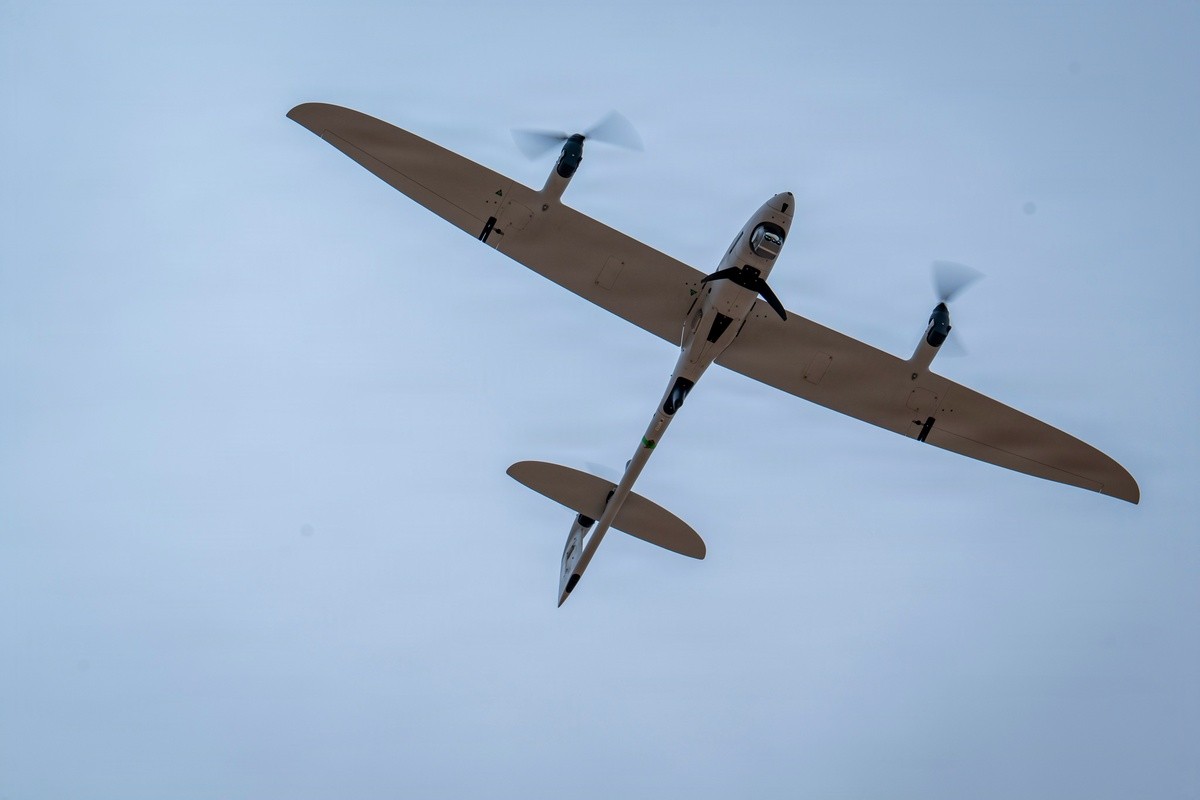
AL26 is U.S. Africa Command's largest annual joint exercise, designed to strengthen collective security capabilities of the U.S., African nations and global allies. Led by U.S. Army Southern European Task Force, Africa (SETAF-AF) from April 20 to May 8, 2026, and hosted in Ghana, Morocco, Senegal and Tunisia, AL26 involved over 5,600 civilian and military personnel from more than 40 nations, using innovation to drive partner-led regional security. (U.S. Navy photo by Mass Communication Specialist 2nd Class Samuel Wagner) View original
“[Accelerated capability events] are driven by real, urgent, theater-specific technology gaps,” said U.S. Army Maj. Katlin VanWye, a G-TEAD representative embedded with SETAF-AF. “We take commanding general's priorities and translate those immediate tactical challenges into clear, executable technical requirements that defense prize-authority partners and Portfolio Acquisition Executive partners can actually action.”
SETAF-AF will hold a Soldier-led demonstration in February and March 2027 in Tan-Tan, Morocco, followed by an operational assessment in April and May during African Lion 2027, U.S. Africa Command’s largest joint military exercise in Africa. G-TEAD will validate up to 15 solutions with PAE Fires, one of the U.S. Army’s core modernization enterprises, responsible for shaping, integrating, and delivering the Army’s most critical fires capabilities, as the transition partner.
“The [accelerated capability events] is structured around five capability categories,” VanWye said. “An overarching, completely integrated fly‑away kit and four subcategories focused on sUAS detection, kinetic defeat, nonkinetic defeat and passive protection. Solutions will integrate into the Army’s C-UAS command and control Integrated Battle Command System-Maneuver.”
The initiative supports broader Army modernization priorities while reinforcing partner-led security across the theater.
“Soldiers need capability,” Hill said. “We have to come in, and we have to actually perform and produce.”
Hill emphasized that every system receives evaluation with an eye toward scaling across the service, so tactical lessons learned in Africa enhance overall military readiness.
By accelerating testing and adaptation alongside G-TEAD, SETAF-AF helps provide the joint force with broader strategic options while validating innovative capabilities for the total Army.
Related Stories
- SETAF-AF hosts joint Ghanaian delegation to advance partner drone production | Aug. 5, 2026
- SETAF-AF showcases cutting-edge solutions at African Land Forces Summit 2026 | April 2, 2026
- SETAF-AF stands up Advanced Capabilities Directorate to drive innovation, data, decision dominance | Jan. 20, 2026
About SETAF-AF
U.S. Army Southern European Task Force, Africa (SETAF-AF) prepares Army forces, executes crisis response, enables strategic competition and strengthens partners to achieve U.S. Army Europe and Africa and U.S. Africa Command campaign objectives.
Social Sharing