

FORT HOOD, Texas — III Armored Corps held a four-day "Russian Way of War" series to strengthen leaders' understanding of Russian military operations and culture and examine Russia's evolving tactics to build a shared understanding of the contemporary battlefield.
The series brought together more than 60 personnel in person, including representatives from divisions, enabling brigades and other staff elements across Fort Hood. Training covered Russian military culture, unmanned aircraft systems, counter-unmanned aircraft systems, task organization, fires and other aspects of Russian military operations.
"This training, the Russian Way of War series, enables leadership development, but it also informs our warfighting," Maj. Tifani Summers, III Armored Corps public affairs plans officer. "The more we learn, the more we develop our leaders, the more we can make sure that our warfighting is accurate, and it identifies all of the different techniques and ongoing, current threats in different theaters."
Instructors from the U.S. Army Europe and Africa-sponsored Russian Way of War program teach the series. The instructors study the Russian armed forces to help U.S. forces better understand the Russian mindset.
"Our mission assigned to us by U.S. Army Europe and Africa is just to make sure that U.S. forces, U.S. units, their commanders and their staffs understand the threat," Donnelly said. "So they understand why Russia fights, why they fight the way they do, and then how they will fight."
Donnelly, who served in the Army for 30 years before retiring seven years ago, spent much of his military career working in and around the former Soviet Union. He said that experience still informs his work with the program.
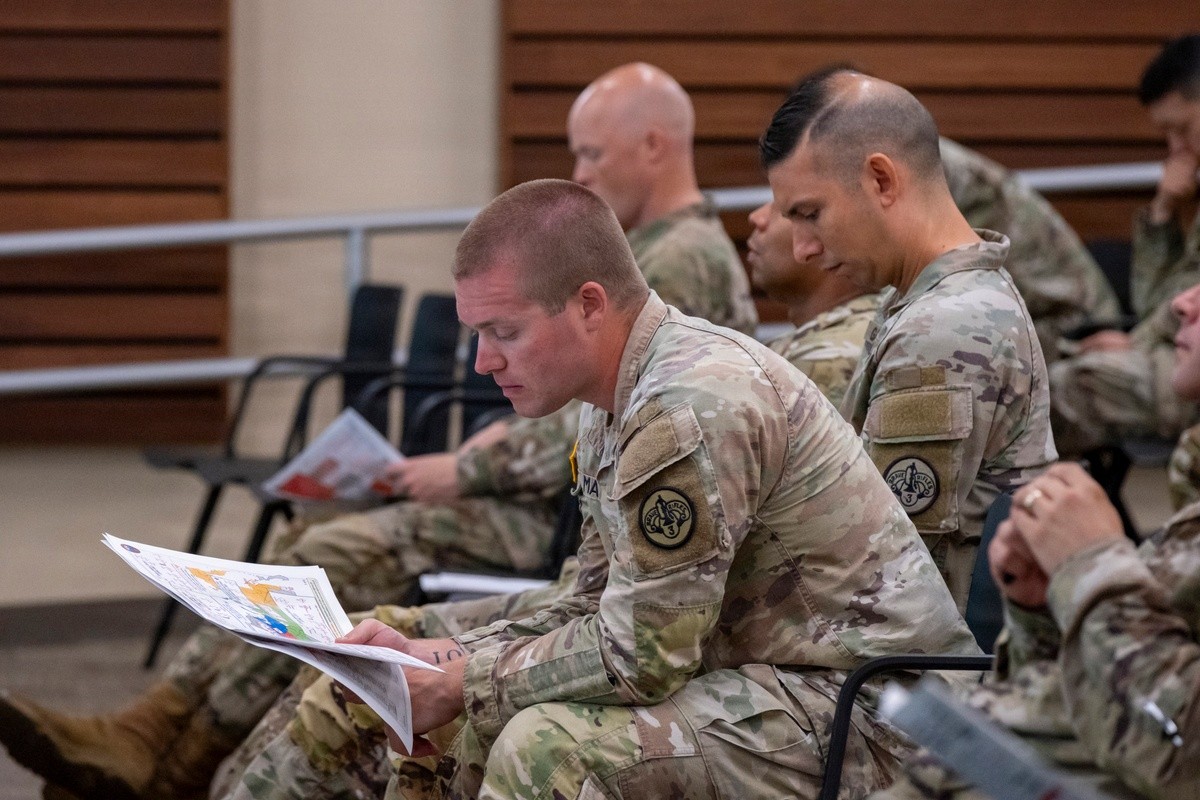

"One of the big takeaways for me in this course is just reinforcing the need to be flexible in our thinking," Maj. Kevin Zhang, III Armored Corps strategic plans officer, said. "The way we think things ought to work, and the way that we develop things and orders and operate as military professionals, is not always the only way. It's not even necessarily the best way to do it."
The series also encouraged participants to examine their own assumptions about warfare.
"As professionals, we should always be striving to develop ourselves, learn more, understand the environment that we'll be asked to operate in," Zhang said.
Donnelly said the Russian Way of War program continually updates its instruction and written products to reflect changes on the battlefield.
"The battlefield is changing. It's changing quickly," Donnelly said. "We track adaptations. Russian adaptations — Russians are thinking already adaptive force, and they are adapting."
Social Sharing