1 / 4
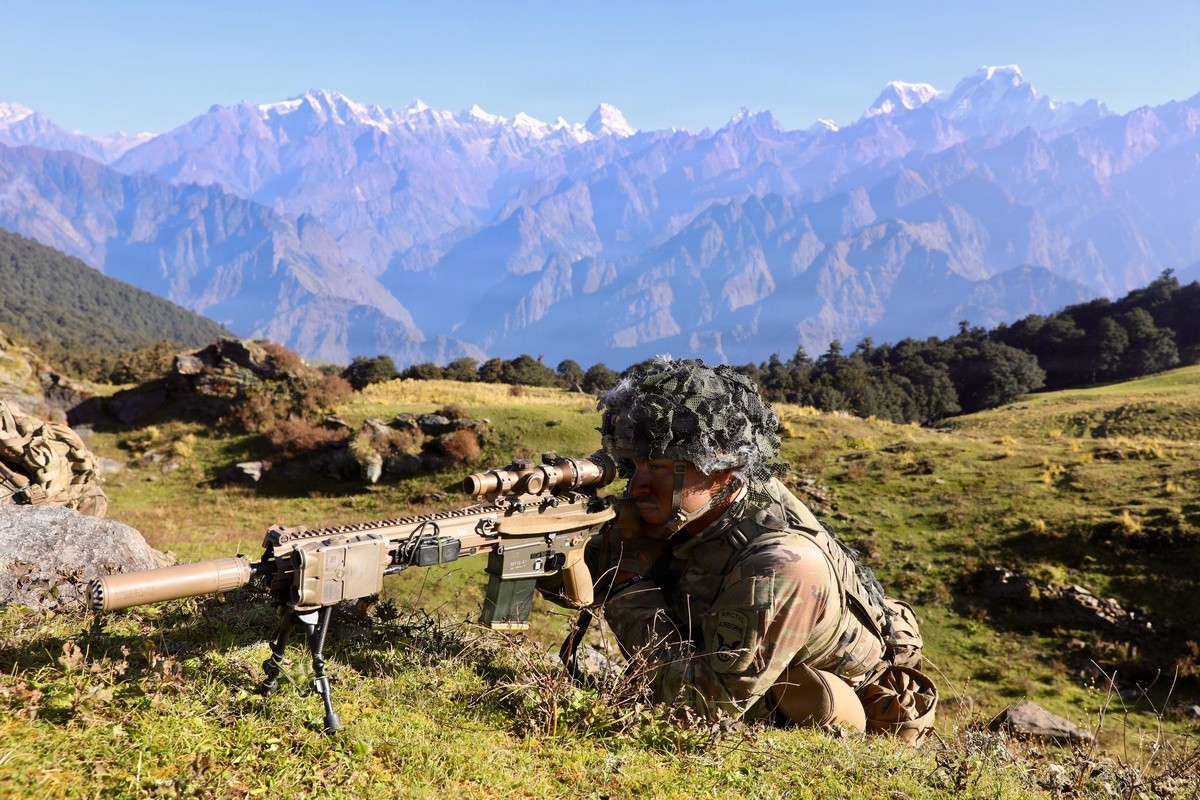
U.S. and Indian Army Soldiers execute a combined air assault during Exercise Yudh Abhyas 2026 near Auli, India, Sept. 25, 2026. Soldiers from both nations integrated into the same maneuver formations to seize training objectives, reinforcing interoperability between the U.S. and Indian armies
(Photo Credit: U.S. Army photo by 2nd Lt. Hannah Allebaugh)View original2 / 4
U.S. and Indian Army Soldiers execute a combined air assault during Exercise Yudh Abhyas 2026 near Auli, India, Sept. 25, 2026. Soldiers from both nations integrated into the same maneuver formations to seize training objectives, reinforcing interoperability between the U.S. and Indian armies.
(Photo Credit: U.S. Army photo by 2nd Lt. Hannah Allebaugh)View original3 / 4
U.S. and Indian Army Soldiers execute a combined air assault during Exercise Yudh Abhyas 2026 near Auli, India, Sept. 25, 2026. Soldiers from both nations integrated into the same maneuver formations to seize training objectives, reinforcing interoperability between the U.S. and Indian armies.
(Photo Credit: U.S. Army photo by 2nd Lt. Hannah Allebaugh)View original4 / 4
U.S. and Indian Army Soldiers execute a combined air assault during Exercise Yudh Abhyas 2026 near Auli, India, Sept. 25, 2026. Soldiers from both nations integrated into the same maneuver formations to seize training objectives, reinforcing interoperability between the U.S. and Indian armies.
(Photo Credit: U.S. Army photo by 2nd Lt. Hannah Allebaugh)View original
AULI, India — U.S. and Indian Army forces executed a combined air assault Sept. 25, seizing two objectives as a part of Exercise Yudh Abhyas 2026 in a mission that integrated soldiers from both nations into the same maneuver formations.
The operation began with battalion scouts moving forward to conduct reconnaissance of the objective area, said Capt. Gaston Adam, deputy operations officer for 1st Mobile Brigade Combat Team, 11th Airborne Division. The lead company moved into assault positions and isolated and secured the first objective before a second company moved to isolate the second objective ahead of the air assault.
Soldiers then executed an air assault via an Indian Army Advanced Light Helicopter Mk III, also known as the Dhruv Mk III, onto a landing zone near the second objective before dismounting and moving into position. Indian Army soldiers conducted their own air assault shortly after, fast-roping from a helicopter to join the assaulting force and seize the objective alongside U.S. forces. Both objectives were fully secured before the combined force transitioned into a hasty defense.
U.S. and Indian Army Soldiers execute a combined air assault during Exercise Yudh Abhyas 2026 near Auli, India, Sept. 25, 2026. Soldiers from both nations integrated into the same maneuver formations to seize training objectives, reinforcing interoperability between the U.S. and Indian armies.
(Photo Credit: U.S. Army photo by Maj. Ian Roth)View original
Capt. Adam said the mission's success depended on close coordination between U.S. ground forces and Indian Army aviation the day before the operation. U.S. and Indian Army forces conducted an air mission coordination meeting between the aviation task force and the ground force task force, followed by cold load training and aircraft familiarization that allowed soldiers to practice safely entering and exiting the Dhruv Mk III ahead of the mission.
"The integration between the ground force and the aviation task force, particularly the pilots, is integral to an operation like this," Capt. Adam said. "You have to be able to look that pilot in the eye and trust they're going to get you there safely. It builds confidence in the soldiers that they're actually going to reach their objective and can focus on their mission."
Capt. Adam said the mission's task organization reflected the exercise's emphasis on interoperability between the two armies. The lead company, led by a U.S. company commander, included two U.S. Army platoons and one Indian Army platoon. The second company, also under U.S. command, was organized the same way. A separate Indian Army company serving as a decoy element during the operation included two Indian Army platoons and one U.S. Army platoon.
"It just goes to show that even though we're mixing our formations together, we can still work together and execute a good plan," Capt. Adam said.
1 / 5
U.S. and Indian Army Soldiers execute a combined air assault during Exercise Yudh Abhyas 2026 near Auli, India, Sept. 25, 2026. Soldiers from both nations integrated into the same maneuver formations to seize training objectives, reinforcing interoperability between the U.S. and Indian armies.
(Photo Credit: U.S. Army photo by 2nd Lt. Hannah Allebaugh)View original2 / 5
U.S. and Indian Army Soldiers execute a combined air assault during Exercise Yudh Abhyas 2026 near Auli, India, Sept. 25, 2026. Soldiers from both nations integrated into the same maneuver formations to seize training objectives, reinforcing interoperability between the U.S. and Indian armies.
(Photo Credit: U.S. Army photo by 2nd Lt. Hannah Allebaugh)View original3 / 5
U.S. and Indian Army Soldiers execute a combined air assault during Exercise Yudh Abhyas 2026 near Auli, India, Sept. 25, 2026. Soldiers from both nations integrated into the same maneuver formations to seize training objectives, reinforcing interoperability between the U.S. and Indian armies.
(Photo Credit: U.S. Army photo by 2nd Lt. Hannah Allebaugh)View original4 / 5
U.S. and Indian Army Soldiers execute a combined air assault during Exercise Yudh Abhyas 2026 near Auli, India, Sept. 25, 2026. Soldiers from both nations integrated into the same maneuver formations to seize training objectives, reinforcing interoperability between the U.S. and Indian armies.
(Photo Credit: U.S. Army photo by 2nd Lt. Hannah Allebaugh)View original5 / 5
U.S. and Indian Army Soldiers execute a combined air assault during Exercise Yudh Abhyas 2026 near Auli, India, Sept. 25, 2026. Soldiers from both nations integrated into the same maneuver formations to seize training objectives, reinforcing interoperability between the U.S. and Indian armies.
(Photo Credit: U.S. Army photo by 2nd Lt. Hannah Allebaugh)View original
Capt. Adam said the exercise's systems and checklists, understood across both armies, were essential to the operation's success.
"We have systems and checklists that we've codified as an Army and that our partners understand," Capt. Adam said. "As we follow those systems and build shared understanding across the force, it delivers a successful operation."
Sept. 25's mission marked the first of three repetitions planned during YA26, with additional air assaults scheduled for Sept. 26 and Sept. 27 under different task organizations. Capt. Adam said future repetitions may include an Indian Army company commander leading a mixed formation of U.S. and Indian Army platoons.
"It's been great working with the Indian Army," Capt. Adam said. "The planning has been great."
Yudh Abhyas 2026 is the 22nd iteration of the annual U.S. Army Pacific-sponsored bilateral exercise between the U.S. and Indian armies, designed to enhance bilateral readiness, cooperation and interoperability. The exercise is scheduled to conclude Sept. 27 with a formal closing ceremony.
Since 2004, Yudh Abhyas, a U.S. Army Pacific-sponsored bilateral exercise with the Indian Army, has enhanced combined interoperability and strengthened the U.S.-India Major Defense Partnership in support of a free and open Indo-Pacific.
Social Sharing