




MONTENEGRO — More than 500 military personnel from six nations spent 12 days in September training in some of Europe’s most demanding mountain terrain during Common Challenge 2026, a multinational exercise designed to strengthen interoperability, readiness and the ability of allied and partner forces to operate together.
Hosted by the Armed Forces of Montenegro, the exercise brought together personnel from Montenegro, the United States, Austria, North Macedonia, Slovenia and Spain for mountain warfare and rescue training at locations across the country.
Approximately 30 Maine National Guard Soldiers and Airmen participated, working alongside their Montenegrin counterparts in aviation, medical, communications and signal operations. The exercise also coincided with the 20th anniversary of the Maine-Montenegro partnership through the National Guard State Partnership Program.
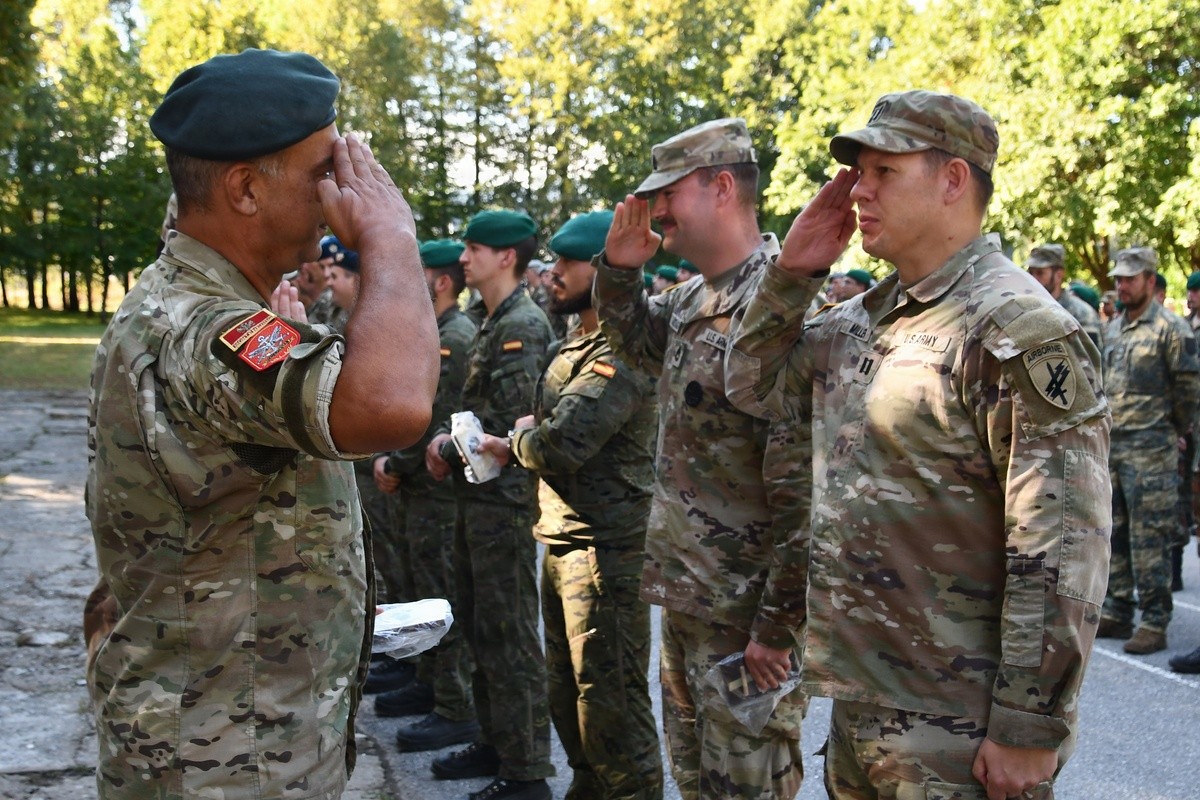
Common Challenge officially began with an opening ceremony Sept. 7 in Kolašin. Col. Mitar Klikovac, chief of staff of the General Staff of the Armed Forces of Montenegro, told participants that multinational training transforms shared knowledge into operational capability while developing interoperability and maintaining the long-term readiness needed for forces to operate together.
The exercise focused on mountain infantry operations while incorporating capabilities applicable to emergencies, including search and rescue, evacuation and care of injured personnel in difficult-to-access terrain.
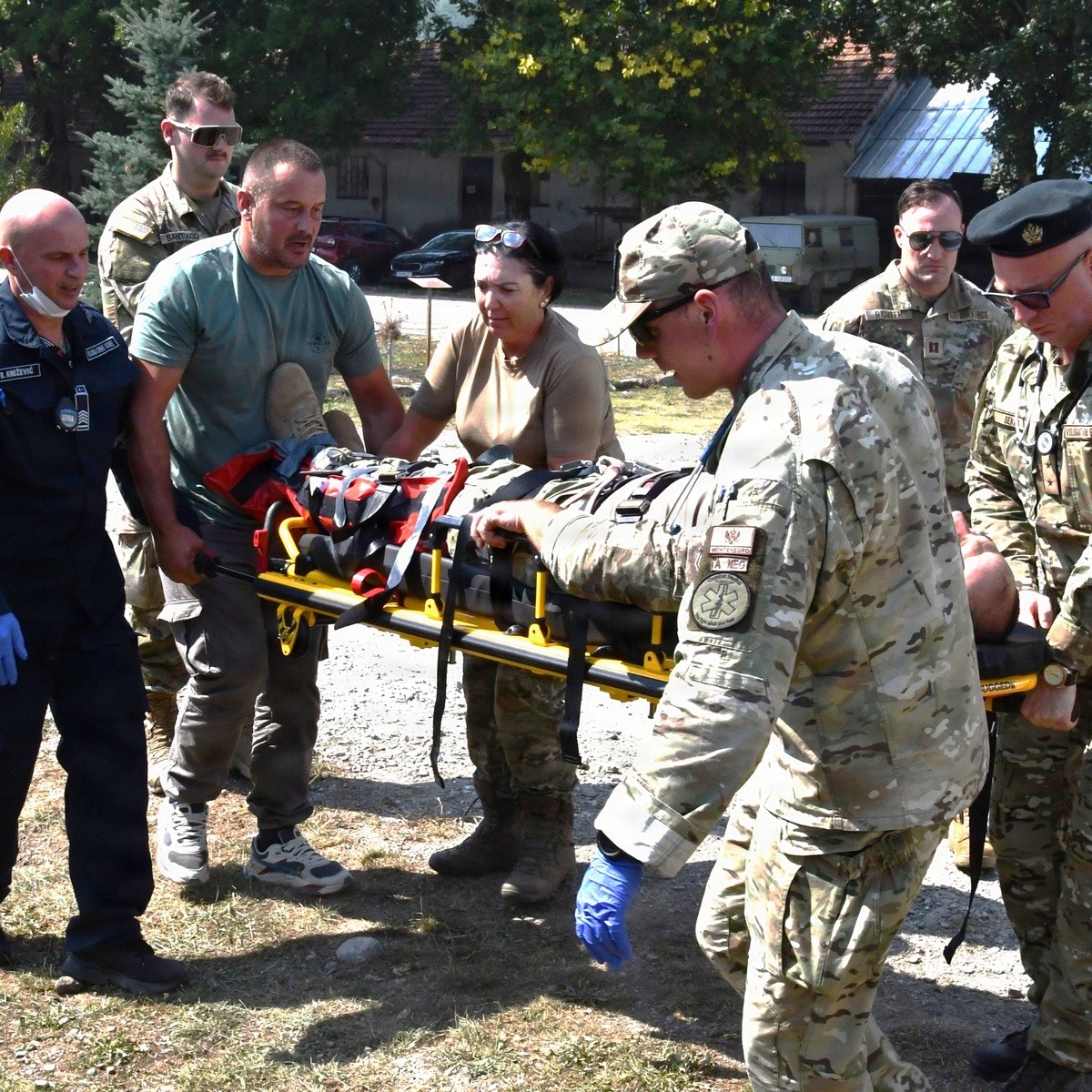
One of the exercise’s most visible demonstrations took place Sept. 11 at Knjaz Danilo Petrović Njegoš military airport in Zeta. Montenegrin and Maine National Guard aviation and medical personnel responded to a simulated aircraft crash, demonstrating procedures from securing the accident site and providing initial medical care to extracting an injured person and preparing the casualty for further medical evacuation.
The event illustrated a central theme of Common Challenge: different military specialties and nations must integrate their capabilities into a single operation.
The exercise then moved into its most demanding phase. For three consecutive days, multinational forces operated in rugged mountain terrain and difficult weather, including rain, storms and strong winds. Participants carried heavy combat loads while negotiating steep rock faces and cliffs using mountaineering techniques.
Rather than limiting training to ideal conditions, the exercise challenged units to maintain procedures, coordination and decision-making as terrain, weather, fatigue and physical demands complicated their movements.
The operational phase also allowed evaluators and observers to assess how participants executed assigned tasks and coordinated their actions in a multinational environment.
The cooperation among the six countries stood out to Staff Sgt. Cordero Behrman of the Maine Air National Guard’s 243rd Engineering and Installation Squadron in South Portland.
“It’s just awesome to see so many different nations coming together and cooperating for many different reasons,” said Behrman, of Lyman, Maine. “The successful execution of the entire mission speaks to how important exercises like Common Challenge are to these countries, and I am fortunate to have been able to see this firsthand as a participant.”
Montenegrin media closely followed the exercise, with national broadcaster RTCG and Vijesti among the outlets reporting on the opening ceremony, rescue training and operational phase. Coverage highlighted the challenges posed by the mountain environment and the opportunity for participating nations to train together.
On Sept. 17 in Pirlitor, senior leaders and guests observed a final demonstration of capabilities. Participants demonstrated advanced mountaineering and mountain combat techniques, movement and maneuver in complex terrain, and coordination between ground and aviation forces during combat and search-and-rescue operations.
For Maine and Montenegro, the exercise carried significance beyond the training itself. It marked the 20th anniversary of their State Partnership Program relationship, established in 2006. The partnership has grown from military exchanges and training to cooperation in emergency management, disaster response, medical preparedness and cybersecurity.
“I am incredibly proud of how this partnership has grown over the past 20 years—from our early exchanges to the enduring friendships, professional development, and operational capabilities we have built together today,” said Maj. Gen. Diane Dunn, the adjutant general of the Maine National Guard, who attended the final demonstration. “This anniversary is not only a celebration of what we have accomplished over the past two decades, but also an opportunity to look ahead with confidence and excitement about the possibilities that await us in the years to come.”
That history was evident throughout Common Challenge. Maine National Guard participants worked alongside Montenegrin counterparts, applying their expertise in communications and medical support while learning how other militaries operate in a challenging environment.
The exercise demonstrated the broader value of the National Guard State Partnership Program by building lasting relationships through repeated interaction. Those relationships help ensure that when forces need to work together, they understand one another’s capabilities, procedures and personnel.
From aviation rescue operations near Podgorica to mountain operations around Kolašin, Common Challenge required participating forces to work across national and military boundaries. The exercise gave six nations an opportunity to test how effectively they could operate together in one of the region’s most challenging environments.
For the Maine National Guard and its Montenegrin partners, Common Challenge reinforced two decades of cooperation while preparing both forces to respond together in the future.
Social Sharing