
Back to U.S. Army Southern European Task Force, Africa
LUANDA, Angola — More than three decades after a battlefield injury, former Angolan Armed Forces Staff Sgt. Alberto Calei Luis was still carrying part of the war with him.
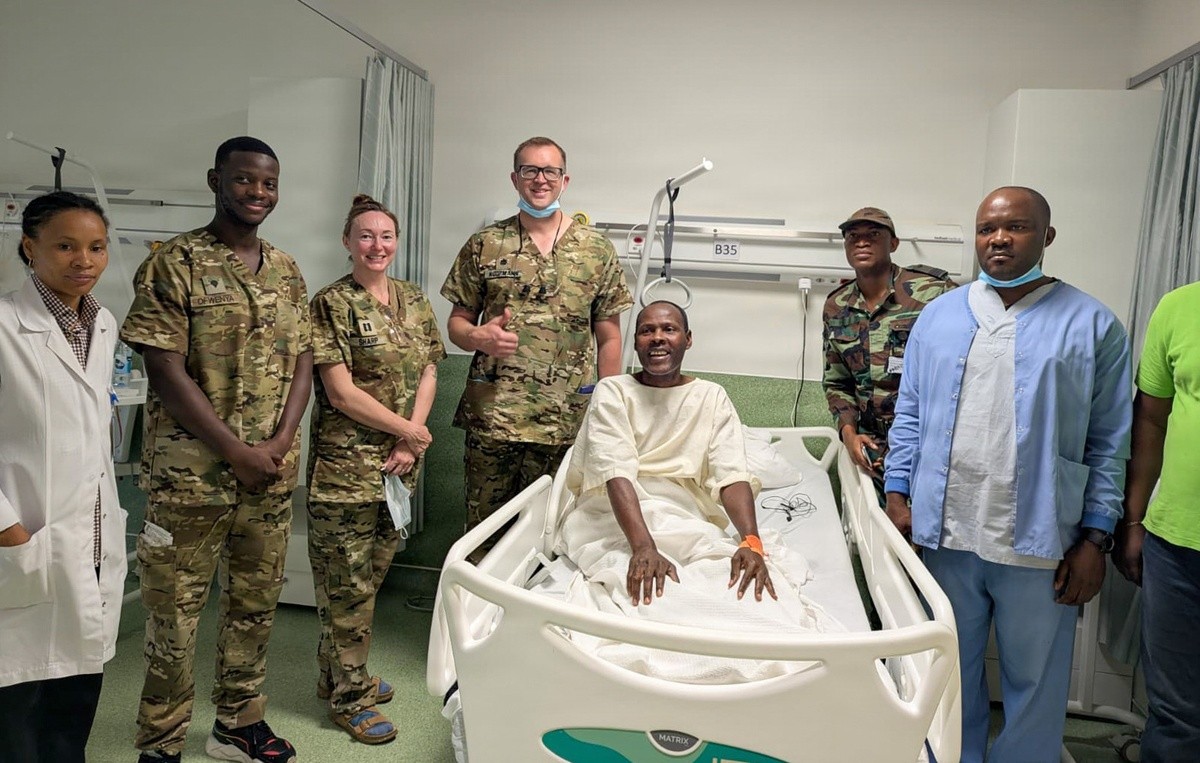
On Sept. 4, the injury brought Luis to U.S. and Angolan vascular surgeons during the Angola Medical Readiness Exercise at Hospital Militar Principal, where a decades-old complication became an opportunity for collaborative patient care and a reminder that the consequences of combat can follow veterans long after they leave the battlefield.

“I think what this reinforces is that trauma has lifelong consequences and injuries sustained in war don’t stay on the battlefield,” said U.S. Army Lt. Col. Matthew Koopmann, a general and vascular surgeon with the 915th Forward Resuscitative Surgical Detachment, 313th Hospital Center, 2nd Medical Brigade. “They go home with the patient, and even after the patient leaves active duty, some of these injuries, even after they seem to have recovered, can create problems years, if not decades, later.”
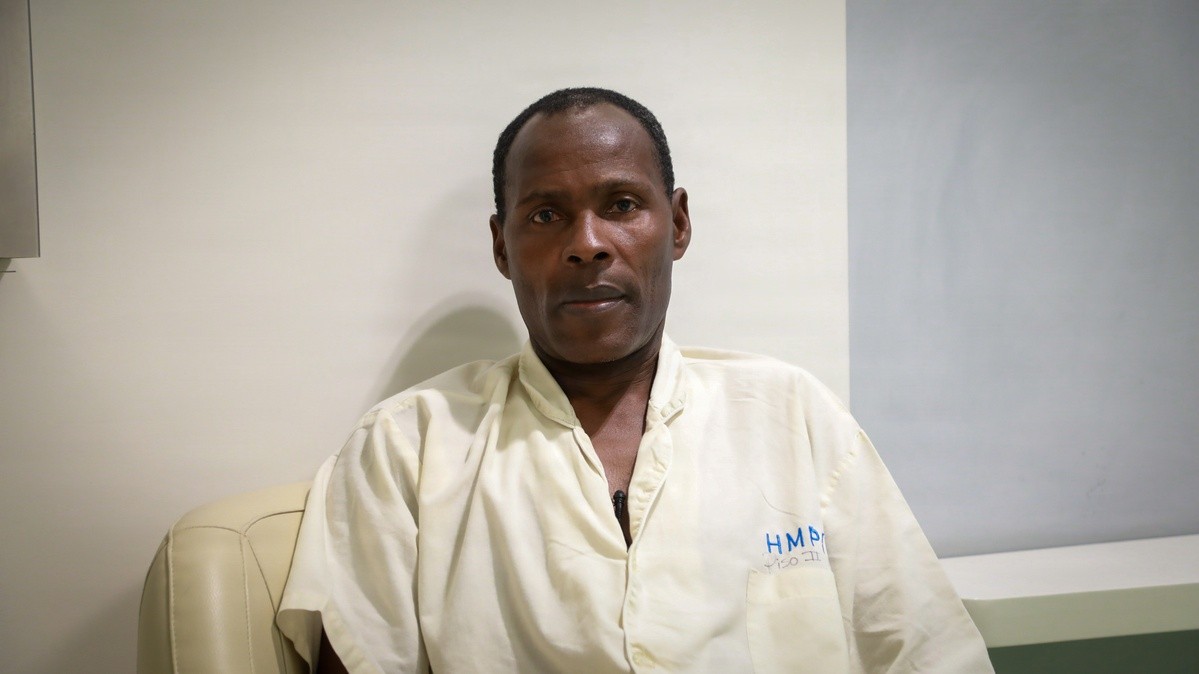
Luis sustained the original injury in 1990 while serving as an infantryman with an anti-guerrilla warfare detachment of the People’s Armed Forces for the Liberation of Angola, known by its Portuguese acronym FAPLA. He fractured his right femur and suffered an associated injury to his femoral artery. The fracture was repaired, but the vascular injury eventually developed into a traumatic arteriovenous fistula, an abnormal connection between an artery and vein, that contributed to significant swelling in his right leg.
“This incident happened in 1990 as I was getting off the vehicle,” Luis said. “I hit my knee and broke the bone. The bone was exposed.”
For decades, the injury caused little pain, and Luis continued with his life. Years later, recurring swelling brought him back to military medical care and eventually to Hospital Militar Principal.
“Because there was no pain, I didn’t make much of it, and that went on for 30 years,” Luis said. “Three years ago, I sprained my foot, the leg got swollen and I came back.”
The complexity of the case required the surgical team to determine not only how to address the abnormal blood flow but how to develop an approach appropriate for the patient and the resources available at the hospital.
“It truly was an exchange,” Koopmann said. “I reviewed the computed tomography scan with him; we went over that in detail and identified where the problems were.”
The U.S. and Angolan surgeons considered multiple treatment options, including an endovascular approach, before determining that open surgery offered a safe and effective solution. Their discussions ultimately produced a surgical plan that incorporated ideas from both teams.

“I had an idea, they had an idea, and we refined it using both of our ideas to an operation that was not the operation that either of us had come up with,” Koopmann said. “It really was a true collaboration, and you can’t argue the results.”
U.S. and Angolan surgeons performed the procedure together, combining their clinical experience while strengthening the interoperability the MEDREX was designed to build.
“It was a very good result after the operation was done, and the patient is doing very well,” Koopmann said.
Within a week, Luis said the swelling in his affected leg had noticeably decreased.
“I had surgery, and now I can see a huge difference,” Luis said. “This one was much larger on this spot. Now it’s the same as the other, in just one week.”
For Koopmann, treating a veteran whose combat injury resurfaced decades later also connected his Army Reserve service with his civilian profession. He works full time as a vascular surgeon at the Veterans Affairs Hospital in Portland, Oregon, where caring for former service members has become part of what he considers his personal mission.
“My personal mission is to take care of Soldiers and veterans,” Koopmann said. “It’s very rewarding. They’re my people.”
His civilian vascular surgery experience also complements the trauma skills required in a forward surgical unit. Although Koopmann primarily serves as a general surgeon in the Army Reserve, vascular techniques are directly applicable to controlling hemorrhage and treating complex injuries during damage-control surgery.
“A lot of what we do in a forward surgical detachment is damage-control trauma surgery, which involves a lot of bleeding and vascular treatment and exposures,” Koopmann said. “I feel like my civilian skill set really is useful in this kind of operational unit.”
Those skills are difficult to replicate entirely through routine Reserve training. Credentialing, privileging and patient-care limitations in the United States can restrict opportunities for FRSD personnel to perform some of their mission-essential clinical tasks outside simulated environments.
“Our primary goal is for us to work on our mission-essential task lists, in particular the two that we can’t adequately train in the United States,” Koopmann said. “Those are damage-control resuscitation and damage-control surgery.”
The Angola MEDREX embedded 10 U.S. Army Reserve medical professionals from the 915th FRSD with Angolan counterparts for clinical collaboration and subject-matter expert exchanges. U.S. Army Southern European Task Force, Africa (SETAF-AF) planned and executed the exercise to enhance the medical readiness and capabilities of U.S. and Angolan military medical personnel.
“Here, we have been able to work in the Angolan Central Military Hospital, and that has been invaluable for us in doing our individual critical tasks that we need to do in order to be ready to take care of Soldiers on the battlefield,” Koopmann said.
For Koopmann, opportunities to perform meaningful clinical work overseas also contribute to another challenge facing Army Reserve medical units: retaining experienced professionals who have demanding civilian careers and numerous opportunities outside the military.
“When Soldiers have the ability to do exciting, useful training like this, it keeps them in the Army for a career,” Koopmann said. “Doing interesting, valuable exercises like this will keep your best Soldiers in the Army.”
Koopmann joined the Army Reserve in 2011 while completing his general surgery residency. Reserve surgeons who had served in Iraq and Afghanistan helped influence his decision to serve, beginning a military career he now balances with caring for veterans in his civilian profession.
“My only regret is that I didn’t join sooner,” Koopmann said. “I’ve really enjoyed my time in the Army.”
For Luis, the collaboration resulted in something more immediate: relief from a medical problem rooted in an injury he sustained while serving his country more than 30 years earlier.
“The American doctors are good, but we also have good doctors in Angola,” Luis said. “This time I found Angolan doctors initially, and then I met the American doctor. It was like the icing on the cake.”
Luis said he plans to return to his business and continue working. Before leaving the hospital, however, he wanted the medical professionals who cared for him to understand the significance of what they had given back.
“If you offer me a car, I’ll say, ‘Thank you,’” Luis said. “Now you’re giving me my health back. What am I going to say?”
“Thank you so much.”
Related Articles:
- US, Angolan forces conclude medical readiness exercise in Luanda | Sept. 2026
- US, Angolan forces conduct trauma activation simulation during medical readiness exercise | Sept. 2026
- US, Burundian medical teams impact over 600 patients during a medical readiness exercise | Sep. 2026
About MEDREX
Planned and executed by U.S. Army Southern European Task Force, Africa (SETAF-AF), MEDREX enables military health professionals from the U.S. and their African partners to exchange medical practices, procedures and techniques that enhance treatment capabilities, strengthening partnerships and improving readiness in operational environments.
About SETAF-AF
U.S. Army Southern European Task Force, Africa (SETAF-AF) prepares Army forces, executes crisis response, enables strategic competition and strengthens partners to achieve U.S. Army Europe and Africa and U.S. Africa Command campaign objectives.
Follow us on DVIDS and sign up for Newswire Alerts.
Social Sharing