Forged in the Arctic, built for the fight: 11th Airborne Division trains across Pacific

By Correy MathewsSeptember 4, 2026

Multinational Forces Tackle Jungle Survival Training in Super Garuda Shield 26
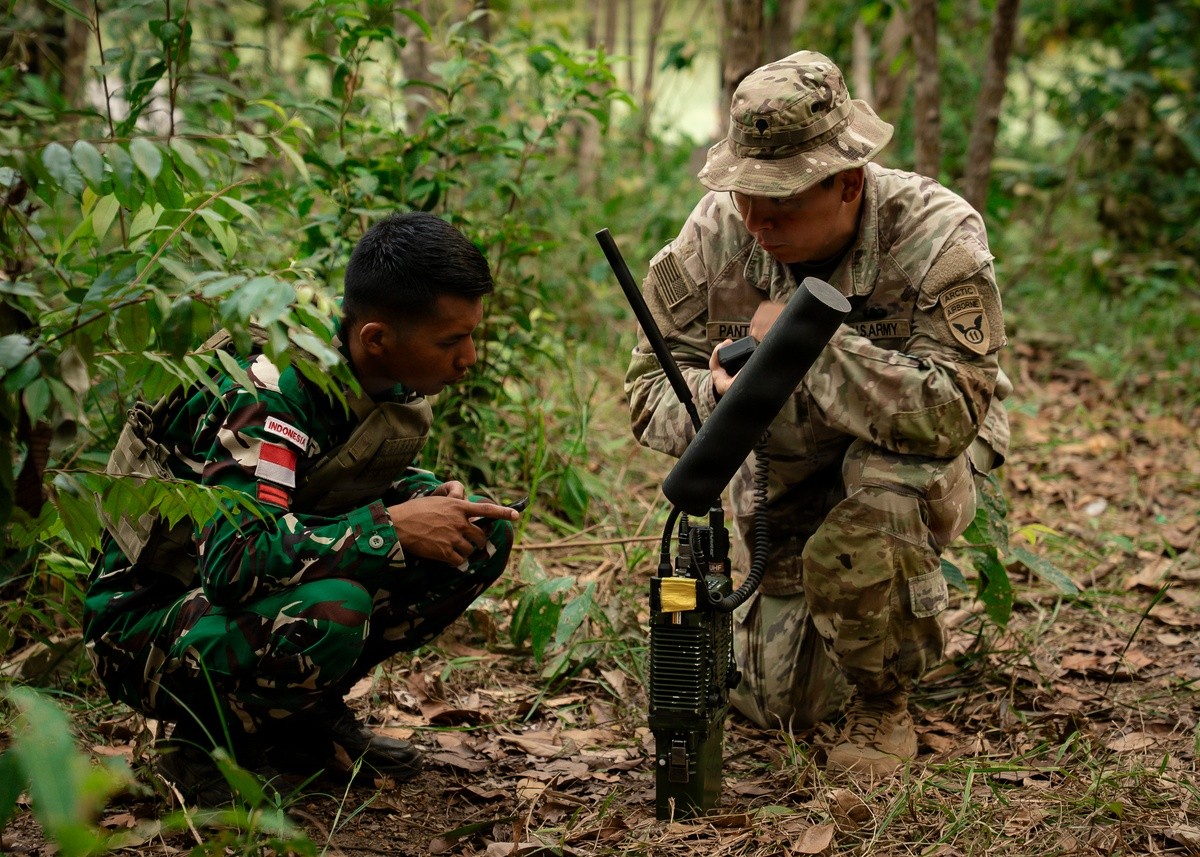
1 / 2 U.S. Army Spc. Roberto Pantoja, right, with the 1st Battalion, 501st Infantry Regiment, 11th Airborne Division, assists Tentara Nasional Indonesia soldier with hourly radio checks to the command team during Super Garuda Shield 26 September 1, 2026. Super Garuda Shield is an annual exercise between the Indonesian National Armed Forces and U.S. Military designed to strengthen bilateral interoperability, capabilities, and cooperation. (U.S. Army photo by Sgt. Marcus Beason) (Photo Credit: Sgt. Marcus Beason) View original
SGS26 Multinational Hot and Cold Load Medical Evacuation Training
2 / 2 U.S. Soldiers assigned to the 11th Airborne Division take a mock casualty onto a U.S. Army UH-60 Black Hawk during cold and hot load medical evacuation training as part of Super Garuda Shield 26 at Baturaja Combat Training Center, Indonesia, Aug. 31, 2026. Super Garuda Shield is an annual exercise between the Indonesian National Armed Forces and U.S. Military designed to strengthen bilateral interoperability, capabilities, and cooperation. (U.S. Army photo by Spc. Kristen Cruz) (Photo Credit: Spc. Kristen Cruz) View original

JOINT BASE ELMENDORF–RICHARDSON, Alaska — The 11th Airborne Division is forged in the Arctic, but its battlefield extends far beyond Alaska. Across the Pacific, Arctic Angels trained nearly simultaneously during Yama Sakura 91 and Orient Shield 26 in Japan, Yudh Abhyas 2026 in India and Super Garuda Shield 26 in Indonesia.

Separated by thousands of miles, the exercises placed 11th Airborne Division Soldiers in different terrain, climates and formations alongside some of the United States’ closest allies and partners, all with a common purpose: build combat ready forces capable of moving, integrating and fighting together when required.

“The Arctic is our expertise, but it is not our limitation,” said Maj. Gen. John P. Cogbill, commanding general, 11th Airborne Division. “What you see across the Pacific is a division demonstrating that it can move forces across the theater, integrate with our allies and partners and remain ready to fight wherever the mission demands. From Alaska to Japan, India and Indonesia, our Soldiers are proving the reach, readiness and lethality this division brings to the region.”

Northern Warfare Training Center meets the demand for increased Arctic training
1 / 3 Cold Weather Leaders Course students move through the rugged terrain at the Northern Warfare Training Center's Black Rapids Training Site during a snowstorm. NWTC cadre worked overtime to help meet the increased need for more Arctic experts in the units to help pass critical knowledge throughout the formations. (Army photo/John Pennell) (Photo Credit: John Pennell) View original
Cold Weather Training for 307th FRSD During JPMRC 25-02
2 / 3 Members of the 307th Forward Resuscitative and Surgical Detachment, a reserve unit out of Milwaukee, Wisconsin, learn how to operate an Ahkio tent system and heater during a cold weather indoctrination and certification course ahead of Joint Pacific Multinational Readiness Center 25-02, Fort Wainwright, Alaska, Jan. 19, 2025. The Arctic is a living laboratory, and JPMRC 25-02 is the premiere opportunity for 11th Airborne Division Soldiers involved to test, innovate, and experiment in a tough, realistic training environment. (U.S. Army photo by Staff Sgt. Mikayla Fritz) (Photo Credit: Staff Sgt. Mikayla Fritz) View original
Cold Weather Training for FRSD During JPMRC 25-02
3 / 3 Members of the 307th Forward Resuscitative and Surgical Detachment, a reserve unit out of Milwaukee, Wisconsin, learn how to operate the Arctic tent heater during a cold weather indoctrination and certification course ahead of Joint Pacific Multinational Readiness Center 25-02, Fort Wainwright, Alaska, Jan. 19, 2025. It takes a team of teams to execute an exercise like JPMRC 25-02, and requires a breadth of experience and capability to conduct a large-scale exercise safely under Arctic winter conditions. (U.S. Army photo by Staff Sgt. Mikayla Fritz) (Photo Credit: Staff Sgt. Mikayla Fritz) View original

Alaska is where that capability is forged. Extreme cold, isolation, limited infrastructure and vast distances leave little room for weakness. Soldiers must be able to survive, communicate, sustain themselves and accomplish the mission when the environment is actively working against them. That training produces formations accustomed to operating under pressure, solving problems with limited resources and continuing the mission when conditions deteriorate. The temperature and terrain may change across the Pacific, but the requirement for leaders to be engaged and build lethal formations does not.

In Indonesia, 11th Airborne Division Soldiers participating in Super Garuda Shield 26 trained alongside the Indonesian National Armed Forces and multinational partners. The exercise included jungle training, a partnered joint forcible entry operation and follow on field training designed to increase the ability of participating forces to operate as a combined team. The dense vegetation, heat and humidity create a problem set far removed from the Arctic, but they demand the same fundamentals: understand the terrain, maintain communications, sustain the force and preserve momentum against an opposing force.

Super Garuda Shield
1 / 4 A member of the Indonesian Armed Forces (left) and a U.S. Army Captain shake hands after a closing ceremony for Ksatria Warrior 24, at the 5th Marine Training Center, Situbondo Regency, Indonesia, Aug. 26, 2024. Regular exercises and engagements with our Allies and partners are instrumental in cultivating civil-military cooperation, increasing emergency preparedness, and enhancing bilateral response capabilities.
(U.S. Army photo by PFC. Melanie Tolen) (Photo Credit: Pfc. Melanie Tolen) View original
Indian and U.S. Army bilateral training exercise at Yudh Abhyas 25 in Fort Wainwright, AK
2 / 4 Indian and U.S. Army units integrate artillery training during Exercise Yudh Abhyas 25 at Fort Wainwright, Alaska, Sept. 2, 2025. Exercise Yudh Abhyas 25 highlights the long-standing defense partnership between the Indian Army and U.S. Army, building joint readiness for future challenges in the Indo-Pacific. (U.S. Army National Guard photo by Sgt. Everett Babbitt) (Photo Credit: Sgt. Everett Babbitt) View original
U.S., Indian Armies conduct mortar live fire during Yudh Abhyas 2025 in Alaska
3 / 4 U.S. Army Soldiers assigned to 1st Battalion, 5th Infantry Regiment, 1st Infantry Brigade Combat Team (Arctic) and Indian Army soldiers conduct live fire training with 120mm mortars during Exercise Yudh Abhyas 25. The exercise brings together Soldiers from the Indian Army and U.S. Army’s 11th Airborne Division in Fairbanks, Alaska, Sept. 2025, for two weeks of combined training focused on interoperability and readiness. (Photo Credit: Staff Sgt. Matthew Brown) View original
U.S., Indian Armies exchange artillery best practices during Yudh Abhyas 2025 in Alaska
4 / 4 Soldiers from the Indian Army and U.S. Army’s 11th Airborne Division pose for a photo around an M119 Howitzer during Exercise Yudh Abhyas 25 in Yukon Training Area, Alaska, 7 Sept. 2025. The exercise enhances interoperability and strengthens defense partnerships in the Indo-Pacific region. (Photo Credit: Staff Sgt. Matthew Brown) View original

In India, Arctic Angels are training alongside the Indian Army during Yudh Abhyas 2026. The bilateral exercise strengthens the ability of U.S. and Indian forces to operate together in demanding environments while building upon the partnership reinforced during Yudh Abhyas 2025 in Alaska. Mountainous and austere terrain places additional demands on Soldiers and leaders, requiring formations capable of adapting quickly, sustaining combat power and continuing operations when normal advantages become difficult to maintain.

“We optimize to train in the extreme cold, high latitude, mountainous terrain and by operating in the harshest environment in the world,” said Command Sgt. Maj. David P. Hanson, command sergeant major, 11th Airborne Division. “We can operate anywhere in the Pacific.”

Exercise Yama Sakura 91
Australian Army soldier, Japanese Ground Self-Defense Force and United States Army Officer points to a map during Exercise Yama Sakura at Camp Higashi-Chitose, Japan. (Photo Credit: Sgt. Sherald McAulay) View original

At the same time, 11th Airborne Division Soldiers were in Japan are strengthening the command-and-control and interoperability required for combined operations. During Yama Sakura 91, Soldiers worked alongside the Japan Ground Self-Defense Force and Australian Army during a trilateral command post exercise focused on the ability to plan, synchronize and command forces across a complex battlefield. The exercise required staff from three nations to overcome differences in doctrine, terminology, systems and processes in order to build the shared understanding required to make decisions and synchronize effects at the speed of combat.

Following the conclusion of Yama Sakura 91, 11th Airborne Division Soldiers moved into Orient Shield 26, continuing bilateral training with the Japan Ground Self-Defense Force. The exercise will provide another opportunity to strengthen U.S.-Japan warfighting capability and build upon the relationships, systems and interoperability developed through repeated training together. While Yama Sakura focused on trilateral command-and-control alongside Japanese and Australian forces, Orient Shield will continue the division’s progression of training in Japan and reinforce the ability of U.S. and Japanese forces to operate together in competition, crisis or conflict.

Orient Shield 25 Closing Ceremony
1 / 3 U.S. Army and Australian Army soldiers and Japan Ground Self-Defense Force members received challenge coins during the Orient Shield 25 closing ceremony and coin exchange was held at Sekiyama Training Area in Niigata Prefecture, Japan, Sept. 24. (Photo Credit: Fumiaki Tabuchi) View original
OS25 Multilateral squad maneuver training
2 / 3 U.S. Army soldiers from Headquarters and Headquarters Company, 1-138th Infantry Regiment, Missouri National Guard, conducted multilateral squad maneuver training during Orient Shield 25 at Sekiyama Training Area in Niigata Prefecture, Japan, Sept. 22.
Orient Shield 25, is a trilateral field training exercise that includes Japan Ground Self-Defense Force members and the Australian Army. (Photo Credit: Fumiaki Tabuchi) View original
U.S. Army, Australian Soldiers and Japan Ground Self-Defense members are conducting familiarization training prior to the upcoming live fire training.
3 / 3 Orient Shield 25 is a large-scale U.S. Army, Japan Ground Self-Defense Force (JGSDF) and Australian’s field exercise that focuses on converging U.S. Army Multi-Domain Operations and JGSDF Cross-Domain Operations through bilateral field training and live fire exercises that focus on a dynamic forward posture, enhancing tactical skills and interoperability. (Photo Credit: Fumiaki Tabuchi) View original

The scale of the division’s participation across the Pacific is itself a demonstration of readiness. The 11th Airborne Division is not concentrating its forces on a single training area, exercise or mission. Elements of the formation are operating across multiple countries and environments during the same training period while the division continues to maintain forces and responsibilities in Alaska. In a theater defined by immense distances, that ability to operate distributed requires forces that can deploy, sustain themselves, communicate across distance, integrate with partners and remain capable of closing with and defeating an enemy.

The Arctic prepares Soldiers for that kind of fight. Alaska forces Soldiers and leaders to operate when equipment is stressed, movement is difficult, resources are limited and the environment punishes mistakes. Those conditions build disciplined formations that understand how to maintain combat power when circumstances are at their worst. When Arctic Angels leave Alaska, they carry those lessons with them.

From the Arctic to the mountains of India, the jungles of Indonesia and training areas across Japan, the 11th Airborne Division is demonstrating that its Soldiers are not defined by a single environment. The Arctic is where they are forged. The Pacific is where they prove that capability can translate anywhere the mission demands.