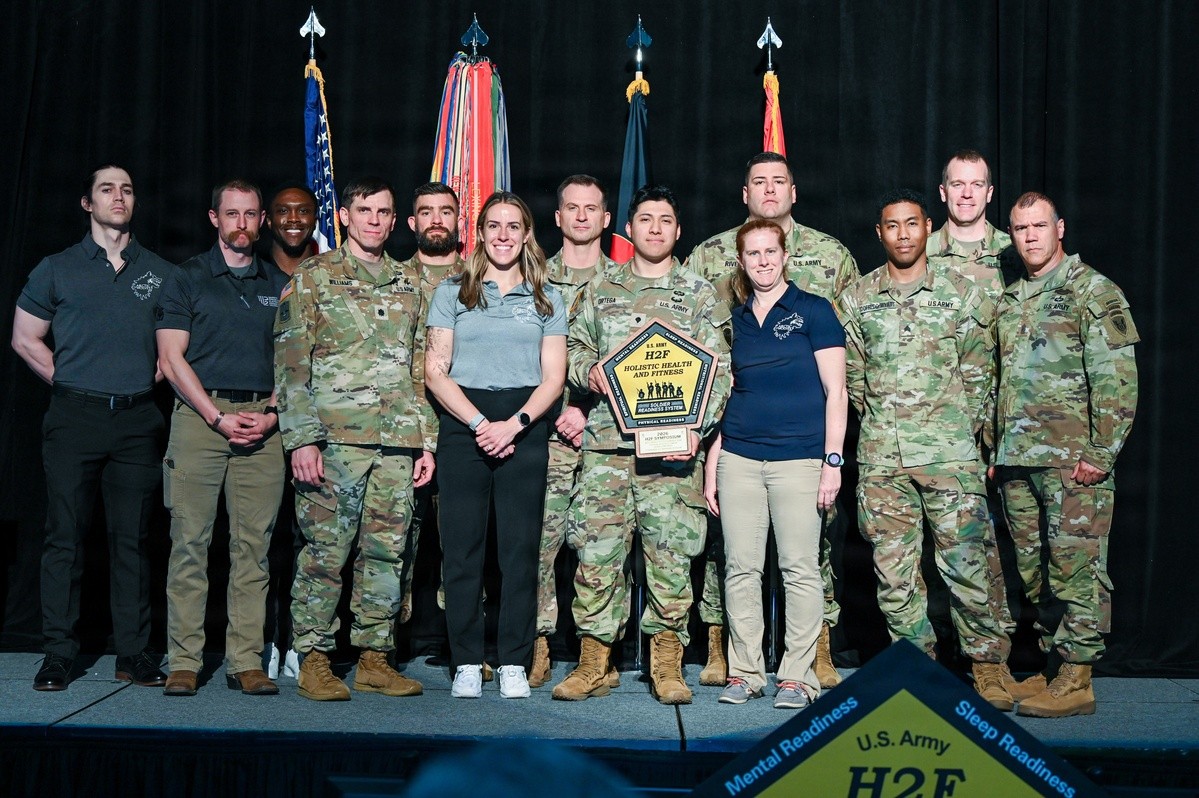
The Arctic Wolves made post-rotation recovery a mandatory 90-minute readiness check and handed their commander a platoon-level picture of the formation within a week.
The Problem
Ask any First Sergeant when injuries actually surface and the answer is not during the exercise. It is afterward. The adrenaline drops, the mission is complete, block leave is three days out, and a knee that has been quietly getting worse for two weeks suddenly hurts enough to notice, at exactly the moment nobody wants to start an appointment.
The 1st Infantry Brigade Combat Team put a number on the cost of that timing. In their experience, a Soldier entering the normal appointment process after a rotation waits seven to ten days for access to care. Multiply that by a brigade coming off a Joint Pacific Multinational Readiness Center rotation in interior Alaska, and the reintegration window becomes a period in which a large number of treatable injuries simply go unreported.
Injuries that wait do not stay the same size. Non-combat injury remains the single leading health problem in the Military Health System, and chronic musculoskeletal injury exceeding ninety days is among the leading drivers of disability discharge (Pav et al., 2024; Thompson et al., 2026). The same injury evaluated in week one and week ten is not the same injury, and the cost difference is measured in duty days and, eventually, in disability compensation.
The brigade frames the underlying problem as a cultural one. Army practice has long prioritized equipment and vehicle maintenance after a high-tempo training event. Wolf Recovery treats human maintenance as an equivalent, command-directed requirement (Roth, 2026).
What They Did
Wolf Recovery removed the Soldier’s decision from the equation. Any Soldier who spends more than two weeks forward, on exercise, deployment, or rotation, completes a standardized ninety-minute session on return that touches all five H2F readiness domains (Rhoades, 2026c). It is not offered. It is not voluntary. It is a clearing requirement, and it applies to everyone regardless of rank or whether they think anything is wrong. The program has reached roughly 8,000 Soldiers since it was standardized in summer 2024 (Roth, 2026).
The session runs as a rotation through stations: physical recovery programming led by strength and conditioning coaches, mindfulness and mental skills stations run by the cognitive performance specialist, and on-the-spot injury evaluations by physical therapists and athletic trainers. It closes with a “turf talk” that brings in chaplains, Military Family Life Counselors, and installation prevention partners alongside the H2F staff (Roth 2026).
Two design details do most of the work, and both are transferable:
- Commanders help write the survey. Each session opens with a holistic Soldier survey that commanders themselves help design, which is what makes the resulting data relevant to their actual readiness concerns rather than a generic instrument filed and forgotten (Roth, 2026).
- The program scales through extenders. Trained H2F extenders the brigade calls HoWLers — Holistic Wolf Leaders — co-coach sessions alongside the core team, embedding the capability at the lowest level so the program can be sustained (Roth, 2026).
What Changed
During the JPMRC 26-02 recovery, brigade H2F personnel conducted 149 on-the-spot injury evaluations. Each bypassed the seven-to-ten day access delay, and each kept a Soldier with their unit rather than routing them into the appointment system (Rhoades, 2026c).
Within one week of each session, unit leaders receive anonymized survey results broken down to platoon level. The feedback loop has already changed unit practice: survey data revealing widespread hydration deficiencies prompted the nutrition team to build targeted education connecting fluid intake to cold weather injury prevention, a live concern for an Arctic formation (Roth, 2026).
Colonel Christopher Brawley, the brigade commander, identifies the single most important factor in building a strong H2F program not as staffing or facilities but as something simpler.
Brawley speaks with his brigade H2F Director, Ellie Hrdina, multiple times daily, and describes her as translating command intent into results (Rhoades, 2026c). That is the practical meaning of a commander’s program: the professionals execute, but the commander is in the loop hourly, not quarterly.
Why It Worked
Three mechanisms appear to be doing the work, and all three transfer:
Proximity beats scheduling. Those 149 evaluates after JPMRC did not happen through the appointment system. It happened because the HPT put themselves in a position to be available for the Soldiers. This allowed them to identify deficiencies early on.
Universal defeats self-selection. A voluntary post-rotation screening reaches the Soldiers who were already going to seek care. A mandatory one reaches the Soldiers who were not, which is the population the program exists to find. Making it a clearing action also removes the social cost of raising a hand.
Information closes the loop. A clinical encounter helps one Soldier. A platoon-level data product delivered to every leader in a week changes how the brigade trains. Divisions across the Army are already converting physiological data into leader decision information; a company commander who knows his Soldiers’ recovery status has a defensible basis for deciding which platoon takes the hardest mission (Mingus and White, 2026).
Replicate It
The structural decisions below are available to any commander. Only the clinical evaluation piece depends on assigned providers.
- Set a trigger, not an invitation. Define the threshold, the Arctic Wolves used more than two weeks forward and make the session a clearing requirement for everyone who meets it.
- Give whoever screens the authority to act on site. If the outcome of the session is a referral slip, you have added a step rather than removed one.
- Design the leader product before the first session. Decide what commanders will receive, at what resolution, and by when. Retrofitting a data product onto an existing program rarely happens.
- Have commanders help write the survey questions. This is the step the brigade credits for turning data into decisions. When commanders shape the questions, they trust and use the answers.
- Anonymize and resolve to platoon. Platoon-level granularity is actionable without exposing individuals, which is what keeps Soldiers honest on the survey.
- Build an extender bench and let them co-lead. The HoWLer model is what makes the program sustainable rather than dependent on a handful of professionals.
- Run it after every rotation. A protocol reserved for hard rotations becomes a signal that the command expects casualties, which suppresses reporting.
Implement with or without an H2F Performance Team
The mandate, the timing, the survey, and the leader roll-up cost nothing. Only the clinical station requires people you may not have, and you likely have more of that capability than you think.
- Make the recovery session a mandatory formation event on the training calendar before anyone redeploys. The single highest-value element of this practice is that it is scheduled and universal, and that is entirely a command decision.
- Use your organic medics for the screening station. 68W combat medics can conduct injury screening and triage and identify who needs to be seen. That is not equivalent to a physical therapist, but it is dramatically better than waiting for Soldiers to self-refer ten days later.
- Coordinate a surge window with your supporting Role 1 or MTF. Ask for dedicated appointment blocks in the seventy-two hours after return rather than letting Soldiers compete for routine slots. Clinics will often accommodate a scheduled surge they can plan for.
- Give the physical station to your H2F Integrators. Reconditioning and progressive return-to-training programming may be within your H2F-Is scope, can be supported monitored by Battalion and Brigade medical personnel and requires no external support.
- Run the turf talk with your chaplain, MFLC, and Army Community Service. Unit ministry teams and Military Family Life Counselors are already resourced and are well suited to the reintegration conversation. ACS supports the family side, which is where most reintegration friction actually lands.
- Use a paper or simple electronic survey and brief it in a week. Ten questions, anonymous, tallied by platoon. The value is in the speed and the resolution, not the instrument.
References
- Fisher, Ross, Sarah Esparza, Nathaniel S. Nye, Randall Gottfredson, Mary T. Pawlak, Thomas L. Cropper, et al. 2021. “Outcomes of Embedded Athletic Training Services within United States Air Force Basic Military Training.” Journal of Athletic Training 56 (2): 134–140.
- Hirschhorn, Rebecca M., Susan W. Yeargin, James Mensch, and Thomas Dompier. 2023. “Injuries and Referral Patterns during Basic Combat Training: An Examination of Data from the Certified Athletic Trainer-Forward Program.” Military Medicine 188 (1–2): e190–e197.
- Mingus, James, and Graham White. 2026. “Building the No Neck Army: The Army’s Holistic Health and Fitness Program.” Modern War Institute at West Point, March 3, 2026.
- Pav, Vanessa, Xiaoning Yuan, Brad Isaacson, Chris Colahan, and Ben Hando. 2024. “Burden of Musculoskeletal Injuries in US Active Duty Service Members: A 12-Year Study Spanning Fiscal Years 2010–2021.” Military Medicine 189 (Suppl. 4): 1–9.
- Rhoades, Hunter. 2026c. “Human Performance Programs Recognized for Excellence at Symposium.” army.mil, May 18, 2026. https://www.army.mil/article/292580.
- Roth, Ian. 2026. “1st Brigade, 11th Airborne Division H2F Team Wins ‘Best-in-Class’ Award for Innovative Wolf Recovery Program.” DVIDS, May 18, 2026. https://www.dvidshub.net/news/565569.
- Thompson, Andrew G., Manoj Subedi, Alexander E. Morrow, Chance L. Smith, and Kevin A. Bigelman. 2026. “Evaluating the Return on Investment of U.S. Army Holistic Health and Fitness Performance Teams: A Matched Difference-in-Differences Study of Readiness and Economic Outcomes.” Sports Medicine 56 (7): 1801–1831.
Social Sharing