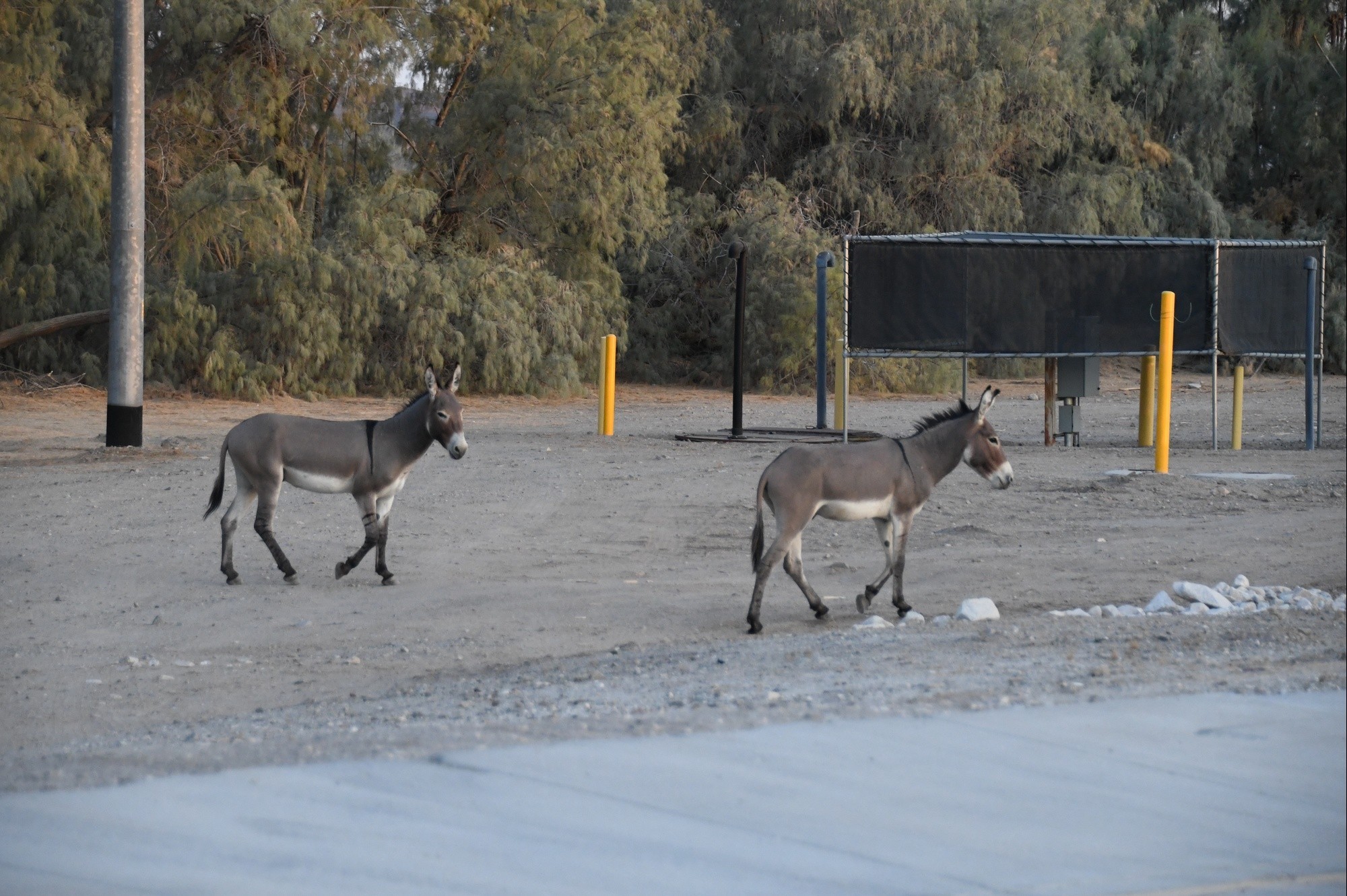

“They’ve got a lot of personality," said Daniel Steward, wildlife biologist. "Burros are less likely to shy away from people than a deer. They’re entertaining -- people truly do enjoy seeing these animals around.” VIEW ORIGINAL
For most of its 83-year history, U.S. Army Yuma Proving Ground (YPG) has seen itself as a natural laboratory, testing equipment Soldiers use in the most realistic natural environment possible.
As such, YPG has a deeply vested interest in being good stewards of the environment, and the proving ground’s record in this area shines.
The proving ground is home to one of the largest and most genetically diverse populations of bighorn sheep in Arizona. The Sonoran Pronghorn, virtually extinct in the early 2000s, is now flourishing thanks in part to Arizona Game and Fish officials intentionally introducing the creature into YPG as a haven to help it regenerate. A fringe-toed lizard that is threatened in most of the American West thrives at YPG, as does the Sonoran tortoise.
“We try to do proactive things to help the environment,” said Daniel Steward, YPG wildlife biologist. “That way, the range is always ready to be used for military testing.”
Among the multiple species found within YPG’s over 1,300 square miles of range space are wild horses and burros, well known to all YPG personnel who spend their days on the range testing equipment for warfighters.
“There are a lot more burros than there are horses,” said Steward. “We track where they’re at for our safety.”
Though the burros are generally popular with the YPG workforce, the creatures occasionally cause mischief. For example, some years ago a clever burro managed to turn on a water spigot—he drank his fill, then departed with the tap still running.
“Food, water, and shelter are what draw wildlife into our area,” Steward explained. “When it gets really dry, horses and burros are looking for water. Landscaping and sprinkler systems provide water: we really try to watch out for pooling water that would attract burros.”
Slow moving and with binocular vision, burros are incapable of moving out of the way of a vehicle moving at highway speeds in time to avoid a costly—and deadly—accident. Mitigating the burro threat to motorists on Highway 95 is no easy task, but Steward and other wildlife officials have done the best they can.
“We’ve eliminated water sources near the roads to try to keep horses and burros as far away from Highway 95 as possible,” Steward said. “It’s not healthy for the horses and burros to be exposed to high levels of traffic, for the animals or for the people.”
The Arizona Department of Transportation’s current project to add traffic circles to the intersections at Imperial Dam Road and Martinez Lake Road has created a new hazard: the presence of cement barriers separating the temporary roadway from the main road under construction has been an adjustment for both motorists and animals. Recently, a pack of confused burros found themselves penned in by the barrier, requiring a response from the YPG Police Department to direct traffic around them until the creatures were able to exit.
“Construction zones are inherently dangerous,” Steward said. “When you add burros, it makes it even more so. It’s all the more reason to slow down and be cautious, especially at night.”
Aside from favorable weather and plenty to eat and drink, the creatures tend to live long lives due to their sheer size and wary pack mentality that deters desert predators.
“Horses and burros are big, strong, and have a herd to protect each other. A lot of times they are too dangerous for a predator to take down—it happens, but it is rare. Mountain lions are typically associated with sheep, not horses or burros.”
The burros are probably helped by the goodwill of their human neighbors, too.
“They’ve got a lot of personality,” Steward said. “Burros are less likely to shy away from people than a deer. They’re entertaining -- people truly do enjoy seeing these animals around.”
Nonetheless, Steward cautions that burros are wild animals that should be treated as such. Feeding wild burros is a particularly bad idea.
“When people start feeding the burros, they become a real nuisance. These are wild animals—one begging for food can be ornery. You want to keep a respectful distance from any wild animal.”
Social Sharing