
WASHINGTON — The Army has replaced the long-standing height and weight tables, circumference-based tape test, and supplemental body fat assessments with the waist-to-height ratio (WHtR) health assessment tool. This immediate change is part of a broader effort to accurately assess Soldier health, increase force readiness and continue to align the Army Body Composition Program with medically validated practices.
"This is about lethality and health," said Sgt. Maj. Monsanto, Deputy Chief of Staff, G-1, Directorate of Prevention, Resilience, Readiness. "We are adopting new metrics to ensure our Soldiers are healthy and physically fit to fight and win."
Under the new policy, all Soldiers will undergo a WHtR assessment twice per calendar year. A waist to height ratio of less than 0.55 is the new benchmark for compliance. The implementation of this assessment measures a Soldier's waistline at the navel (belly button) and divides that measurement by their height in inches, which produces the ratio for record. The Army will conduct a 180-day assessment of the new WHtR to validate accuracy and determine if adjustments are needed.
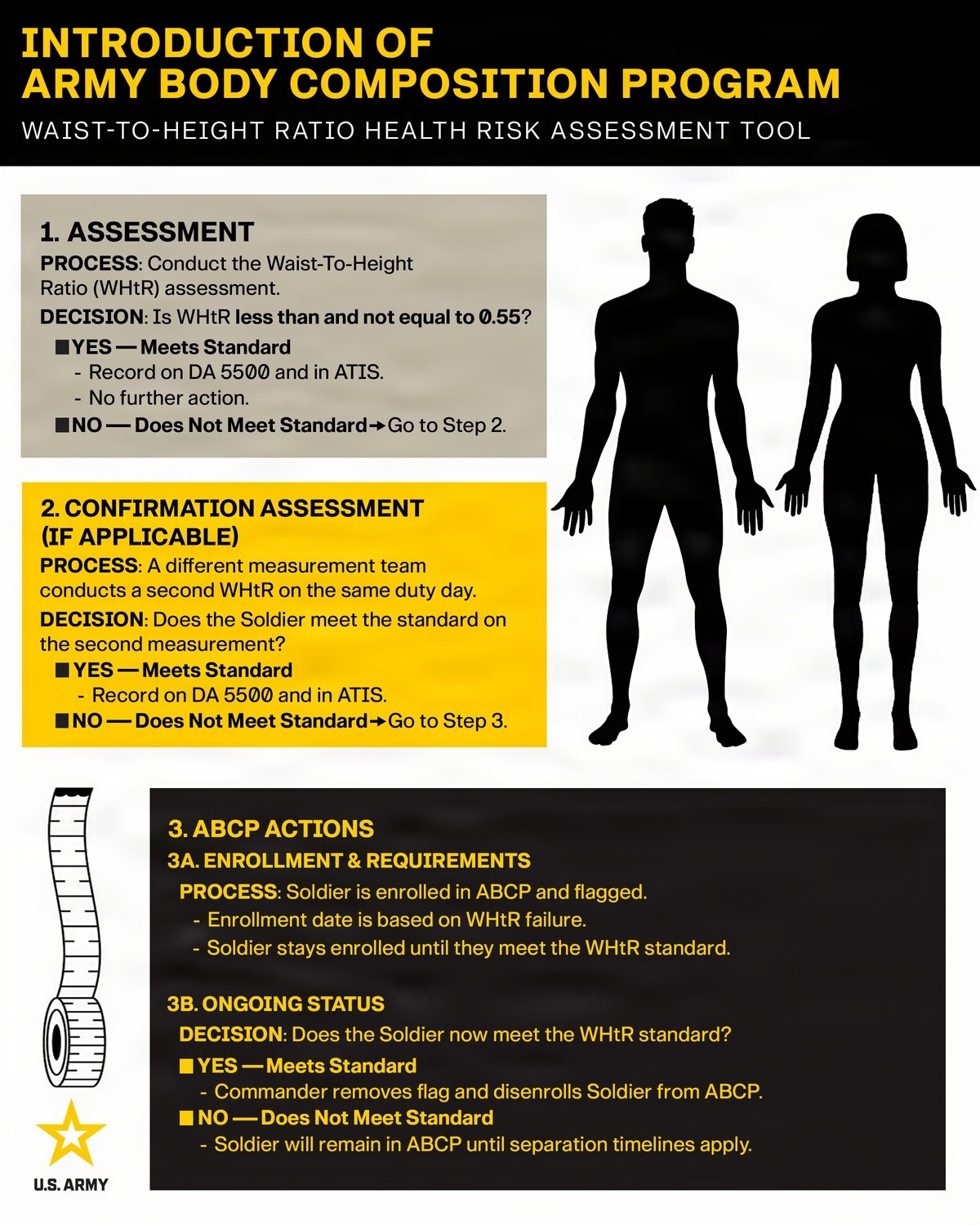
Soldiers whose WHtR is 0.55 or greater will receive a confirmation test by another team on the same duty day to verify accuracy. If a Soldier fails the WHtR assessment, placement in the Army Body Composition program will follow to begin the process for compliance.
"Our human resource continuous transformation initiative requires that we modernize how we improve readiness and our warfighting lethality,” said Sgt. Maj. Monsanto. “By incorporating the Waist-to-Height Ratio, we are becoming more adaptive and agile, ensuring our Soldiers are healthy and physically fit to fight and win.”
The Army will continue to use a formal flagging action for Soldiers whose waist-to-height ratio is 0.55 or higher. Under the updated policy, these Soldiers are flagged and enrolled in the Army Body Composition Program until they meet the standard. No separation actions for failing WHtR will occur during the Army’s initial 180‑day assessment period.
To ensure standards of professionalism remain consistent across the Army, commanders at any time may direct a Soldier to undergo a WHtR assessment if they are concerned that the Soldier does not meet the WHtR standard.
This transition to the Waist-to-Height Ratio marks a significant step in modernizing the Army’s approach to health and fitness. By adopting an accurate and medically validated standard, we are ensuring our Soldiers are prepared for the demands of the modern battlefield and fostering a healthier, more lethal force.
Social Sharing