FORT HUACHUCA, Ariz. — In a rapidly evolving world driven by technology, parents play a vital role in preparing their children for the future. Enrolling children in science, technology, engineering, arts, and mathematics programs is one of the most effective ways to set them on a path toward success. These STEAM programs teach technical skills while also fostering critical thinking, creativity, and problem-solving abilities that will serve children throughout their lives. For the U.S. Army, these educational initiatives are critical to cultivating the next generation of technical leaders, engineers, and innovators who will defend our nation in the years to come.
The annual STEAM event that took place on June 4 at Fort Huachuca was a prime example of the Army’s commitment to youth education. Middle and high school students from the Wilcox Theater and Arts Engineering and Technology Institute visited the post to explore technical fields and careers. This collaborative community outreach was organized by the Joint Interoperability Test Command, U.S. Army Electronic Proving Ground, U.S. Army Network Enterprise Technology Command, and U.S. Army Information Systems Engineering Command (a major subordinate command of the Communications-Electronics Command).
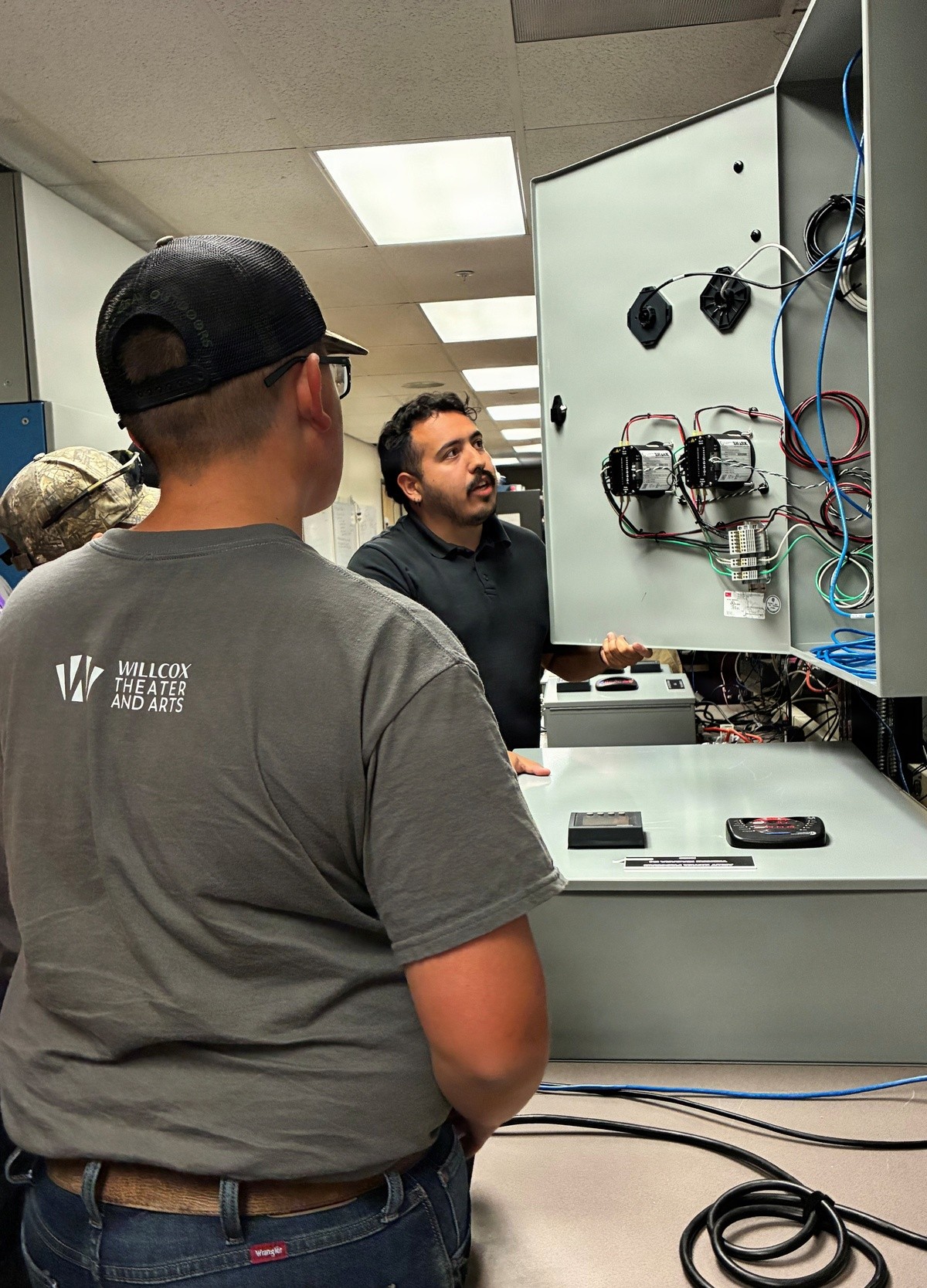
During the event, USAISEC engineers Alfonso Bodden and Jose Medina highlighted the real-world applications of technical fields in military operations at the USAISEC Patch and Test Facility. Alfonso and Jose offered students detailed, hands-on explanations about the internal components of the utility monitoring and control system in the facility. To help students understand the system technology better, the engineers compared it to smart home devices and cellular phone updates.


In addition to showcasing active systems, USAISEC engineers Alex Motley and Robens Cyprien explained the powerful career pathways available to young people by sharing their experiences as former USAISEC interns.
“As a Department of the Army fellow, I really enjoyed the opportunity to rotate among three distinctly different cybersecurity teams during the internship,” Alex said. “Instead of being siloed into a single specialty on day one, I spent months embedded with different units, acquiring diverse skills at every stop with some of the best minds working in the USAISEC team.”
Robens echoed similar positive sentiments while highlighting the dynamic nature of his internship.
“As a recent graduate intern, I was able to get hands-on experience with installing, configuring, and testing short- and long-distance wireless networks,” Robens said. “I was able to travel with my team to various sites around the continental United States to perform those tasks.”

To complete the educational experience, USAISEC engineer Travis Bloss introduced students to the principles of artificial intelligence prompt engineering, inspiring them to envision how they could leverage AI in their own lives.

By educating students about current technology, events like this STEAM day for Wilcox students help build a pipeline of future workforce talent for critical Army roles. The Army has a continuous need for skilled engineers, information technology specialists, and technicians. Enrolling children in STEAM activities today ensures they will have the skills needed to fill these vital roles tomorrow. In the end, STEAM events help support Army recruitment, workforce development, and national defense.
Finding STEAM programs
For parents wanting to inspire their children, finding accessible STEAM programs is easier than ever. Army and civilian families can leverage several local resources to connect youth with high-quality technical opportunities:
- Garrison Child and Youth Services: On military installations, the garrison CYS acts as a primary contact point. Parents can contact CYS and local school liaison officers to find on-post clubs and vetted neighborhood activities.
- Public libraries and community colleges: Beyond installation gates, local libraries, community colleges, and dedicated youth technology academies host hands-on workshops in coding, robotics, and structural engineering.
- Municipal and school partnerships: In civilian communities, school districts partner with regional universities, community colleges, and science museums on a regular basis to host after-school programs and summer enrichment camps.
- Civic and nonprofit organizations: Neighborhood civic organizations, local chapters of the 4-H club, and community-based nonprofit centers offer subsidized or free workshops covering coding, environmental science, and digital arts on a regular basis.
Securing high-quality educational opportunities is vital to building resilient Army and civilian families while fostering the next generation of innovators. By using installation assets and local community resources, parents can enroll their children in enriching STEAM programs successfully. This active engagement maintains academic continuity, promotes technical skill development, and inspires future Army careers in science and technology.
Social Sharing