

During Joint Pacific Multinational Readiness Center (JPMRC) 26-01, electrical energy emerged as a limiting factor in tactical operations in ways that traditional sustainment planning did not fully capture. Formations did not culminate because they lacked fuel or ammunition. They increasingly faced friction because they lacked a deliberate way to generate, store, distribute, and forecast electrical power for the systems that now underpin combat effectiveness.
This is not a niche technical issue. It is a warfighting problem. Modern formations depend on electricity to sustain mission command, communications, sensing, targeting, night vision, unmanned systems, and increasingly the individual Soldier’s ability to fight effectively. However, the Army still plans endurance primarily in gallons and rounds, while electrical demand often remains invisible until it disrupts execution.
That mismatch matters. A battalion tactical operations center may require only a fraction of the output produced by a legacy generator but will still run the generator continuously, burning fuel inefficiently and emitting an unnecessary acoustic and thermal signature. Infantry formations may carry batteries, but without a sustainable recharge architecture they still become tethered to vehicles for power. Commanders can often estimate how long a unit can fight before it runs short on fuel or ammunition, but they are far less likely to know how long that same unit can remain connected, informed, and synchronized before electrical energy shortfalls degrade mission command and combat effectiveness.
The Army must address this gap by treating electrical energy as a deliberate sustainment commodity: Class III–Energy. Doing so would allow commanders and sustainment staffs to measure, forecast, and manage operational endurance in ways aligned to the realities of modern warfare. Energy must no longer be treated as a background technical function. It must become part of the broader concept of support.
The Problem: Combat Power Now Depends on Electricity
For more than a century, sustainment planning has translated operational reach into tangible commodities. Fuel determines how far formations can move. Ammunition determines how long they can generate fires. Water, rations, and repair parts determine whether the force can continue operating. These remain essential. But they no longer tell the full story.
Combat power today also depends on persistent access to electrical energy. Radios, command post systems, satellite communications, sensors, unmanned aircraft systems, end-user devices, targeting platforms, and Soldier-worn technologies all require electrical power. A formation may still possess its weapons, vehicles, and personnel, yet lose combat effectiveness if it cannot charge the devices that enable situational awareness, command and control, and synchronization across dispersed formations.
This transformation has occurred faster than doctrine and sustainment processes have adapted. The Army remains organized and equipped to fuel platforms and run generators, but not yet to deliberately forecast and manage electrical demand as an operational requirement. Fuel is still often treated as the primary energy commodity, even though fuel increasingly serves as an intermediate input used to generate electricity for mission command and other systems. The result is a force that is electrically dependent but is not yet institutionally optimized to manage that dependency.
What JPMRC 26-01 Revealed
JPMRC 26-01 illustrated the problem clearly. In one case, a battalion tactical operations center displaced successfully under limited visibility to reduce exposure to enemy detection. The movement itself was efficient. But once established, the command post immediately resumed continuous generator operations to power mission command systems. The generator produced well over 15 kilowatts, while the command post’s average electrical load was closer to two kilowatts. Most of the available generation capacity went unused, yet the unit still consumed fuel, assumed maintenance burden, and generated a detectable signature simply to support a comparatively small electrical demand.
The same friction appeared at lower echelons. During planning for long-range maritime air assault operations, Infantry Squad Vehicles and Squad Multipurpose Equipment Transport systems were not loaded onto aircraft solely for mobility. They were also carried because they served as practical power sources after insertion. Vehicle alternators became part of the energy plan. In effect, lift capacity was being used not just to move forces and supplies, but to move electrical sustainment capability because formations lacked reliable man-portable alternatives.
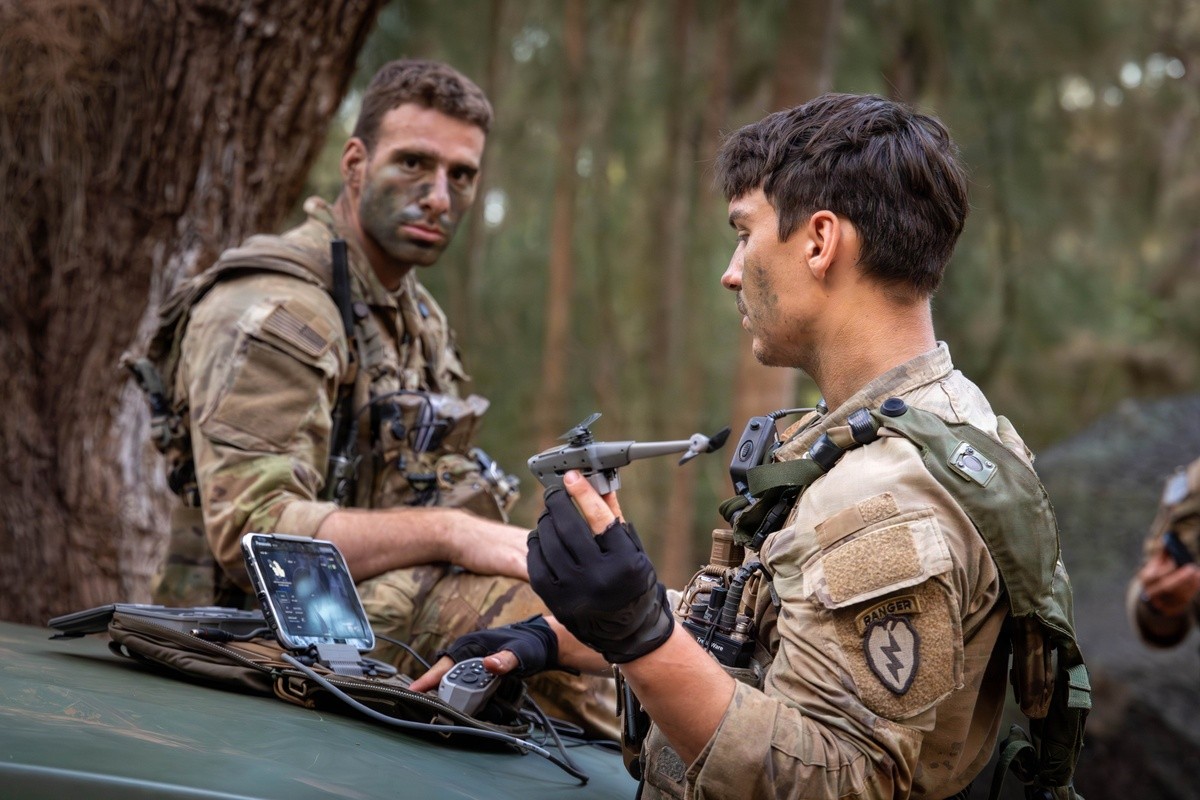
At the company echelon, the challenge became more acute. Forward elements consumed batteries for radios, night-vision systems, and Soldier electronics, requiring precious space to be allocated for battery storage. Some units carried substantial battery stocks, but stock alone did not solve the underlying problem. Without an efficient method to recharge and redistribute power, formations still risked degraded communications and reduced night-fighting capability once initial supplies were exhausted.
Across the battlefield, maneuver timelines had to factor battery recharge requirements as a tactical planning necessity. Command posts relied on vehicles as charging stations. Platoons balanced battery conservation against the value of drones and digital systems. Energy demand, though rarely visible in the sustainment estimate, was shaping operational decisions in real time. The issue was conceptual: the Army had not yet fully incorporated electrical energy into the operational sustainment framework that commanders use to understand endurance and risk.
Why Legacy Power Concepts No Longer Fit
The friction observed in training is not simply the result of insufficient equipment. In many cases, units possess generators, vehicles, batteries, and innovative workarounds. The problem is that much of the Army’s power architecture reflects assumptions from an earlier way of fighting. Several trends have combined to expose that mismatch.
First, formations are becoming lighter and more distributed. Command posts that once occupied large tent complexes now often operate from a small number of vehicles, prioritizing mobility and survivability over size. These smaller nodes require far less continuous power than the large headquarters for which current generators were originally fielded.
Second, support areas and command nodes are increasingly dispersed to reduce vulnerability in large-scale combat operations (LSCO). Instead of one concentrated location, formations now operate across multiple smaller nodes. This improves survivability but divides electrical demand across several sites, making legacy high-capacity generators even less efficient.
Third, combat systems at every echelon are becoming more electrically dependent. Even as command posts shrink physically, they rely more heavily on digital systems, radios, sensors, and charging infrastructure. The issue is not that units need more peak generation at each node but that they need more efficient ways to match generation, storage, and consumption over time.
The Army therefore faces a paradox: formations often need less continuous power at a single site than current generators efficiently provide while needing more deliberate and flexible energy sustainment across dispersed operations. Generators sized for large, static headquarters are now frequently used to support small, mobile command nodes that run a fraction of that load. The result is fuel inefficiency, increased maintenance, and unnecessary emissions without corresponding operational gain.
The Operational Effects of Poor Energy Management
If this were only a technical efficiency issue, it would be important but not decisive. The real concern is that unmanaged energy demand creates friction across multiple warfighting functions.
Sustainment Friction
The most immediate effect is inefficiency inside the sustainment system itself. Underloaded generators burn fuel, require service, and impose transportation burdens disproportionate to the power actually consumed. Sustainment formations end up moving and protecting fuel to support architectures that are poorly matched to demand. In an environment where every gallon moved forward carries cost and risk, this is not trivial.
Maneuver Friction
At lower echelons, electrical dependency increasingly shapes how formations move and fight. Platoons and companies rely on vehicles not only for mobility but for charging radios, drones, and Soldier systems. When vehicles become the de facto recharge solution, units risk becoming tethered to them. This is especially crucial for light infantry operating in jungle, mountainous, littoral, or urban terrain where vehicle access is limited.
Historically, light infantry derived advantage from its ability to maneuver where vehicles could not. Energy dependency now threatens to erode that advantage by creating a hidden requirement for proximity to vehicular power. In such conditions, the limiting factor is not simply resupply in the traditional sense but the ability to sustain electrical systems once dismounted forces separate from vehicles.
Protection Friction
Electrical sustainment also affects survivability. A command post may disperse, camouflage, and reduce physical footprint, yet still reveal itself by continually using generators. In a battlespace defined by persistent sensing and rapid targeting, energy architecture becomes a protection issue.
Stored power changes that equation. If formations generate energy intermittently, store it, and then operate silently between recharge cycles, they reduce emissions without sacrificing mission command. Sustainment decisions about when power is generated, where it is stored, and how it is distributed shape whether formations remain concealed or become targetable.
Planning Friction
The deepest problem is planning. The Army lacks a standardized method to express electrical demand in operational terms familiar to commanders. Sustainment staffs routinely convert fuel into days of supply, but few staffs do this for electricity. Thus, energy remains diffused across technical systems, local workarounds, and execution-phase improvisation. Until energy is measured and briefed as an operational requirement, commanders will continue to manage its effects reactively instead of proactively.
A Better Framework: Class III–Energy
The Army must treat electrical energy as Class III–Energy within sustainment planning. This does not replace traditional fuel planning. It expands it. Fuel remains essential, but electrical power must be recognized as a distinct commodity that can be generated, stored, transported, distributed, and forecasted.
This matters because the Army already understands how to plan commodities. Sustainment leaders know how to translate gallons, rounds, and repair parts into operational endurance. The same logic must apply to electricity. Power demand can be measured in watts. Consumption can be expressed in watt-hours over time. These inputs can then be translated into operationally relevant estimates of endurance and resupply requirements.
For example, a battalion command post requiring roughly two kilowatts of continuous power consumes nearly 50 kilowatt-hours in a day. That figure can be planned against available storage, recharge timelines, generator cycles, and distribution capacity. Once aggregated across subordinate echelons, it becomes possible to show commanders not simply whether they have generators, but how long their formations can operate before needing to recharge, refuel, or accept greater risk.
What Must Change
To move from experimentation to institutional change, the Army must pursue three lines of effort.
- Integrate Energy into the Concept of Support —
Brigade and division sustainment staffs must deliberately account for electrical demand during planning. Energy must be forecasted alongside fuel, ammunition, maintenance, and distribution. This requires determining the electrical load of task-organized formations and assessing how those loads vary by mission, terrain, and echelon.
An energy estimate does not need to be perfect to be useful. The Army already plans many sustainment factors with imperfect information. What matters is that energy becomes visible early enough to shape operational decisions. - Establish Clear Ownership within Support Operations Sections —
Operational energy requires a responsible planner. Brigade and division support operations sections must designate an energy management planner or equivalent function to analyze demand, synchronize recharge architecture, and integrate electrical sustainment into distribution planning. This role would not be a niche technical advisor. It would help translate commander intent into energy endurance by linking generation, storage, and movement to the way the force fights. The staff officer who understands electrical demand, recharge timelines, and signature tradeoffs will increasingly influence operational tempo, survivability, and maneuver freedom. - Align Equipping and Doctrine with Distributed Operations —
The Army’s future power architecture must emphasize modular generation, scalable battery storage, and dispersed energy distribution rather than dependence on oversized generators running continuously. Generators must increasingly serve as recharge platforms rather than default always-on power sources. Storage must allow formations to operate silently between recharge cycles. Distribution must enable power to move forward in practical ways, including man-portable and low-signature solutions for dismounted formations.
Doctrine must evolve alongside equipment. If energy is treated as Class III–Energy, then planning tools, sustainment estimates, logistics synchronization matrices, and operational dashboards must reflect it. Commanders must be able to see energy endurance alongside other sustainment indicators.
Early Signs of Progress
The Army is not starting from zero. Units are already experimenting. Formations have begun integrating generators, vehicle power, rechargeable batteries, and limited renewable systems into hybrid approaches that reduce generator runtime and improve survivability. The 25th Infantry Division’s experimentation during Operation Lightning Surge, similar in purpose to the 4th Infantry Division’s Operation Ivy Sting, reflects an important shift: treating energy not simply as hardware, but as a planning problem.
Command visualization tools currently being generated begin to offer commanders a way to understand how much power formations generate, store, and consume. These efforts are in early stages and still depend heavily on manual inputs, but the larger value is conceptual. They show that energy can be tracked, visualized, and incorporated into decision making.
That is the right direction. The Army does not need a perfect technological solution before changing how it thinks. It needs a framework that makes energy visible, measurable, and operationally relevant.
Conclusion: Operational Endurance Now Includes Energy Endurance
The question for senior leaders is not whether the force needs electricity. The question is whether the Army will continue treating electrical power as an implied technical detail or recognize it as a sustainment requirement that directly shapes combat power.
A formation that cannot generate, store, and distribute energy cannot maintain mission command, sustain communications, employ sensors, charge unmanned systems, or preserve the night-fighting and information advantages on which modern operations depend. Energy is part of combat power.
The Army has long understood how to plan for fuel, ammunition, and mobility. It must now apply that same discipline to electrical power. Treating electricity as Class III–Energy will give commanders and sustainers a shared framework to understand endurance, reduce signature, preserve freedom of maneuver, and better align sustainment with the realities of LSCO.
If sustainment leaders want formations to remain mobile, survivable, and lethal, energy must become part of the concept of support. The future sustainment question is no longer only how far a formation can move or how much ammunition it can fire. It is also how long it can remain connected, informed, and operational before energy constraints force it to pause.
The Army’s next sustainment challenge is already here: Watts next?
--------------------
MAJ Sean McLachlan is the deputy G-4 for the 25th Infantry Division and formerly the support operations officer for the 225th Light Support Battalion, 2nd Light Brigade Combat Team, 25th Infantry Division. He has earned master’s degrees in military history from Norwich University and the U.S. Army Command and General Staff College and is a Ph.D. candidate at Liberty University. He is the winner of the 2024 LTG Arthur Gregg Sustainment Leadership Award and the Transportation Corps Field Grade Officer of the Year.
--------------------
This article was published in the summer 2026 edition of Army Sustainment Professional Bulletin.
RELATED LINKS
Army Sustainment on Line of Departure
----------------------------------------------------------------------------------------------
Social Sharing