
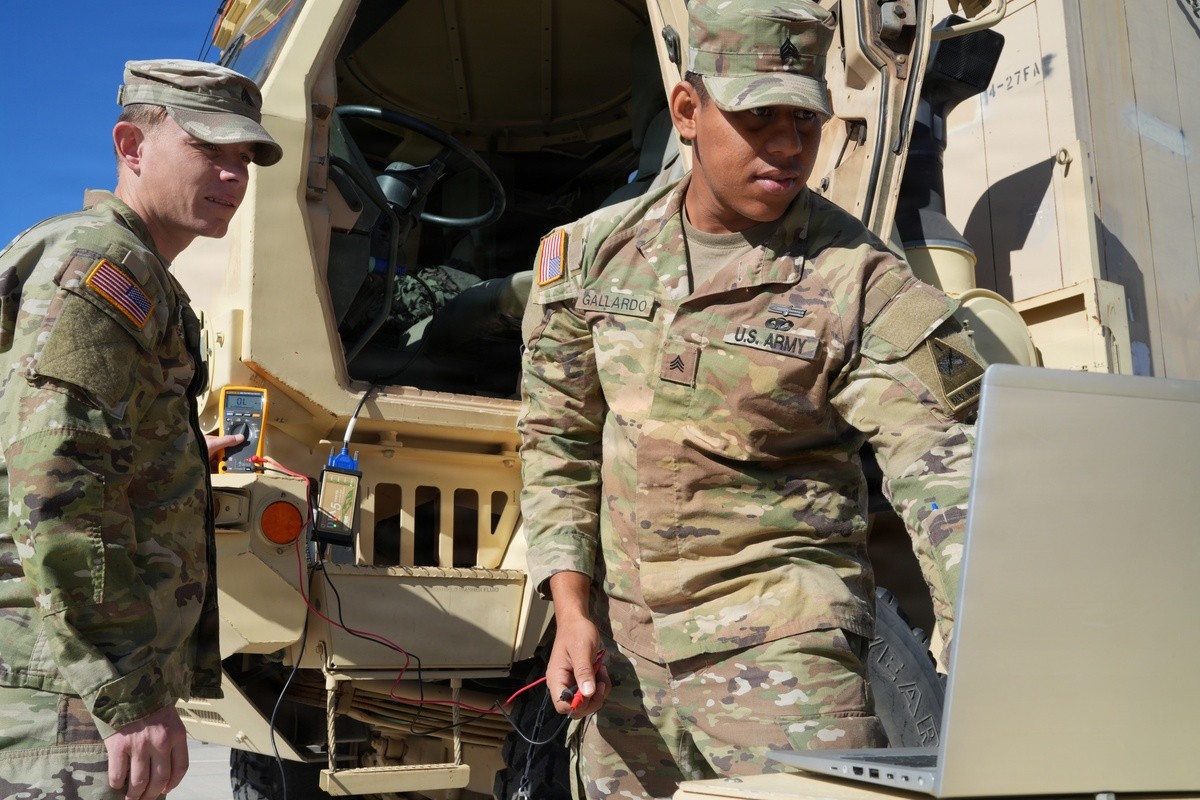


In armored and sustainment-heavy formations, maintenance is not a support activity; it is the mechanism that preserves tempo, extends operational reach, and protects crews. The enemy does not measure readiness on a slide; the enemy measures it when platforms fail to start; systems cannot communicate; or formations cannot mass effects. Leaders who treat maintenance as someone else’s lane discover too late that they have separated combat power from the systems that generate it. Maintenance becomes a true combat multiplier only when leaders treat it as a warfighting function.
Strengthening the sustainment warfighting profession begins at the motor pool. The sustainment Soldier who masters fault diagnosis, enforces preventive maintenance checks and services (PMCS) discipline, and manages parts flow with precision is executing a warfighting skill. Maintenance proficiency is a professional standard, not a collateral task. Units that internalize this identity produce readiness consistently; units that treat it as overhead collapse under operational pressure. This article is written for the leaders who own that standard.
A formation can brief green and still be unable to execute a movement-to-contact if a handful of mission-critical faults are hidden, misdiagnosed, or waiting on long-lead repair parts. Maintenance becomes a combat multiplier when leaders reliably convert time, labor, and parts into mission-capable systems at the point of need. This article translates maintenance doctrine into leader behaviors at the company level. It focuses on what commanders, first sergeants, executive officers (XOs), platoon leaders, and senior NCOs can do to build a maintenance system that holds up under operating tempo.
A useful way to think about maintenance as combat power is to define what it multiplies. Maintenance multiplies three things leaders care about in combat: tempo, operational reach, and survivability.
If maintenance is weak, leaders pay for it in lost training time, in increased demand on recovery and sustainment assets, and in degraded mission options. In contrast, strong maintenance expands the commander’s choice set: more ready platforms, fewer unplanned constraints, and faster regeneration after contact.
Why Readiness Collapses: The Hidden Failure Chain
At company level, readiness usually collapses through a predictable chain. Leaders can break that chain only if they understand it.
- PMCS are rushed or rubber stamped.
- Faults are written incorrectly or without enough detail on the Department of the Army (DA) Form 5988-E, Equipment Maintenance and Inspection Worksheet, creating delays in diagnosis and parts identification.
- Work orders are opened late or not updated, which obscures true not-mission-capable (NMC) status and hides trends.
- Class IX repair parts actions are misprioritized or under-resourced, and the unit loses time waiting on parts it should have forecasted or sourced earlier.
- Equipment evacuations are delayed due to unclear priorities, incomplete documentation, or poor coordination between supported units and maintainers.
- Leaders brief readiness, but the maintenance system is not producing outcomes, and readiness becomes a narrative instead of an operating condition.
This chain is why maintenance discipline is inseparable from command discipline. The Army’s maintenance policy and procedures exist to prevent these failure patterns, but they only work when leaders enforce them.
Maintenance Is Command Business: People, Processes, Priorities
Maintenance succeeds or fails on three leader-owned variables: people, processes, and priorities. This framework is intentionally simple. It gives leaders a way to diagnose problems without defaulting to technical jargon or blaming external agencies.
People: Readiness Is Built by Humans
Operators and crews are the first mechanics on every platform. The most effective maintenance programs treat crew-level PMCS as a tactical skill. Crews that identify faults early, describe them accurately, and report them without fear prevent small problems from turning into deadline cascades.
Leaders build this culture through visible actions, especially the following: Train PMCS and identified trends like a battle drill. Validate proficiency. Reward honest reporting. Protect wrench time.
The updated Leader’s Guide to Maintenance and Services highlights a consistent trend at combat training centers (CTCs): units that protect maintenance time and execute disciplined programs spend more time training and fighting than sitting in maintenance collection points. This pattern repeats across CTC rotations because it is structural, not incidental. When leaders treat PMCS as a battle drill and hold Soldiers accountable for the quality of their fault reporting, the maintenance system runs before problems escalate. When they do not, the system degrades quietly until the cost appears at the worst possible moment such as during a field problem, a gunnery week, or a deployment notification.
Processes: Readiness Is a System, not a Vibe
Processes are the repeatable routines that move a fault from found to fixed. At the company level, leaders must ensure that the basic system runs every week. That system includes fault discovery (PMCS), fault recording and classification (DA Form 5988-E entries and status accuracy), work order management, parts management, services and inspections, and dispatching/control.
Clearly defined and easily understood processes outlive fatigue, uncertainty, and tenure. When teams are tired, understaffed, or operating under friction, they do not rise to the occasion. A unit with a simple, enforced maintenance process keeps producing readiness even when key leaders rotate, the operational picture shifts, or the pace increases.
Priorities: Readiness Lives Where the Commander Spends Time
Maintenance becomes a priority when leaders spend time on it, ask the right questions, and make decisions that remove constraints. This does not mean a commander becomes the shop foreman. It means the commander treats maintenance as an operational requirement similar to ranges, gunnery, and collective training.
If you always push maintenance to when you have time, you will never have time. Strong units schedule maintenance, enforce standards, and align effort against mission-critical systems first.
The Maintenance Ecosystem Leaders Must Understand
Companies do not own the entire maintenance system, but they do own how well they interact with it. Leaders who understand the ecosystem reduce friction and gain time. The Army’s continued use of the Global Combat Support System–Army (GCSS-A) has digitized much of the maintenance record keeping that previously lived on paper forms. Good leaders invest time learning how their teams use GCSS-A, how work orders are opened and updated, how parts are requisitioned, and how readiness data are transmitted up the chain to reduce the lag between a fault appearing and a repair part arriving. Units that use the system correctly generate more accurate readiness data, enabling better decisions at battalion and brigade. Maintenance competence now includes data discipline, not just wrench time.
Field maintenance is the company’s daily readiness engine. This is where disciplined PMCS, accurate fault reporting, and protected time create momentum. Sustainment maintenance is the capacity that repairs systems beyond the field level. Leaders influence sustainment outcomes through documentation quality, evacuation discipline, and clear priorities. Poor documentation and unclear urgency often add days or weeks to repair timelines.
Readiness often lives or dies with Class IX repair parts. Parts flow is not magic; it is a process that rewards accurate faults, correct priorities, early forecasting, and disciplined tracking. Leaders must understand the difference between NMC supply (NMCS) and NMC maintenance (NMCM), because the fix path is different. NMCM often demands better troubleshooting, tools, protected time, or evacuation. NMCS often demands better requisition discipline, tracking, and forecasting.
Class IX without Mystique: Five Questions Leaders Must Ask
Many leaders feel intimidated by parts-and-supply discussions, then default to a single question: When will it get here? That question is necessary, but it is not sufficient. Leaders can improve parts outcomes by asking five questions that drive action and accountability:
- Is the fault written well enough to identify the correct part?
- What is the priority, and does it match the mission?
- What is the expected delivery date, and what is our plan if it slips?
- Is there a substitute, controlled exchange option, or local solution (shop stock/bench stock) that maintains ethics and documentation?
- Are we repeatedly consuming the same parts on the same systems?
These questions push the conversation from passive waiting to active management. They also help leaders identify whether the friction is in troubleshooting, requisition accuracy, supply support activity processes, or distribution.
Metrics That Matter: Decision-Grade Indicators, Not Slide Cosmetics
A maintenance system improves when leaders measure what drives outcomes. Too often, units track only a single readiness percentage and miss the story underneath. Consider building or using an already developed commander’s dashboard that answers these questions: What is NMC today and why? What has been broken the longest? What will break next if we do not intervene? What decisions do we need this week to restore readiness?
Useful, company-level indicators include the following:
- NMC breakdown by driver: NMCS versus NMCM. This shows whether the constraint is parts flow or maintenance capacity.
- Average days down for the top 10 deadline systems.
- Work order aging: how long open actions sit without progress.
- Parts delinquency: high-priority requisitions past expected delivery date.
- Services compliance: scheduled services due within 14 days versus completed.
- Repeat faults: systems that return NMC shortly after repair.
These measurements drive leader action. They point to whether the unit needs better operator training, stronger troubleshooting, improved parts tracking, better evacuation discipline, or more protected maintenance time.
Five Leader Mistakes That Quietly Destroy Readiness
Most maintenance failures are not dramatic. They are small habits that compound. Leaders can protect readiness by eliminating five common mistakes:
- Treating maintenance time as optional.
- Accepting status optimism. Leaders must ensure that work orders, DA Form 5988-Es, and dispatching reflect reality.
- Letting NMC equipment hide in the corners. Days down must trigger leader action.
- Rewarding speed over quality.
- Delegating priorities without oversight.
For perspective, consider a thought exercise: A company prepares for a rotation with several platforms in almost-ready status, with each deadlined on a single component, and each with a vague fault description that has not translated into a correct requisition. The XO briefs the vehicles as repairable. The maintenance officer assumes the parts are on order. No one confirms the corrective action or verifies the requisition against the fault. Three days before the rotation, the company faces a choice between cannibalizing a training float or missing the movement. They cannibalize. The float sits deadlined for six weeks. The rotation proceeds at reduced readiness. The root failure is not mechanical; it is a process failure because no one owns the fault-to-fix chain, and no one asks the five questions until it is too late. This is how readiness collapses at company level. It is rarely a single catastrophic event.
Turn the Maintenance Meeting into a Decision Forum
Many units conduct a weekly maintenance meeting that is really a briefing. That approach wastes time. Leaders must treat the maintenance meeting as a decision forum and an operational rehearsal focused on restoring combat power.
A simple agenda that works at company level:
- Command intent (2 minutes). What matters most this week, and why?
- Readiness truth check (10 minutes). What is the real story?
- Top 10 deadline systems (15 minutes). What are the diagnoses, parts status, required actions, owner, and suspense?
- Services plan (10 minutes). What services are due? What resources are required? How will we protect time?
- Parts friction (10 minutes). What high-priority requisitions are stuck and who will fix the bottleneck?
- Recovery and evacuation plan (5 minutes). What must move to maintain flow?
- Decisions and tasks (10 minutes). Confirm who does what by when.
This meeting must end with two products: a short commander’s maintenance priorities list and a clear set of actions that will change readiness before the next meeting.
Integrate Maintenance into Operations, Not Around Operations
Units that integrate maintenance into planning and rehearsals reduce risk and increase tempo. Leaders integrate maintenance by including maintenance priorities in training meetings and training schedules. Services and recovery are training events because they determine whether the unit can train tomorrow.
Leaders must plan recovery and repair as part of every operation. If the plan assumes all platforms stay operational, it is not a plan. Leaders must rehearse combat repair concepts (battle damage repair and fabrication, advanced manufacturing, controlled exchange decisions, and evacuation triggers) and synchronize logistics and maintenance reporting so the commander knows what will keep the unit from executing in the next 72 hours.
A Practical 30-60-90-Day Playbook for Building a Stronger System
When a new commander or senior NCO takes formation, the maintenance system is often the fastest path to measurable improvement. The key is to stabilize the fundamentals before chasing advanced solutions.
Days 0-30: Establish Truth
- Reconcile reported readiness with physical reality.
- Standardize fault-writing expectations and enforce PMCS training lanes.
- Use a verified dashboard: NMC drivers, top 10 days-down, and parts delinquency.
Days 31-60: Build Flow
- Identify where time dies.
- Implement a 72-hour stuck equipment trigger.
- Protect maintenance time on the training calendar and enforce it as a standard.
Days 61-90: Lock in Endurance
- Integrate maintenance into operations and rehearsals.
- Use trend data to shape training.
- Audit services execution and quality control to reduce repeat faults.
This playbook does not require new tools. It requires leaders’ attention, disciplined routines, and consistent follow-through.
Conclusion
Maintenance becomes a combat multiplier when it produces outcomes commanders can use. That result comes from leaders who build disciplined people, repeatable processes, and priorities that protect maintenance as an operational requirement.
Units that can maintain at pace do not just look good on reports. They win time, preserve options, and hold the initiative longer. In the modern operational environment, this is a decisive advantage. The sustainment warfighting profession is strengthened one leader at a time in the motor pool, at the maintenance meeting, and on the training schedule. That is where readiness is built, and that is where the profession is defined.
--------------------
SGM William Frazer serves as the G-4 maintenance sergeant major for the 1st Armored Division, advising on sustainment, maintenance readiness, and fleet management to strengthen combat power. He previously served as a first sergeant and in several maintenance roles in sustainment brigades and armored formations. His military education includes NCO professional development levels, Strategic Studies, Demonstrated Master Logistician, Logistics Functional Area Services, Global Combat Support System–Army, RT‑240 Rough Terrain Container Handler Maintainer, and M88A2 Hercules Maintainer courses. He holds a Bachelor of Arts degree in organizational management from the University of Arizona Global Campus.
--------------------
This article was published in the summer 2026 edition of Army Sustainment Professional Bulletin.
RELATED LINKS
Army Sustainment on Line of Departure
-------------------------------------------------------------------------------------------
Social Sharing