FORT HUACHUCA, Ariz. — As part of the Communications-Electronics Command, the U.S. Army Information Systems Engineering Command hosted the first in a series of Leader Professional Development briefs at Fort Huachuca on June 9, 2026. During the brief, the Pentagon Joint Staff provided USAISEC’s senior leadership with key insights into the Department of War’s strategic direction.
In alignment with the DoW's vision, USAISEC is focusing its engineering efforts on emerging global networking concepts, such as Combined Joint All-Domain Command and Control. CJADC2 is the data-centric framework supporting the DoW’s warfighting concept designed to connect all U.S. military assets across every domain (i.e., land, sea, air, space and cyberspace) into a single, integrated network. The primary goal is to provide commanders with a decisive information advantage, enabling them to make better, faster decisions than the adversaries. Rather than a single piece of hardware or a specific program, CJADC2 is a concept and a series of interconnected capabilities guiding how the military modernizes, acquires, and employs its systems. The Army's contribution to CJADC2 is known as Project Convergence.
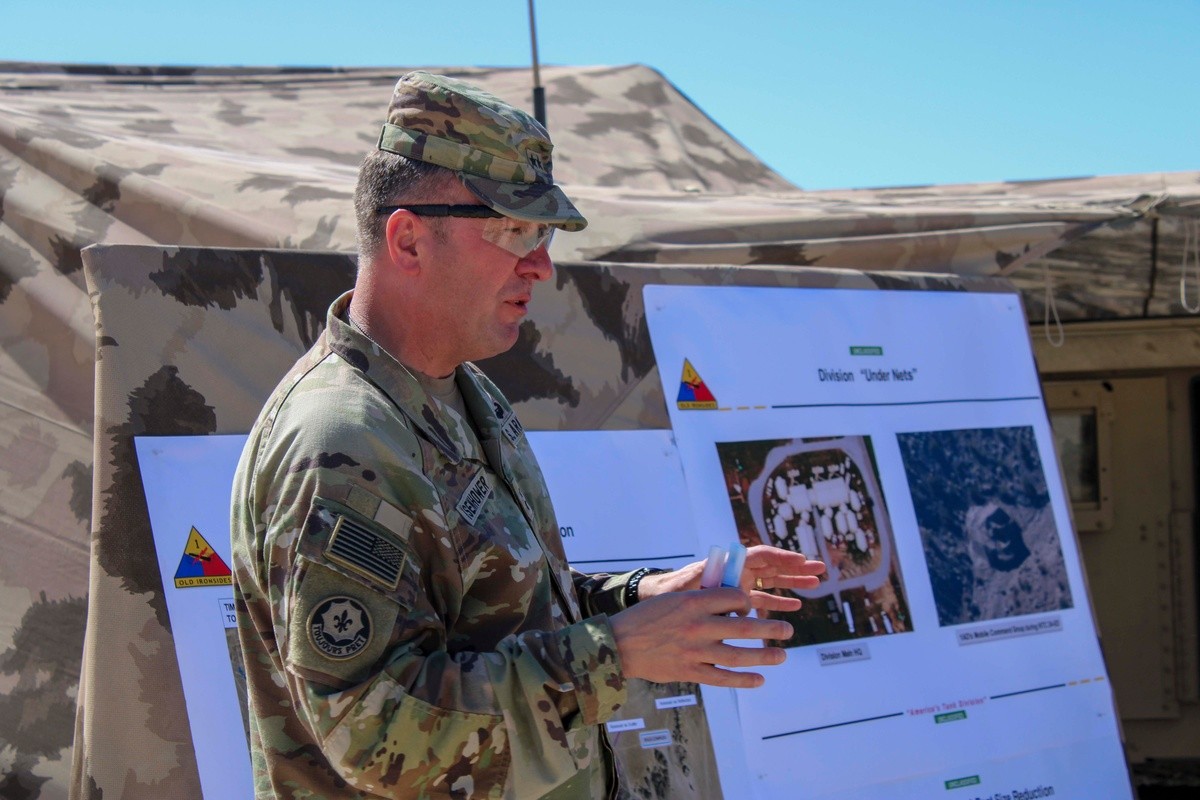
PC-C4 is the largest, two-phase experiment hosted by Army Futures Command from February 23 through March 20 to assess how technology can enhance cross-domain military operations and unified strategic approaches involving partners from various nations and joint services. (U.S. Army photo by Capt. Ronald A. Stafford) VIEW ORIGINAL
Currently, USAISEC is working toward synchronizing its operations to support CJADC2 through its new pilot program known as Installation Resiliency Mission Assurance. Project IRMA is being designed to utilize asset sensors to integrate raw data from multiple utility systems into a single decision-making dashboard to modernize how the Army monitors and manages critical military infrastructure services, such as power and water.️
"The work that USAISEC does daily for the U.S. Army enables CJADC2,” said Col. Matthew Miller, USAISEC Commander. “Thanks to the Joint Staff’s strategic insight, our leadership understands that [mission], especially as we embark on and pivot toward the defense of critical infrastructure through Project IRMA.”
Breaking down information “stovepipes”
Historically, military branches and individual units developed unique, isolated systems. This information isolation created stovepipes that made data sharing difficult and required analysts to pull data manually from multiple screens.
Recognizing this method is too slow for the speed of modern warfare, the DoW is utilizing CJADC2 to create a Data Integration Layer. A DIL ensures information from any surveillance asset sensor on a satellite, drone, or ground radar can be processed, fused with other intelligence, and delivered to the best-positioned tactical asset, such as a jet, ship, or ground unit, at the speed of relevance.
To achieve this capability at tactical speed, the military relies on four key enablers:
- Data standards and open architecture: The systems must share common data standards and interfaces to communicate effectively.
- Artificial intelligence and machine learning: These tools are essential for sorting vast amounts of data, identifying targets, analyzing enemy courses of action, and speeding up the decision-making cycle.
- Secure, resilient networks: The network must function in contested environments and defend against cyberattacks using zero-trust principles, where every user and device is verified continuously.
- Cloud computing: The scalable, on-demand cloud environments provide the computing and storage necessary to process massive datasets across the globe.
USAISEC’s role in engineering the network
"USAISEC's work is critical, foundational and directly enables the warfighting mission," stated Christopher Dixon, Joint Staff J-6.
USAISEC provides worldwide systems engineering for the Army. This unique mission positions the command to be a primary driver of the Army's contribution to CJADC2. USAISEC translates the DoW's vision into actionable contributions through five core capabilities:
- Systems engineering and integration: CJADC2 presents the ultimate integration challenge. USAISEC leads engineering efforts for Project Convergence by designing, testing and validating new and legacy Army platforms to ensure they can connect to the joint network successfully.
- Network engineering and modernization: USAISEC designs and implements the standards-based network architecture required for CJADC2. This effort leverages technologies, such as software-defined wide area networks, zero-trust principles and cloud optimization to build the high-speed, resilient data pathways needed to connect sensors to tactical assets from the command post to the tactical edge.
- Infrastructure modernization: As the Army builds smart installations and modernizes command posts, USAISEC engineers ensure the underlying information technology or operational technology infrastructure is built to CJADC2 standards from the ground up. This proactive approach prevents costly retrofitting and prepares facilities to host advanced data and AI tools.
- Cybersecurity engineering: The interconnected nature of CJADC2 creates a vast attack surface. USAISEC cybersecurity professionals implement and validate security controls, perform vulnerability assessments and ensure systems receive the authority to operate. Their work builds a network that commanders can trust in a fight.
- Lab testing and evaluation: Before fielding new capabilities, USAISEC utilizes its in-house integration and test facilities to simulate a joint environment. This ensures interoperability, such as verifying an Army sensor feed can be shared securely with other systems prior to deployment.
As the DoW moves toward a more integrated force, organizations like USAISEC provide the essential, hands-on engineering and technical expertise necessary to turn that high-level vision into a tangible, secure, and functional reality for the Army and joint forces.
To learn how USAISEC can enhance mission capabilities, send an email to USAISEC@Army.mil.
Social Sharing