
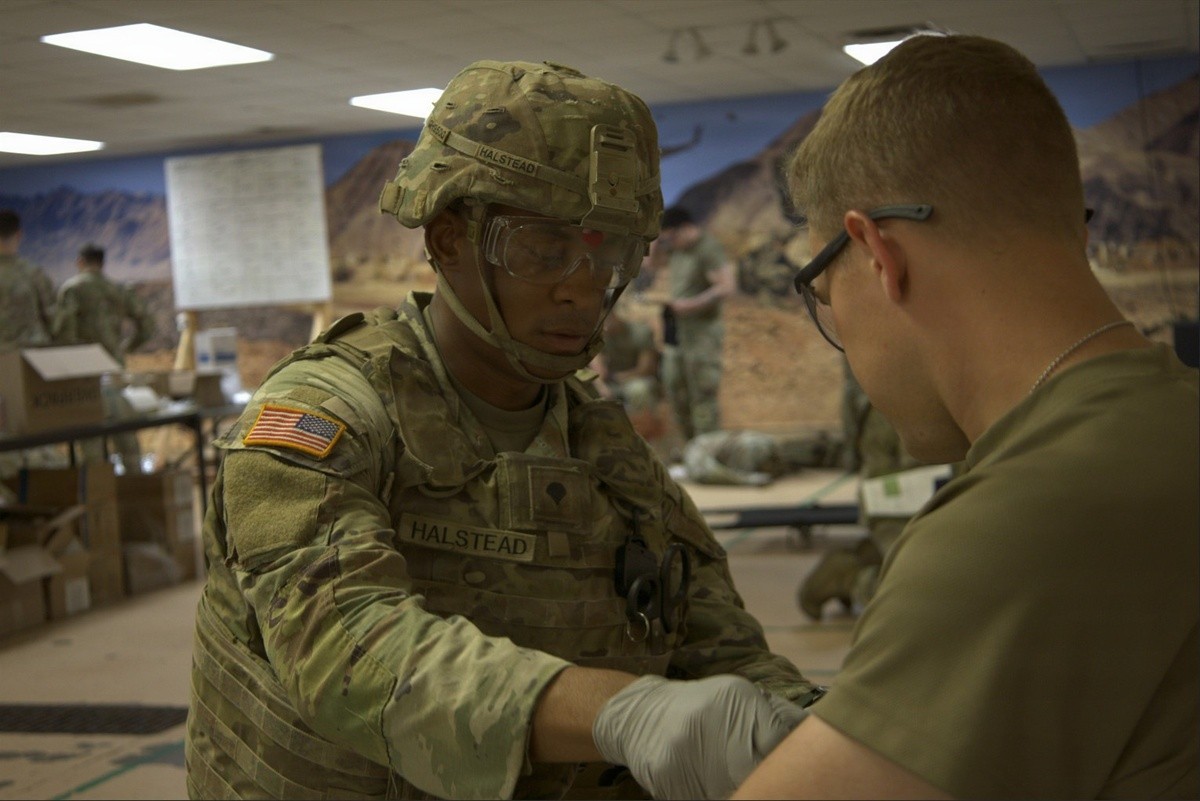
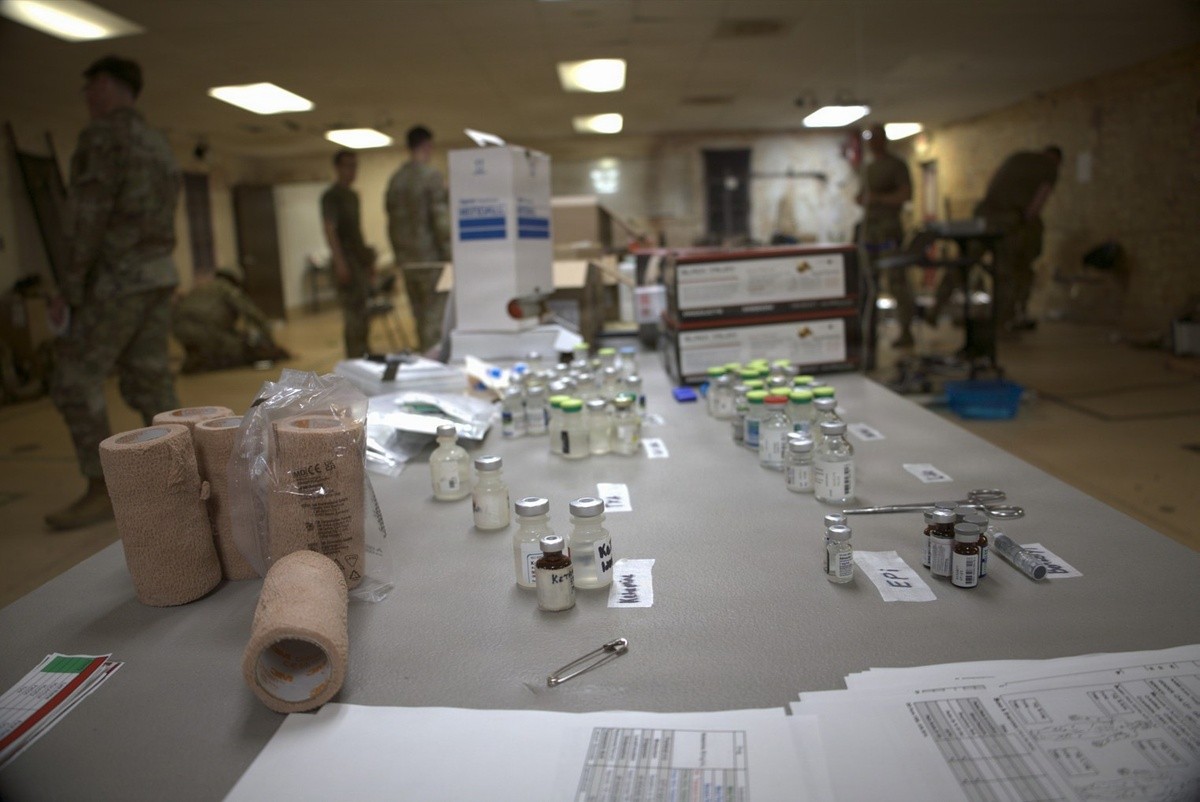

FORT DRUM, N.Y. — Combat Medics from across Fort Drum are training to improve casualty survivability with the adoption of ‘walking blood-banks’ through a training program named Project Valkyrie. Standardizing and codifying what special operations forces have practiced for years, the 10th Mountain Division exemplifies the U.S. Army’s goal to bring more life-saving procedures and tools to the average Soldier on the battlefield.
The modern battlefield presents unique challenges for casualty evacuation and medical resupply. As the Army continues to prepare for large-scale combat operations, programs like Valkyrie help units develop the capability to provide life-saving interventions when traditional medical support may be delayed or unavailable.
During a recent training event on Fort Drum, medical soldiers from across the Division participated in Valkyrie training designed to familiarize personnel with emergency whole-blood collection and transfusion procedures. The training exposed soldiers to the processes, equipment and decision-making required to sustain casualties in austere environments.
Situated in a crowded room designed to look like an urgent trauma center from a modern battlefield, the trainees were trained extensively – and then tested on their abilities to perform to standard - all the while under the stress of time and a dying, albeit simulated, patient.
"This program has been very refreshing to roll out, and it's exciting that we're bringing it to the forefront of military medicine," said Capt. Steven Robinson, the Senior Physician’s Assistant (PA) for the 10th Mountain Division Artillery Brigade. “We're doing this safely and efficiently so that when casualties require resuscitation, soldiers can obtain blood from pre-screened donors and administer it in austere environments.
The Valkyrie program builds upon lessons learned from years of combat operations and incorporates techniques that have been successfully employed by special operations forces. By expanding these capabilities to conventional formations, Army leaders aim to increase survivability during future conflicts where evacuation timelines may be extended.
According to Robinson, the ability to rapidly provide whole blood can make a critical difference during the most severe trauma cases.
"Data from past conflicts showed that many potentially survivable casualties could have been saved had we been able to administer whole blood sooner,” said Robinson.
The training also reinforced the importance of preparation, medical readiness and individual responsibility throughout the force. Soldiers designated as potential donors undergo screening and education to ensure they can safely support emergency transfusion operations when required.
Not only is the program focused on education, but also identifying candidates that could be selected to come back to the program and teach others.
“This is a tool for medics to use to get blood as far forward as possible. It’s part of a larger logistics chain focused on getting the equipment, tools and people we need to the right place to save a patient on the battlefield,” said Sgt. 1st Class John Jeffers, an experienced Army medic, recent graduate of the Valkyrie training course and hopeful instructor candidate.
As the Army continues to adapt to emerging operational challenges, programs like Valkyrie provide conventional units with capabilities once limited to specialized formations. The training conducted at Fort Drum demonstrates how soldiers across the force are preparing to save lives in complex and contested environments.
"Special Operations units have been refining this capability for years. Now we're bringing it to conventional forces through a standardized course to ensure everyone receives the appropriate training,” said Robinson.
By integrating Valkyrie procedures into regular training, the 10th Mountain Division is enhancing its ability to preserve combat power, increase survivability and remain ready to fight and win in future operations.
Social Sharing