

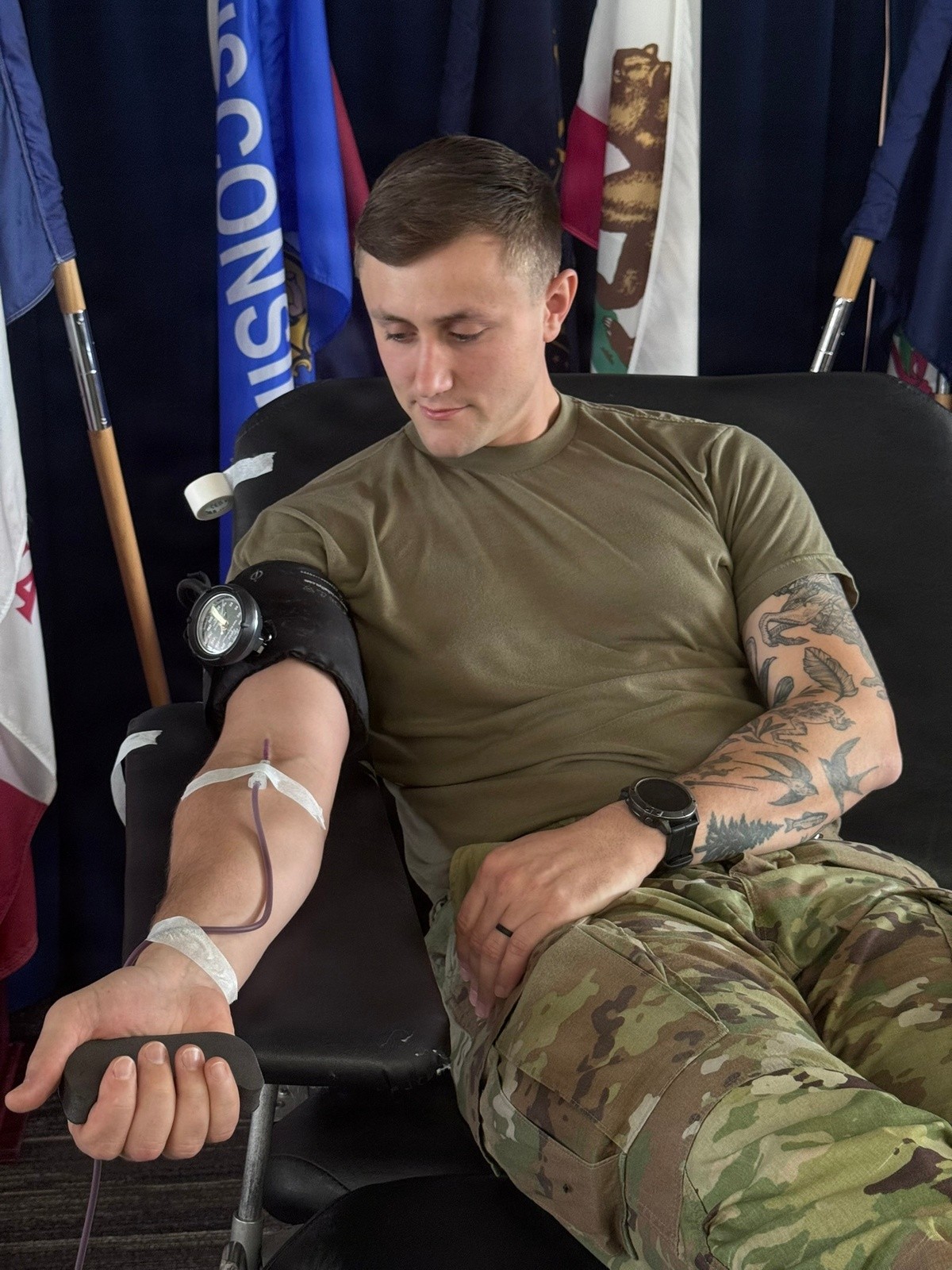
Blood donations help people of all ages whether they are accident and burn victims, heart surgery and organ transplant patients, people battling cancer and those with sickle cell disease.
Fort Jackson assisted these patients by donating blood during two community blood drives June 8-9.
Capt. William Norman with Moncrief Army Health Clinic, said he donates blood because he “just wants to help his community.”
Norman donated during one drive held in the clinic’s 4th floor multipurpose room, June 8. The other drive was held in the Drill Sergeant Timothy Kay Soldier Performance Readiness Center, June 9.
Michelle Wilson, a military housing inspector at Fort Jackson, said she was “doing her civic duty” to donate.
The volunteers, whatever their reasons for donating, are a great help to the country.
The American Red Cross estimates every two seconds someone in the U.S. needs blood. Other facts about blood need are that roughly 29,000 units of red blood are needed every day and nearly 5,000 units of platelets and 6,500 units of plasma are needed daily in the U.S.
According to the American Cancer Society, in 2023 more than 1.9 million people were expected to be diagnosed with cancer many of whom would need blood during chemotherapy.
This blood cannot be manufactured is can only be donated.
“I think it’s a responsibility that everybody should have,” Wilson said after donating at the SPRC. “It’s life saving and I believe that it’s important.”
One donation can also help save more than one life. For those who donate they can track how their donation is helping someone.
Norman said he likes being able to go on the Red Cross app and see where his blood is being sent to help others.
To learn more about donating blood visit www.redcrossblood.org.
(Editor’s note: Lia Carter works for the Moncrief Army Health Clinic Public Affairs Office.)
Social Sharing