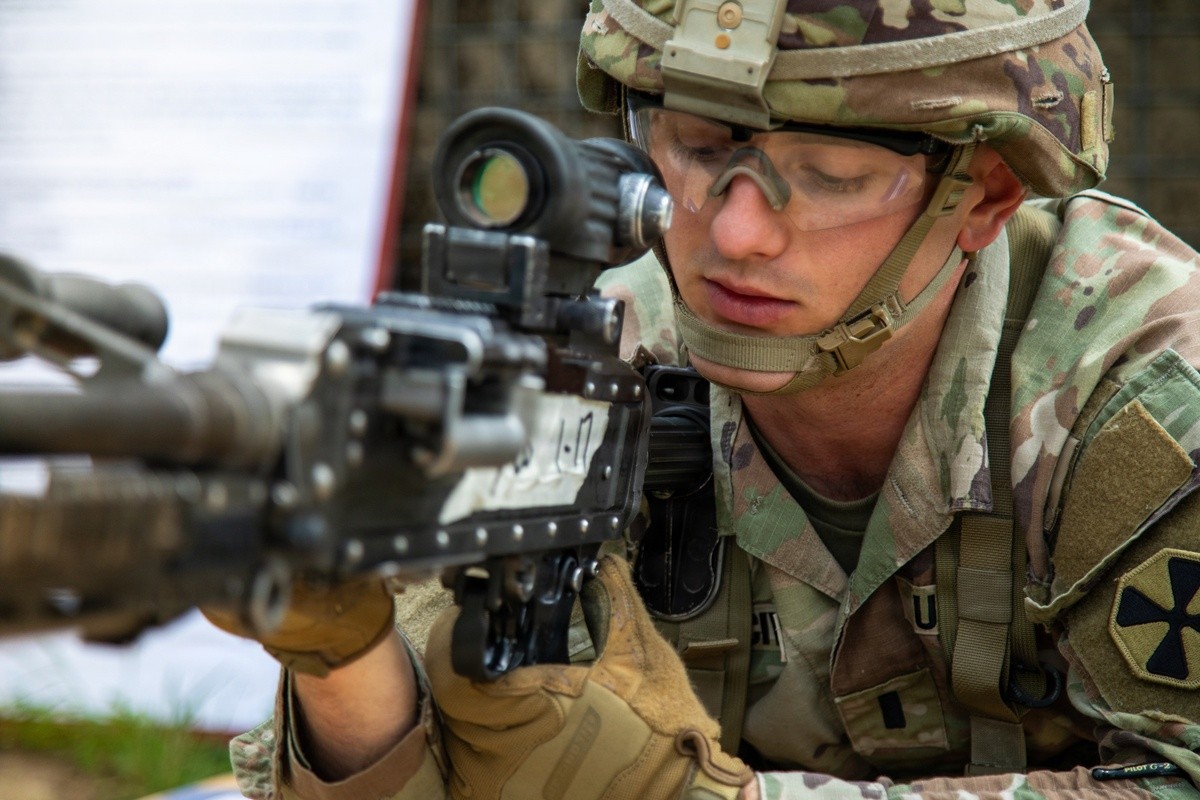
CAMP CASEY, South Korea — U.S. Army, Korean Augmentation to the United States Army and Republic of Korea Army soldiers took part in competition for the Expert Infantryman Badge, Expert Soldier Badge and Expert Field Medical Badge — commonly referred to as E3B — Camp Casey from May 18 to June 5, 2026.
The Expert Infantryman Badge, Expert Soldier Badge and Expert Field Medical Badge each recognize excellence in different career fields while maintaining the same high standards of physical fitness, tactical proficiency and combat readiness.
The EIB is awarded to infantry Soldiers who demonstrate mastery of infantry-specific tasks and battlefield skills. The ESB is designed for non-infantry and non-medical Soldiers who excel in warrior tasks and technical proficiency across a wide range of military occupational specialties. The EFMB is awarded to medical personnel who demonstrate expert-level competency in combat medical tasks, patient care and battlefield medicine under demanding conditions.
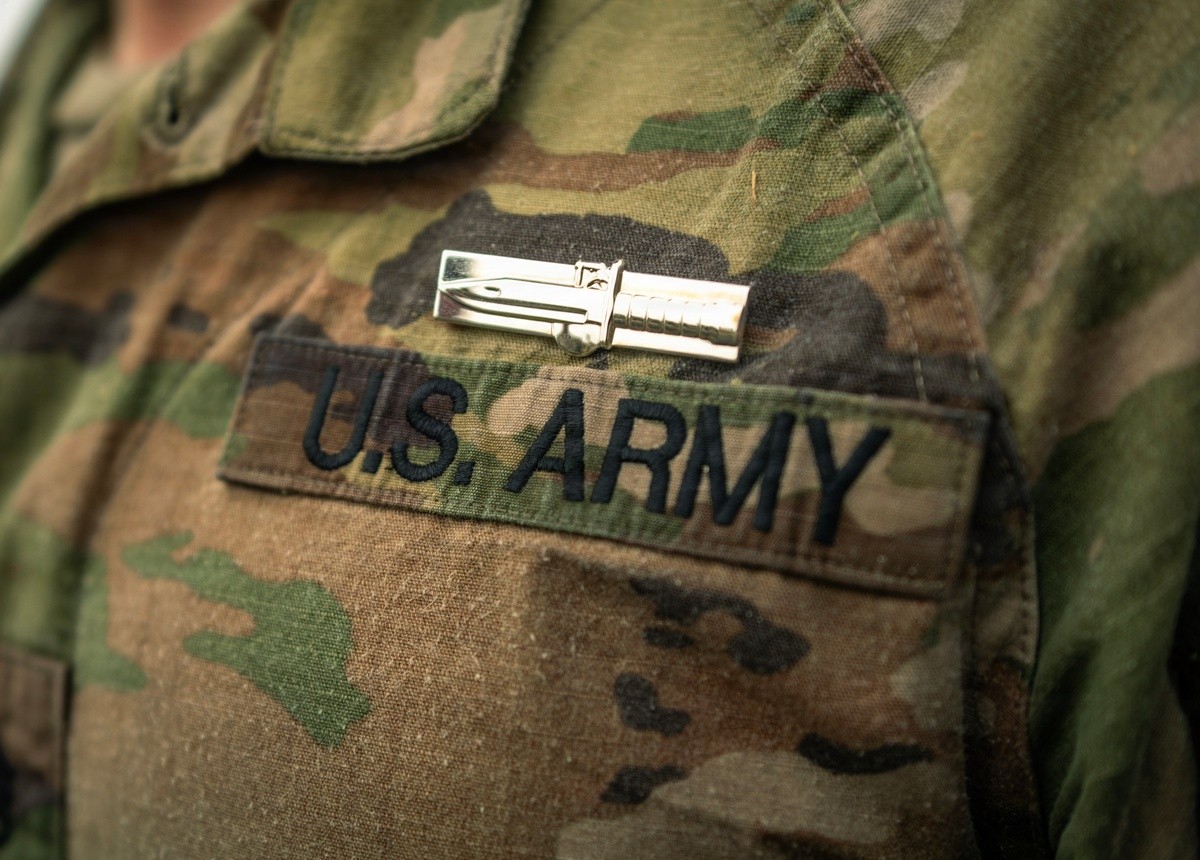


Together, the badges represent the Army’s commitment to developing disciplined, capable and combat-ready Soldiers across the force.
Throughout the competition, candidates are tested on warrior tasks and battle drills, weapons proficiency, medical skills, land navigation, and physical endurance events. Every task must be completed to exact standards, reinforcing the discipline and attention to detail required in combat environments.
“E3B is effectively a jack-of-all-trades school,” said Sgt. Gregory Jones, assigned to 2nd Battalion, 1st Infantry Regiment, 2nd Stryker Brigade Combat Team, 7th Infantry Division. “You get to learn the fundamentals of basic soldiering, as well as combat arms tasks, weapons systems and combat lifesaver skills.”
Jones said the competition supports readiness by ensuring Soldiers can execute critical tasks to standard, building the foundation needed to perform effectively under pressure. Leaders across the event emphasized that E3B develops proficiency in the Army’s core skills while fostering the determination and discipline required to succeed in operational environments.
While E3B is traditionally a U.S. Army individual qualification event, the competition in Korea includes KATUSA and ROK Army soldiers training and competing alongside their U.S. counterparts under the same rigorous standards. The unique environment provides participants an opportunity to observe different approaches, exchange knowledge, and gain experience alongside fellow Soldiers serving on the Korean Peninsula.
“I think this is a good chance to improve your tactical skills and all the things you need to learn as an infantryman,” said Cpl. Nam Dungeun, a KATUSA Soldier competing for the EIB. “As a KATUSA, I feel really proud to be a representative of the ROK Army.”

Nam said the competition exposes participants to new skills and experiences while providing valuable opportunities to learn from one another. Even beyond earning a badge, the training helps build confidence and reinforces the knowledge required to perform effectively in demanding environments.
For medical Soldiers pursuing EFMB, the competition presents a unique opportunity to validate their skills while learning to perform under demanding conditions. Candidates are evaluated on combat casualty care, medical evacuation procedures, and other critical tasks that support battlefield survival and mission success.
“I wanted to challenge myself,” said Spc. Coyle-Vega, assigned to the U.S. Army Medical Department Activity-Japan. “EFMB creates a standard that medical personnel can strive for and shows a willingness to work harder and become an example for others.”
The event reflects the Eighth Army's commitment to maintaining a highly trained and ready force on the Korean Peninsula. By testing Soldiers against demanding standards and providing a venue for U.S., KATUSA, and ROK Soldiers to train together, E3B helps develop the competence, confidence, and resilience required to succeed in complex operational environments.
Social Sharing