

U.S. Army Yuma Proving Ground’s (YPG) status as the Department of War’s premier test and evaluation facility is greatly aided by its geographic isolation.
Possessing over 1,300 square miles of range space, the proving ground can safely test virtually every piece of equipment used by Soldiers, even dangerous items like long-range artillery.
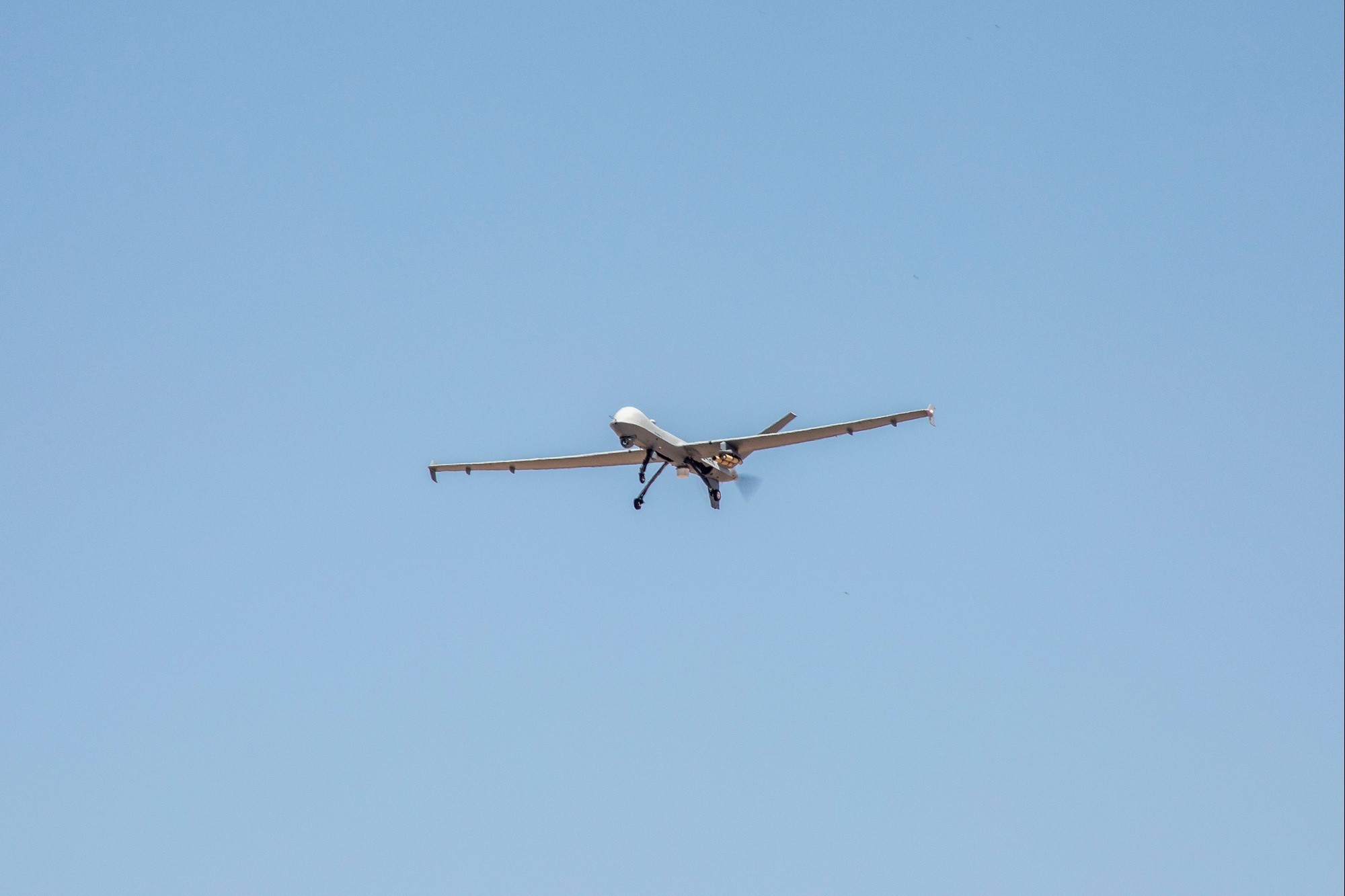
Though YPG does not have to contend with encroachment from houses and buildings, it is not exempt from the crowded radio spectrum that facilitates much of modern life. Every time you use a cell phone, microwave oven, or garage door opener, you are using parts of the radio spectrum, the invisible resource that YPG relies on to support their highly specialized testing, from using radar and telemetry in evaluation of artillery rounds to replicating the radio spectrum as it is in various places around the world to facilitate the testing of technologies to counter unmanned aircraft.
“A lot of testing involves really complex, dense radio frequency environments,” said Michael Stoltenberg, YPG Radiofrequency Support Lead. “If a system under test doesn’t work, the customer can go back to the bench and work on it, and when they come back we can put up the exact same environment they used last time.”
Maintaining these unique capabilities without competing needs interfering with each other is only possible thanks to the careful management of the air waves. Part of Stoltenberg’s job involves identifying the causes of potential spectrum conflict on the test range and finding solutions to allow the mission to proceed.
“Spectrum is a precious resource. If I can’t change the frequency, I can change the time of day or locations for two conflicting tests. It may solve the issue, but we still have to get approvals from the FCC and FAA.”
Toward this end, the tools of his trade to conduct radio frequency investigations on the range include handheld spectrometers and GPS tools. If testers experience radiofrequency dropouts on the range, he can make a computer model to predict a good alternate location for their activities. More important, though, is modeling and coordination to prevent conflicts from occurring.
“We talk regularly to keep each other in the loop so we are not interfering with each other. The idea is to keep ensure the safety of individuals and the security of communications.”
He also assists YPG’s Arctic Regions Test Center at Fort Greely, Alaska and Tropic Regions Test Center (TRTC) in Central and South America. When TRTC conducted a major test of the Armored Multipurpose Wheeled Vehicle (AMPV) in Central America, for example, he helped the test team with their communication devices they needed to conduct operations safely in a triple canopy jungle.
Being a good steward of the spectrum is a bilateral affair, too: not only must important tests be insulated from electronic interference, it is also vital that YPG’s projects do not interfere with spectrum users outside the installation.
“Just getting clearances and approvals to operate and making sure we don’t interfere with our neighbors in the region is a lot,” said Stoltenberg. “Minimizing our footprint and meeting test objectives are key.”
Social Sharing