
Back in 1942, Dugway Proving Ground built its first airfield and cost over $110,000. It would continue improvements through September 1943 with a new asphalt runway, a connecting taxiway, decontamination apron, parking apron, and hangar facility. By 1954 a new airfield complex was constructed including a new runway built parallel to the old runway, a new operations building, and new control tower.
It was called the World War II Runway. The name was later changed to “Dugway Army Airfield.” In 1944, in addition to the construction of a few minor buildings, the airfield was renovated and enlarged to accommodate increased air traffic. In 1952, the present Aviation Operations Building was completed and the Flight Control Tower, was finished in 1955.
By 1955, the improved and modernized airfield was dedicated in and named after Chemical Corps Major Joe Berk Michael, who died in 1946 in a flight off Hawaii. Coining the name “Michael Army Airfield”, which is the name still used today. Today the Joe B. Michael Army Airfield has three air strips. With the main air strip being over 6000-foot, with jet-arresting gear located on both ends.
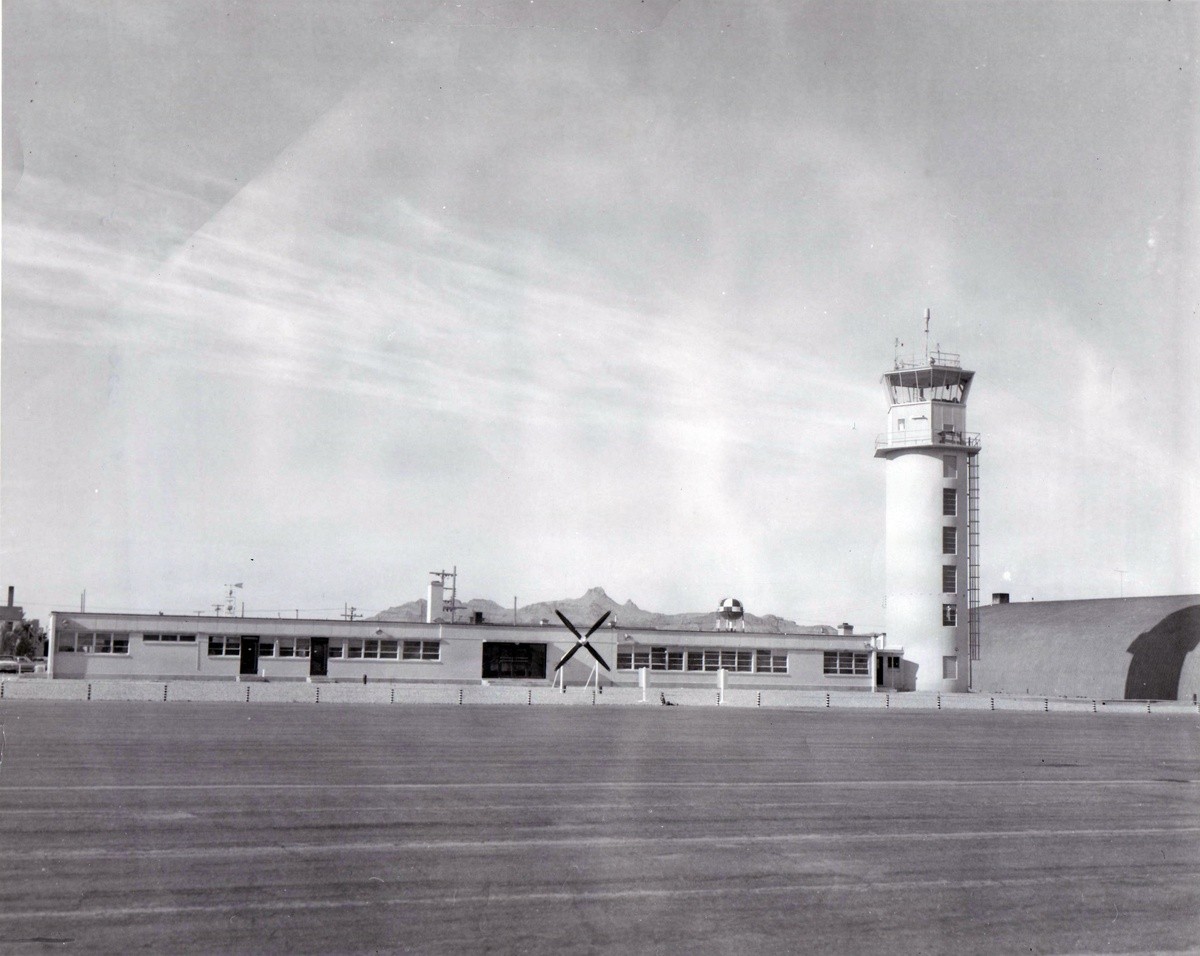
The Michael Army Airfield Air Control Tower was built in 1955, this iconic structure stood 80 feet tall (excluding its instrumentation) with a 20-foot diameter and four floors. Equipped with radio communications and radar, it played a vital role in supporting mission activities. A 2000 report indicated the control tower was not staffed full time, but it was staffed when needed to support mission activities.

In the 1960s/1970s interior of the tower was equipped with a “Electrowriter” machine (similar to an old fax machine). The Electrowriter transmitted real-time handwritten messages over telephone lines. The machine in the photograph is a receiving unit, identifiable by its lack of a writing pad. When a remote sender wrote on a connected transmitter, electrical signals guided a mechanical pen on the receiver. This pen moved automatically to trace the sender's exact handwriting as it was being created, providing the controller with an immediate, physical handwritten message.

A tower operator’s main duties were; giving vocal assistance to arriving and departing aircraft, transmitting information concerning local traffic regulations, flight patterns and weather conditions – e.g., wind direction, speed and altimeter readings; providing directional aid and emergency data to any aircraft in distress and regulating all activities upon the taxiways and runways.
Though no longer standing, the Michael Army Airfield Air Control Tower will always remain a cherished part of Dugway’s legacy.
Social Sharing