1 / 9Show Caption +Hide Caption –
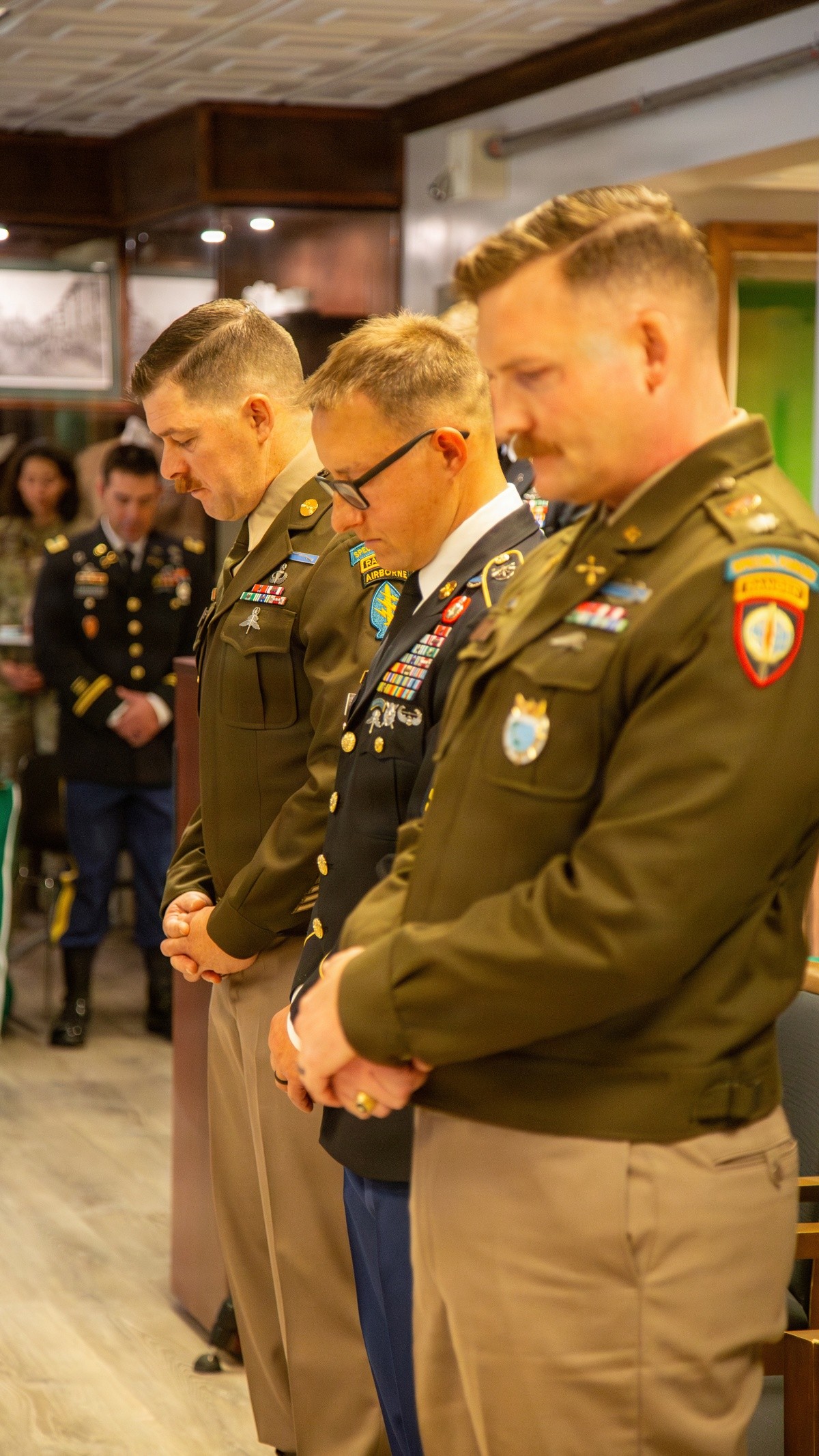
A chaplain delivers the invocation during the retirement ceremony of U.S. Army Sgt. Maj. Eric Carpenter, 10th Special Forces Group (Airborne), at Fort Carson, Colorado, May 1, 2026. Carpenter retired after 25 years of service, capping a Special Forces career that included deployments in support of Operations Iraqi Freedom and New Dawn, Special Operations Command Forward–West Africa, and the standup of Ukraine's first Special Operations Forces selection and qualification course in 2015. (U.S. Army photo by Staff Sgt. Evan Cooper)
(Photo Credit: Staff Sgt. Evan Cooper)VIEW ORIGINAL2 / 9Show Caption +Hide Caption –
U.S. Army Sgt. Maj. Eric Carpenter with 10th Special Forces Group (Airborne), bows in prayer during his retirement ceremony at Fort Carson, Colorado, May 1, 2026. Carpenter retired after 25 years of service, capping a Special Forces career that included deployments in support of Operations Iraqi Freedom and New Dawn, Special Operations Command Forward–West Africa, and the standup of Ukraine's first Special Operations Forces selection and qualification course in 2015. (U.S. Army photo by Staff Sgt. Evan Cooper)
(Photo Credit: Staff Sgt. Evan Cooper)VIEW ORIGINAL3 / 9Show Caption +Hide Caption –
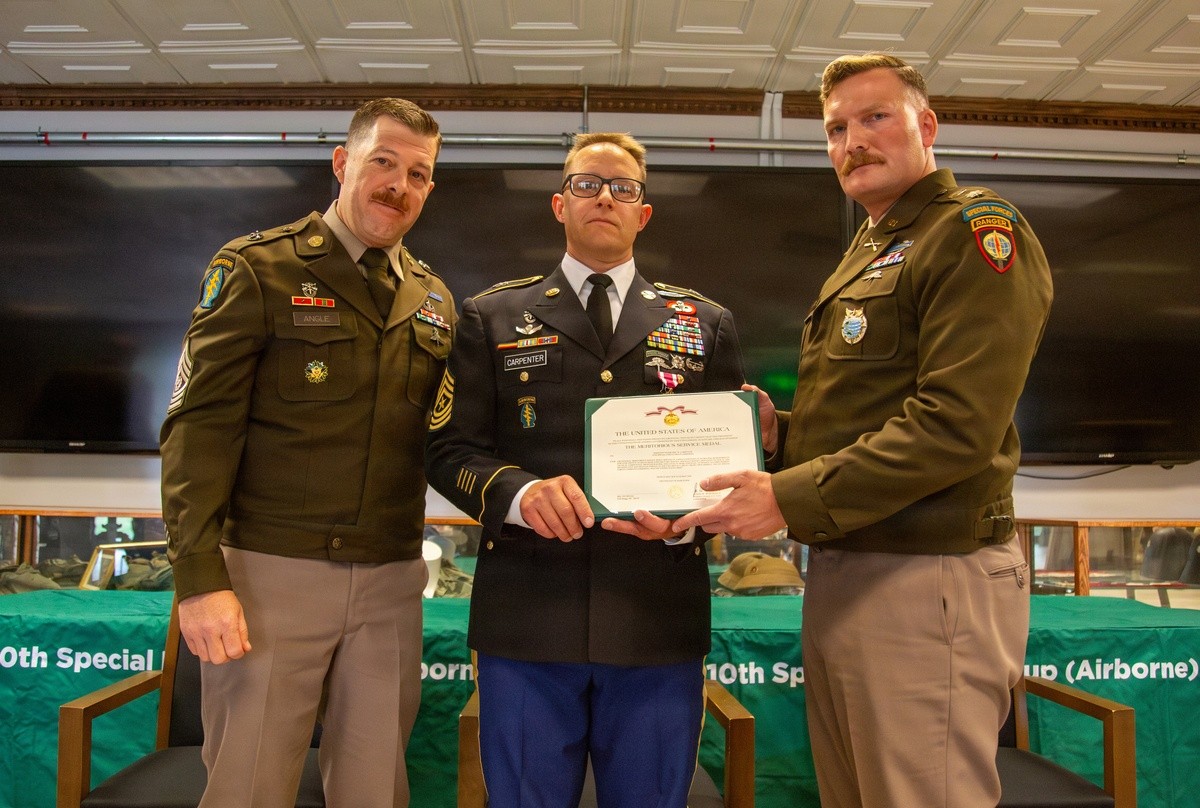
U.S. Army Sgt. Maj. Eric Carpenter with 10th Special Forces Group (Airborne), accepts his certificate of retirement from the U.S. Army during his retirement ceremony at Fort Carson, Colorado, May 1, 2026. Carpenter retired after 25 years of service, capping a Special Forces career that included deployments in support of Operations Iraqi Freedom and New Dawn, Special Operations Command Forward–West Africa, and the standup of Ukraine's first Special Operations Forces selection and qualification course in 2015. (U.S. Army photo by Staff Sgt. Evan Cooper)
(Photo Credit: Staff Sgt. Evan Cooper)VIEW ORIGINAL4 / 9Show Caption +Hide Caption –
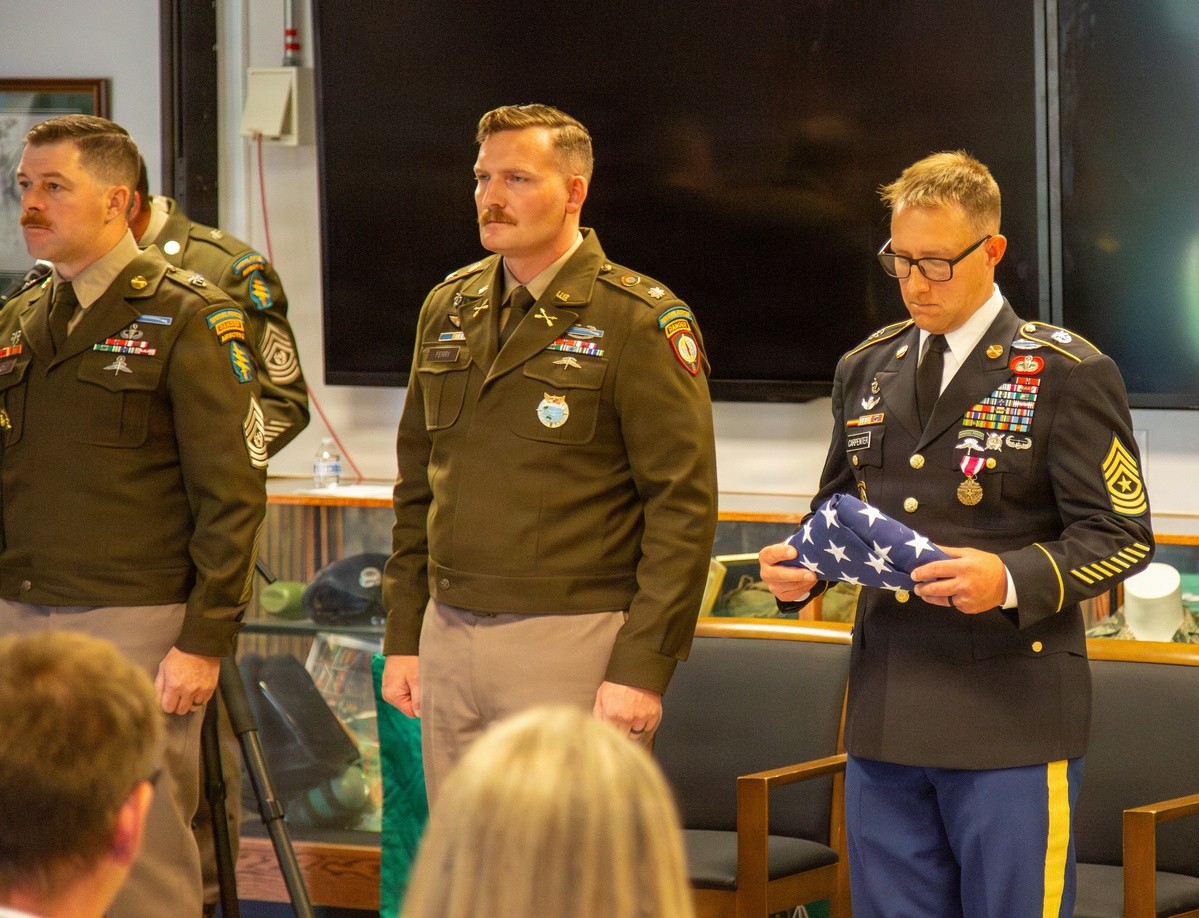
U.S. Army Sgt. Maj. Eric Carpenter with 10th Special Forces Group (Airborne), accepts a folded flag during his retirement ceremony at Fort Carson, Colorado, May 1, 2026. Carpenter retired after 25 years of service, capping a Special Forces career that included deployments in support of Operations Iraqi Freedom and New Dawn, Special Operations Command Forward–West Africa, and the standup of Ukraine's first Special Operations Forces selection and qualification course in 2015. (U.S. Army photo by Staff Sgt. Evan Cooper)
(Photo Credit: Staff Sgt. Evan Cooper)VIEW ORIGINAL5 / 9Show Caption +Hide Caption –
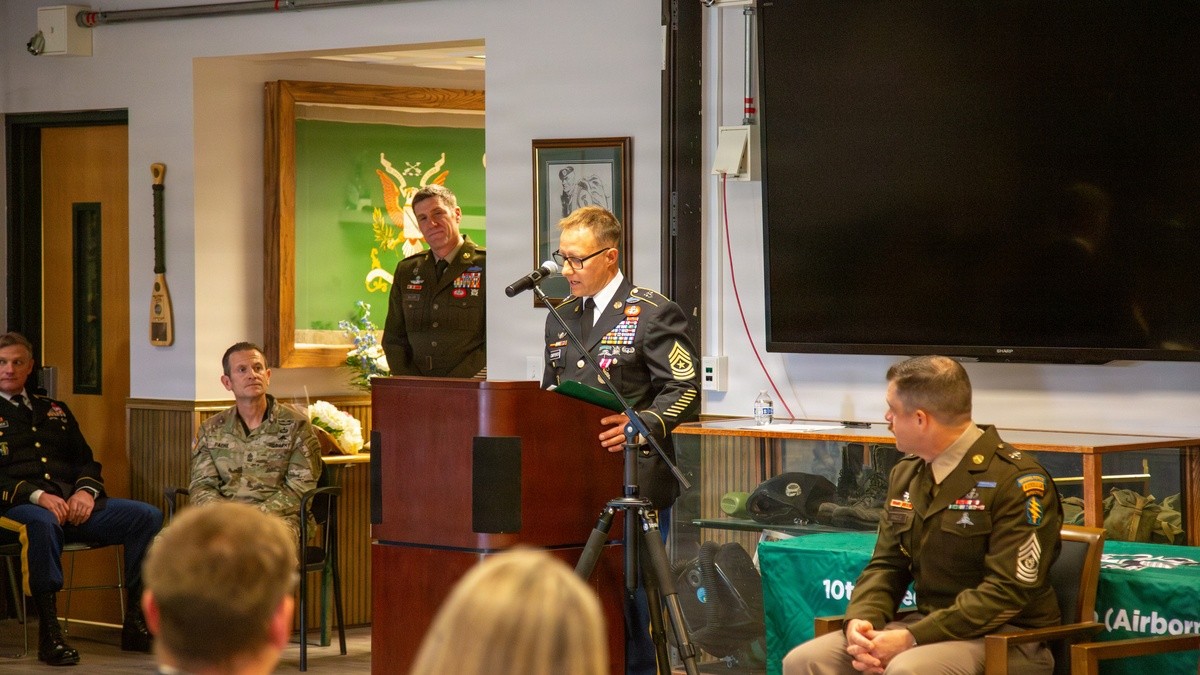
U.S. Army Sgt. Maj. Eric Carpenter with 10th Special Forces Group (Airborne), gives his retirement speech during his retirement ceremony at Fort Carson, Colorado, May 1, 2026. Carpenter retired after 25 years of service, capping a Special Forces career that included deployments in support of Operations Iraqi Freedom and New Dawn, Special Operations Command Forward–West Africa, and the standup of Ukraine's first Special Operations Forces selection and qualification course in 2015. (U.S. Army photo by Staff Sgt. Evan Cooper)
(Photo Credit: Staff Sgt. Evan Cooper)VIEW ORIGINAL6 / 9Show Caption +Hide Caption –
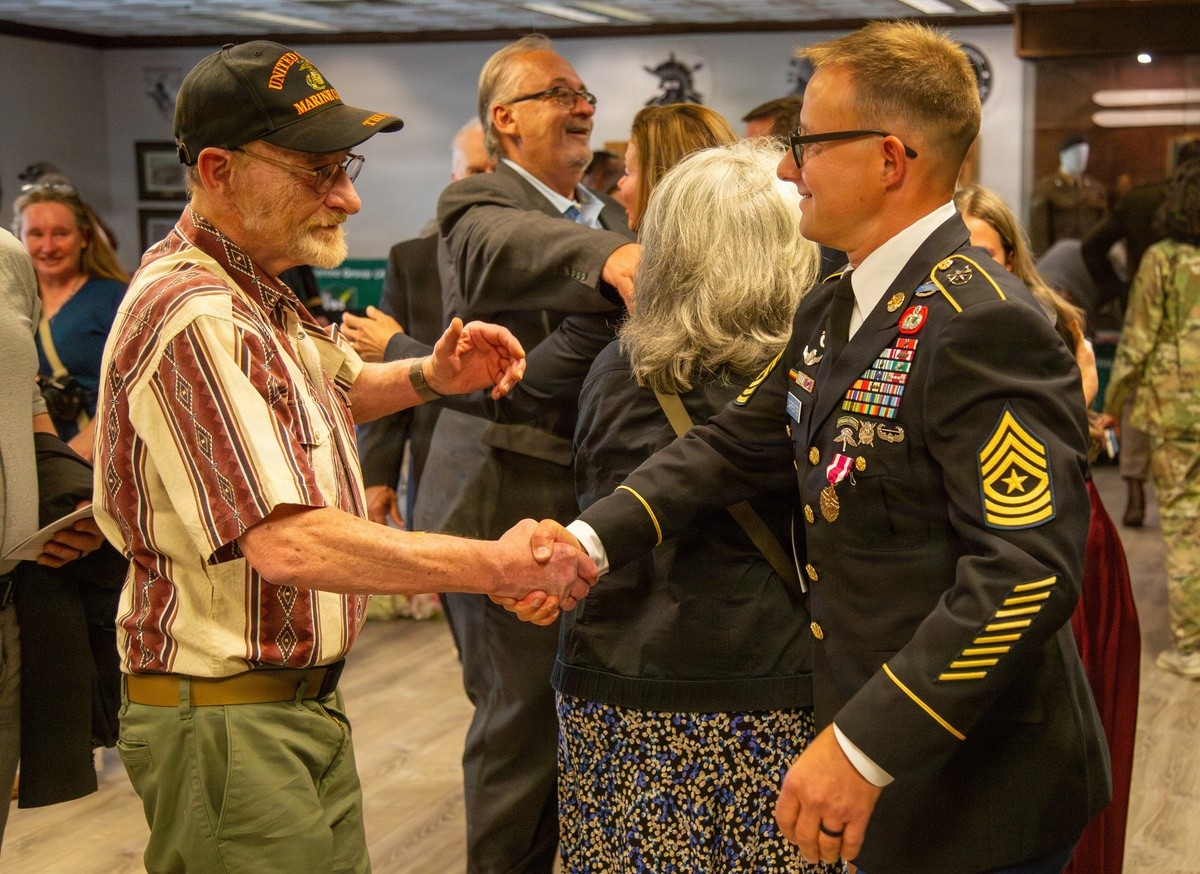
U.S. Army Sgt. Maj. Eric Carpenter with 10th Special Forces Group (Airborne), receives recognition during his retirement ceremony at Fort Carson, Colorado, May 1, 2026. Carpenter retired after 25 years of service, capping a Special Forces career that included deployments in support of Operations Iraqi Freedom and New Dawn, Special Operations Command Forward–West Africa, and the standup of Ukraine's first Special Operations Forces selection and qualification course in 2015. (U.S. Army photo by Staff Sgt. Evan Cooper)
(Photo Credit: Staff Sgt. Evan Cooper)VIEW ORIGINAL7 / 9Show Caption +Hide Caption –
U.S. Army Sgt. Maj. Eric Carpenter with 10th Special Forces Group (Airborne), poses for the camera at Fort Carson, Colorado, April 17, 2026. Carpenter retired after 25 years of service, capping a Special Forces career that included deployments in support of Operations Iraqi Freedom and New Dawn, Special Operations Command Forward–West Africa, and the standup of Ukraine's first Special Operations Forces selection and qualification course in 2015. (Courtesy photo)
(Photo Credit: Staff Sgt. Evan Cooper)VIEW ORIGINAL8 / 9Show Caption +Hide Caption –
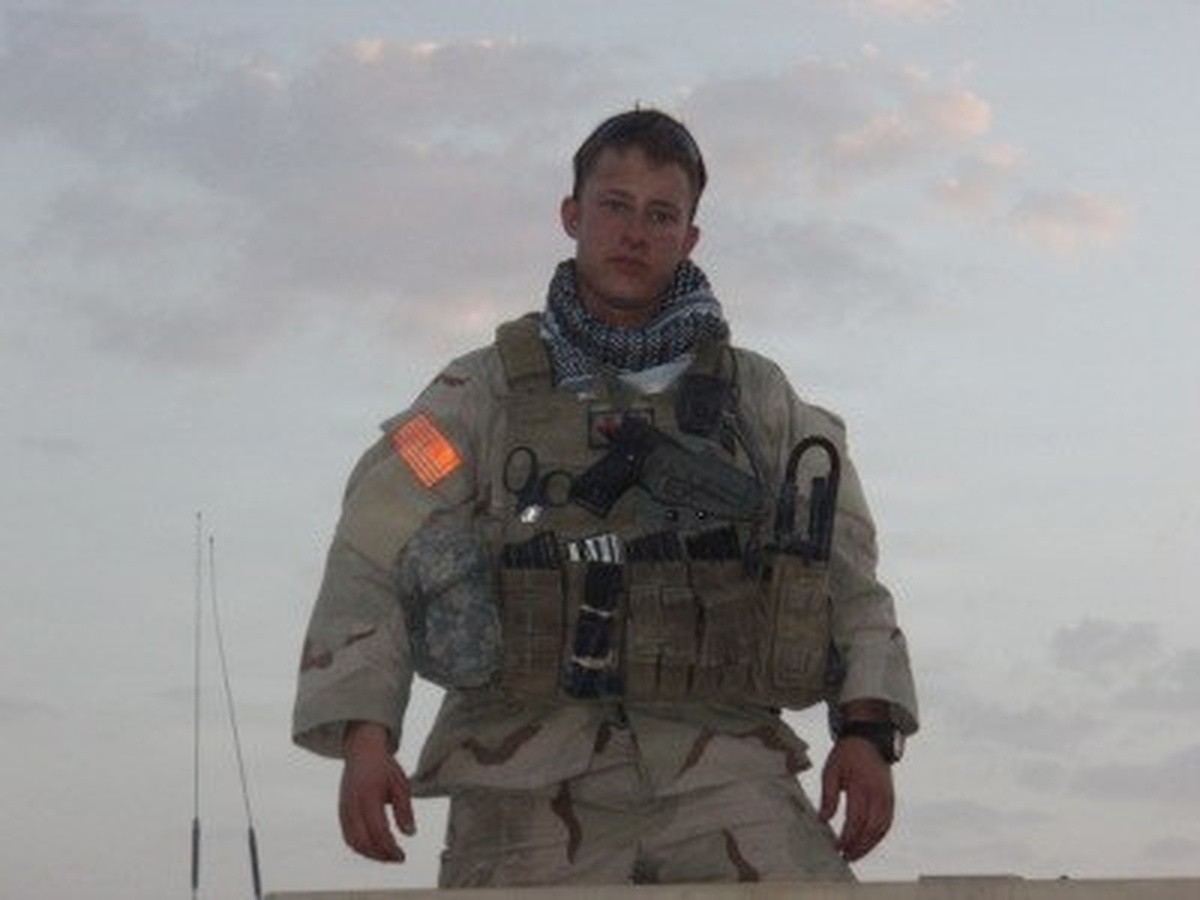
U.S. Army Sgt. Maj. Eric Carpenter with 10th Special Forces Group (Airborne), poses for the camera during a deployment. Carpenter retired after 25 years of service, capping a Special Forces career that included deployments in support of Operations Iraqi Freedom and New Dawn, Special Operations Command Forward–West Africa, and the standup of Ukraine's first Special Operations Forces selection and qualification course in 2015. (Courtesy photo)
(Photo Credit: Staff Sgt. Evan Cooper)VIEW ORIGINAL9 / 9Show Caption +Hide Caption –
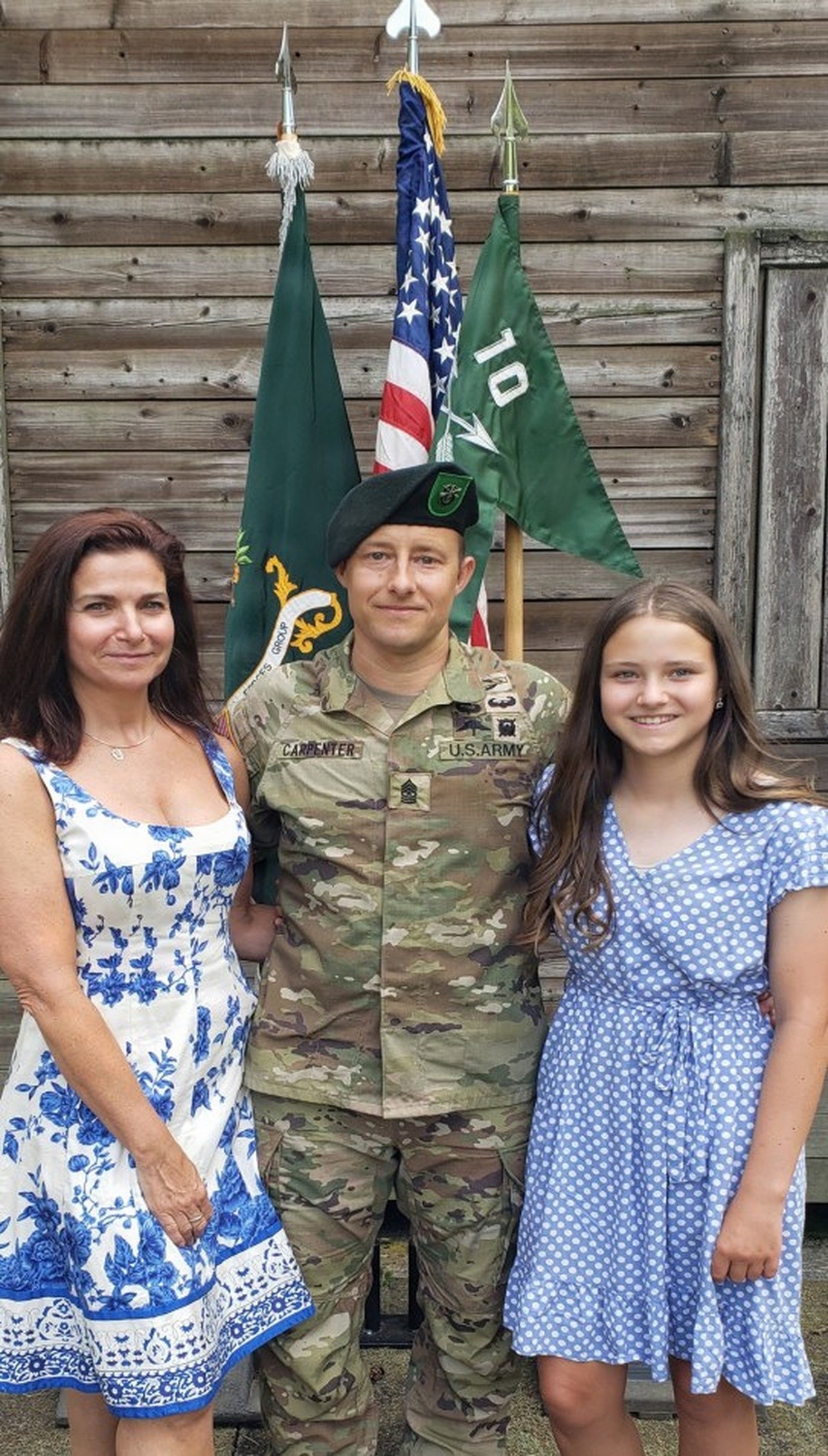
U.S. Army Sgt. Maj. Eric Carpenter with 10th Special Forces Group (Airborne), poses for the camera with his family. Carpenter retired after 25 years of service, capping a Special Forces career that included deployments in support of Operations Iraqi Freedom and New Dawn, Special Operations Command Forward–West Africa, and the standup of Ukraine's first Special Operations Forces selection and qualification course in 2015. (Courtesy photo)
(Photo Credit: Staff Sgt. Evan Cooper)VIEW ORIGINAL
FORT CARSON, Colo. -- When Sgt. Maj. Eric Carpenter woke up in a hospital bed in Nice, France, five days had passed. His pelvis was broken. His back was fractured in three places. His right humerus was shattered. The bones in his face had shifted so violently that his right eye no longer pointed forward. His renal artery had been torn. He had a severe traumatic brain injury.
Carpenter is a paraglider pilot. On Labor Day weekend 2023, he was flying in Chamonix on a four-day pass when his canopy partially collapsed and tangled in his equipment. The procedure called for him to cut away and deploy his reserve. He did not. He has never softened the account since then.
“It was pilot error,” Carpenter said. “Poor piloting decisions. I should have thrown my rescue.” He hit the ground at roughly 43 miles per hour—about 18 meters per second—and was airlifted off the mountain unconscious.
Carpenter had been a Soldier for 22 years by then, enlisting in April 2001 as a multiple launch rocket system crewman, deploying to Iraq in 2003, and earning the Green Beret in 2004 after Ranger medics saved three of his fellow Soldiers from a vehicle accident downrange. “I never wanted to be in that position again,” Carpenter said. He went to selection to become an 18D.
What followed read like a roadmap of modern special operations: Operations Iraqi Freedom 5 and 6, Operation New Dawn, and Special Operations Command Forward–West Africa in 2014. The next year, after Russia’s annexation of Crimea, his detachment deployed to help stand up Ukraine’s Special Operations Command from the ground floor—building and running the country’s first SOF selection and qualification course. Years later, as a company sergeant major, he led the task group that withdrew U.S. forces from forward positions in Europe when Russia’s full-scale invasion of Ukraine began in 2022.
The recovery from Chamonix took eight months across France, Landstuhl Regional Medical Center, Walter Reed, and the James A. Haley Veterans’ Hospital in Tampa. Eight surgeries. Twelve weeks in a wheelchair. Vision therapy. Cognitive rehabilitation. Learning to walk again.
Asked what he would tell a young Green Beret arriving at 10th Group fresh off the Q-Course, Carpenter did not hesitate.
“I don’t credit grit alone,” Carpenter said. “I credit the community. Teammates flew in to visit. Friends in Germany cleared my quarters while I was an ocean away. My wife left our daughter with friends and stayed by my bedside for a month.” He added, “I also credit patience. When doctors asked me to stay in the wheelchair longer than I wanted, I pushed back—then reframed the math myself. If I can suffer now and still carry grandkids at 60, then I can suffer now for the long-term game.”
“Be committed to your craft. Don’t accept good-enough training.” Train at every opportunity, he said, and add realism to whatever you are doing. Don’t just bring pistols to the range—throw on full kit, load the radios, drive the vehicles you’d actually drive, stage your medical gear where it would really sit, and run a downed-driver drill on the way there. The standard you set in training, he said, is the standard you’ll fall back on when combat comes.
On May 1, 2026, Carpenter will retire after 25 years of service. The traumatic brain injury cost him most of the visual field in both eyes, ending his time in uniform on medical grounds even as he reached his retirement window. He plans to stay in Boulder County, Colorado, volunteer with a rescue organization, and be a husband and father in a way the mission never quite allowed.
“Humans are more important than hardware,” Carpenter said, quoting a SOF Truth he has lived by. The community he built carried him through the worst day of his life. Now he walks back toward it.


Social Sharing