1 / 8Show Caption +Hide Caption –
Maj. Gen. Francis J. Evon Jr., the adjutant general of the Connecticut National Guard, speaks during the unveiling of a statue honoring Sgt. Stubby, a World War I canine hero, at the Museum of Connecticut History in Hartford, Connecticut, April 20, 2026. The ceremony marked the 100th anniversary of Stubby's death and recognized Connecticut's first military working dog, widely considered one of the most decorated dogs in U.S. military history. (U.S. Army National Guard photo by Spc. Emmanuel Gibson)
(Photo Credit: Spc. Emmanuel Gibson)VIEW ORIGINAL2 / 8Show Caption +Hide Caption –
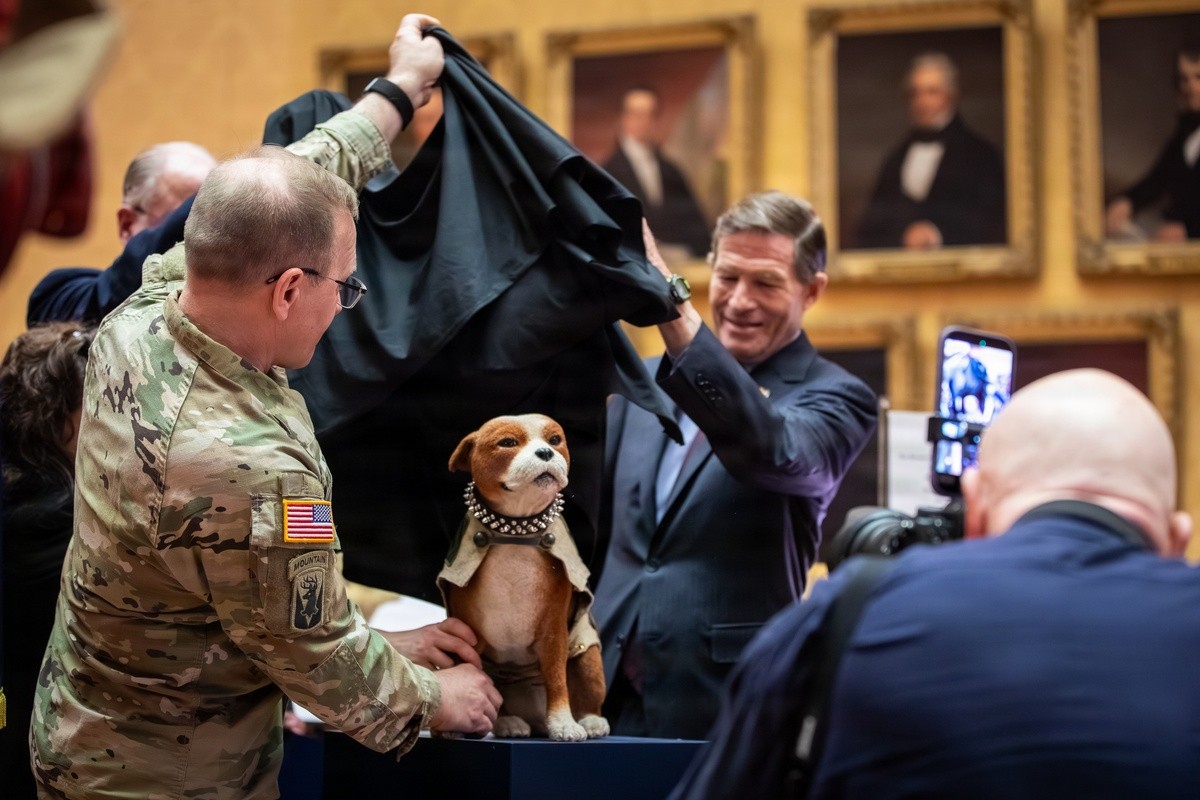
U.S. Sen. Richard Blumenthal and Maj. Gen. Francis J. Evon Jr., the adjutant general of the Connecticut National Guard, unveil a statue of Sgt. Stubby during a ceremony at the Connecticut State Library in Hartford, Connecticut, April 20, 2026. The unveiling marked the 100th anniversary of the death of Stubby, a stray dog adopted by Cpl. J. Robert Conroy in 1917 who went on to serve with the 102nd Infantry Regiment. (U.S. Army National Guard photo by Spc. Emmanuel Gibson)
(Photo Credit: Spc. Emmanuel Gibson)VIEW ORIGINAL3 / 8Show Caption +Hide Caption –
HARTFORD, Conn. – Senator Richard Blumenthal displays a Congressional Record entry commemorating the 100th anniversary of Sgt. Stubby’s death during a ceremony at the Museum of Connecticut History, Hartford, April 20, 2026. The record highlights Stubby’s service as the first and most decorated military working dog and notes that he was rescued in New Haven and smuggled to France by members of the 102nd Infantry Regiment. The event pays tribute to the dog who alerted troops to gas attacks, found the wounded and even helped capture a German soldier.
(Photo Credit: Spc. Emmanuel Gibson)VIEW ORIGINAL4 / 8Show Caption +Hide Caption –
Community Members, veterans and Connecticut National Guard Soldiers gather during a ceremony honoring Sgt. Stubby, the first and most decorated canine in U.S. military history, at the Connecticut State Library in Hartford, Connecticut, April 20, 2026. The event, held on the 100th anniversary of Stubby's death, marked the unveiling of a new statue recognizing the stray dog who served alongside the 102nd Infantry Regiment through 17 engagements in World War I. (U.S. Army National Guard photo by Spc. Emmanuel Gibson)
(Photo Credit: Spc. Emmanuel Gibson)VIEW ORIGINAL5 / 8Show Caption +Hide Caption –
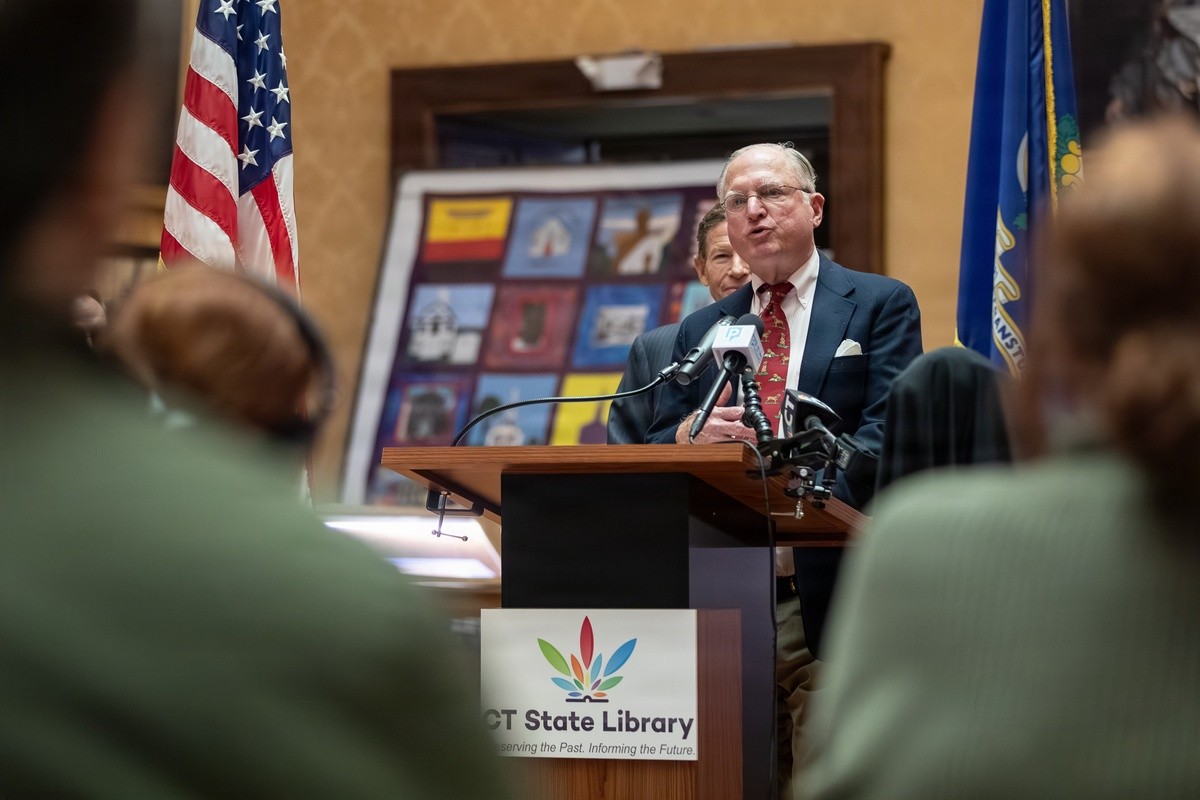
Curt Deane, grandson of Cpl. J. Robert Conroy, speaks during the unveiling of a statue honoring Sgt. Stubby at the Connecticut State Library in Hartford, Connecticut, April 20, 2026. Conroy befriended Stubby in 1917 while training with the 102nd Infantry Regiment of the Connecticut National Guard, and the two served together through 17 engagements during World War I.
(Photo Credit: Spc. Emmanuel Gibson)VIEW ORIGINAL6 / 8Show Caption +Hide Caption –
HARTFORD, Conn. – A military working dog with the Connecticut National Guard’s 928th Military Working Dog Detachment looks up at its handler during the unveiling of the new Sgt. Stubby statue at the Museum of Connecticut History, April 20, 2026. Stubby, a stray from New Haven who became the first and most decorated U.S. military working dog during World War I, saved lives by detecting gas attacks and locating wounded soldiers. Today military working dogs continue his mission by completing the same lifesaving tasks.
(Photo Credit: Spc. Emmanuel Gibson)VIEW ORIGINAL7 / 8Show Caption +Hide Caption –
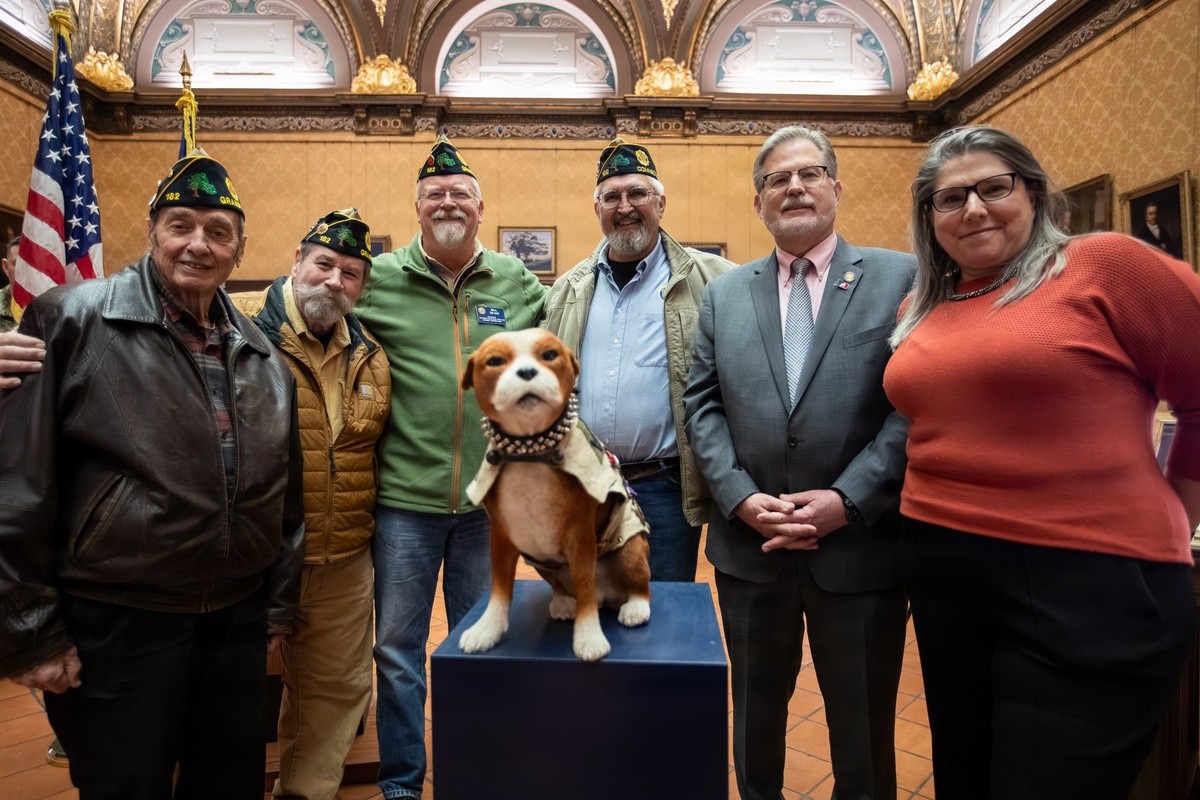
HARTFORD, Conn. – Local veterans and community leaders pose beside a newly unveiled statue of Sgt. Stubby at the Museum of Connecticut History in Hartford, April 20, 2026. Stubby, a stray from New Haven who became the first and most decorated U.S. military working dog during World War I, saved lives by detecting gas attacks and locating wounded soldiers.
(Photo Credit: Spc. Emmanuel Gibson)VIEW ORIGINAL8 / 8Show Caption +Hide Caption –
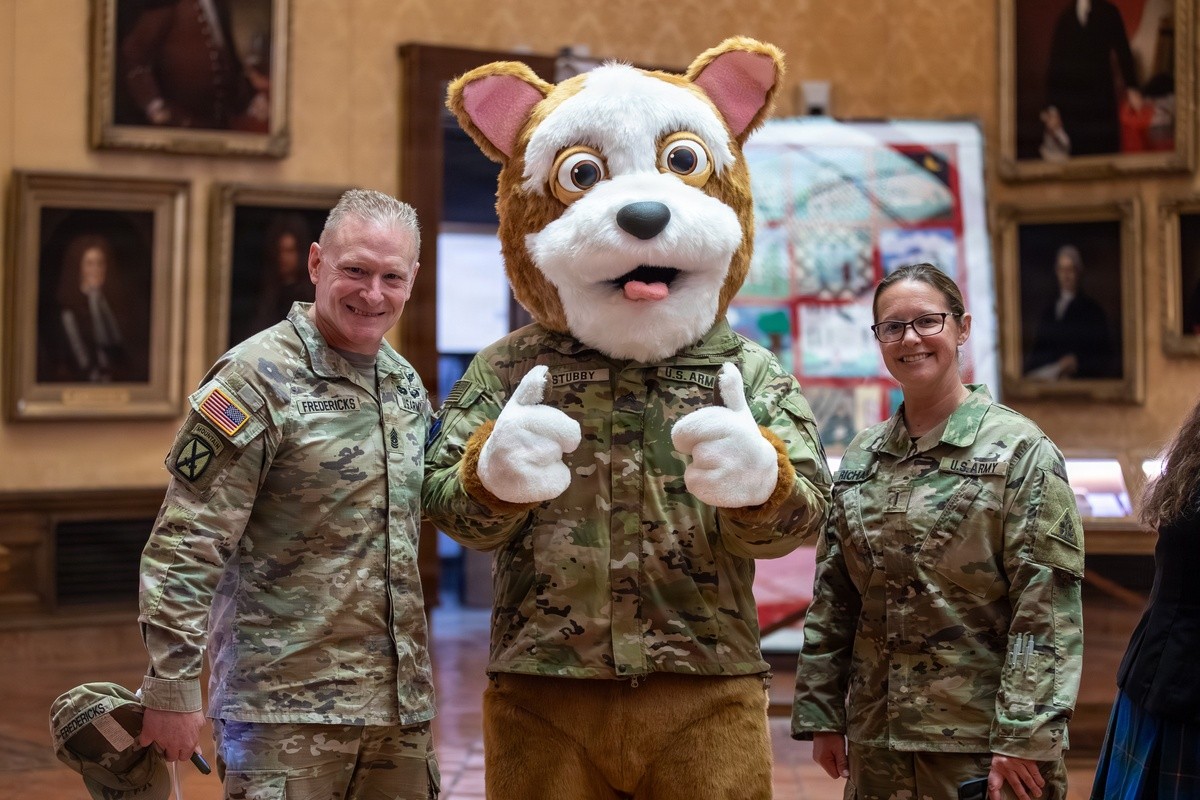
HARTFORD, Conn. -- Command Sgt. Maj. Arthur Fredricks, the State Command Senior Enlisted Leader(left) and Chief Warrant Officer 5 Stephanie Richard, the Command Chief Warrant Officer pose with a mascot of Sgt. Stubby following the unveiling of a statue honoring the World War I veteran at the Museum of Connecticut History, April 20, 2026. The event at the Hartford museum, held on the 100th anniversary of Stubby’s death, highlights his status as the first and most decorated U.S. military working dog.
(Photo Credit: Spc. Emmanuel Gibson)VIEW ORIGINAL
The Connecticut State Library unveiled a brand-new statue of famous World War I canine Sgt. Stubby during a ceremony at the Library April 20, 2026.
Stubby, who was adopted by Cpl. J. Robert Conroy of the Connecticut National Guard’s 1st Battalion, 102nd Infantry Regiment after the Boston Terrier mutt wondered onto the unit’s training grounds at Yale Field (and was smuggled to France), is widely considered the first-ever U.S. Military working dog—and the most decorated.
“Sergeant Stubby probably never understood the details or purposes of World War I, the great ideals and visions of the political leaders,” said Connecticut Senator Richard Blumenthal. “What he understood was loyalty to his buddies, which is what motivates a lot of our human heroes.”
The timing of this unveiling was significant in a couple of different ways. Earlier this month, on April 4th, marked the 100th anniversary of Stubby’s death. April 20th is also the anniversary of the Battle of Seicheprey, the United States first major military conflict during The Great War, in which the less experienced 102nd pushed back a larger, more seasoned German military.
“What we’re really celebrating today is another example, especially in the year of the [United States’ 250th anniversary], of Connecticut’s contribution to our great nation,” said Maj. Gen. Francis J. Evon, adjutant general for the Connecticut National Guard, who also shouted out the 1-102nd, which is still an active unit and once again overseas fighting for our country.
But Stubby was more than just a mascot and friend of the 102nd; he was an integral part of the team. His acute olfactory senses could sense incoming gas attacks before any of the human members of the 102nd, allowing him to alert his comrades about the incoming dangers. And if that wasn’t enough to prove how good of a boy he was, Stubby is also credited with capturing at least one German soldier during the war by … biting his bum.
Stubby survived the war, despite being hospitalized after being caught in gas attacks and being injured by shrapnel from a grenade.
“Sgt. Stubby was loyal as the day is long,” Blumenthal said. “He came back after recovering from his wounds to the front lines and participated in battle after battle after battle, saving his fellow Army soldiers from the gas and the attacks that awaited them.”
Following the war, Stubby was a celebrity. He led parades, appeared at war bond rallies, and event met with Presidents Woodrow Wilson, Warren G. Harding, and Calvin Coolidge. But his connection to the military never faded. He reportedly had visits with wounded soldiers and helped ease family members into difficult conversations to understand what their loved ones experienced during the war overseas.
Also in attendance at Monday’s event was Curtis Deane, Conroy’s grandson, who shared stories about his experience with his grandfather and his love for Stubby.
“I was always told by my father and grandfather that we were raised by dogs,” said Deane. “I learned that being raised by dogs meant learning the meaning of unconditional love, being both trustworthy and faithful, and living with dignity and without hesitation or regret, and caring for others who are less fortunate or in need.”
Conroy’s love for Stubby was eternal. According to Deane, Stubby passed away in his grandfather’s arms and he never adopted another dog for the rest of his life.
“There's an old expression, speak the name of the dead and they shall remain alive,” said Deane. “That's what I'm doing on behalf of my grandfather and Stubby.”
And this new statue will also help keep Stubby’s memory alive, but like most heroes, the little four-legged pup’s legacy is cemented in the groundwork he laid for future generations. Because of Stubby, and other war dogs like him, canines play a vital role in the modern military. In fact, Connecticut is home to the 928th Military Working Dog Detachment, the only military working dog unit in the reserve components of the U.S. military.




Social Sharing