Senior U.S. Army Medical leader in Europe Highlights Allied Medical Readiness at Medical Symposium in London

By Kirk FradyApril 1, 2026

Medical Readiness Command, Europe commander takes part in 2026 Deployed Medical and Healthcare Delivery Symposium in London
1 / 4 Show Caption + Hide Caption – LONDON – U.S. Army Brig. Gen. Roger Giraud, commander of Medical Readiness Command, Europe and command surgeon for U.S. Army Europe and Africa took part in the 2026 Deployed Medical and Healthcare Delivery (DMHD) Symposium held in London March 24-25. The two-day medical symposium brought together more than 350 military and civilian medical experts from 20 plus nations. The medical symposium focused on urgent challenges in operational healthcare to include NATO Medical Action Plan for collective defense, mass casualty planning and patient evacuation, civilian/military interoperability through regulatory alignment, medical logistics resilience in disrupted supply chains, workforce shortages and a scalable medical force solution. (Photo Credit: Kirk Frady) VIEW ORIGINAL
Senior U.S. Army Medical leader in Europe Highlights Allied Medical Readiness at Medical Symposium in London
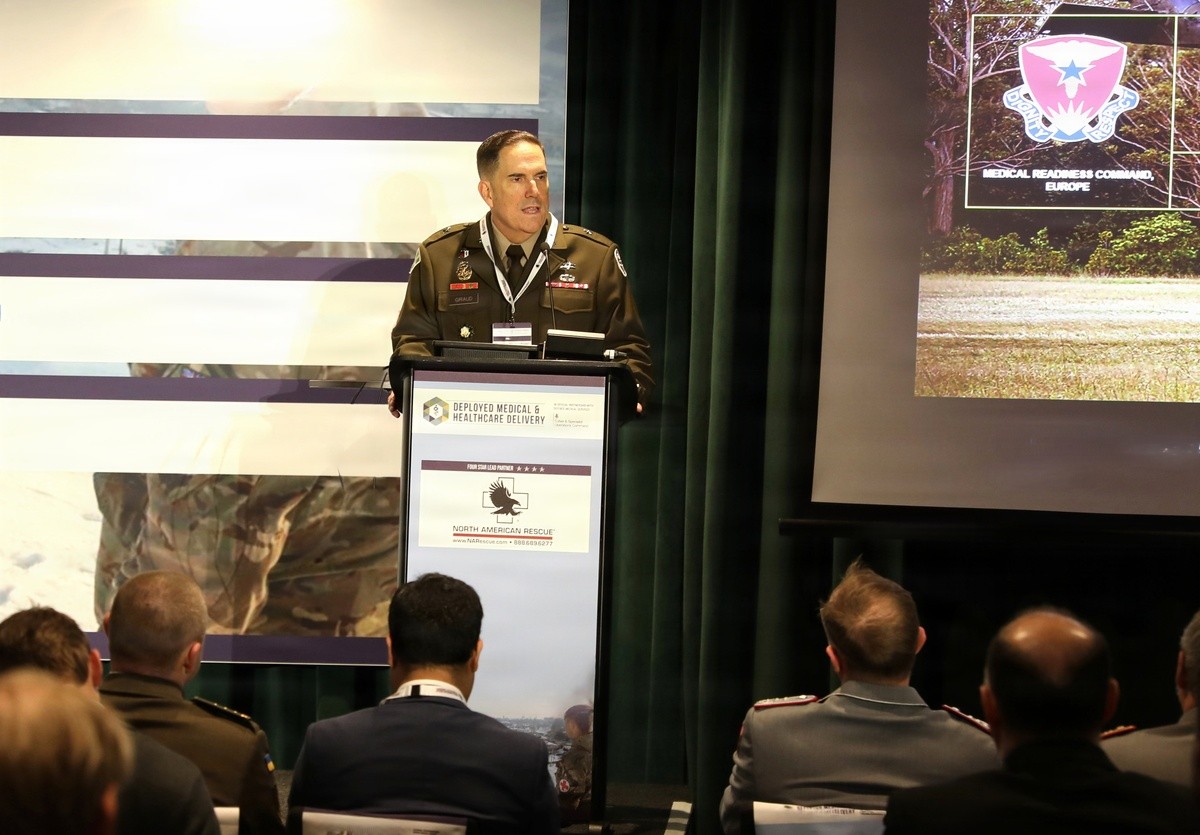
2 / 4 Show Caption + Hide Caption – LONDON – U.S. Army Brig. Gen. Roger Giraud, commander of Medical Readiness Command, Europe, and command surgeon for U.S. Army Europe and Africa emphasizes the importance of collective medical readiness during the 2026 Deployed Medical & Healthcare Delivery (DMHD) symposium in London on March 24-25.
More than 300 military and industry medical professionals from twenty NATO and allied partner countries attended the two-day event which focused on the challenges of deployed medical care. This year’s symposium featured in-depth discussions on the NATO Medical Action Plan, addressing key areas such as regulatory frameworks, mass casualty planning, patient evacuation, and medical logistics. (Photo Credit: Kirk Frady)
VIEW ORIGINAL
Senior U.S. Army Medical leader in Europe Highlights Allied Medical Readiness at Medical Symposium in London
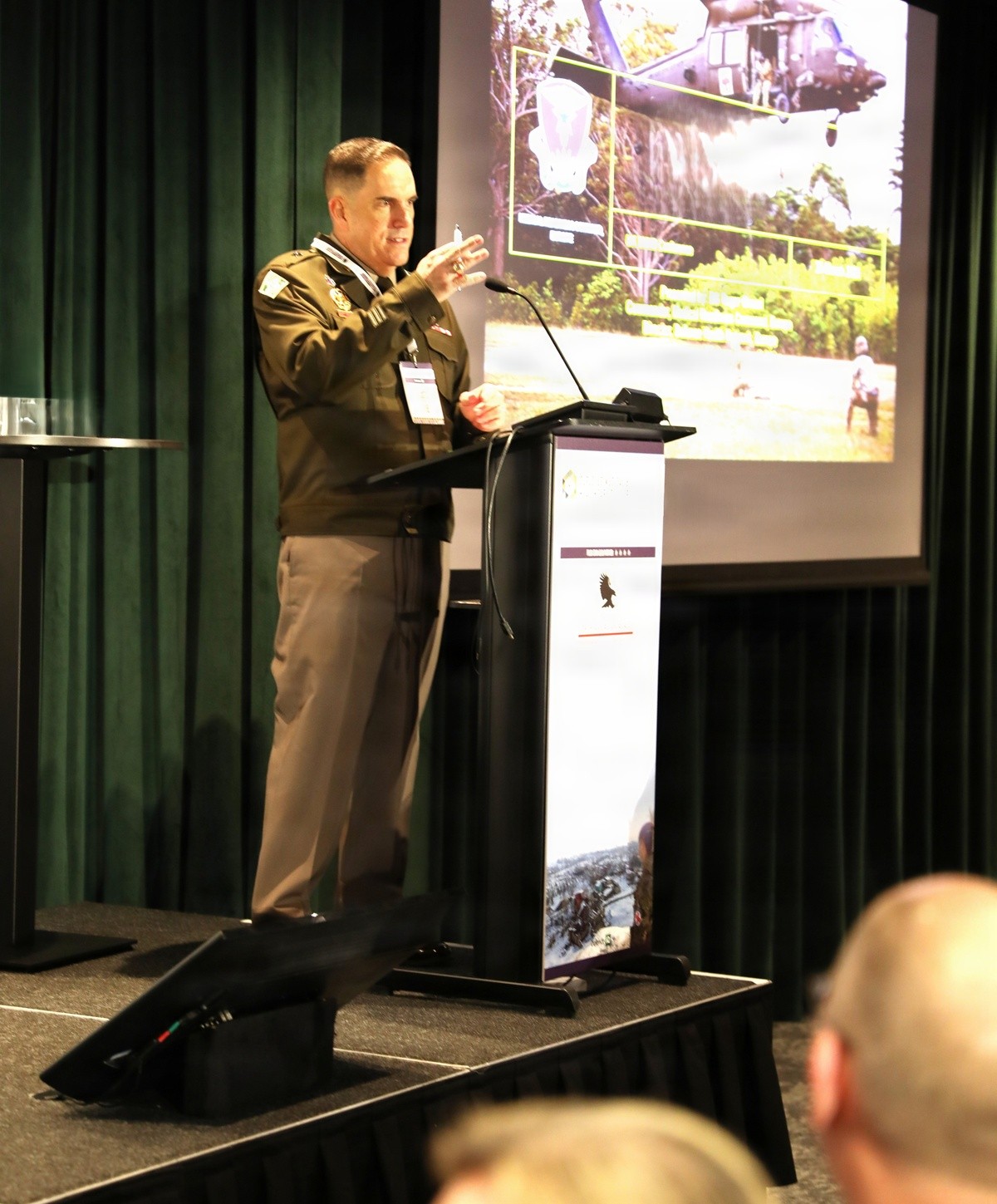
3 / 4 Show Caption + Hide Caption – LONDON - U.S. Army Brig. Gen. Roger Giraud (center), commander of Medical Readiness Command, Europe and command surgeon for U.S. Army Europe and Africa, engages with attendees at the 2026 Deployed Medical and Healthcare Delivery (DMHD) Symposium held in London March 24-25. The two-day medical symposium brought together more than 300 military and civilian medical experts from 20 plus nations. The medical symposium focused on urgent challenges in operational healthcare to include NATO Medical Action Plan for collective defense, mass casualty planning and patient evacuation, civilian/military interoperability through regulatory alignment, medical logistics resilience in disrupted supply chains, workforce shortages and a scalable medical force solution. (Photo Credit: Kirk Frady) VIEW ORIGINAL
2026 Deployed Medical and Healthcare Delivery (DMHD) Symposium held in London
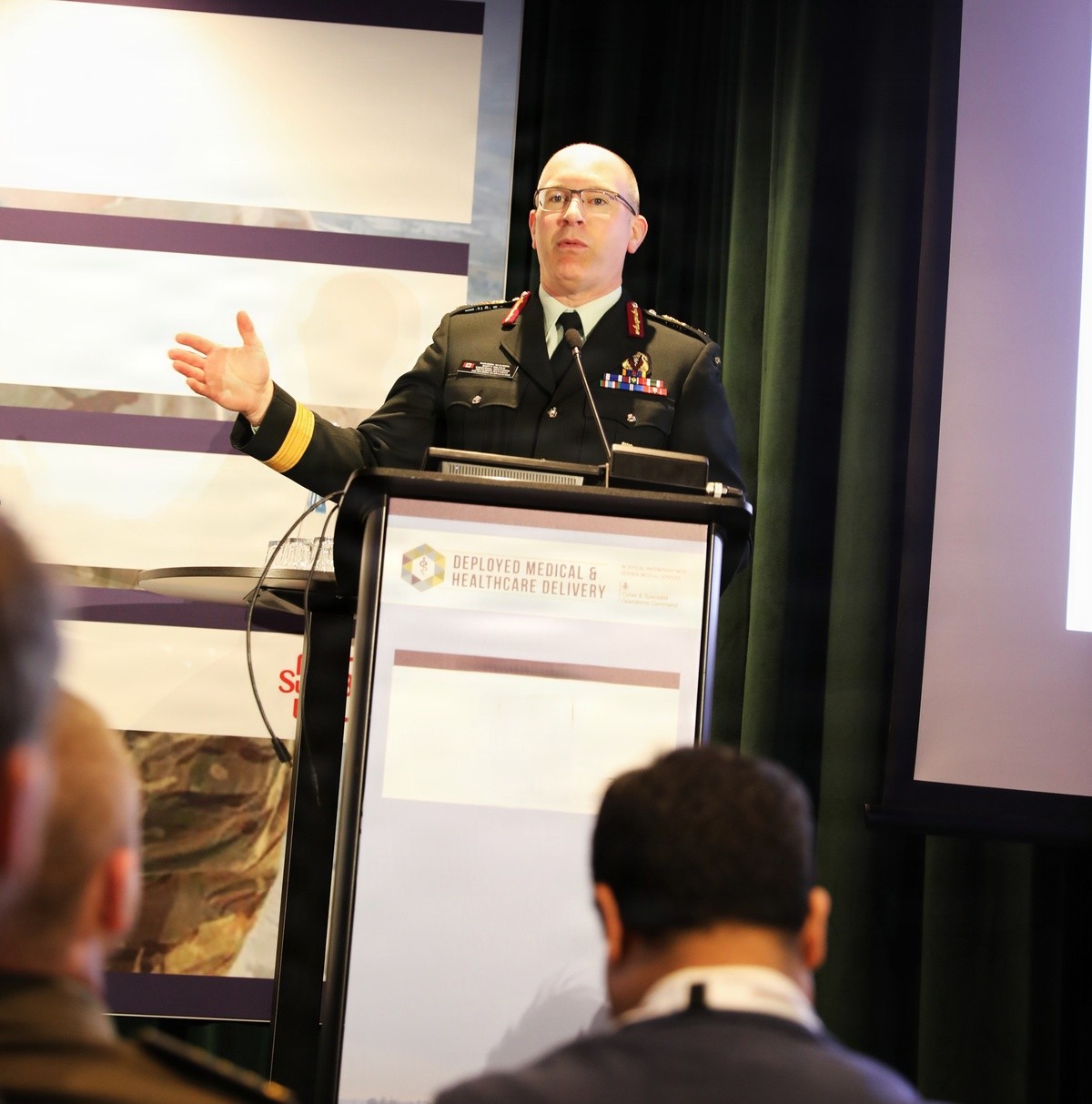
4 / 4 Show Caption + Hide Caption – LONDON - Maj. Gen. Scott Malcolm, Surgeon General of the Canadian Armed Forces, briefs attendees at the 2026 Deployed Medical & Healthcare Delivery (DMHD) symposium in London March 24-25. More than 300 military and industry medical professionals from twenty NATO and allied partner countries attended the two-day event which focused on the challenges of deployed medical care. This year’s symposium featured in-depth discussions on the NATO Medical Action Plan, addressing key areas such as regulatory frameworks, mass casualty planning, patient evacuation, and medical logistics. (Photo Credit: Kirk Frady) VIEW ORIGINAL

LONDON – U.S. Army Brig. Gen. Roger Giraud, commander of Medical Readiness Command, Europe, and command surgeon for U.S. Army Europe and Africa emphasized the importance of collective medical readiness during the 2026 Deployed Medical & Healthcare Delivery (DMHD) symposium in London on March 24-25.

More than 300 military and industry medical professionals from twenty NATO and allied partner countries attended the two-day event which focused on the challenges of deployed medical care.

This year’s symposium featured in-depth discussions on the NATO Medical Action Plan, addressing key areas such as regulatory frameworks, mass casualty planning, patient evacuation, and medical logistics.

"Collectively, our intent is to gain a better understanding of the requirements of a changing modern battlefield and enable the integration of health service plans across NATO,” said Giraud. “By taking part in this event, we were able to hear case studies from the frontlines of current conflicts and gain a deeper understanding of how combat medicine is being adapted for the current operating environment.”

According to event planners, ongoing armed conflicts and a changing global security environment necessitate a joint medical response in wartime. Consequently, NATO nations and their allies are working toward collective medical readiness across the civilian, military, government, and commercial sectors.

“This event provided a unique opportunity for attendees to expand their network and build relationships across the international military medical community, including NATO partners and allied nations,” Giraud added. “It also allowed military medical personnel to engage with their counterparts on health services planning considerations in wartime and ensuring we have integrated plans that meet the needs of a mass casualty scenario.”

The two-day symposium aimed to foster this collaboration by providing a forum for medical personnel to engage in the "whole of society" approach called for in the NATO Medical Action Plan.

“Together, our collective medical capabilities are strong and will enable us to respond more effectively to crisis or conflict, provide critical care to those in need, and demonstrate our commitment to the well-being of our military forces and civilian populations alike,” said Giraud.

A senior NATO military medical official stated that the symposium’s goal was to bring together senior representatives from the military, government, and industry to advance the NATO plan.

“By staying engaged and through continued collaboration, we will ensure that our allied military medical readiness remains a cornerstone of global deterrence and our collective security, allowing us to meet any challenge, now and in the future,” Giraud concluded.