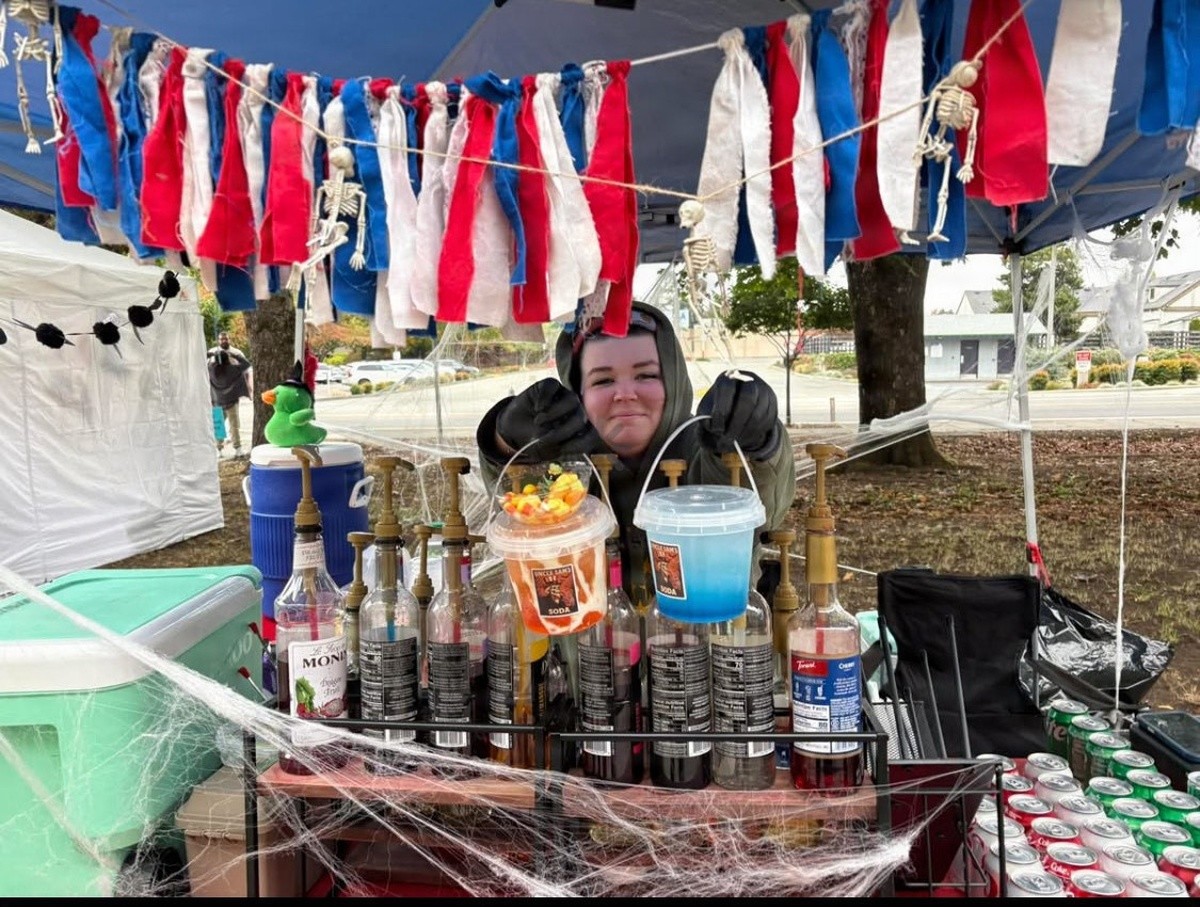
sells her custom sodas at a JBLM pop-up market. VIEW ORIGINAL
At Joint Base Lewis-McChord in Washington, military spouses are turning their creativity and skills into opportunity through the installation’s Home-Based Business program. The program helps spouses start a business from home—giving them flexibility, extra income and the ability to grow their venture while managing Family life in a state where living costs are high and child care can be expensive or hard to find.
Right now, 16 businesses are approved, and more are on the way. They range from baking and specialty foods and drinks to photography and jewelry making. For many spouses, working from home means no day care bills, no commuting and all earnings go straight into the household.
The HBB program, led by Rochelle “Ro” Hicklin, a longtime military spouse, walks spouses through the approval process: completing the HBB Form 212; getting licenses, permits and insurance; and handling reviews for housing, environmental health and legal approval; ending with the Garrison Commander’s final approval. Hicklin is there every step of the way, making sure participants understand the process and connecting them with approved business owners who mentor newcomers.
One standout business is Uncle Sam’s Soda, run by Ella Armstrong. Inspired by the “dirty soda” trend popular in Utah, Armstrong brought the idea to JBLM after realizing nothing like it existed locally. As a stay-at-home mom with a medically complex daughter, she needed more flexibility than traditional jobs offer. “We felt cornered,” she said. “My husband’s schedule didn’t line up with the therapies and child care we needed. We didn’t really have options.”
With Hicklin’s guidance, Armstrong got through the approval process. She now sells through her website and at JBLM’s monthly pop-up markets—and demand has taken off. Her first video about the business posted on social media went viral, drawing customers from across the region.
“People drove hours just to try us at the first pop-up,” she said. The program has also helped Armstrong’s Family in unexpected situations.
“When my dad needed emergency surgery, I had less than 24 hours’ notice to get on a plane,” she said. “Because of the support we have from the community, our sales that day alone paid for the plane ticket.”
Monthly pop-up events at Waller Hall, one of JBLM’s busiest spots, give spouses a direct line to the community, and most vendors sell out. Some businesses even expand into the Main Exchange or keep going after a PCS. Hicklin helps spouses understand the rules at new locations so their business can move with them.
Beyond income, spouses gain confidence, skills and a support network. Many earn enough to cover car payments, groceries or school clothes—sometimes in just a few hours. “Some make $200 in five hours at a pop-up and $300–$500 at weekend bazaars,” Hicklin said.
“It’s life-changing.”
Military spouses interested in starting a home-based business can visit the JBLM Home-Based Business Facebook page or get their business registered by contacting their local Family and MWR office. Between the creativity, drive and community support, one thing is clear: Military spouses at JBLM aren’t just making products. They’re making opportunities.
Social Sharing