1 / 4
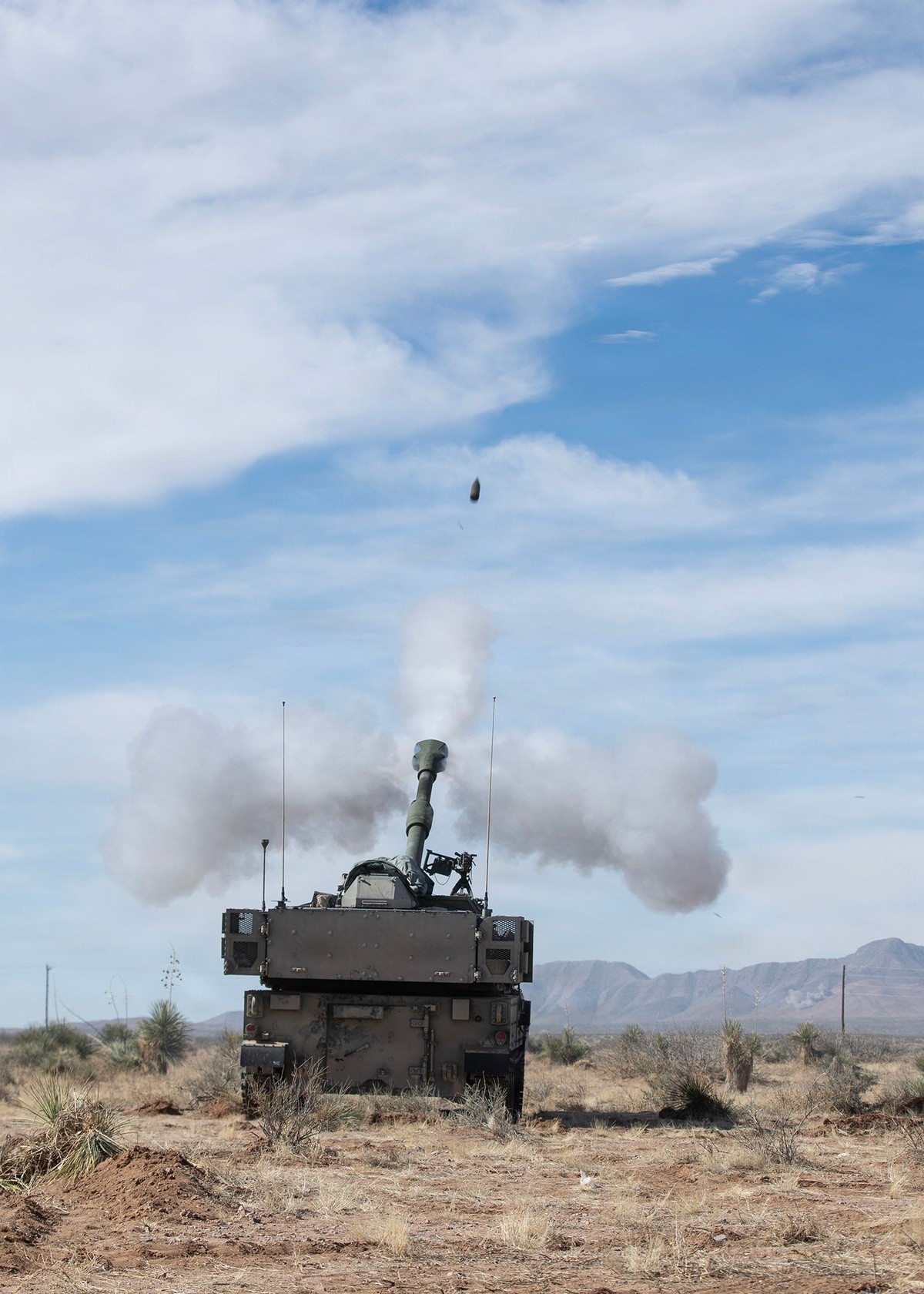
A plume of fire and smoke erupts from the cannon of an M109A7 Paladin howitzer as Soldiers with the 4th Battalion, 1st Field Artillery Regiment "Defenders," 1st Armored Division Artillery (DIVARTY), conduct a live-fire training exercise on the Fort Bliss Training Complex in New Mexico, Feb. 24, 2026. This training ensures Soldiers maintain combat readiness and proficiency, preparing them to deliver timely and accurate fires in support of the brigade's maneuver elements. This exercise highlighted the sustained lethality of the Paladin platform, a critical component of the 1st Armored Division's combined arms capabilities as the Army continues its modernization efforts.
(Photo Credit: U.S. Army photo by David Poe)View original2 / 4
A Soldier with the 4th Battalion, 1st Field Artillery Regiment, 1st Armored Division Artillery (DIVARTY) counts grommets from propellant charge containers during a live-fire exercise on the Fort Bliss Training Complex in New Mexico, Feb. 24, 2026. This procedure is a critical part of the ammunition preparation and post-firing accountability process for the Modular Artillery Charge System (MACS). This detailed accounting ensures all components are properly handled, reflecting the high standard of discipline required in artillery operations.
(Photo Credit: U.S. Army photo by David Poe)View original3 / 4
The 1st Armored Division "Old Ironsides" patch is seen on the shoulder of a Soldier from the 4th Battalion, 1st Field Artillery Regiment during a live-fire exercise on the Fort Bliss Training Complex in New Mexico, Feb. 24, 2026. The training event involved the M109A7 Paladin howitzer and its companion vehicle, the M992A3 Carrier, Ammunition, Tracked (CAT). Both systems share a common chassis, which enhances mobility and simplifies logistics for the artillery section. The exercise trained Soldiers on the use of this modernized artillery system to provide lethal and accurate indirect fires in support of the broader division.
(Photo Credit: U.S. Army photo by David Poe)View original4 / 4
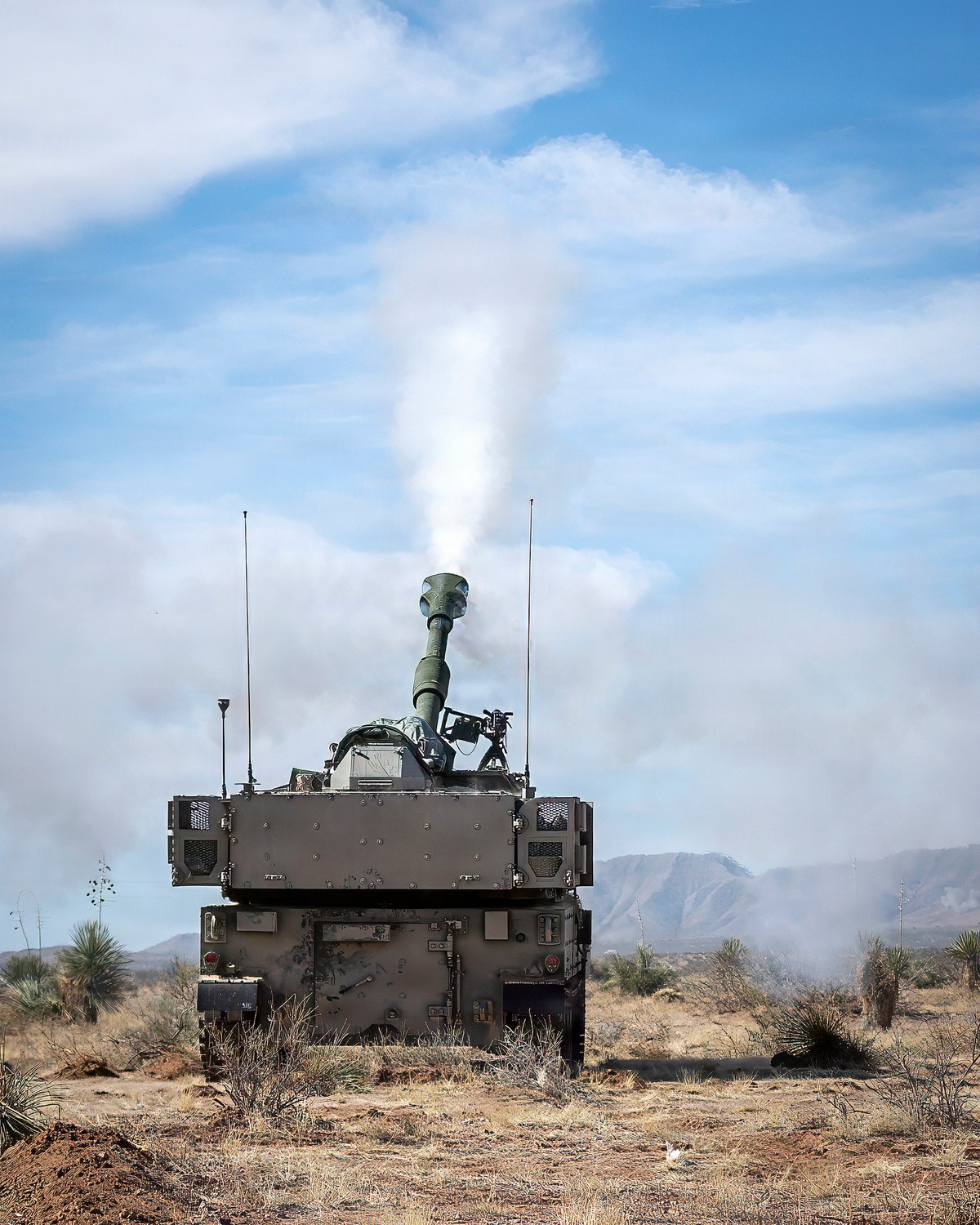
A plume of smoke erupts from the cannon of an M109A7 Paladin howitzer as Soldiers with the 4th Battalion, 1st Field Artillery Regiment "Defenders," 1st Armored Division Artillery (DIVARTY) conduct a live-fire training exercise on the Fort Bliss Training Complex in New Mexico, Feb. 24, 2026. This training ensures Soldiers maintain combat readiness and proficiency, preparing them to deliver timely and accurate fires in support of brigade maneuver elements. This exercise highlighted the sustained lethality of the Paladin platform, a critical component of the 1st Armored Division's combined arms capabilities as the Army continues its modernization efforts.
(Photo Credit: U.S. Army photo by David Poe)View original
FORT BLISS, Texas — Across the vast, sun-soaked expanse of the Fort Bliss training complex, a thunderous bark briefly silenced the desert wind late last month as a 40-ton M109A7 Paladin rocked back on its suspension, having just sent a 155mm shell arcing downrange toward a distant target.
Inside and around the steel beast, the 4th Battalion, 1st Field Artillery Regiment Soldiers worked with focused intensity, executing the final steps to master the Army's newest and most advanced self-propelled howitzer.
Embodying their historic regimental motto, “First or Not at All,” the "Defender" battalion, a core unit of the 1st Armored Division Artillery (DIVARTY), officially completed crew-level qualifications, Feb. 24.
The successful live-fire gunnery represented a critical step in the Army's sweeping modernization strategy, a multi-billion dollar effort to plus-up its formations for the modern challenges of combat operations. For the "Iron Soldiers" of the 1st AD, this upgrade is transformative, ensuring their artillery can keep pace with the division's Abrams tanks and Bradley Fighting Vehicles to dominate the complex battlefields of the future.
The certification was the climax of weeks of intensive, progressive training meticulously outlined in the field artillery gunnery tables. This "crawl-walk-run" methodology is the bedrock of artillery readiness, designed to forge expert crews from the ground up.
1 / 4
Soldiers with the 4th Battalion, 1st Field Artillery Regiment, 1st Armored Division Artillery (DIVARTY) pack expended 155mm shell casings following a live-fire exercise on the Fort Bliss Training Complex in New Mexico, Feb. 24, 2026. Proper handling and accountability of spent munitions components are a critical part of gunnery safety procedures and field discipline. The training ensures crews are proficient in all phases of the artillery mission, from preparation to post-firing operations.
(Photo Credit: U.S. Army photo by David Poe)View original2 / 4
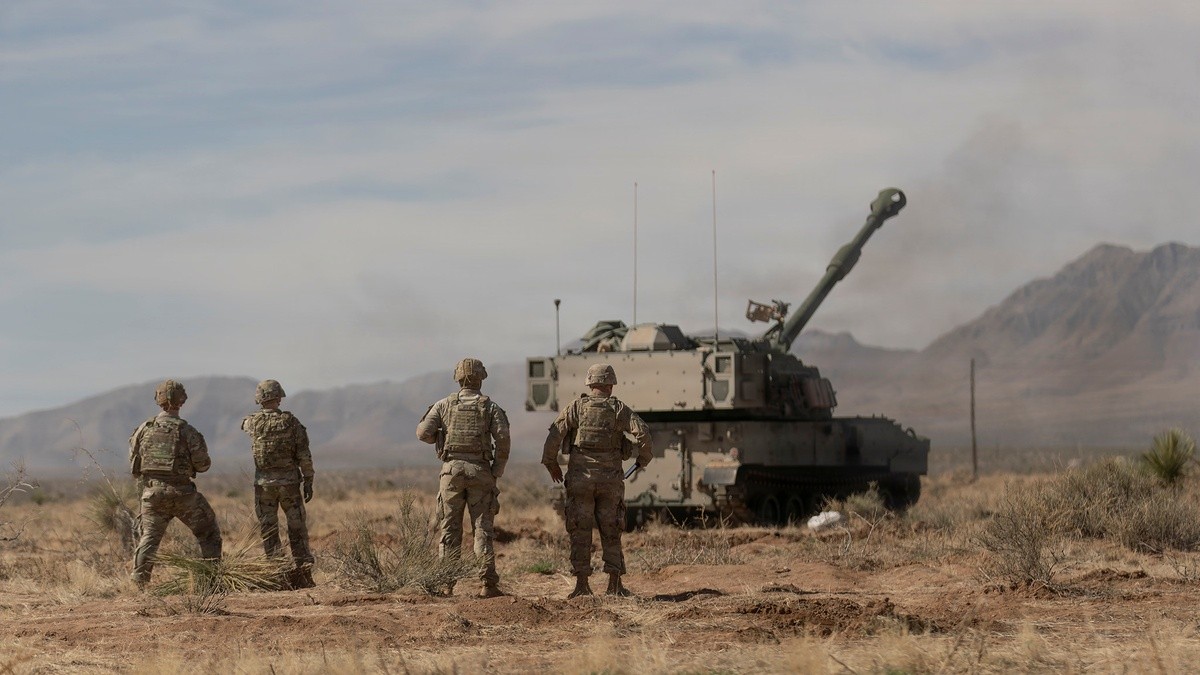
Soldiers with the 1st Armored Division observe an M109A7 Paladin self-propelled howitzer assigned to the 4th Battalion, 1st Field Artillery Regiment during a live-fire exercise on the Fort Bliss Training Complex in New Mexico, Feb. 24, 2026. The training provided an opportunity for Soldiers to familiarize themselves with the capabilities of the modernized artillery platform, enhancing integration and shared understanding within the combined arms team.
(Photo Credit: U.S. Army photo by David Poe)View original3 / 4
A plume of smoke erupts from the cannon of an M109A7 Paladin howitzer as Soldiers with the 4th Battalion, 1st Field Artillery Regiment "Defenders," 1st Armored Division Artillery (DIVARTY) conduct a live-fire training exercise on the Fort Bliss Training Complex in New Mexico, Feb. 24, 2026. This training ensures Soldiers maintain combat readiness and proficiency, preparing them to deliver timely and accurate fires in support of brigade maneuver elements. This exercise highlighted the sustained lethality of the Paladin platform, a critical component of the 1st Armored Division's combined arms capabilities as the Army continues its modernization efforts.
(Photo Credit: U.S. Army photo by David Poe)View original4 / 4
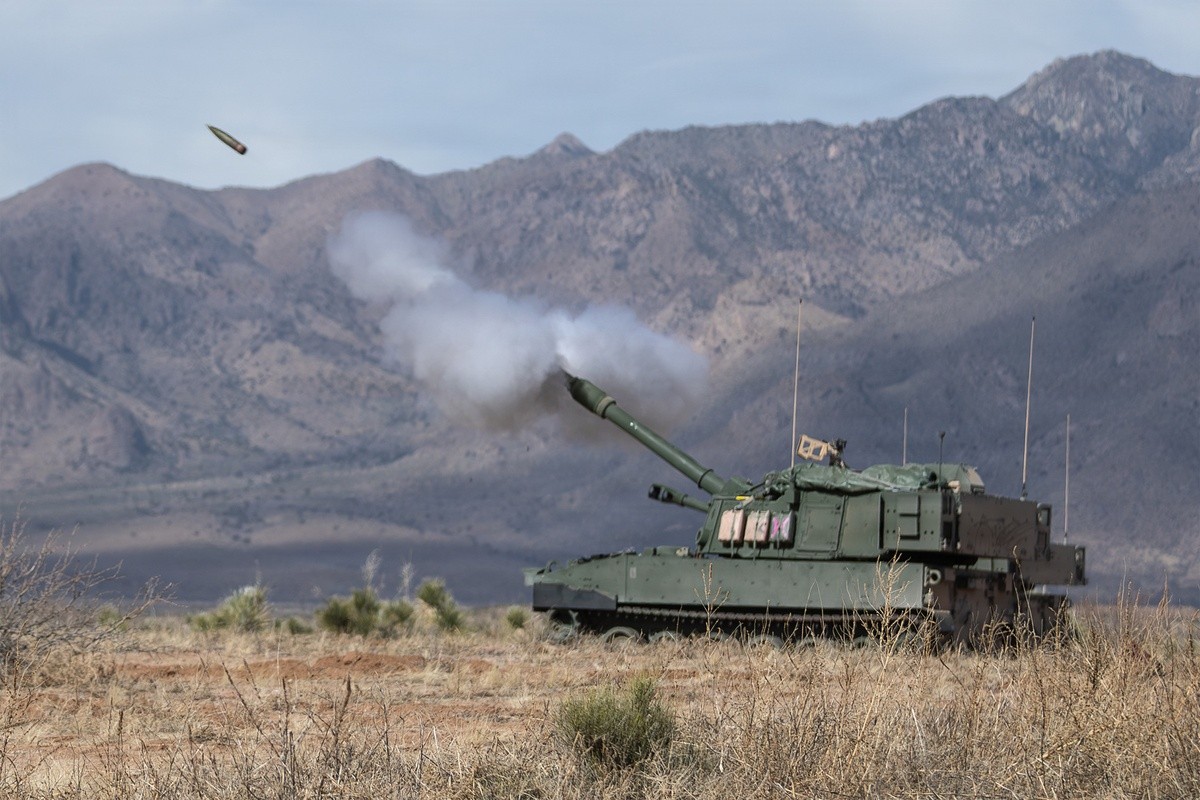
An M109A7 Paladin howitzer from the 4th Battalion, 1st Field Artillery Regiment, 1st Armored Division Artillery (DIVARTY) fires a 155mm round during a live-fire gunnery on the Fort Bliss Training Complex in New Mexico, Feb. 24, 2026. This training validates the readiness of crews on the Army's modernized artillery platform. The M109A7, paired with the M992A3 Carrier, Ammunition, Tracked (CAT), features a common chassis with other vehicles in the armored brigade, simplifying maintenance and improving mobility for the entire artillery section.
(Photo Credit: U.S. Army photo by David Poe)View original
The journey began with individual skills tests and virtual simulators before transitioning to the Paladins themselves for proficiency drills. The entire process culminated with Artillery Table VI, the final live-fire qualification where each crew, under the watchful eyes of certified evaluators, had to prove their complete mastery by executing a variety of complex fire missions.
The battalion’s senior enlisted leader, Command Sgt. Maj. Bradley Beavers, confirmed the importance of this final step.
"Crews go through and they complete an artillery Table Level VI, which is a section-level certification," explained Beavers, a career field artilleryman with more than 21 years of service. "It's basically the start that locks in all the crews for the cannon."
The success of the day was a point of pride.
"Today they went over five separate missions; each gun shot around 20-to-25 rounds, and everyone was successful," Beavers said. "Everybody's feeling pretty good here at the end of this because they're now locked in as chiefs and gunners and number one men, and they’re ready to move on with their training to the next level."
The ability to conduct such demanding training is made possible by the unique assets of Fort Bliss. The installation’s 1.12 million acres provides a premier training environment that allows units to test new equipment and refine tactics at their home station.
This advantage was highlighted by Command Sgt. Maj. Robert Theus, the Fort Bliss Garrison command sergeant major, who joined the “Defenders” in the field Feb. 28 to see the Army’s newest artillery platform in action.
"Well, it's one of the reasons ‘It's better at Bliss,’" Theus stated. "We have more training land out here than there is at [the National Training Center], and you can do things here at Bliss in a training environment you can't do anywhere else in the world. It's always great to see Soldiers out here excelling."
1 / 3
Soldiers with the 1st Armored Division observe an M109A7 Paladin self-propelled howitzer assigned to the 4th Battalion, 1st Field Artillery Regiment during a live-fire exercise on the Fort Bliss Training Complex in New Mexico, Feb. 24, 2026. The training provided an opportunity for Soldiers to familiarize themselves with the capabilities of the modernized artillery platform, enhancing integration and shared understanding within the combined arms team. (U.S. Army photo by David Poe, Fort Bliss Garrison Public Affairs)
(Photo Credit: David Poe)View original2 / 3
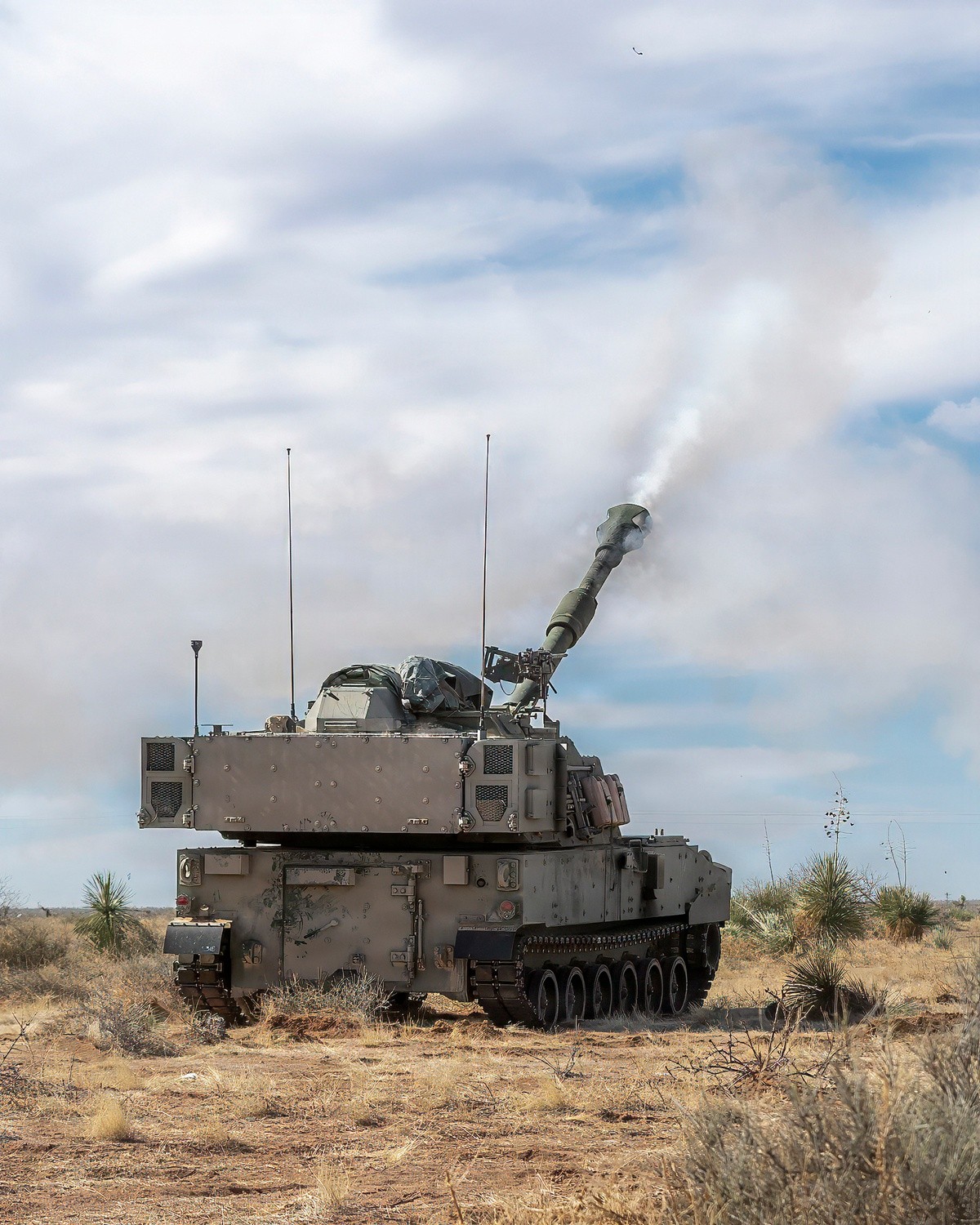
The U.S. Army's latest M109A7 Paladin howitzers assigned to the 4th Battalion, 1st Field Artillery Regiment, 1st Armored Division Artillery (DIVARTY) prepare for a fire mission during a training exercise on the Fort Bliss Training Complex in New Mexico, Feb. 24, 2026. The M109A7 represents a key component of the Army's modernization strategy, enhancing the reliability, survivability, and lethality of the self-propelled howitzer fleet. The A7 features a new chassis design with components common to the Bradley Fighting Vehicle, which simplifies logistics and maintenance across the armored brigade combat team.
(Photo Credit: U.S. Army photo by David Poe)View original3 / 3
An M109A7 Paladin howitzer assigned to the 4th Battalion, 1st Field Artillery Regiment, 1st Armored Division Artillery (DIVARTY) fires a 155mm round during a live-fire training exercise on the Fort Bliss Training Complex in New Mexico, Feb. 24, 2026. The exercise validates the combat readiness of the crews and their proficiency in delivering timely and accurate fires in support of the brigade's maneuver elements, showcasing the lethality and effectiveness of the Army's modernized artillery platform.
(Photo Credit: U.S. Army photo by David Poe)View original
On a modern battlefield, survival depends on the ability to "shoot and scoot"— to fire and move before an enemy can retaliate. The M109A7 is a platform engineered for this deadly dance.
Its new 675-horsepower engine, a power pack it shares with the Army’s Bradley Fighting Vehicle, gives it the raw power and speed to keep pace with frontline tanks. This newfound agility is supported by a revolutionary leap in reliability, as the A7’s state-of-the-art all-electric turret replaces the maintenance-heavy hydraulic systems of older models.
The leaders on the ground immediately recognized these benefits.
"Oh, it's absolutely an enhancement," Beavers stated. "The vehicles are faster, they're more accurate, which gives us more accurate and timely fires; it allows us to move, get in position, and shoot faster."
Theus, also an experienced artilleryman, elaborated on the long-term advantages for the Soldiers.
"Being on the Bradley chassis makes it easier to work on because the parts are easy to get to as opposed to the old Alpha 6," he said. "So, I know the crews out here, where they spend a lot of their time on maintenance, are particularly happy about that because they're on a platform that's going to be easier to work on."
This modernization comes at a critical time, as the Army focuses on keeping pace with the capabilities of peer and near-peer adversaries.
For Beavers and the Defender Battalion, who recently returned from a nine-month Europe deployment, the arrival of the new howitzers has a deeper, strategic significance.
"I worked with a lot of European armies, and I can tell you that they're starting to acquire equipment, and they're getting better artillery equipment, and I kind of watched ours get stagnant," Beavers, who also has previously served with the 4th Security Forces Assistance Brigade, reflected. "So, it's nice for us to get a hold of something new ourselves and show that we're still the best Army in the world."
With their crews now fully certified and "locked in," the 4th Battalion, 1st Field Artillery Regiment will continue to build on this success, ready to provide the timely, accurate, and lethal fire support that the 1st AD needs to deter adversaries and prove their mettle anywhere in the world.





Social Sharing