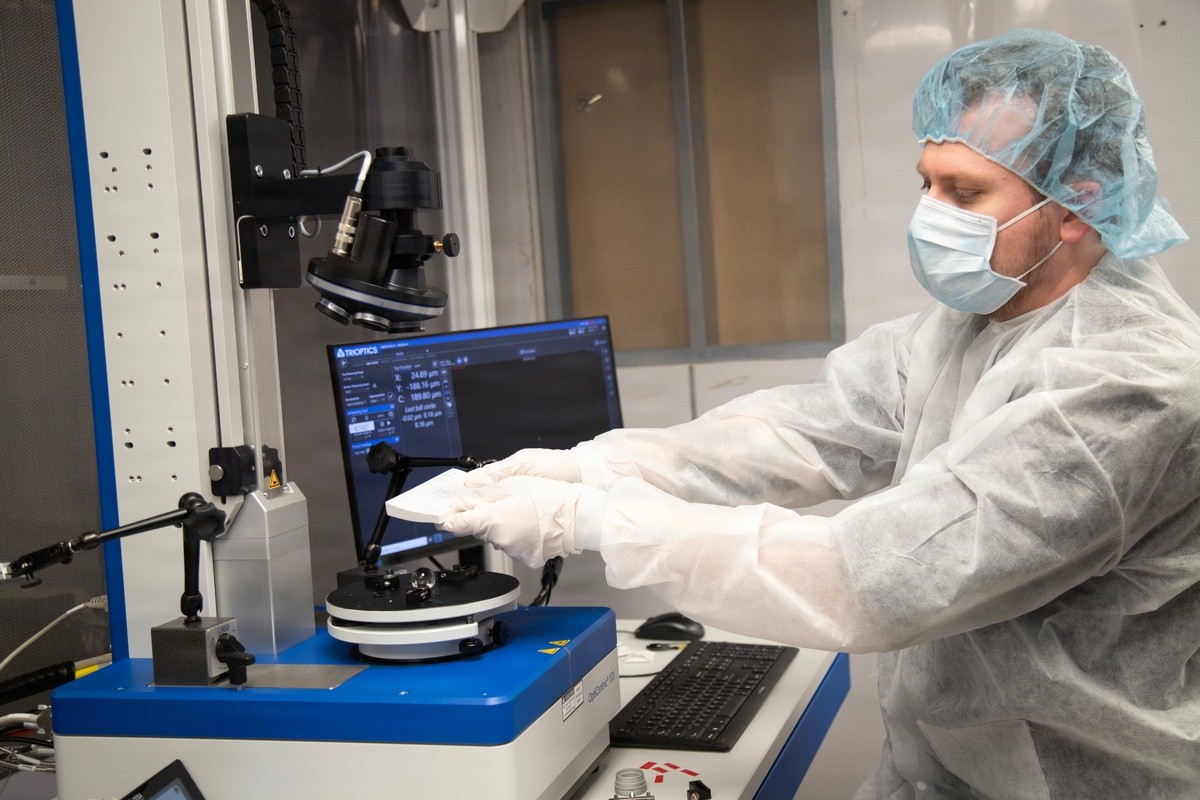

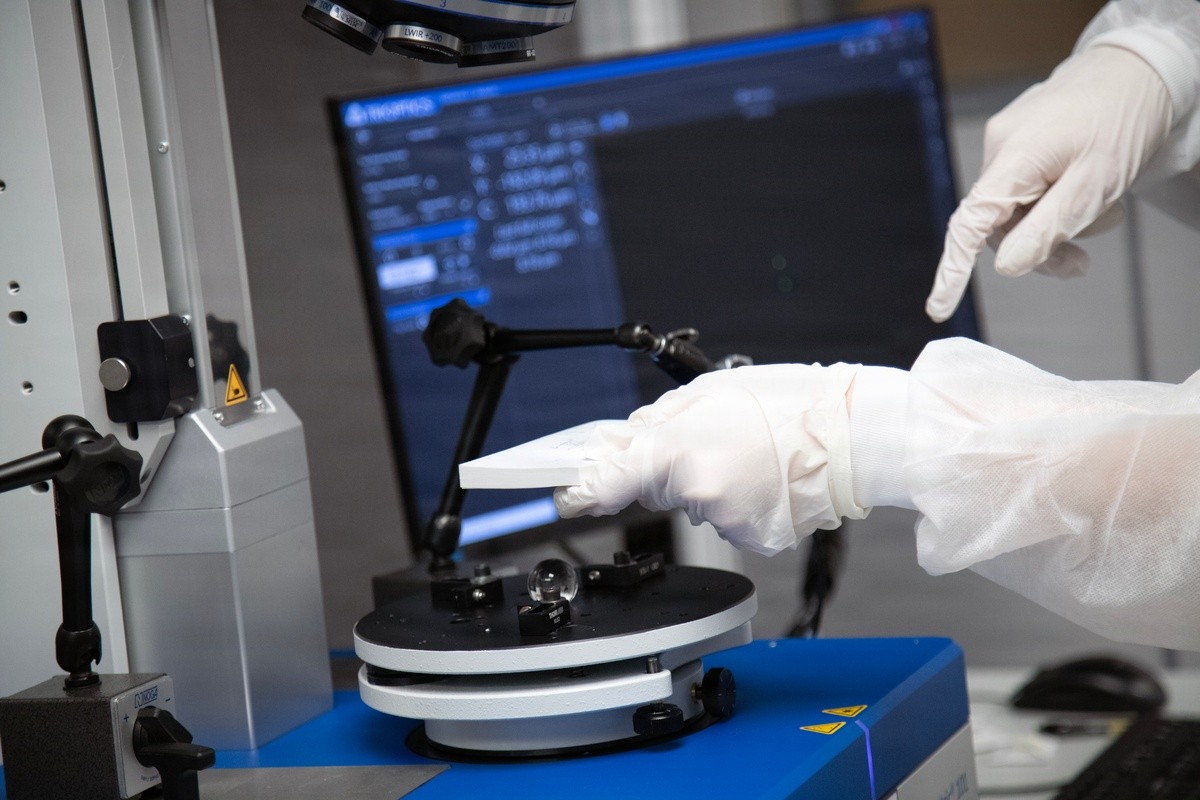
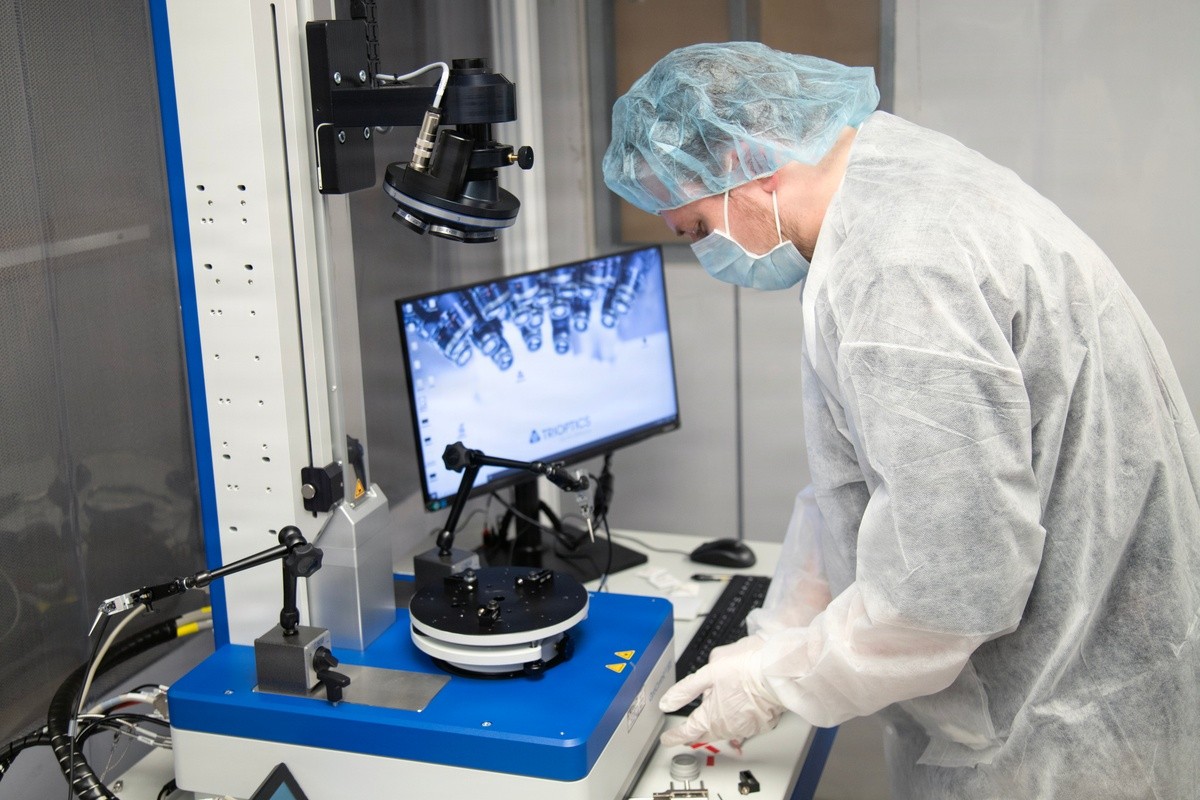
FORT BELVOIR, Va. — To meet the technological demands of unmanned aerial systems on today’s battlefield, Army researchers are delivering advanced optics that provide significantly higher resolution imaging at longer ranges.
The Army’s Command, Control, Communications, Computers, Cyber, Intelligence, Surveillance and Reconnaissance (C5ISR) Center is leveraging its broad expertise in electro-optic/infrared research to bring enhanced capabilities to Soldiers for this critical piece of emerging military technology, according to optical engineer Brian Kellermeyer. The C5ISR Center is an element of the Combat Capabilities Development Command.
The Folded Lightweight Annular Telescope, FLAT, project, which packages advanced optics into compact, lightweight, and low-cost UAS payloads, is key to the Center’s research and development for delivering the next generation of advancements. FLAT uses a novel reflective telescopic design, coupled with manufacturing advancements in precision mirror fabrication and optical alignment techniques.
“These optics deliver much higher definition images and superior performance at extended ranges than currently fielded capabilities when coupled with aided target recognition algorithms for rapid search and cueing, increasing Soldier lethality and situational awareness,” Kellermeyer said. “Soldiers can better detect, locate, and avoid enemy engagement threats in complex and contested environments.”

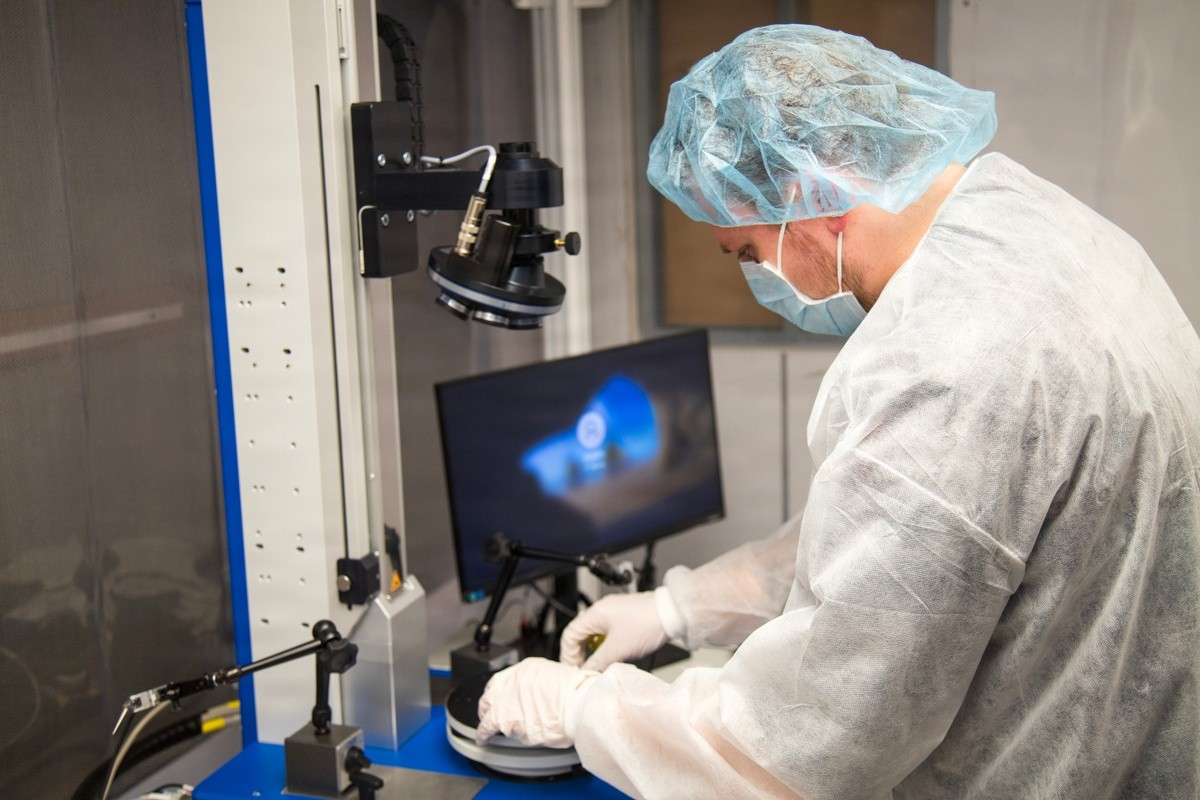
With the large UAS quantities the Army plans to procure for future warfare, affordability will be essential. C5ISR Center’s UAS science and technology mission pursues paths to incorporate long-range, advanced electro-optics/infrared sensors while decreasing cost.
“FLAT optics are pushing boundaries by enabling a mirror-based solution that’s not dependent on rare earth minerals or more expensive optical components,” he said. “Our programs enable a new configuration. The prototypes that we build here and transition to industry enable better use cases for the Warfighter.”
Because the government leads the FLAT initiative and owns the design rights, C5ISR Center can rapidly transition this technology directly to multiple industry partners for immediate integration into emerging payloads for Launched Effects and small UAS. The Army uses Cooperative Research and Development Agreements, as well as Small Business Innovation Research and Manufacturing Technology partnerships, to bring multiple vendors into the effort.
“Through government rights, we can help spur industry toward this solution set and deliver a larger production level quantity,” Kellermeyer said. “By distributing it openly, the Army effectively ‘burns down risk’ for industry. The goal is to strengthen the defense industrial base and increase supply chains.”
C5ISR Center works across the sensors community of interest through the Military Sensing Symposia with Army, government and industry partners to discuss research breakthroughs. During a recent MSS Parallel Conference, Center researchers reinforced key benefits of FLAT optics, including scalable and modular designs, enabling other ground- or Soldier-borne use cases to take advantage of the increased magnification that FLAT optics provide. The designs can also be applied to multiple wave bands, including cooled and uncooled thermal sensors.
Initial prototypes of small FLAT payloads are set for field demonstration and operational experimentation in 2026. Through CRADAs, C5ISR Center plans to transition the FLAT technology, making it available on the UAS Marketplace once the sensor suite is packaged into a suitable gimbal solution. The Marketplace aims to streamline the process for Department of War and interagency partners to identify and procure the right equipment to meet their needs through a catalog of validated counter-UAS systems and components, according to Joint Interagency Task Force 401.
——————————
The U.S. Army Command, Control, Communications, Computers, Cyber, Intelligence, Surveillance and Reconnaissance Center is the Army’s applied research and advanced technology development center for C5ISR capabilities. As the Army’s primary integrator of C5ISR technologies and systems, DEVCOM C5ISR Center supports our networked Warfighters by identifying, developing, maturing, and rapidly integrating innovative technologies to drive continuous transformation.
DEVCOM C5ISR Center is an asset of the U.S. Army Combat Capabilities Development Command. DEVCOM is Transformation and Training Command’s leader and integrator within a global ecosystem of scientific exploration and technological innovation. DEVCOM expertise spans seven major competency areas to provide integrated research, development, analysis and engineering support to the Army and Department of War. From rockets to robots, drones to dozers, and aviation to artillery – DEVCOM innovation is at the core of the combat capabilities American Warfighters need to win on the battlefield of the future. For more information, visit c5isrcenter.devcom.army.mil.
Social Sharing