1 / 3Show Caption +Hide Caption –
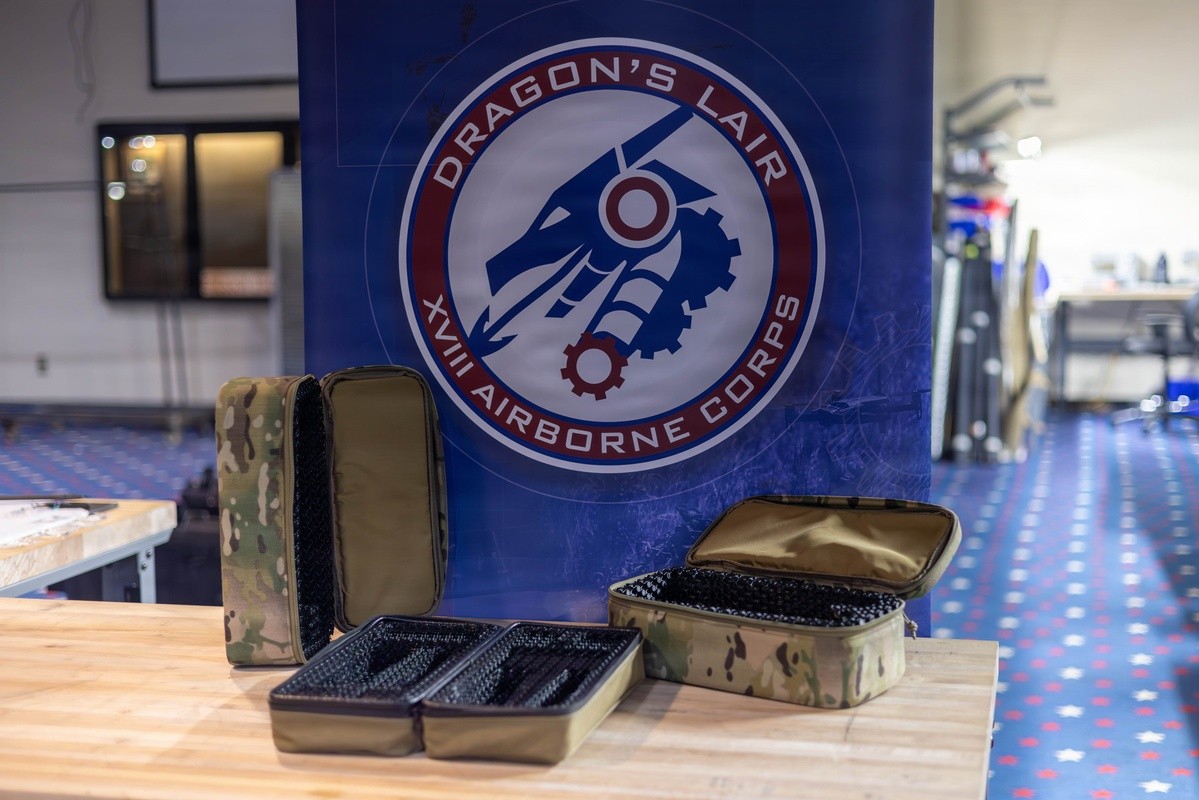
A Dragons Lair 11 innovation pitch: a lightweight, rigid, and jumpable modular drone case compatible with multiple small Unmanned Aerial Systems (sUAS). Spc. Alexander Soto, a paratrooper assigned to the 1st Battalion, 504th Parachute Infantry Regiment, noted the reoccurring problem of drones being broken during airborne drops and rigorous field exercises. “We needed to be able to carry drones in our rucksacks for airborne operations,” said Soto. “The idea of a smaller rigid case that allowed us to pack it also made it possible to get them in the air as soon as we hit the drop zone.”
(Photo Credit: U.S. Army photo by Sgt. Austin Robertson)VIEW ORIGINAL2 / 3Show Caption +Hide Caption –
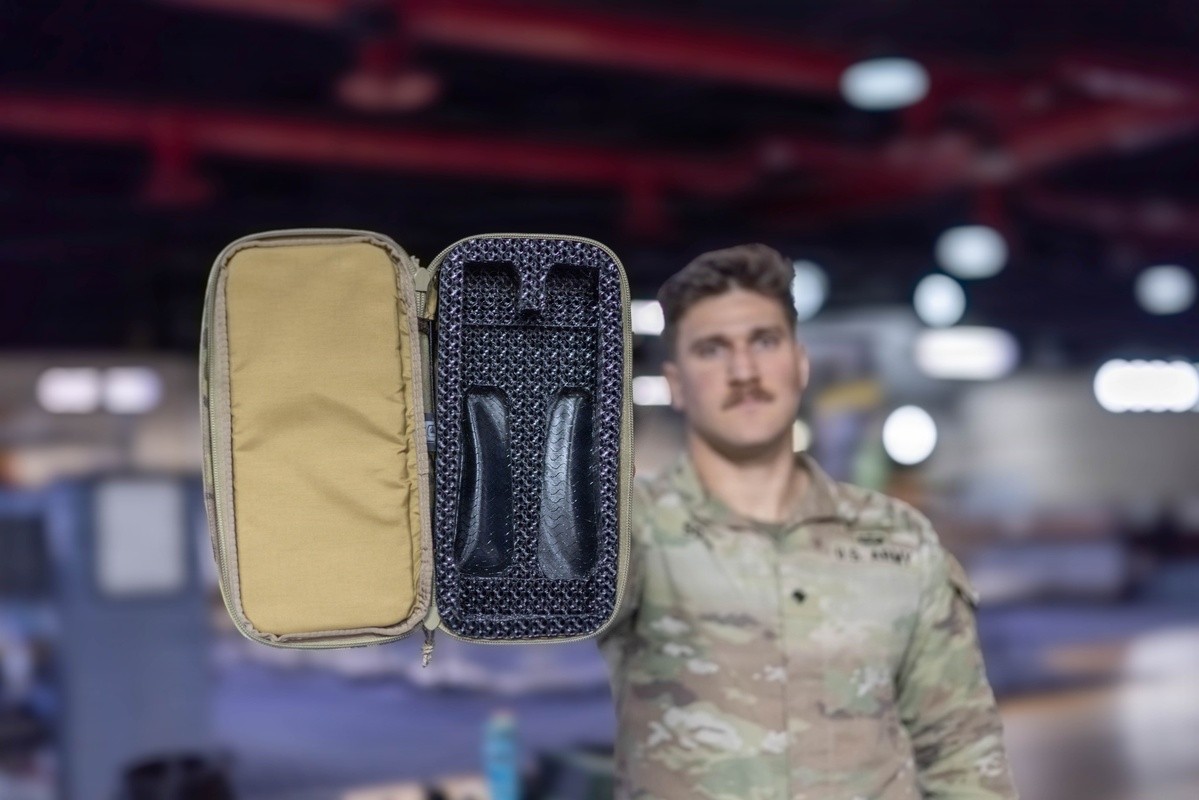
Spc. Alexander Soto, a paratrooper assigned to the 1st Battalion, 504th Parachute Infantry Regiment, presents the modular drone case at the Airborne Innovation Lab, Fort Bragg, North Carolina, Feb. 9, 2026. Soto noted the reoccurring problem of drones being broken during airborne drops and rigorous field exercises. “We needed to be able to carry drones in our rucksacks for airborne operations,” said Soto. “The idea of a smaller rigid case that allowed us to pack it also made it possible to get them in the air as soon as we hit the drop zone.” Soto collaborated with Staff Sgt. Larry Dockins from the Airborne Innovation Lab, together they developed a functional prototype in just three months.
(Photo Credit: U.S. Army photo by Sgt. Austin Robertson)VIEW ORIGINAL3 / 3Show Caption +Hide Caption –
Spc. Alexander Soto, a paratrooper assigned to the 1st Battalion, 504th Parachute Infantry Regiment, presents the modular drone case at the Airborne Innovation Lab, Fort Bragg, North Carolina, Feb. 9, 2026. Soto noted the reoccurring problem of drones being broken during airborne drops and rigorous field exercises. “We needed to be able to carry drones in our rucksacks for airborne operations,” said Soto. “The idea of a smaller rigid case that allowed us to pack it also made it possible to get them in the air as soon as we hit the drop zone.” Soto collaborated with Staff Sgt. Larry Dockins from the Airborne Innovation Lab, together they developed a functional prototype in just three months.
(Photo Credit: U.S. Army photo by Sgt. Austin Robertson)VIEW ORIGINAL
FORT BRAGG, N.C. — A modular drone case conceived by two 82nd Airborne paratroopers is heading into production eight months after being a runner-up at the XVIII Airborne Corps' Dragon's Lair competition on June 25, 2025.
This rapid turnaround from idea to production demonstrates the success of Secretary of the Army Daniel Driscoll's Transformation Initiative, which simultaneously increase warfighter lethality and accelerates the Army's acquisition process.
Spc. Alexander Soto, a paratrooper assigned to the 1st Battalion, 508th Parachute Infantry Regiment, noted the reoccurring problem of drones being broken during airborne drops and rigorous field exercises.
“We needed to be able to carry drones in our rucksacks for airborne operations,” said Soto. “The idea of a smaller rigid case that allowed us to pack it also made it possible to get them in the air as soon as we hit the drop zone.”
His solution was born out of necessity and pitched at Dragon's Lair 11, an annual competition modeled after the TV show Shark Tank. Soldiers from across the corps presented their battlefield solutions to real-world challenges to a panel of judges for potential adoption.
Following the competition, Soto collaborated with Staff Sgt. Larry Dockins from the Airborne Innovation Lab. Together they developed a functional prototype in just three months. The result was a lightweight, rigid, and jumpable modular drone case compatible with multiple small unmanned aerial systems.
1 / 3Show Caption +Hide Caption –
Spc. Alexander Soto, a paratrooper assigned to the 1st Battalion, 504th Parachute Infantry Regiment, opens his innovation at the Airborne Innovation Lab, Feb. 9, 2026. Soto collaborated with Staff Sgt. Larry Dockins from the Airborne Innovation Lab; together they developed a functional prototype in just three months.
(Photo Credit: U.S. Army photo by Sgt. Austin Robertson)VIEW ORIGINAL2 / 3Show Caption +Hide Caption –
U.S. Army Spc. Alexander Soto and Sgt. Talen Valerio stand on stage after being announced as the runner-up team during the Dragon’s Lair 11 innovation competition at the Airborne Innovation Laboratory on Fort Bragg, North Carolina, June 25, 2025. Their submission, a modular, jumpable drone case compatible with multiple sUAS platforms, showcased forward-thinking design to enhance battlefield mobility and adaptability.
(Photo Credit: U.S. Army photo by Spc. Hermon Whaley)VIEW ORIGINAL3 / 3Show Caption +Hide Caption –
A Dragons Lair 11 innovation pitch: a lightweight, rigid, and jumpable modular drone case compatible with multiple small Unmanned Aerial Systems (sUAS). Spc. Alexander Soto, a paratrooper assigned to the 1st Battalion, 504th Parachute Infantry Regiment, noted the reoccurring problem of drones being broken during airborne drops and rigorous field exercises. “We needed to be able to carry drones in our rucksacks for airborne operations,” said Soto. “The idea of a smaller rigid case that allowed us to pack it also made it possible to get them in the air as soon as we hit the drop zone.” (U.S. Army photo by Sgt. Austin Robertson)
(Photo Credit: Sgt. Austin Robertson)VIEW ORIGINAL
The accelerated path from concept to contract was made possible by another of the Corps' innovation initiatives: the Lt. Gen. James M. Gavin Joint Innovation Outpost. The drone case project served as a successful pilot for the outpost's new rapid-procurement model — testing the team’s ability to align the necessary resources for production.
The JIOP officially opened its doors in January 2026. Its primary mission is to bridge the gap between military needs and industry partners, fast-tracking the procurement process.
"By implementing the systems that the Lt. Gen. James M. Gavin Joint Innovation Outpost enables, we are able to bring these Soldiers' ideas forward and implement them rapidly," explained Col. Thomas R. Monaghan Jr., the JIOP’s director. "It also demonstrates the shift in prioritizing innovations that Soldiers want and view as viable solutions to problems.”
The significance of such Soldier-led innovation was not lost on leadership.
“Any solution that makes a warfighter more lethal is a winning solution for us,” Dockins said. “Ultimately, ounces make pounds, seconds make minutes. Creating a device that cuts weight could mean winning or losing on the battlefield.”



Social Sharing