
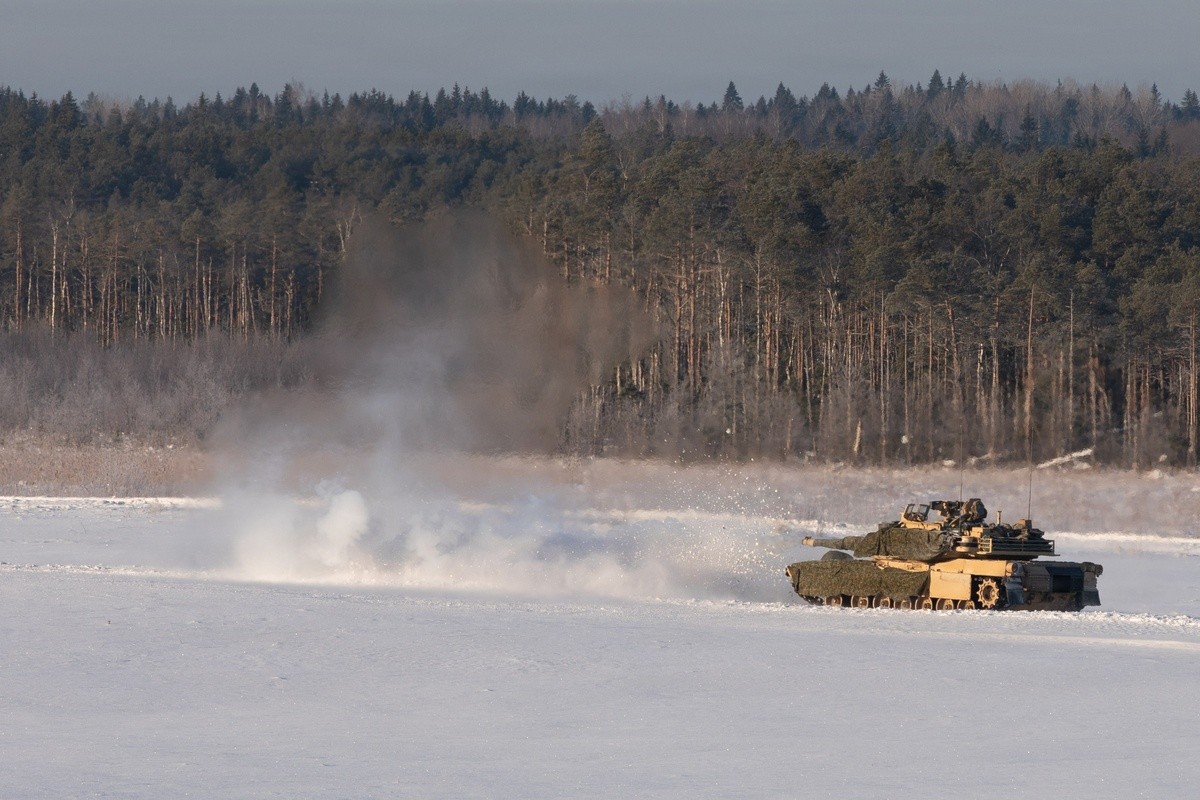
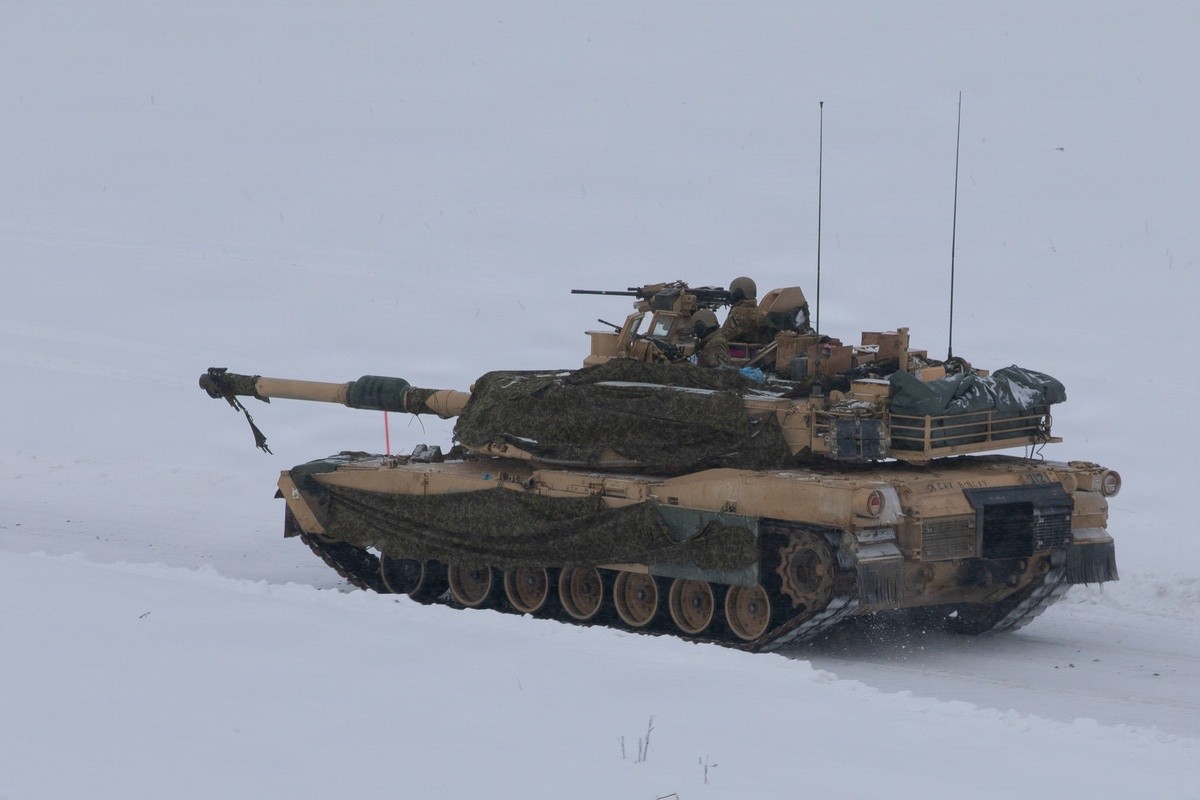
Camp Tapa, Estonia— Snow kicked up behind armored vehicles and smoke rolled across the range as live rounds cracked through the air and M1A2 Abrams tanks maneuvered into position. Their engines cut through the cold morning silence, signaling the start of a combined arms live-fire exercise (CALFEX). Soldiers assigned to 6th Squadron, 9th Cavalry Regiment, 1st Cavalry Division, executed the culminating training event Feb. 18–22 to validate platoon and company-level proficiency and demonstrate combat readiness in a dynamic field environment.
Prior to executing the live-fire event, the unit conducted troop-level situational training exercise (STX) lanes focused on platoon-sized elements reacting to a stationary enemy force. The scenarios allowed leaders to practice reconnaissance missions, defensive positioning, and synchronization of assets in order to build confidence across the formation before integrating live ammunition. Environmental conditions added an additional layer of complexity to the training.
“The weather does have a vote as well as the enemy,” said Sgt. Maj. Andres Castellanos, operations sergeant major. “The biggest thing to consider when fighting along a front that you’re not used to is that you have to be acclimatized and live in the same environment that you’re going to be fighting in. That’s the biggest lesson we will take away from this besides maneuvers, synchronization of assets, and the commander’s ability to control his platoons.”
The STX lanes were critical to setting conditions for success during the CALFEX. During the exercise, mounted elements maneuvered through designated lanes while engaging targets and support-by-fire positions suppressed simulated enemy forces to enable maneuver elements to seize objectives. The integration of maneuver, fires, and sustainment demonstrated the unit’s ability to mass combat power under realistic field conditions.
Capt. Eriq Jones, squadron fire support officer, said the exercise represents the culmination of every training event conducted since the unit arrived in theater. Previous gunnery qualifications, winter camp, and platoon STX lanes all built toward the company-sized live-fire execution.
For Jones, a successful CALFEX means more than simply completing the lane.
“A successful CALFEX means we met the commander’s goal,” said Jones. “Also, that we trained safely without running into any serious injuries or safety issues and that the training was beneficial for everyone involved. From the lowest private to the squadron staff.”
For junior Soldiers, the exercise reinforced the importance of communication and teamwork at every level.
“My specific role today is loading the main gun, helping the tank commander navigate, and assisting the gunner in identifying targets,” said Spc. Jacob Silva, armor crewman. “This exercise shows how to work as a platoon and incorporate other troops into our exercises. It shows the chaos that can happen over the radios and how to filter and manage it at your level. It helps us work better as a team and troop.”
The exercise also incorporated a casualty evacuation procedure, requiring Soldiers to assess and evacuate a simulated casualty while maintaining security and tempo. Integrating medical response into live-fire conditions reinforced adaptability and field survivability.
Exercises like the CALFEX ensure the unit remains ready to respond decisively to future missions while upholding the Army’s standards of readiness and lethality.
Social Sharing