Aberdeen Proving Ground, MD – Two Army chemical biological defense organizations have entered into a Memorandum of Agreement that will enable Soldiers to conduct research and receive training in the Army’s premier chemical and biological defense laboratory.
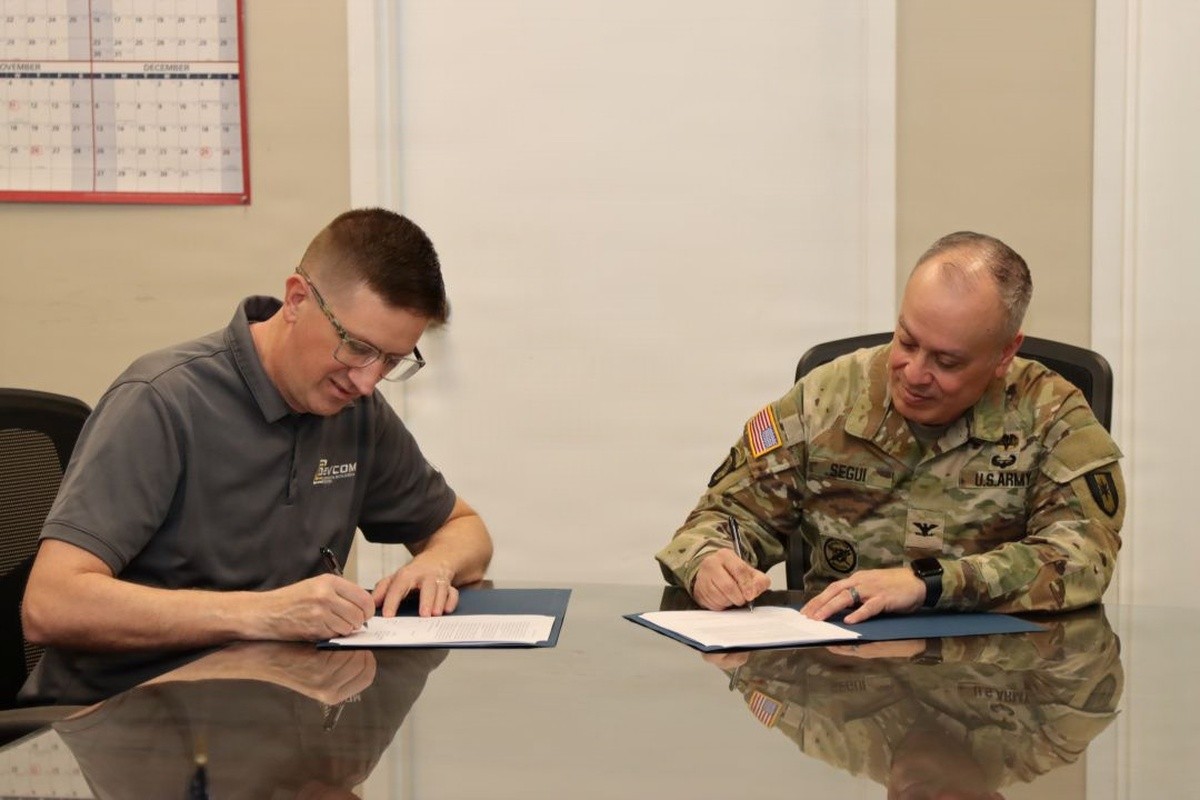
U.S. Army Combat Capabilities Development Command Chemical Biological Center (DEVCOM CBC) Director Michael Bailey and Colonel Dennison Segui of the 20th Chemical, Biological, Radiological, Nuclear, Explosives (CBRNE) Command 1st Global Field Medical Laboratory (1GFML) signed the agreement Feb. 6 at the Center’s campus on Aberdeen Proving Ground, Maryland.
Through the agreement, Soldiers with the Army unit will be able to conduct research at DEVCOM CBC where they will receive training, mentorship and technical oversight in a laboratory environment from the Center’s team of experts, such as those within the Forensic Analytical Center. The Forensic Analytical Center is the only Department of War laboratory in the U.S. designated by the Organisation for the Prohibition of Chemical Weapons for analysis of both environmental and biomedical samples.
Timothy Allan works in DEVCOM CBC’s Forensic Analytical Center as a chemist and sees the benefits in developing advanced technical skills for the warfighter and promoting readiness.
“A 1GFML Soldier-scientist will be able to work alongside CBC scientists allowing them to take that knowledge and expertise into the field when deployed,” he explained. “When 1GFML encounters a chemical threat, that knowledge and relationship will enable the reach-back to CBC to accelerate the time between when a chemical threat occurs and when it is characterized and mitigated.”
Hands-on lab training and maintaining certifications are important components to ensuring mission readiness within 1GFML personnel. The agreement will enable chemical laboratory officers to complete individual critical task list requirements, maintain professional certifications and demonstrate proficiency in chemical and biological threat science through training facilitated by DEVCOM CBC.
The agreement also allows 1GFML personnel access to Center workspaces and to conduct research primarily focused on analysis of unknown chemical threats in complex environmental samples.
“It’s a great mechanism to ensure the warfighters have the resources they need and can learn from our team of expert scientists at CBC,” Bailey said. “Our researchers can benefit by the direct feedback from those in the field. Having that insight from the warfighter is essential and will improve future operational success for everyone involved.”
Located at Aberdeen Proving Ground, the 1GFML is a U.S. Army unit that deploys worldwide to perform surveillance, execute confirmatory analytical laboratory testing, and conduct health hazard assessments of CBRN threats in support of force protection and counter-weapons of mass destruction missions. Leveraging a hands-on approach to research, engineering and field support, DEVCOM CBC generates innovative CBRNE defense capabilities for the warfighter.
The agreement was a natural fit for both organizations and one that Segui applauds. “By enhancing interoperability with DEVCOM CBC, we are improving our ability to deploy rapidly, analyze hazards with precision, and support commanders across multiple theaters,” he noted following the signing. “The agreement represents a decisive step forward in ensuring our expeditionary laboratory remains ready, modernized, and fully aligned with emerging threats.”
Social Sharing